Old Maps of New Lenox, Illinois for Academic Research
Study the evolution of New Lenox with 56 high-resolution historic maps. Whether you're teaching, researching, or modeling changes in land use, these maps provide essential visual documentation of urban, environmental, and geographic change.
- Analyze long-term change: Track patterns in development, transportation, and natural features.
- Ideal for environmental or urban studies: Support academic projects with primary historical map data.
- Use in the classroom or lab: Educators and researchers rely on these maps to bring historical context to life.
These maps are a powerful tool for teaching, research, and visualizing how New Lenox has changed over the decades.
New Lenox, IL maps
(56)- 1890 Map of Des Plaines
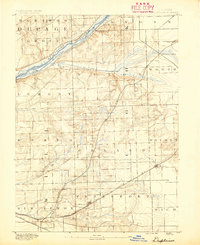 1890 Des Plaines1890 Print · USGSThe Des Plaines valley and southern Cook County are shown here in the late nineteenth century as a hub of canal and rail transit. Genealogists can trace family roots in early settlements like Lemont, Orland, and Mokena or locate vanished stops like Johnston Station.
 - 1892 Map of Joliet
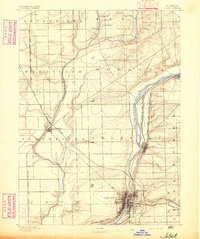 1892 Joliet1892 Print · USGSWill County at the end of the nineteenth century was a bustling intersection of canal trade and heavy rail. Genealogists can trace the early streets of Joliet and Lockport or locate long-standing rural landmarks like Caton Farm and Grinton.6 unique versions available
 - 1892 Map of Wilmington
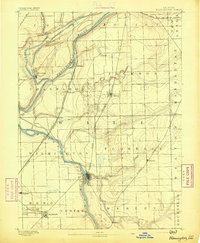 1892 Wilmington1892 Print · USGSWill County at the end of the nineteenth century is defined by its strategic river confluences and a rapidly expanding rail network. Genealogists and local historians can trace the early footprints of Wilmington and Braidwood, or find vanished rail stops like Blodget and Drummond.3 unique versions available
 - 1894 Map of Des Plaines
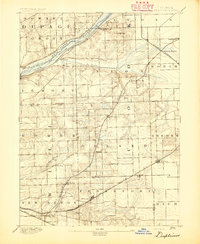 1894 Des Plaines1894 Print · USGSCook and Will counties in the 1890s are defined by the convergence of major rail lines and early waterway transit. Genealogists and historians can trace the foundations of Lemont, Mokena, and New Lenox along lines like the Wabash R. R. and the Illinois and Michigan Canal.
 - 1900 Map of Des Plaines
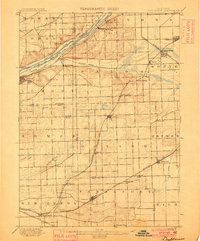 1900 Des Plaines1900 Print · USGSCook and Will counties at the turn of the century reveal a landscape of massive canal engineering and burgeoning railroad junctions. Researchers can trace ancestral farmsteads and old station stops from Sag Bridge Sta. to the early streets of Tinley Park and Mokena.
 - 1901 Map of Des Plaines
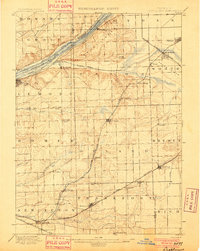 1901 Des Plaines1901 Print · USGSCook and Will County communities thrive along a dense network of nineteenth-century canals and rail lines. Genealogists and local historians can trace early property patterns and rail stops in Willow Springs, Tinley Park, and Gooding's Grove.5 unique versions available
 - 1918 Map of Wilmington
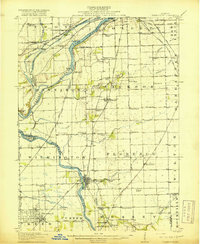 1918 Wilmington1918 Print · USGSWill County in the late teens is a landscape shaped by the convergence of major rivers and several historic rail lines. Genealogists and historians can trace numerous rural schoolhouses like Red Brick School and Schweizer School alongside river towns such as Wilmington and Channahon.5 unique versions available
 - 1923 Map of Joliet
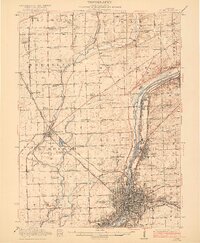 1923 Joliet1923 Print · USGSJoliet and the Des Plaines River valley are shown here in the 1920s, a hub of heavy industry and vital shipping canals. Genealogists and local historians can trace family roots through numerous country schools like Spaulding School, the Du Page Church, and the expansive State Penitentiary Farm.5 unique versions available
 - 1929 Map of Brisbane
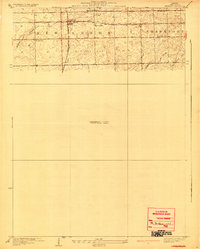 1929 Brisbane1929 Print · USGSWill County’s rural prairie was a nexus of steam rail traffic in the late twenties, centered on the village of Brisbane. Genealogists and rail historians can trace the paths of the Michigan Central and Wabash lines alongside local landmarks like Murphy Sch.2 unique versions available
 - 1929 Map of Mokena
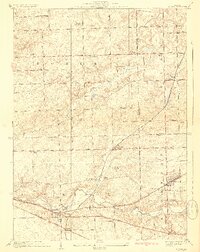 1929 Mokena1929 Print · USGSWill County's rural landscape is captured here in the late 1920s, when small schoolhouses and railroads defined the community. Researchers can trace family history at Brooks Cemetery or follow the Wabash tracks through Hadley and Alpine.3 unique versions available
 - 1949 Map of Peotone
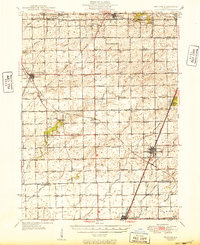 1949 Peotone1949 Print · USGSWill County’s rural townships are captured in the late 1940s, a period of transition for its railroad hubs and farming communities. Genealogists can locate family-named landmarks and country schools like Fivemile Grove Sch, Pfundstein Sch, and the St Peter Cem.2 unique versions available
 - 1953 Map of Mokena, 1955 Print
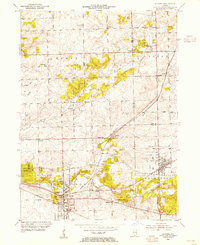 1953 Mokena1955 Print · USGSWill County's agricultural heartland is captured mid-century as the rail-centered towns of Mokena and New Lenox began to expand. Genealogists and historians can locate numerous rural landmarks, including St Johns Cem, the Wabash railroad, and Wells Corner Sch.
 - 1953 Map of Manhattan, 1955 Print
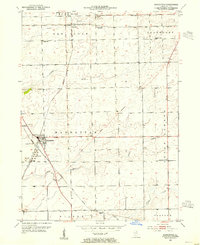 1953 Manhattan1955 Print · USGSWill County's agricultural heartland is documented here in the early fifties, showing the busy rail junctions and prairie townships of the era. Genealogists can trace family roots at St Joseph Cem, Green Garden Ch, or the rural Reiter Sch.3 unique versions available
 - 1953 Map of Elwood, 1955 Print
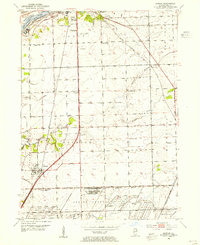 1953 Elwood1955 Print · USGSNear the village of Elwood in the early fifties, the landscape was defined by the massive expansion of the Joliet Arsenal and a heavy rail network. Local historians can trace old schoolhouse sites like Rose Hill Sch and Brown Sch alongside the Old Indian Bdy.3 unique versions available
 - 1953 Map of Chicago, 1964 Print
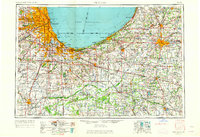 1953 Chicago1964 Print · USGSThe southern Lake Michigan shoreline was rapidly modernizing in the mid-fifties, balancing heavy industry with its famous academic centers. Researchers can trace the footprints of Notre Dame University or locate vanished sites like the Kingsbury Ordnance Plant and Meigs Field.5 unique versions available
 - 1954 Map of Joliet, 1955 Print
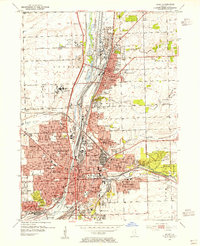 1954 Joliet1955 Print · USGSThe industrial heart of the Des Plaines River corridor comes alive in the mid-1950s. Trace the complex rail and canal networks through Lockport and Joliet, finding historic landmarks like Stateville State Prison and Lewis College.
 - 1954 Map of Wilmington, 1960 Print
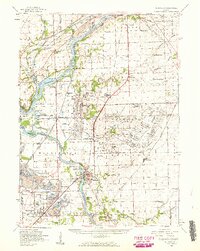 1954 Wilmington1960 Print · USGSWill and Grundy counties in the mid-fifties show a landscape of industrial convergence where major railroads meet the state's storied canal systems. Researchers can trace the Old Indian Boundary or locate family sites like the Soldiers Widows Home and Willard Grove Cem.3 unique versions available
 - 1954 Map of Joliet, 1960 Print
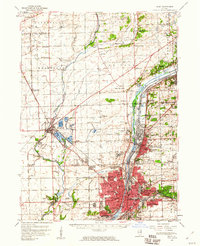 1954 Joliet1960 Print · USGSMid-century Joliet and Plainfield are captured here during a period of heavy industrial and transit growth. Researchers can trace the alignment of the Lincoln Highway and find localized details like the State Prison Farm and Caton Farm.
 - 1957 Map of Chicago
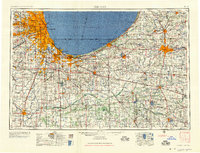 1957 Chicago1957 Print · USGSThe industrial heartland and southern Great Lakes shoreline are captured here during the peak of mid-century growth. Researchers can trace the massive Gary Steel Works, the grounds of the University of Notre Dame, and the early paths of the Tri-State Tollway.
 - 1958 Map of Aurora, 1969 Print
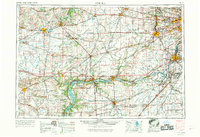 1958 Aurora1969 Print · USGSNorthern Illinois in the late fifties shows a landscape of powerful river industry and expanding transport corridors. Genealogists and historians can trace the development of Aurora and Joliet or locate sites like the Elwood Ordnance Plant and Starved Rock.3 unique versions available
 - 1961 Map of Aurora
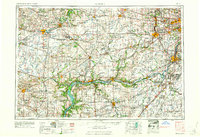 1961 Aurora1961 Print · USGSNorthern Illinois at the height of the post-war era reveals a landscape of massive industrial works and thriving river towns. Genealogists and historians can trace the paths of the Lincoln Highway or locate long-standing landmarks like the Green River Ordnance Plant and Starved Rock State Park.
 - 1962 Map of Joliet, 1963 Print
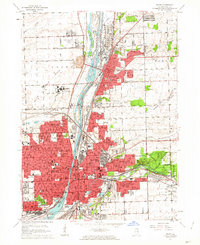 1962 Joliet1963 Print · USGSGreater Joliet and Lockport are captured here in the early sixties, centered on the vital industrial corridor of the Des Plaines River. Researchers can trace the layouts of Stateville State Prison, the historic Illinois and Michigan Canal, and local neighborhoods like Lidice.3 unique versions available
 - 1963 Map of Mokena, 1964 Print
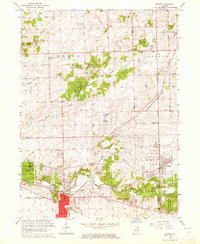 1963 Mokena1964 Print · USGSWill County in the early sixties shows the steady growth of rail-connected villages alongside deep-rooted rural communities. Trace the family names and legacy sites at Brooks Cem, follow the Rock Island Line, or locate long-standing schools like Schmuhl Sch.2 unique versions available
 - 1980 Map of Chicago
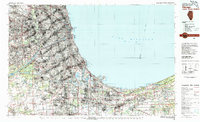 1980 Chicago1980 Print · USGSThe Chicago metropolitan area and the industrial shores of Northwest Indiana are captured here at the start of the 1980s. Genealogists and local historians can trace the vast urban landscape through landmarks like Loyola University, St Casimir Cemetery, and the busy docks of Calumet Harbor.
 - 1984 Map of Kankakee, 1985 Print
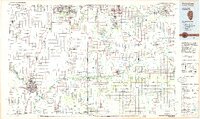 1984 Kankakee1985 Print · USGSThe Illinois-Indiana borderlands appear here in the early eighties as a landscape of river-centered towns and vast managed wetlands. Genealogists and local historians can trace the grounds of the Kankakee State Hospital, the campus of Olivet Nazarene College, and the sprawling Beaver Lake Wildlife Refuge.
Showing maps 1-25 of 56
Top cities near New Lenox
- Chicago historical maps
- Joliet historical maps
- Naperville historical maps
- Bolingbrook historical maps
- Oak Lawn historical maps
- Orland Park historical maps
See more
Top neighborhoods of New Lenox
Frequently asked questions
- What are the different types of historical maps available for New Lenox?
- What is the oldest map of New Lenox?
- Where can I purchase historical maps of New Lenox for my home or office?
- Where can I download high-res historical maps of New Lenox?
- Are there historical topographic maps available for New Lenox?
- Is there historical aerial imagery available for New Lenox?
- Where are historical maps of New Lenox sourced from?