Old Maps of Fulton County, Indiana for Hiking & Exploration
Hike through history with 100 historic maps of Fulton County. Explore old trails, ghost towns, and forgotten backroads — perfect for outdoor adventurers and local explorers.
- Rediscover forgotten places: Map out old mining camps, roads, and footpaths that no longer exist on modern maps.
- Layer with modern tools: Combine with LiDAR or satellite views to plan hikes through historical terrain.
- Made for exploration: Popular among hikers, overlanders, and local history lovers.
Use these maps to find adventure and explore the hidden past of Fulton County.
Fulton County, IN maps
(100)- 1953 Map of Fort Wayne, 1963 Print
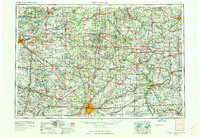 1953 Fort Wayne1963 Print · USGSNortheast Indiana and its neighboring borderlands in Michigan and Ohio appear here during a peak era of rail and road expansion. Researchers can trace the massive rail networks of the Nickel Plate Road and Wabash or locate lakeside landmarks like Lake Wawasee and Clear Lake.4 unique versions available
 - 1953 Map of Chicago, 1964 Print
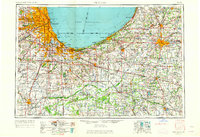 1953 Chicago1964 Print · USGSThe southern Lake Michigan shoreline was rapidly modernizing in the mid-fifties, balancing heavy industry with its famous academic centers. Researchers can trace the footprints of Notre Dame University or locate vanished sites like the Kingsbury Ordnance Plant and Meigs Field.5 unique versions available
 - 1953 Map of Danville, 1965 Print
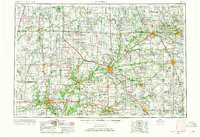 1953 Danville1965 Print · USGSIndiana and Illinois crossroads come to life in this mid-century survey as the interstate era begins to reshape the river-and-rail landscape. Genealogists and collectors can trace the historic paths of the Nickel Plate railroad or locate smaller communities like Veedersburg, Goodland, and Bismarck.3 unique versions available
 - 1953 Map of Muncie, 1966 Print
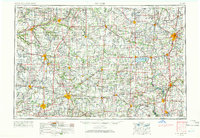 1953 Muncie1966 Print · USGSIndiana and Ohio borderlands thrive in the early fifties, showing a landscape defined by manufacturing cities and an intensive railroad network. Genealogists can trace family roots across the Indiana-Ohio line through Muncie, Celina, and Portland via the Pennsylvania railroad.5 unique versions available
 - 1955 Map of Danville
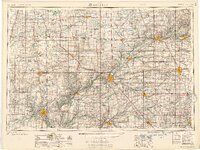 1955 Danville1955 Print · USGSThe Indiana-Illinois borderlands during the mid-fifties reveal a landscape of thriving rail hubs and university towns. Researchers can trace the legacy of Purdue University, the Tippecanoe Battlefield, and the path of the Pennsylvania RR.
 - 1956 Map of Muncie
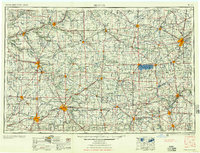 1956 Muncie1956 Print · USGSEastern Indiana and western Ohio are shown at a peak of rail-driven industry in the mid-fifties. Genealogists and rail historians can trace the paths of the Pennsylvania RR through Muncie or locate landmarks like Lake Saint Marys (Grand Lake Reservoir) and Frances Slocum State Forest.
 - 1956 Map of Danville
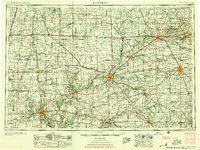 1956 Danville1956 Print · USGSMid-century Indiana and Illinois are captured here as the river-and-rail economy evolved into the modern highway era. Researchers can trace ancestral roots and old transport lines through Logansport, Battle Ground, and the dams at Lake Shafer.
 - 1956 Map of Fort Wayne
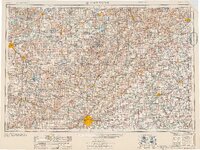 1956 Fort Wayne1956 Print · USGSThe tri-state borderlands of Indiana, Michigan, and Ohio are captured here in the mid-fifties, centered on the growing industrial hub of Fort Wayne. Researchers can trace the heavy rail lines of the New York Central and Pennsylvania alongside prominent water features like Lake Wawasee and the Maumee River.2 unique versions available
 - 1957 Map of Chicago
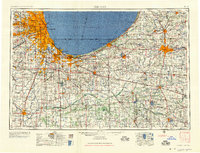 1957 Chicago1957 Print · USGSThe industrial heartland and southern Great Lakes shoreline are captured here during the peak of mid-century growth. Researchers can trace the massive Gary Steel Works, the grounds of the University of Notre Dame, and the early paths of the Tri-State Tollway.
 - 1959 Map of Mentone, 1961 Print
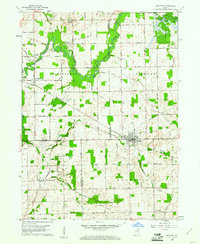 1959 Mentone1961 Print · USGSThe Tippecanoe River valley was a busy agricultural corridor in the late fifties, defined by its complex drainage networks and rail connections. Local historians can trace old community centers like Old Tip Town and Sevastopol, or locate family sites near Summit Chapel and Sycamore Cem.3 unique versions available
 - 1960 Map of Fulton, 1963 Print
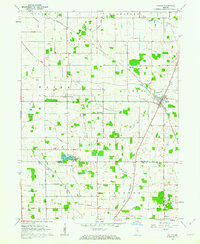 1960 Fulton1963 Print · USGSFulton County agricultural life is centered on the town of Fulton during the mid-twentieth century. Genealogists and historians can trace an extensive network of family-named drainage projects like the Sylvester Maroney Ditch and local landmarks like Olive Branch Ch.2 unique versions available
 - 1960 Map of Macy, 1963 Print
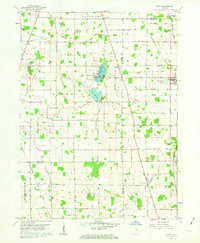 1960 Macy1963 Print · USGSMiami and Fulton counties are captured here in the early 1960s, a period when the rural landscape was defined by its railroad crossings and small townships. Researchers can trace the junction of two major lines at Macy or locate ancestral sites like Mud Lake Chapel and Plainview Cemetery.3 unique versions available
 - 1960 Map of Deedsville, 1963 Print
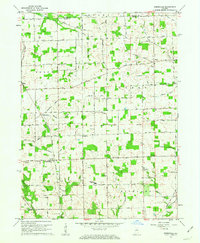 1960 Deedsville1963 Print · USGSMiami County, Indiana, is captured at the dawn of the 1960s, showing a rural landscape defined by the Old Indian Treaty Boundary and the Chicago and St Louis RR. Genealogists and local historians can trace the foundations of Deedsville and find scattered landmarks like Ebenezer Ch and Yike Cem.2 unique versions available
 - 1960 Map of Grass Creek, 1964 Print
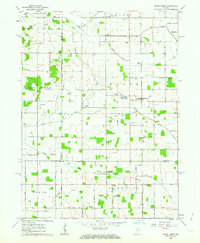 1960 Grass Creek1964 Print · USGSIndiana farm country in the early sixties is defined here by the iron rails of the Pennsylvania and a complex web of drainage ditches. Genealogists can locate family-named sites like Bowman Cem, O'Brien Lake, and the rural West Union Ch.3 unique versions available
 - 1961 Map of Silver Lake, 1963 Print
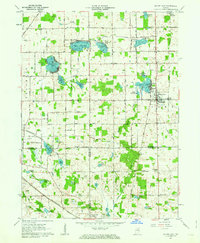 1961 Silver Lake1963 Print · USGSThe lake country of Kosciusko County comes into focus in the early sixties, showing the intersection of rural agriculture and rail-side industry. Genealogists can trace family roots through sites like Graceland Cem, Silver Creek Ch, and the small settlement of Disko.2 unique versions available
 - 1961 Map of Roann, 1963 Print
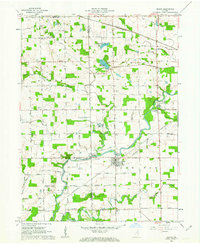 1961 Roann1963 Print · USGSIndiana's Eel River valley comes alive in this early 1960s survey of Wabash and Miami counties. Genealogists and local historians can trace family ties at the Abshire Cem, locate the historic Covered Bridge at Roann, or explore the rail corridors of the Erie-Lackawanna.3 unique versions available
 - 1962 Map of Pershing, 1964 Print
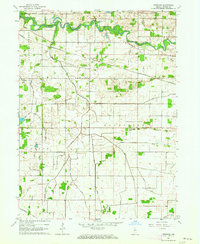 1962 Pershing1964 Print · USGSFulton County agriculture and rail lines are captured here in the early sixties, showing a landscape defined by the Tippecanoe River and a complex drainage system. Genealogists can locate family landmarks like South Germany Cem, Burton Ch, and the small settlement of Pershing.
 - 1962 Map of Akron, 1964 Print
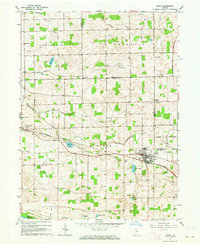 1962 Akron1964 Print · USGSAkron and the Fulton-Kosciusko county line are shown here in the early sixties, a period when rail service still anchored these agricultural townships. Researchers can locate family landmarks such as Bethlehem Ch, Mt Hope Athens Cem, and the small settlement of Athens.3 unique versions available
 - 1962 Map of Kewanna, 1964 Print
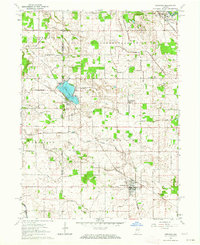 1962 Kewanna1964 Print · USGSFulton County and its agricultural landscape are shown here in the early sixties, centered on the crossroads of Kewanna. Local historians can trace the Indian Treaty Boundary and locate family burial grounds like Shaffer Cem and Moon Cem.2 unique versions available
 - 1962 Map of Argos, 1964 Print
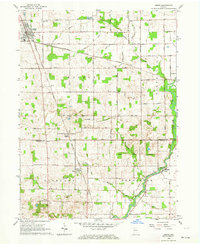 1962 Argos1964 Print · USGSNorthern Indiana's rural landscape is captured here in the early sixties, showing the transition between the agricultural plains and the winding Tippecanoe River. Genealogists can trace local roots through landmarks like the Walnut Ch, McGrew Cem, and the historic Old Indian Treaty Boundary.3 unique versions available
 - 1962 Map of Rochester, 1964 Print
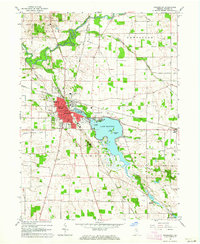 1962 Rochester1964 Print · USGSRochester and the surrounding Fulton County countryside are captured here in the early sixties as a bustling rail and water hub. Researchers can trace family history through sites like Sand Hill Cem, Riddle Sch, and the Mt Zion Millpond.2 unique versions available
 - 1962 Map of Culver, 1964 Print
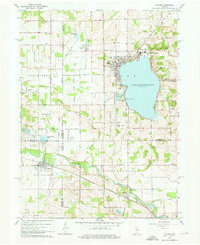 1962 Culver1964 Print · USGSThe Lake Maxinkuckee region in the early sixties is dominated by the prestigious Culver Military Academy and the busy riverfront village of Monterey. Researchers can trace the Old Indian Treaty Boundary and locate family names at North Union Cem and Masonic Cem.3 unique versions available
 - 1962 Map of Rutland, 1964 Print
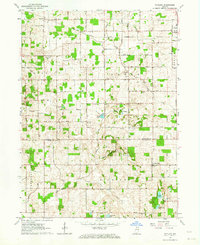 1962 Rutland1964 Print · USGSMarshall and Fulton County farmlands are captured here in the early sixties, split by the historic Old Indian Treaty Bdy. Genealogists can locate family-named landmarks and rural hubs like Poplar Grove Ch, Richland Center, and Rutland.2 unique versions available
 - 1984 Map of Fort Wayne, 1985 Print
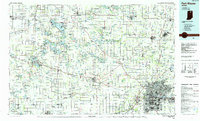 1984 Fort Wayne1985 Print · USGSNortheast Indiana in the mid-1980s reveals a complex landscape of glacial lakes, thriving college towns, and heavy rail infrastructure. Researchers can trace the development of Winona Lake, locate Manchester College in North Manchester, and find rural landmarks like Oakwood Cem or the Tri-County State Fish and Game Area.
 - 1984 Map of Knox, 1985 Print
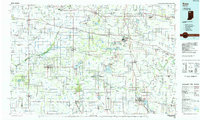 1984 Knox1985 Print · USGSNorthern Indiana's glacial lake country is captured in the mid-eighties, showing a landscape defined by the Kankakee River and major rail lines. Genealogists and historians can trace family ties through lakefront settlements like Lake Maxinkuckee and Bass Lake or the Old Indian Treaty Boundary.2 unique versions available
Showing maps 1-25 of 100
Top cities of Fulton County
Frequently asked questions
- What are the different types of historical maps available for Fulton County?
- What is the oldest map of Fulton County?
- Where can I purchase historical maps of Fulton County for my home or office?
- Where can I download high-res historical maps of Fulton County?
- Are there historical topographic maps available for Fulton County?
- Is there historical aerial imagery available for Fulton County?
- Where are historical maps of Fulton County sourced from?