1950s Maps of Vigo County, Indiana
Explore 14 historic maps of Vigo County from the 1950s. These maps offer a rare glimpse into what life looked like during the 1950s — showing old roads, neighborhoods, homes, and landmarks that have changed or disappeared over time.
Whether you're researching your family's past, planning a metal detecting trip, or studying how Vigo County's landscape evolved across the 1950s, these high-resolution maps are a powerful tool for exploring the history of this region.
- Focus on a specific era: All maps on this page are from the 1950s, giving you a focused view of this time period.
- See what’s changed: Compare century-old streets, trails, and buildings to today's modern landscape using overlays and satellite layers.
- Research with precision: Use these maps for genealogy, historical research, land use analysis, or educational projects.
- View, download, or print: Maps are fully viewable online in high resolution, and can be downloaded or printed for your own records.
Start exploring Vigo County's history through authentic maps from the 1950s. This is your window into the past.
Vigo County, IN maps
(14)- 1950 Map of Rosedale, 1952 Print
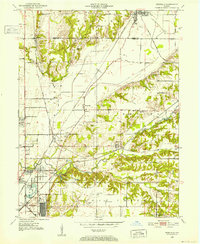 1950 Rosedale1952 Print · USGSThe rail-and-creek landscape of Parke and Vigo counties comes alive in this mid-century survey. Trace family roots and vanished rail stops through settlements like Atherton, Sandcut, and Burnett, or locate country landmarks like Friendship Ch and Markles Cem.2 unique versions available
 - 1950 Map of Brazil West, 1952 Print
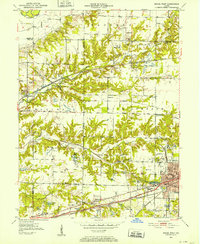 1950 Brazil West1952 Print · USGSClay County's western coalfields are shown in the 1950s as a landscape of active extraction and heavy rail transport. Genealogists and historians can locate numerous rural burial grounds like St Marys Cem alongside vanished industrial sites and the streets of Brazil.
 - 1950 Map of New Goshen, 1952 Print
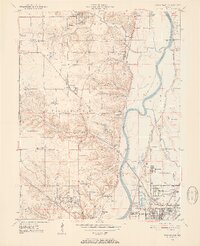 1950 New Goshen1952 Print · USGSVigo County in the early fifties is captured here as a landscape of river-side industry and emerging suburbs north of Terre Haute. Researchers can locate the historic St Mary-of-the-Woods College or trace the path of the Erie Canal (Abandoned) past Shepardsville and Tecumseh.3 unique versions available
 - 1950 Map of Sandford, 1956 Print
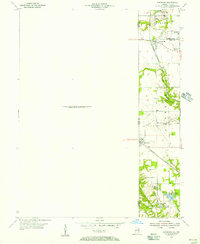 1950 Sandford1956 Print · USGSStraddling the Illinois and Indiana border at the middle of the century, this area reveals a landscape shaped by coal mining and heavy rail. Genealogists can trace family roots in Sandford or Libertyville, or locate Pisgah Ch and the Green Valley Mine.
 - 1952 Map of Lewis, 1953 Print
 1952 Lewis1953 Print · USGSVigo and Sullivan counties during the early fifties reveal a landscape transitioning from the canal era to an intensive mining economy. Genealogists and local historians can trace family roots through numerous landmarks like Fletcher Chapel, Stephens Cem, and the settlement of Lewis.2 unique versions available
 - 1952 Map of Seelyville, 1953 Print
 1952 Seelyville1953 Print · USGSVigo County enters a period of post-war industrial and civic expansion in the early fifties. Genealogists and local historians can trace the foundations of Rose Polytechnic Institute, locate family plots in Highland Lawn Cemetery, and explore the coal-mining heritage near Seelyville and Glen Ayr.2 unique versions available
 - 1952 Map of Hutton, 1953 Print
 1952 Hutton1953 Print · USGSVigo County and the Indiana-Illinois border are shown here during the early fifties, where the river-bound economy met burgeoning oil exploration. Genealogists can trace family footprints at Lykens Cem or locate the old Darwin Ferry crossing on the Wabash River.
 - 1953 Map of Indianapolis, 1965 Print
 1953 Indianapolis1965 Print · USGSCentral Indiana and the Illinois borderlands are captured in the mid-sixties, showing the growth of Indianapolis and its industrial rail corridors. Genealogists and historians can trace the development of outlying towns like Zionsville or Beech Grove and find landmarks such as Atterbury AAF and Turkey Run State Park.4 unique versions available
 - 1956 Map of Indianapolis
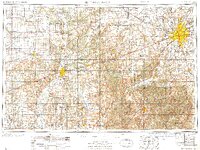 1956 Indianapolis1956 Print · USGSCentral Indiana in the mid-fifties is captured during a period of industrial growth and military presence. Genealogists and historians can trace the rail networks of the New York Central or locate regional landmarks like Fort Benjamin Harrison and Camp Atterbury.
 - 1957 Map of Indianapolis
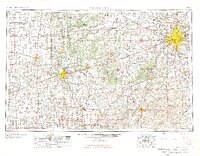 1957 Indianapolis1957 Print · USGSCentral Indiana in the mid-fifties is captured here as a crossroads of major rail lines and nascent federal highways. Genealogists and historians can trace family-named ridges like Poplar Ridge or locate strategic sites like Camp Atterbury and Speedway.2 unique versions available
 - 1957 Map of Saline City, 1958 Print
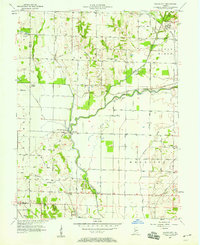 1957 Saline City1958 Print · USGSClay County's rural and industrial character is preserved here in the late fifties, showing the area's transition through mining and rail transport. Researchers can trace the MONON rail lines, locate the Neal Mill Bridge, and find family sites like Stagg Cem or Briley Chapel.4 unique versions available
 - 1958 Map of Staunton, 1959 Print
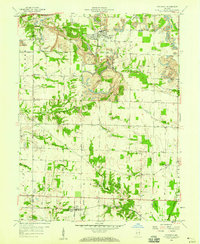 1958 Staunton1959 Print · USGSClay County at the end of the 1950s shows a landscape defined by the rails and the coal seams. You can trace the lineage of local families at Summit Lawn Cem and Mewhinney Cem, or follow the industrial activity of the Pennsylvania railroad near Staunton.4 unique versions available
 - 1958 Map of Pimento, 1959 Print
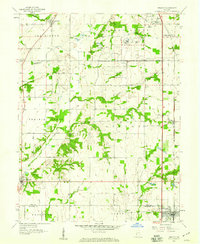 1958 Pimento1959 Print · USGSThe rural border of Vigo and Sullivan counties is captured here in the late fifties, defined by its small farming towns and institutional landmarks. Researchers can trace family roots at New Harmony Cem or follow the Chicago and Eastern Illinois rail line through Pimento and Farmersburg.3 unique versions available
 - 1958 Map of Terre Haute, 1960 Print
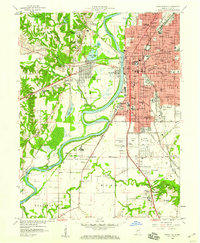 1958 Terre Haute1960 Print · USGSTerre Haute is shown as a bustling rail and industrial hub in the late fifties, dominated by the winding Wabash River. Genealogists can locate family sites across several neighborhoods and cemeteries like Durham Cem, while historians can trace the early layout of the Indiana State Teachers College.3 unique versions available
End of results
Showing maps 1-14 of 14
Top cities of Vigo County
- Terre Haute historical maps
- West Terre Haute historical maps
- Prairieton historical maps
- Prairie Creek historical maps
- Seelyville historical maps
- Riley historical maps
Frequently asked questions
- What are the different types of historical maps available for Vigo County?
- What is the oldest map of Vigo County?
- Where can I purchase historical maps of Vigo County for my home or office?
- Where can I download high-res historical maps of Vigo County?
- Are there historical topographic maps available for Vigo County?
- Is there historical aerial imagery available for Vigo County?
- Where are historical maps of Vigo County sourced from?