Old Maps of Boone County, Iowa for Hiking & Exploration
Hike through history with 149 historic maps of Boone County. Explore old trails, ghost towns, and forgotten backroads — perfect for outdoor adventurers and local explorers.
- Rediscover forgotten places: Map out old mining camps, roads, and footpaths that no longer exist on modern maps.
- Layer with modern tools: Combine with LiDAR or satellite views to plan hikes through historical terrain.
- Made for exploration: Popular among hikers, overlanders, and local history lovers.
Use these maps to find adventure and explore the hidden past of Boone County.
Boone County, IA maps
(149)- 1911 Map of Madrid, 1958 Print
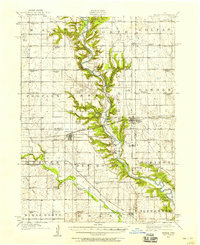 1911 Madrid1958 Print · USGSBoone and Dallas counties appear here in the early twentieth century as a busy corridor of river-valley agriculture and rail transit. Researchers can trace dozens of early rural school sites like Hull School and Gildea School alongside the path of the Inter-Urban Railway.
 - 1911 Map of Slater, 1960 Print
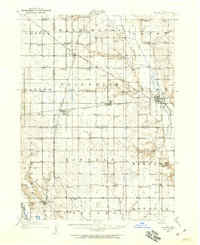 1911 Slater1960 Print · USGSCentral Iowa at the dawn of the twentieth century was a landscape of rail-driven prairie towns and a schoolhouse at nearly every mile. Genealogists can trace the rural roots of local families through specific sites like Nip-and-tuck School, Polk City Junction, and Huxley.
 - 1912 Map of Ames, 1956 Print
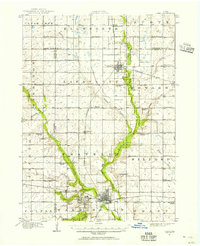 1912 Ames1956 Print · USGSStory and Hamilton counties appear here in the early twentieth century as a thriving network of rail-side towns and rural school districts. Researchers can trace the grounds of Iowa State College or find vanished schoolhouses like Tiernagel School and Hobbs School.3 unique versions available
 - 1913 Map of Slater
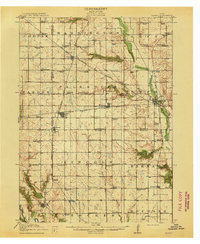 1913 Slater1913 Print · USGSCentral Iowa's farm country and rail corridors are captured here just before the First World War, showing a landscape tightly knit by steam and electric lines. Genealogists can locate dozens of neighborhood landmarks like Nip-and-tuck School, the Sydnes School, and the early plats of Slater and Huxley.2 unique versions available
 - 1914 Map of Madrid
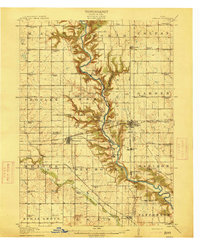 1914 Madrid1914 Print · USGSCentral Iowa's river valleys and prairie townships come alive in the decade before the Great War, showing a landscape defined by rail lines and rural schoolhouses. Genealogists and historians can trace family roots through specific landmarks like Madrid, Woodward, and the Marcy Center School.3 unique versions available
 - 1914 Map of Ames
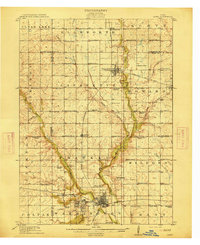 1914 Ames1914 Print · USGSStory County at the start of the twentieth century was a landscape of fertile farmland and burgeoning rail towns like Story City and Ames. Genealogists and researchers can trace the precise locations of dozens of country schoolhouses, including Zenorville School and Espeland School, alongside the grounds of Iowa State College.3 unique versions available
 - 1916 Map of Boone
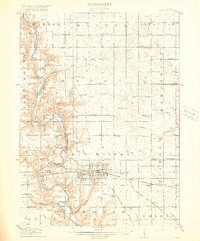 1916 Boone1916 Print · USGSBoone and the Des Moines River valley appear here in the decade before the Great War, showing a landscape defined by deep river bluffs and heavy rail traffic. Genealogists can locate dozens of named rural schools such as Incline School and Coal Valley School, or trace the riverside streets of Moingona and Fraser.3 unique versions available
 - 1950 Map of Perry, 1968 Print
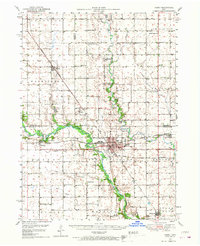 1950 Perry1968 Print · USGSMid-century Dallas and Boone Counties are captured here at a peak of rural development, showing a landscape defined by prairie agriculture and heavy rail. Genealogists can trace family footprints across dozens of country schools like Garfield Sch and churches including Swede Valley Ch.
 - 1951 Map of Perry
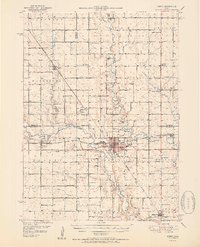 1951 Perry1951 Print · USGSMid-century central Iowa comes into focus in this detailed study of the rail and river corridors surrounding Perry. Genealogists and historians can trace the locations of dozens of country schools and cemeteries, from Prairie View Sch to the Violet Hill Cem.2 unique versions available
 - 1951 Map of Ogden
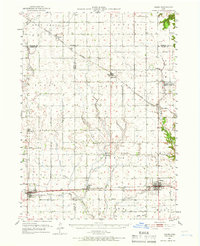 1951 Ogden1951 Print · USGSCentral Iowa's farming heartland is captured here in the early fifties, showing a landscape defined by the intersection of the Chicago North Western and the Fort Dodge Des Moines and Southern. Researchers can trace vanished rural schoolhouses like Kelly Sch and the family history tied to Union Cem or Boxholm.3 unique versions available
 - 1954 Map of Omaha, 1967 Print
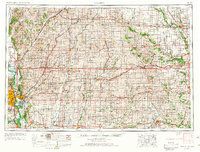 1954 Omaha1967 Print · USGSMid-century development radiates from the river bluffs into the agricultural heartland during this period of post-war growth. Genealogists and historians can trace rail-connected towns like Atlantic and Red Oak or locate the sprawling grounds of Offutt Air Force Base and Manawa Lake.3 unique versions available
 - 1954 Map of Waterloo, 1968 Print
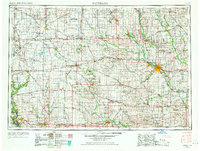 1954 Waterloo1968 Print · USGSCentral Iowa at the height of its mid-century agricultural and rail boom features the growing hubs of Waterloo and Cedar Falls. Genealogists and researchers can trace the rail corridors of the Chicago Great Western and find local landmarks like Iowa State College and Brushy Ridge.4 unique versions available
 - 1954 Map of Fort Dodge, 1968 Print
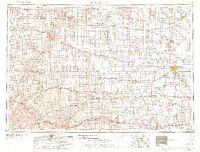 1954 Fort Dodge1968 Print · USGSNorthwest Iowa is shown here during a period of steady industrial and rail activity in the mid-fifties. Researchers can trace the extensive rail lines connecting Fort Dodge to mining and manufacturing sites like Gypsum and Industry Station.3 unique versions available
 - 1954 Map of Des Moines, 1973 Print
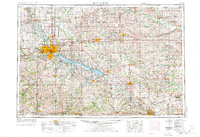 1954 Des Moines1973 Print · USGSCentral Iowa's evolving landscape is captured here in the early seventies, just as major reservoirs were reshaping the river valleys. Genealogists and historians can trace the rail corridors of the Burlington Northern or locate family roots near Pella, Indianola, and Knoxville.2 unique versions available
 - 1955 Map of Waterloo
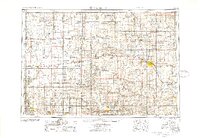 1955 Waterloo1955 Print · USGSCentral Iowa in the mid-fifties presents a dense landscape of rail-connected farming towns and growing river cities. Researchers can trace ancestral roots and old transport routes through Waterloo, Marshalltown, and Ames, while locating rural Cemeteries and local Quarries.2 unique versions available
 - 1956 Map of Des Moines
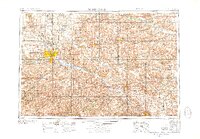 1956 Des Moines1956 Print · USGSCentral Iowa in the mid-fifties shows a landscape defined by bustling rail hubs and deep-rooted agricultural research. Genealogists and researchers can trace the growth of Des Moines and Ames, locate the Sac and Fox Indian Reservation, or study the paths of the Skunk River and South Skunk River.
 - 1957 Map of Des Moines
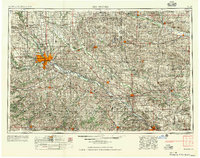 1957 Des Moines1957 Print · USGSCentral Iowa's post-war landscape is defined here by the converging rail lines and river valleys that shaped its earliest settlements. Genealogists and historians can trace the paths of the Rock Island Railroad and locate community landmarks in Des Moines, Ames, and Newton.
 - 1957 Map of Omaha
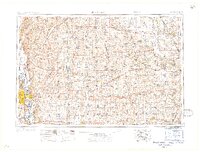 1957 Omaha1957 Print · USGSWestern Iowa and the Missouri River valley are seen here in the mid-fifties during the height of the rail-and-road era. Researchers can trace the sprawling rail lines of the Chicago And North Western or locate Cold War landmarks like Offutt Air Force Base.
 - 1957 Map of Fort Dodge
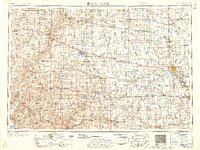 1957 Fort Dodge1957 Print · USGSWest-central Iowa thrived as a network of rail-linked agricultural hubs and river towns during the mid-fifties. Researchers can trace the development of the Des Moines River valley and locate historic landmarks in Fort Dodge, Storm Lake, and Lehigh.
 - 1958 Map of Omaha
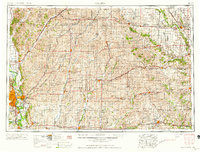 1958 Omaha1958 Print · USGSOmaha and Council Bluffs stand at the center of this mid-fifties landscape, where the Missouri River splits the urban plains of Nebraska from the rolling hills of western Iowa. Genealogists can trace the rail lines of the Wabash RR and Illinois Central RR to rural settlements like Missouri Valley and Red Oak.2 unique versions available
 - 1958 Map of Fort Dodge
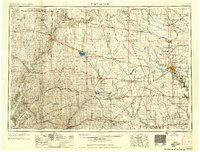 1958 Fort Dodge1958 Print · USGSWestern Iowa in the mid-1950s reveals a productive landscape of river-valley industry and prairie agricultural hubs. Researchers can trace the development of the Des Moines River corridor through Fort Dodge and locate vanished local landmarks near Coalville or Storm Lake.
 - 1965 Map of Granger, 1966 Print
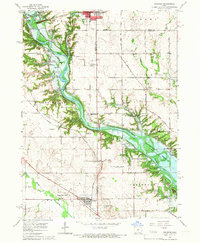 1965 Granger1966 Print · USGSThe Des Moines River valley in the mid-sixties reveals a landscape undergoing transformation as the Saylorville Reservoir takes shape. Genealogists can locate family sites like Granger Homesteads or rural landmarks such as Hopkins Grove Cem and the Chestnut Ford Bridge.2 unique versions available
 - 1965 Map of Mackey, 1966 Print
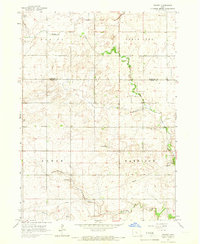 1965 Mackey1966 Print · USGSBoone and Hamilton counties are shown in the mid-1960s as a landscape of rural schoolhouses and family burial grounds. Researchers can trace local lineage at South Marion Cem and Leininger Cem or locate the old St Paul Sch and Mackey.
 - 1965 Map of Fraser, 1966 Print
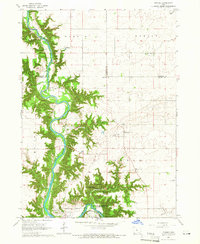 1965 Fraser1966 Print · USGSThe Des Moines River valley in the mid-1960s reveals a rural landscape transitioning toward major hydrological management. Researchers can trace ancestral locations at Hardin Cem or Mineral Ridge Cem and locate vanished landmarks near Ridgeport and Fraser.
 - 1965 Map of Woodward, 1966 Print
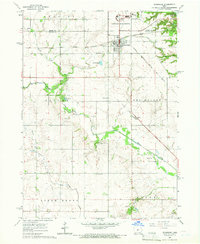 1965 Woodward1966 Print · USGSThe Dallas County prairie in the mid-1960s is defined by its small towns and the sprawling Woodward State Hospital campus. Genealogists and local historians can trace the early reaches of Saylorville Reservoir and locate several rural burial grounds like Xenia and Greenwood Cemetery.
Showing maps 1-25 of 149
Top cities of Boone County
- Boone historical maps
- Madrid historical maps
- Ogden historical maps
- Luther historical maps
- Fraser historical maps
- Berkley historical maps
Frequently asked questions
- What are the different types of historical maps available for Boone County?
- What is the oldest map of Boone County?
- Where can I purchase historical maps of Boone County for my home or office?
- Where can I download high-res historical maps of Boone County?
- Are there historical topographic maps available for Boone County?
- Is there historical aerial imagery available for Boone County?
- Where are historical maps of Boone County sourced from?