1900s (20th Century) Maps of Indiana Township, Iowa
Explore 16 historic maps of Indiana Township from the 1900s (20th Century). These maps offer a rare glimpse into what life looked like during the 1900s — showing old roads, neighborhoods, homes, and landmarks that have changed or disappeared over time.
Whether you're researching your family's past, planning a metal detecting trip, or studying how Indiana Township's landscape evolved across the 1900s, these high-resolution maps are a powerful tool for exploring the history of this region.
- Focus on a specific era: All maps on this page are from the 1900s, giving you a focused view of this time period.
- See what’s changed: Compare century-old streets, trails, and buildings to today's modern landscape using overlays and satellite layers.
- Research with precision: Use these maps for genealogy, historical research, land use analysis, or educational projects.
- View, download, or print: Maps are fully viewable online in high resolution, and can be downloaded or printed for your own records.
Start exploring Indiana Township's history through authentic maps from the 1900s. This is your window into the past.
Indiana Township, IA maps
(16)- 1909 Map of Knoxville, 1958 Print
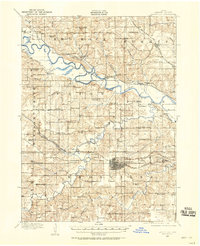 1909 Knoxville1958 Print · USGSMarion County at the start of the twentieth century is a landscape defined by its river valleys and dense network of country schools. Genealogists and historians can trace family roots through dozens of named landmarks like Stringtown School, Mt Vernon Church, and the river town of Red Rock.
 - 1910 Map of Pella, 1958 Print
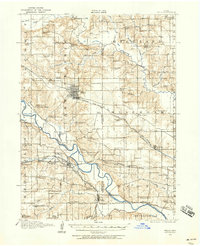 1910 Pella1958 Print · USGSMarion and Mahaska counties at the peak of the rail era show a landscape dotted with country schools and river settlements. Genealogists and historians can locate vanished schoolhouses like Bunker Hill School and trace the paths of the Chicago Rock Island and Pacific through Pella and Leighton.2 unique versions available
 - 1912 Map of Knoxville
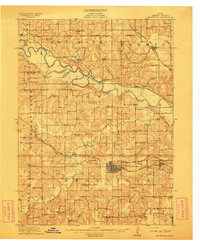 1912 Knoxville1912 Print · USGSMarion County at the dawn of the twentieth century was a landscape of bustling rail towns and river crossings. Genealogists can trace the exact locations of dozens of rural schoolhouses and churches like Stringtown School and Mt Vernon Church alongside the Des Moines River.2 unique versions available
 - 1912 Map of Pella
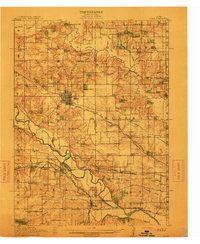 1912 Pella1912 Print · USGSThe river valleys of Marion County come alive in this pre-World War I portrait of a thriving agricultural and rail corridor. Researchers can pinpoint early homesteads near dozens of rural landmarks, including Pella, Salem Church, and the West Amsterdam School.2 unique versions available
 - 1924 Map of Melcher
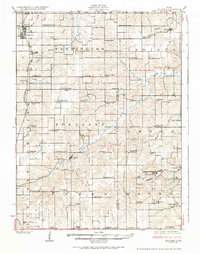 1924 Melcher1924 Print · USGSSouth-central Iowa thrives during the 1920s coal boom, where rail lines and mine shafts transformed the rural landscape. Trace the growth of mining towns like Tipperary and Bucknell, and locate vanished local schools such as Coal Glen School.3 unique versions available
 - 1929 Map of Albia
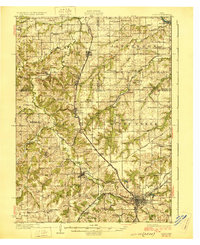 1929 Albia1929 Print · USGSMonroe County was a bustling coal and rail corridor during the late twenties, anchored by the junction at Albia. Genealogists and historians can trace defunct mining camps like Hiteman and dozens of rural school sites such as Halfway Prairie Sch.3 unique versions available
 - 1954 Map of Des Moines, 1973 Print
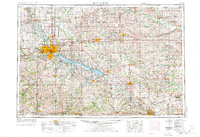 1954 Des Moines1973 Print · USGSCentral Iowa's evolving landscape is captured here in the early seventies, just as major reservoirs were reshaping the river valleys. Genealogists and historians can trace the rail corridors of the Burlington Northern or locate family roots near Pella, Indianola, and Knoxville.2 unique versions available
 - 1956 Map of Des Moines
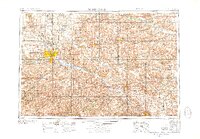 1956 Des Moines1956 Print · USGSCentral Iowa in the mid-fifties shows a landscape defined by bustling rail hubs and deep-rooted agricultural research. Genealogists and researchers can trace the growth of Des Moines and Ames, locate the Sac and Fox Indian Reservation, or study the paths of the Skunk River and South Skunk River.
 - 1957 Map of Des Moines
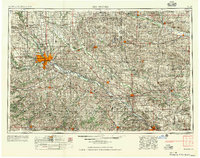 1957 Des Moines1957 Print · USGSCentral Iowa's post-war landscape is defined here by the converging rail lines and river valleys that shaped its earliest settlements. Genealogists and historians can trace the paths of the Rock Island Railroad and locate community landmarks in Des Moines, Ames, and Newton.
 - 1965 Map of Knoxville, 1966 Print
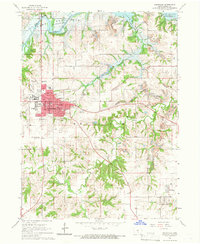 1965 Knoxville1966 Print · USGSKnoxville and its surrounding coalfields are captured in the mid-sixties, just as the landscape was being reshaped by the rising waters of Lake Red Rock. Researchers can trace the era's industry and community through numerous Strip Mines and rural landmarks like Zion Ch and Graceland Cem.2 unique versions available
 - 1969 Map of Des Moines
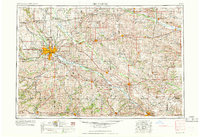 1969 Des Moines1969 Print · USGSCentral Iowa's fertile plains and growing capital are captured here during the late sixties, a time of major highway expansion and reservoir construction. Genealogists and researchers can trace rural township boundaries, local cemeteries, and rail lines serving towns like Pella, Grinnell, and Oskaloosa.
 - 1980 Map of Harvey
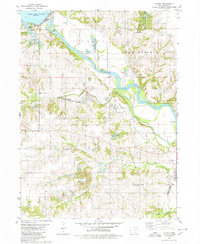 1980 Harvey1980 Print · USGSMarion County's river valley is captured here in the late seventies, showing the rail-and-river economy near Harvey. Genealogists can trace family locations through several rural cemeteries like Eureka Cem and Brecke Ridge Cem or the small settlement of Tracy.
 - 1982 Map of Oskaloosa
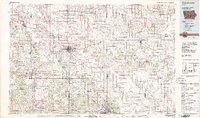 1982 Oskaloosa1982 Print · USGSSoutheast Iowa's river valleys and rail hubs are meticulously detailed in the early eighties, showing a landscape of productive farmland and growing municipal centers. Researchers can trace the legacy of small-town life and local industry through features like Union Mills, What Cheer, and the extensive Burlington Northern rail network.
 - 1982 Map of Lovilia, 1983 Print
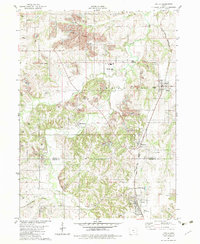 1982 Lovilia1983 Print · USGSThe Marion and Monroe county border was defined by heavy industry and small-town life in the early eighties. Genealogists can trace family burial sites at Woodlawn Cem and Greenlawn Cem while exploring the impact of Strip Mines on Lovilia and Bussey.
 - 1982 Map of Attica, 1983 Print
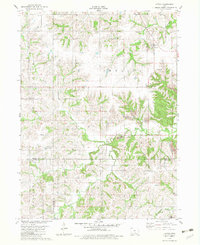 1982 Attica1983 Print · USGSThe rural landscape of Marion County in the early eighties reveals a mix of upland farming and active industrial sites. Genealogists can locate several family cemeteries such as Hogeland Cem and Oak Dale Cem, while researchers can trace local coal history through the Strip Mines near Indiana Chapel.
 - 1984 Map of Indianola
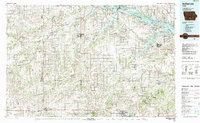 1984 Indianola1984 Print · USGSSouth-central Iowa in the mid-1980s reveals a patchwork of established rail hubs and significant new conservation areas. Trace the Chicago and North Western rail lines and explore rural landmarks like Lake Ahquabi State Park or the Strip Mine near Knoxville.
End of results
Showing maps 1-16 of 16
Top cities near Indiana Township
- Pella historical maps
- Knoxville historical maps
- Albia historical maps
- Pleasantville historical maps
- Melcher-Dallas historical maps
- Lovilia historical maps
See more
Top neighborhoods of Indiana Township
Frequently asked questions
- What are the different types of historical maps available for Indiana Township?
- What is the oldest map of Indiana Township?
- Where can I purchase historical maps of Indiana Township for my home or office?
- Where can I download high-res historical maps of Indiana Township?
- Are there historical topographic maps available for Indiana Township?
- Is there historical aerial imagery available for Indiana Township?
- Where are historical maps of Indiana Township sourced from?