1900s (20th Century) Maps of Muscatine County, Iowa
Explore 35 historic maps of Muscatine County from the 1900s (20th Century). These maps offer a rare glimpse into what life looked like during the 1900s — showing old roads, neighborhoods, homes, and landmarks that have changed or disappeared over time.
Whether you're researching your family's past, planning a metal detecting trip, or studying how Muscatine County's landscape evolved across the 1900s, these high-resolution maps are a powerful tool for exploring the history of this region.
- Focus on a specific era: All maps on this page are from the 1900s, giving you a focused view of this time period.
- See what’s changed: Compare century-old streets, trails, and buildings to today's modern landscape using overlays and satellite layers.
- Research with precision: Use these maps for genealogy, historical research, land use analysis, or educational projects.
- View, download, or print: Maps are fully viewable online in high resolution, and can be downloaded or printed for your own records.
Start exploring Muscatine County's history through authentic maps from the 1900s. This is your window into the past.
Muscatine County, IA maps
(35)- 1901 Map of Rock Island
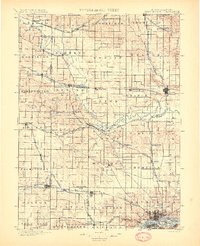 1901 Rock Island1901 Print · USGSThe eastern Iowa borderlands and the Mississippi River confluence thrive during the rail boom of the late nineteenth century. Genealogists and historians can trace family roots through numerous small settlements like Lost Nation, Grand Mound, and the vital U. S. Arsenal grounds.2 unique versions available
 - 1901 Map of Stanwood
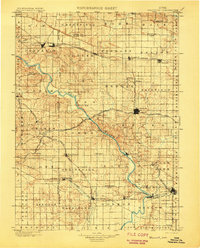 1901 Stanwood1901 Print · USGSEastern Iowa is defined by its fertile plains and busy rail corridors at the turn of the century. Genealogists and historians can trace the early layouts of Tipton, West Liberty, and Mt. Vernon, alongside vanished stopping points like Lime City and Walden.2 unique versions available
 - 1910 Map of Rock Island, 1949 Print
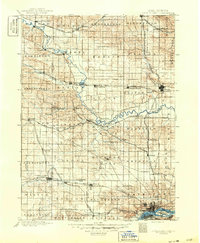 1910 Rock Island1949 Print · USGSEastern Iowa and the Illinois borderlands come alive in this late nineteenth-century survey of the river valleys and rail hubs. Genealogists and historians can trace old homesteads near Lost Nation, the early streets of Dewitt, and the sprawling U.S. Arsenal.
 - 1916 Map of Edgington
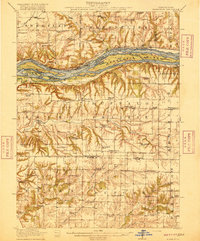 1916 Edgington1916 Print · USGSThe river-and-rail corridor along the Mississippi border emerges in high detail during the early twentieth century. Genealogists and local historians can trace the rural landscape through a dense network of country schools like Whiteoak School and New Era, alongside river features like Geneva Island.3 unique versions available
 - 1938 Map of Edgington, 1955 Print
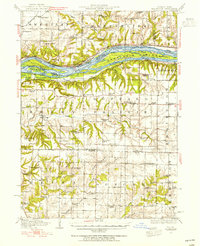 1938 Edgington1955 Print · USGSThe Mississippi River corridor in the late thirties shows a landscape of active rail lines and riverfront industry. Genealogists can trace rural family roots through numerous local landmarks like Jimtown, White Eagle School, and Buffalo Center School.
 - 1948 Map of Muscatine
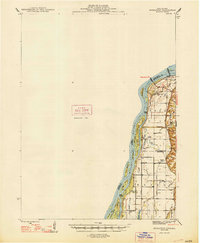 1948 Muscatine1948 Print · USGSThe Mississippi River bottomlands along the Iowa-Illinois border are captured here in the late 1940s, showing a transition from river commerce to intensive drainage agriculture. Researchers can trace rural school districts like Lillibridge Sch and local landmarks such as the Muscatine Bridge and Glancey Lake.2 unique versions available
 - 1953 Map of Wilton Junction, 1956 Print
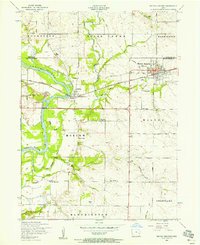 1953 Wilton Junction1956 Print · USGSWilton and Moscow thrived along the rail lines and riverbanks of eastern Iowa during the mid-fifties. Genealogists and historians can trace the locations of numerous rural institutions, from Oakdale Cemetery and Peace Church to Champion Hill School and the local Moscow Airport.2 unique versions available
 - 1953 Map of Blanchard Island, 1958 Print
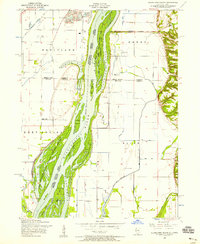 1953 Blanchard Island1958 Print · USGSThe Mississippi River bottomlands between Illinois and Iowa are captured here in the early fifties, showing a landscape of complex chutes and islands. Genealogists can locate rural landmarks like Island Church, Reynolds Cemetery, and several local schools such as Excelsior School.2 unique versions available
 - 1953 Map of Illinois City, 1958 Print
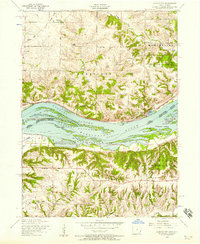 1953 Illinois City1958 Print · USGSThe Mississippi River forms a maze of sloughs and islands between Illinois and Iowa in the early fifties. Genealogists and historians can locate Illinois City, the dismantled Rock Island and Pacific railroad, and Harker Cemetery.2 unique versions available
 - 1953 Map of Walcott, 1958 Print
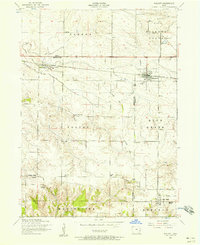 1953 Walcott1958 Print · USGSThe rural landscape of Scott and Muscatine counties thrived in the early 1950s around a busy network of country schools and the Rock Island railroad. Researchers can trace family ties at Parr Cemetery, Stockton Consolidated School, and the community of Blue Grass.2 unique versions available
 - 1953 Map of Montpelier, 1958 Print
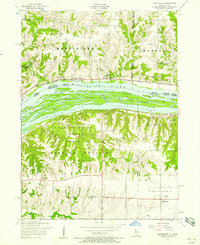 1953 Montpelier1958 Print · USGSThe Mississippi River corridor near the Iowa-Illinois border is captured here during the 1950s, showing a landscape of riverfront recreation and rural industry. Researchers can find the Old Pine Creek Mill, early schools like White Lake School, and the community at Edgington.3 unique versions available
 - 1953 Map of Muscatine, 1958 Print
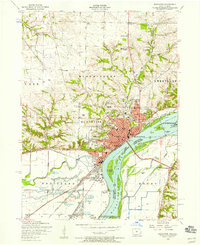 1953 Muscatine1958 Print · USGSMuscatine and the Mississippi River bottomlands are captured here in the early 1950s, showing a bustling rail and river economy. Genealogists can locate family landmarks like Spangler Church, Mittman School, and the old County Home.3 unique versions available
 - 1953 Map of Durant, 1958 Print
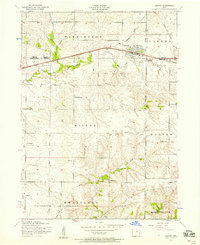 1953 Durant1958 Print · USGSEastern Iowa farmland at the start of the fifties is captured here, centered on the tri-county junction of Cedar, Muscatine, and Scott. Genealogists can trace rural life through a dense network of country schools like Yankee Hollow School and old burial grounds such as Melpine Cemetery.2 unique versions available
 - 1953 Map of Edgington, 1960 Print
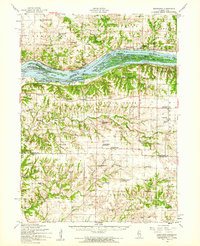 1953 Edgington1960 Print · USGSThe Mississippi River valley comes alive in the early fifties, showing a landscape of sloughs and islands between Iowa and Illinois. Researchers can trace rural lineages through the Buffalo Prairie Cem, Sweetland Center, and dozens of named schoolhouses.
 - 1958 Map of Davenport, 1968 Print
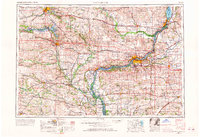 1958 Davenport1968 Print · USGSEastern Iowa and western Illinois thrive along the river during the late fifties, defined by the industrial Quad Cities and a robust rail network. Genealogists can trace family roots through settlements like Oasis and Stanwood or along the Cedar River.2 unique versions available
 - 1961 Map of Davenport
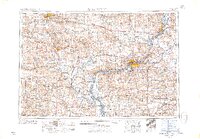 1961 Davenport1961 Print · USGSThe Quad Cities and the eastern Iowa riverlands are captured here in the early sixties, showing the region's transition into a modern industrial and transit hub. Genealogists and historians can trace the paths of major railroads and find river landmarks like Rock Island Arsenal, Huron Island, and the Coralville Reservoir.
 - 1962 Map of Davenport
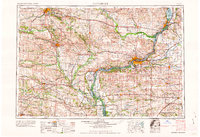 1962 Davenport1962 Print · USGSThe Quad Cities and the Mississippi River corridor are shown at their industrial peak just before the interstate era fully transformed the region. Researchers can trace the sprawling rail networks of the Chicago Rock Island and Pacific and find landmarks like the Rock Island Arsenal and Wild Cat Den State Park.
 - 1965 Map of West Liberty, 1966 Print
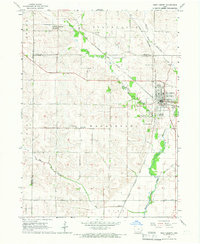 1965 West Liberty1966 Print · USGSMid-century Muscatine County is centered here on the busy rail junction of West Liberty and the surrounding prairie farmsteads. Researchers can trace family history through numerous rural landmarks like South Prairie Grange Hall, Oak Ridge Cemetery, and the settlement at Downey.
 - 1965 Map of Letts, 1966 Print
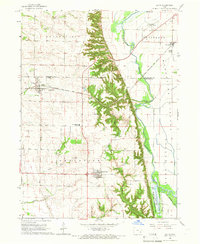 1965 Letts1966 Print · USGSEastern Iowa's riverine border comes into focus in the mid-sixties, where the Muscatine Slough meets the developed farmsteads of the interior. Genealogists and local historians can trace family plots at Lettsville Cem or Thompson Cem and locate landmarks like Gospel Hall Ch.
 - 1965 Map of Muscatine NW, 1966 Print
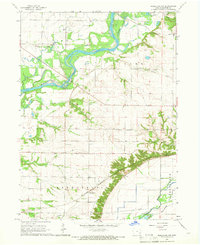 1965 Muscatine NW1966 Print · USGSMuscatine County during the mid-sixties reveals a landscape defined by the winding Cedar River and the active Chicago Milwaukee St Paul and Pacific rail line. Researchers can locate community anchors like Ardon, St Malachys Ch, and various family burial sites like Houtz Cem.
 - 1965 Map of Atalissa, 1966 Print
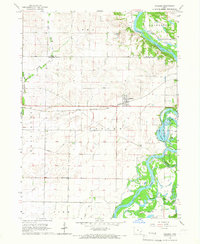 1965 Atalissa1966 Print · USGSMuscatine and Cedar Counties are captured in the mid-1960s, showing the agricultural heartland centered on the Atalissa rail corridor. Genealogists can locate family sites like Timberlake Cem and Overman Cem near the Wiese Slough.
 - 1970 Map of Columbus Junction, 1972 Print
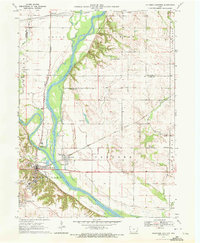 1970 Columbus Junction1972 Print · USGSLouisa and Muscatine Counties are captured here in the early 1970s at the strategic meeting of the rivers. Genealogists can trace rural roots through several local burial grounds like Newell Cem and Concord Cem or the community life at the Fairground.
 - 1970 Map of Nichols, 1972 Print
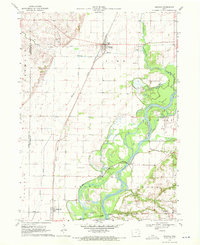 1970 Nichols1972 Print · USGSThe river and rail networks of Muscatine and Louisa counties are meticulously detailed in the early 1970s. Trace family history through numerous burial sites like Lone Tree Cem and Brockway Cem, or follow the legacy of the Chicago Rock Island and Pacific railroad through Nichols.2 unique versions available
 - 1984 Map of Iowa City, 1985 Print
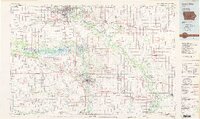 1984 Iowa City1985 Print · USGSEastern Iowa in the mid-eighties shows a landscape of expanding university towns and river-fed conservation lands. Genealogists and local historians can trace the rural networks connecting Iowa City to smaller outposts like West Branch, Solon, and Atalissa.2 unique versions available
 - 1984 Map of Muscatine, 1985 Print
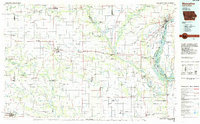 1984 Muscatine1985 Print · USGSThe Mississippi River corridor and Iowa prairie meet in the 1980s, showcasing a landscape of river navigation and agricultural heartland. Genealogists and researchers can locate old schools and landmarks like Maharishi International University, Elm Grove Cem, and Lock & Dam No 16.2 unique versions available
Showing maps 1-25 of 35
Top cities of Muscatine County
- Muscatine historical maps
- West Liberty historical maps
- Wilton historical maps
- Fruitland historical maps
- Conesville historical maps
- Nichols historical maps
See more
Frequently asked questions
- What are the different types of historical maps available for Muscatine County?
- What is the oldest map of Muscatine County?
- Where can I purchase historical maps of Muscatine County for my home or office?
- Where can I download high-res historical maps of Muscatine County?
- Are there historical topographic maps available for Muscatine County?
- Is there historical aerial imagery available for Muscatine County?
- Where are historical maps of Muscatine County sourced from?