Old Maps of Wayne County, Iowa for Metal Detecting
Plan your next treasure hunt with 130 historic maps of Wayne County. Find old homesites, ghost towns, trails, and gathering spots that may be lost to time — perfect for identifying promising metal detecting locations.
- Locate forgotten sites: Uncover places like long-lost settlements, abandoned rail lines, or gathering spots.
- Plan better hunts: Use map overlays combined with LiDAR or satellite views to narrow in on historically rich areas.
- Made for detectorists: Thousands of hobbyists use these maps to discover relics, coins, and hidden history.
Use these historic maps to boost your research and find new opportunities beneath the surface of Wayne County.
Wayne County, IA maps
(130)- 1934 Map of Humeston
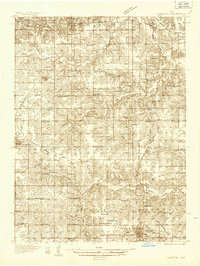 1934 Humeston1934 Print · USGSSouthern Iowa farmland and small-town commerce define this 1930s landscape, where rail lines and river branches meet. Genealogists can trace family roots at Humeston and Corydon or locate rural landmarks like Eden Ch and the Wayne County Farm.3 unique versions available
 - 1935 Map of Russell, 1958 Print
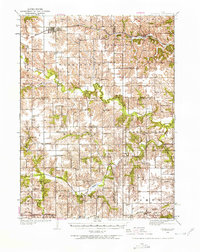 1935 Russell1958 Print · USGSSouthern Iowa in the mid-thirties was a landscape of river-valley farms and rail-connected towns like Russell and Melrose. Researchers can trace old township school locations such as Brush College Sch and Rabbit Hill Sch or locate the New York Cem.2 unique versions available
 - 1937 Map of Corydon
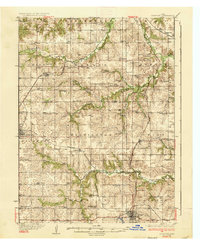 1937 Corydon1937 Print · USGSWayne County and the city of Corydon are captured in the mid-1930s, showing a landscape tightly organized around rail transport and rural education. Genealogists and historians can trace dozens of country schools and churches like Rabbit Ridge Sch, Brown Jug Sch, and Eden Ch.2 unique versions available
 - 1938 Map of Russell
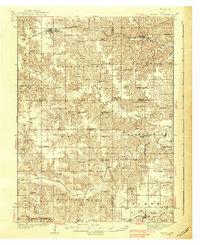 1938 Russell1938 Print · USGSSouthern Iowa's rural school and rail network are preserved here during the mid-1930s. Genealogists can trace family footprints across dozens of local landmarks like Hilledgeville Cem, Rabbit Hill Sch, and the settlement of Confidence.2 unique versions available
 - 1942 Map of Seymour, 1954 Print
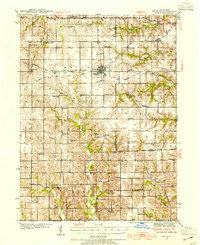 1942 Seymour1954 Print · USGSSouthern Iowa and the Missouri borderlands are captured here just as the rural schoolhouse era reached its peak. Genealogists can trace family roots through dozens of local landmarks like Genoa Cem, Locust Valley Mine, and the Kniffin Sch.
 - 1944 Map of Seymour
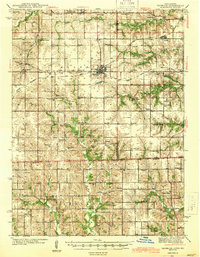 1944 Seymour1944 Print · USGSSouthern Iowa and northern Missouri are captured here in the early 1940s, showing a landscape defined by crossing rail lines and small-town junctions. Genealogists can locate numerous country schools and burial sites like Genoa Cem, Schultz Cem, and Happy Hollow Sch.2 unique versions available
 - 1954 Map of Centerville, 1967 Print
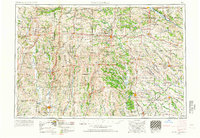 1954 Centerville1967 Print · USGSThe Iowa-Missouri borderlands at mid-century reveal a landscape shaped by river valleys and the height of the regional rail network. Genealogists and historians can trace the paths of the Wabash railroad and locate old townsites like Mystic, Moulton, and Greentop.3 unique versions available
 - 1957 Map of Centerville
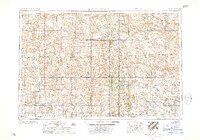 1957 Centerville1957 Print · USGSThe Iowa-Missouri borderlands in the mid-fifties reveal a landscape of river-valley agriculture and vital rail corridors. Genealogists and historians can trace family-named landmarks and small-town growth in Centerville, Kirksville, and along the Wabash railroad line.
 - 1958 Map of Centerville
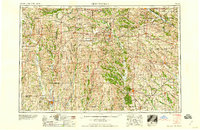 1958 Centerville1958 Print · USGSThe Iowa-Missouri borderlands come into focus during the mid-fifties, showing a landscape defined by river valleys and intersecting rail lines. Genealogists and local historians can trace family roots through dozens of rural hubs like Bloomfield, Unionville, and Corydon.
 - 1964 Map of Woodland, 1965 Print
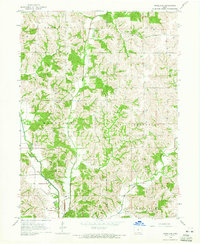 1964 Woodland1965 Print · USGSThe rural landscape of Decatur and Wayne Counties is captured in the mid-1960s, showing a well-established network of farms and country roads. Genealogists can locate several family-named burial sites like Gollough Cem and Corder Cem or the local Spring Branch Ch.
 - 1964 Map of Allerton, 1966 Print
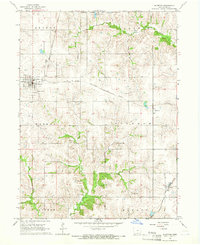 1964 Allerton1966 Print · USGSWayne County farming communities and rail junctions are captured here in the mid-1960s, showing the intersection of major transit lines and rural life. Genealogists can locate several family burial grounds like Sturgeon Cem and Corydon Cem, or trace the tracks of the Chicago Milwaukee St Paul and Pacific through Sewal.
 - 1964 Map of Cleopatra, 1966 Print
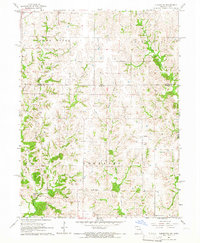 1964 Cleopatra1966 Print · USGSThe Missouri-Iowa borderlands come to life in the mid-1960s, showing a rural landscape anchored by small settlements and family farms. Researchers can trace local genealogy and land use through landmarks like Cleopatra, Epworth Ch, and the Laughlin Cem.
 - 1964 Map of Clio, 1966 Print
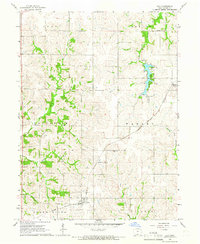 1964 Clio1966 Print · USGSWayne County farmland and the waters of Bob White State Park define this Iowa landscape in the mid-1960s. Genealogists can locate family sites at Hazel Dell Cem and Greenridge Cem along the Rock Island railroad line.
 - 1964 Map of Powersville, 1966 Print
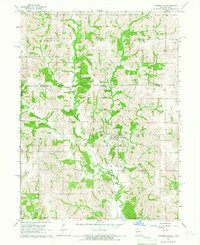 1964 Powersville1966 Print · USGSThe Missouri-Iowa borderlands come to life in the mid-sixties, centered on the railroad village of Powersville. Genealogists can trace local roots across numerous burial sites like Wyreka Cem, Edmond Cem, and the tracks of the Milwaukee Road.
 - 1964 Map of Lineville, 1966 Print
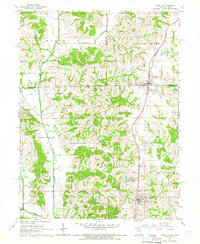 1964 Lineville1966 Print · USGSThe Iowa-Missouri border country comes to life in this mid-sixties survey of the Lineville and Mercer area. Trace family history through numerous rural cemeteries like Evergreen Cemetery and White Oak Cem, or follow the Chicago Rock Island and Pacific rail line.
 - 1965 Map of Le Roy, 1966 Print
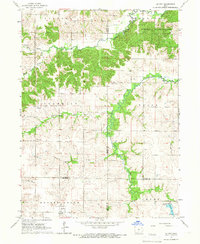 1965 Le Roy1966 Print · USGSSouthern Iowa's rural landscape at the crossroads of four counties is captured here in the mid-1960s. Researchers can trace the path of the Old Railroad Grade or find family sites like Smyrna Cem and the settlement of Last Chance.
 - 1965 Map of Garden Grove, 1967 Print
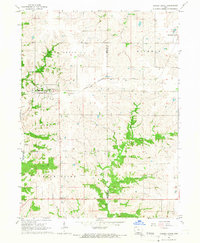 1965 Garden Grove1967 Print · USGSDecatur and Wayne Counties are captured in the mid-1960s, showing the agricultural rhythm of southern Iowa before modernization reshaped its rural landscape. Researchers can trace family roots at Green Bay Cem. or locate regional landmarks like the Chicago Burlington and Quincy railroad and the local Drive-in Theater.
 - 1966 Map of Confidence, 1967 Print
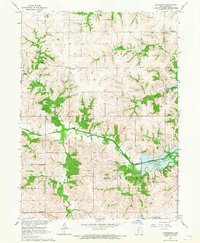 1966 Confidence1967 Print · USGSWayne County saw significant changes in the 1960s as traditional farming communities met new infrastructure projects. Researchers can trace the layout of Bethlehem and Confidence or locate family sites at New York Cem and Sunnyslope Sch.
 - 1966 Map of Russell, 1967 Print
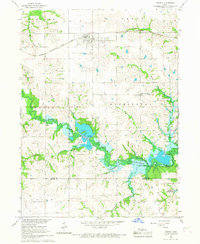 1966 Russell1967 Print · USGSThe Lucas and Wayne County borderlands are seen here in the mid-sixties, just as the landscape was being reshaped by the coming Rathbun Reservoir. Genealogists and historians can trace the rail corridor of the Chicago Burlington and Quincy and locate local sites like Ragtown Cem and Center Community Ch.
 - 1966 Map of Plano, 1967 Print
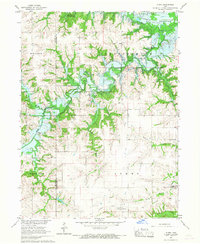 1966 Plano1967 Print · USGSSouthern Iowa is shown here just as the landscape was being reshaped by the rising waters of the Rathbun Reservoir. Genealogists and local historians can trace the foundations of this rural community through the Philadelphia Ch, Jones Cem, and an Old Railroad Grade.
 - 1979 Map of Lake Thunderhead, 1980 Print
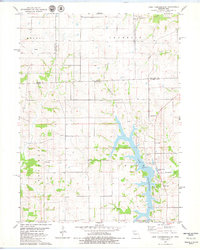 1979 Lake Thunderhead1980 Print · USGSThe Missouri-Iowa borderlands underwent significant change in the late seventies as the waters of Lake Thunderhead reshaped the terrain. Genealogists and local historians can locate long-standing landmarks like Genoa, Franklin Ch, and Union Cem alongside newer developments.
 - 1979 Map of St. John, 1980 Print
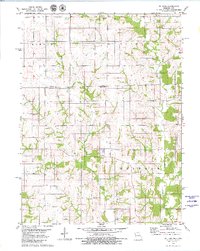 1979 St. John1980 Print · USGSThe Iowa and Missouri borderlands are captured here in the late seventies, showing the rural junction of Wayne and Putnam counties. Genealogists can locate family landmarks like Harris Cem, Torrey Cem, and the quiet settlement of St John.
 - 1979 Map of Seymour East, 1980 Print
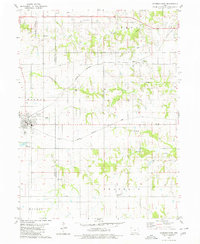 1979 Seymour East1980 Print · USGSThe borderlands of Wayne and Appanoose Counties are captured here in the late seventies, showing a landscape shaped by competing rail lines. Genealogists and local historians can locate several rural landmarks including Little Flock Chapel, Crossroads Cem, and the settlement of Jerome.
 - 1979 Map of Seymour West, 1980 Print
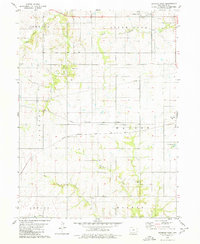 1979 Seymour West1980 Print · USGSWayne County agriculture and rail transportation intersect in the late 1970s near the settlements of Promise City and Seymour. Genealogists and historians can trace defunct routes like the Old RR Gr or locate family burial sites at Bollman Cem.
 - 1981 Map of Leon, 1982 Print
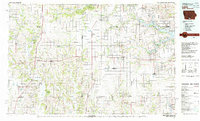 1981 Leon1982 Print · USGSSouthern Iowa and northern Missouri are captured here in the early eighties as the rural landscape balances traditional agriculture with large-scale water management. Researchers can trace the path of the Burlington Northern through Leon or locate early settlements like Decatur City and New Buda.
Showing maps 1-25 of 130
Top cities of Wayne County
- Corydon historical maps
- Seymour historical maps
- Humeston historical maps
- Allerton historical maps
- Lineville historical maps
- Promise City historical maps
See more
Frequently asked questions
- What are the different types of historical maps available for Wayne County?
- What is the oldest map of Wayne County?
- Where can I purchase historical maps of Wayne County for my home or office?
- Where can I download high-res historical maps of Wayne County?
- Are there historical topographic maps available for Wayne County?
- Is there historical aerial imagery available for Wayne County?
- Where are historical maps of Wayne County sourced from?