1900s (20th Century) Maps of Burr Oak, Iowa
Explore 8 historic maps of Burr Oak from the 1900s (20th Century). These maps offer a rare glimpse into what life looked like during the 1900s — showing old roads, neighborhoods, homes, and landmarks that have changed or disappeared over time.
Whether you're researching your family's past, planning a metal detecting trip, or studying how Burr Oak's landscape evolved across the 1900s, these high-resolution maps are a powerful tool for exploring the history of this region.
- Focus on a specific era: All maps on this page are from the 1900s, giving you a focused view of this time period.
- See what’s changed: Compare century-old streets, trails, and buildings to today's modern landscape using overlays and satellite layers.
- Research with precision: Use these maps for genealogy, historical research, land use analysis, or educational projects.
- View, download, or print: Maps are fully viewable online in high resolution, and can be downloaded or printed for your own records.
Start exploring Burr Oak's history through authentic maps from the 1900s. This is your window into the past.
Burr Oak, IA maps
(8)- 1906 Map of Decorah
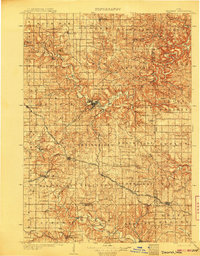 1906 Decorah1906 Print · USGSNortheast Iowa at the turn of the century was a land of intricate river valleys and vital railroad junctions. Genealogists can trace the early rail-and-river economy through landmarks like Decorah, the historic site of Fort Atkinson, and the junction at Calmar.3 unique versions available
 - 1958 Map of La Crosse, 1979 Print
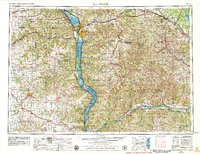 1958 La Crosse1979 Print · USGSThe Driftless Area of Wisconsin and Iowa is captured here during the late seventies, showing the intricate river valleys and ridge-top settlements. Genealogists and historians can trace the rail corridors of the Soo Line or locate landmarks like Grandad Bluff and Effigy Mounds National Monument.2 unique versions available
 - 1961 Map of La Crosse
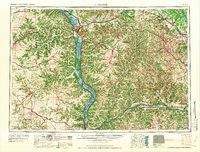 1961 La Crosse1961 Print · USGSThe Driftless Area at the start of the 1960s reveals a complex network of river towns and rail lines along the Mississippi River. Genealogists and historians can trace old settlements like New Amsterdam and Wyattville or locate major landmarks like Camp McCoy Military Reservation and Effigy Mounds National Monument.
 - 1965 Map of La Crosse
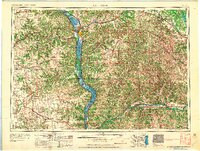 1965 La Crosse1965 Print · USGSThe Driftless Area and the Upper Mississippi valley are captured here during a period of steady mid-century growth. Researchers can trace the rail lines of the Chicago and North Western or locate riverfront sites like Effigy Mounds National Monument and the Camp McCoy Military Reservation.
 - 1975 Map of Decorah 2 NE, 1977 Print
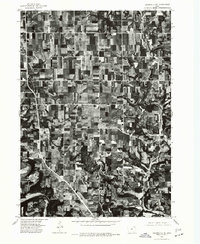 1975 Decorah 2 NE1977 Print · USGSWinneshiek County farmland and rural homesteads are shown at the height of the mid-seventies, revealing the exact layout of the countryside. Genealogists and local historians can trace property boundaries near Burr Oak and Hesper, or follow the banks of the Upper Iowa River.
 - 1976 Map of La Crosse
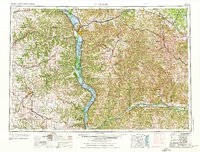 1976 La Crosse1976 Print · USGSThe Driftless Area and Mississippi River valley are captured here in the mid-seventies, showing a landscape of deep coulees and river commerce. Genealogists can trace family footprints from La Crosse to smaller hamlets like Newburg Corners and Witoka.
 - 1981 Map of Burr Oak, 1982 Print
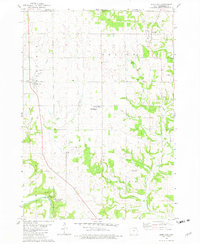 1981 Burr Oak1982 Print · USGSIn the early 1980s, the Iowa-Minnesota border region of Winneshiek County remained a patchwork of limestone quarries and creek-cut valleys. Researchers can locate family landmarks like Salveson Cem and Kjiggolom Hall, or trace the rural reach of the Luther College Observatory.
 - 1985 Map of Decorah
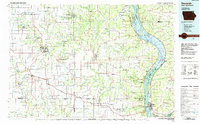 1985 Decorah1985 Print · USGSNortheast Iowa and western Wisconsin in the mid-eighties show a landscape of high bluffs and river valleys shaped by the Upper Iowa and Mississippi Rivers. Genealogists and historians can trace the paths of the Chicago Milwaukee St Paul and Pacific railroad or locate the National Cemetery and the ancient earthworks at Effigy Mounds National Monument.2 unique versions available
End of results
Showing maps 1-8 of 8
Top cities near Burr Oak
- Decorah historical maps
- Preston historical maps
- Spring Grove historical maps
- Harmony historical maps
- Mabel historical maps
- Newburg historical maps
See more
Frequently asked questions
- What are the different types of historical maps available for Burr Oak?
- What is the oldest map of Burr Oak?
- Where can I purchase historical maps of Burr Oak for my home or office?
- Where can I download high-res historical maps of Burr Oak?
- Are there historical topographic maps available for Burr Oak?
- Is there historical aerial imagery available for Burr Oak?
- Where are historical maps of Burr Oak sourced from?