1900s (20th Century) Maps of Ford County, Kansas
Explore 39 historic maps of Ford County from the 1900s (20th Century). These maps offer a rare glimpse into what life looked like during the 1900s — showing old roads, neighborhoods, homes, and landmarks that have changed or disappeared over time.
Whether you're researching your family's past, planning a metal detecting trip, or studying how Ford County's landscape evolved across the 1900s, these high-resolution maps are a powerful tool for exploring the history of this region.
- Focus on a specific era: All maps on this page are from the 1900s, giving you a focused view of this time period.
- See what’s changed: Compare century-old streets, trails, and buildings to today's modern landscape using overlays and satellite layers.
- Research with precision: Use these maps for genealogy, historical research, land use analysis, or educational projects.
- View, download, or print: Maps are fully viewable online in high resolution, and can be downloaded or printed for your own records.
Start exploring Ford County's history through authentic maps from the 1900s. This is your window into the past.
Ford County, KS maps
(39)- 1955 Map of Pratt, 1968 Print
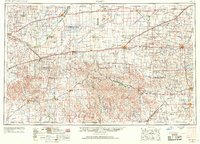 1955 Pratt1968 Print · USGSSouth-central Kansas during the mid-fifties presents a landscape of sprawling oil fields and critical rail junctions. Researchers can trace the paths of the Atchison Topeka and Santa Fe railroad or locate local landmarks like the Blue Ridge Community House and Camp Carlisle.3 unique versions available
 - 1955 Map of Dodge City, 1968 Print
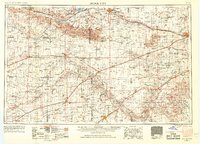 1955 Dodge City1968 Print · USGSSouthwest Kansas in the mid-fifties reveals an expansive landscape of cattle towns, early gas fields, and prairie outposts. Researchers can trace rural school districts like Moundview and Good Luck or locate the Kansas State Game Farm near Lakin.3 unique versions available
 - 1958 Map of Dodge City
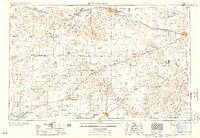 1958 Dodge City1958 Print · USGSSouthwest Kansas in the late fifties shows a landscape of river-valley agriculture and burgeoning energy infrastructure. Genealogists can trace rural life through numerous landmarks like Fairview Cemetery, the Goodwell School, and Concord Church.
 - 1959 Map of Pratt
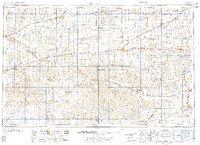 1959 Pratt1959 Print · USGSSouth-central Kansas thrived as a rail and agricultural hub in the late fifties, where the Arkansas River meets a vast grid of section roads. Researchers can trace the path of the Missouri Pacific railroad through settlements like Turon and Stafford, or locate family landmarks like the Prairie Oak School.2 unique versions available
 - 1959 Map of Dodge City
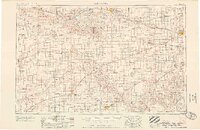 1959 Dodge City1959 Print · USGSSouthwest Kansas in the mid-fifties is captured at its agricultural height, centered on the vital rail and river hubs of Dodge City and Garden City. Genealogists and local historians can trace rural school districts like Shockey School and Hickok School or locate the Fairview Cemetery.
 - 1967 Map of Bloom, 1968 Print
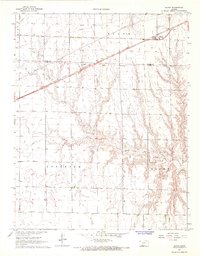 1967 Bloom1968 Print · USGSBloom and the surrounding Kansas plains were firmly defined by the rail and ranching economy in the late sixties. Researchers can trace the CHICAGO Rock Island and Pacific railroad and the historic Old Indian Treaty Boundary near Bloom Cem.
 - 1967 Map of Minneola, 1968 Print
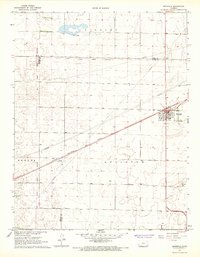 1967 Minneola1968 Print · USGSMinneola and the surrounding plains were a hub of rail and regional boundary lines in the late 1960s. Genealogists and researchers can trace the Old Indian Treaty Boundary across the county line and locate sites like the Kennedy Glider Port and Minneola Cem.
 - 1968 Map of Dodge City NE, 1969 Print
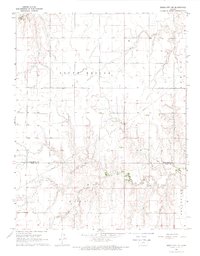 1968 Dodge City NE1969 Print · USGSThe rural landscapes of Hodgeman and Ford counties are documented here in the late sixties, showing a period of agricultural stability and early industrial infrastructure. Researchers can trace the winding Saw Log Creek, identify local landmarks like St Michaels Cem, and explore the sprawling townships of South Roscoe and Grandview.
 - 1968 Map of Dodge City NW, 1969 Print
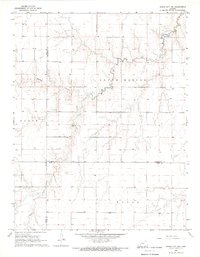 1968 Dodge City NW1969 Print · USGSThe High Plains of Western Kansas appear in the late sixties at the intersection of Gray, Hodgeman, and Ford counties. Genealogists and researchers can trace the rural landscape across South Roscoe and Royal, following Buckner Creek and its South Fork.2 unique versions available
 - 1968 Map of Dodge City, 1969 Print
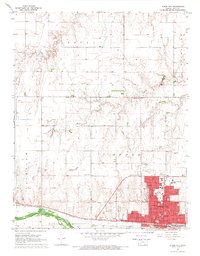 1968 Dodge City1969 Print · USGSDodge City thrived along the Arkansas River in the late sixties as a regional hub of education and transport. Researchers can locate Boot Hill, trace the Old Indian Treaty Boundary, and identify schools like Sacred Heart Sch.3 unique versions available
 - 1968 Map of Dodge City SW, 1969 Print
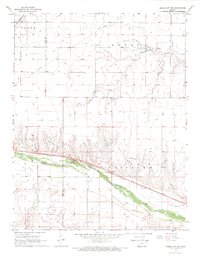 1968 Dodge City SW1969 Print · USGSThe Arkansas River valley west of Dodge City is shown here in the late sixties, where the Atchison Topeka and Santa Fe railroad defines the corridor. Researchers can locate the Ridenour Cem, the Townhall at Howell, and traces of an Abandoned Canal along the river bank.2 unique versions available
 - 1969 Map of Bucklin NE, 1971 Print
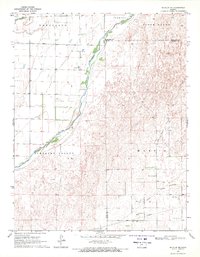 1969 Bucklin NE1971 Print · USGSThe Kansas plains south of the Arkansas River come into focus in the late sixties, where agriculture and energy production intersect. Researchers can trace the layout of the Fralick West Oil Field and the rural reaches of Pleasant Valley and South Brown.
 - 1969 Map of Bucklin SE, 1971 Print
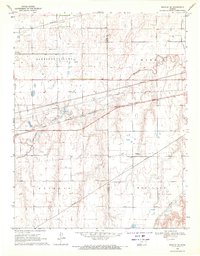 1969 Bucklin SE1971 Print · USGSThe Kansas prairie south of the Arkansas River comes into focus in the late sixties, showing a landscape defined by rail and energy. Trace the path of the Chicago Rock Island and Pacific and locate scattered gas wells along Rattlesnake Creek.
 - 1969 Map of South Dodge, 1971 Print
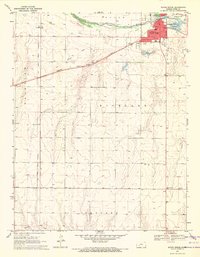 1969 South Dodge1971 Print · USGSFord County south of the Arkansas River in the late sixties shows a mix of industrial expansion and traditional farm life. Genealogists and historians can trace the Old Indian Treaty Boundary or find rural landmarks like Richland Valley Sch and Hope Ch.3 unique versions available
 - 1969 Map of Fort Dodge SW, 1971 Print
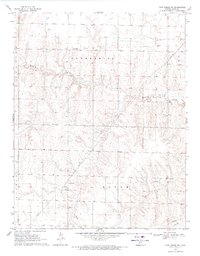 1969 Fort Dodge SW1971 Print · USGSFord County and the High Plains are captured here in the late sixties, a period of transition for the Kansas ranching landscape. Researchers can trace the mid-century energy infrastructure through the Pipelines and Compressor Station that intersect with a rugged Jeep Trail.2 unique versions available
 - 1969 Map of Fowler, 1971 Print
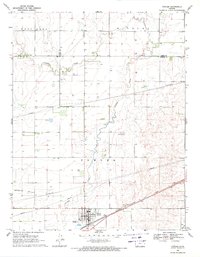 1969 Fowler1971 Print · USGSThe High Plains of Meade and Ford counties are captured here in the late sixties, centered on the Fowler settlement. Genealogists and historians can trace family locations near McCauley Cem, follow the Chicago Rock Island and Pacific rail line, or map the bends of Crooked Creek.2 unique versions available
 - 1969 Map of Fort Dodge, 1971 Print
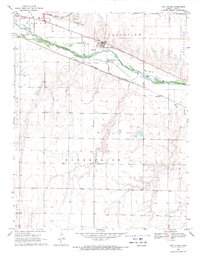 1969 Fort Dodge1971 Print · USGSFort Dodge and the Arkansas River valley are captured in the late sixties as industrial transport and rural settlements defined the Ford County landscape. Researchers can trace the dual rail lines of the Atchison Topeka and Santa Fe and the Chicago Rock Island and Pacific near Wilroads Gardens.2 unique versions available
 - 1969 Map of Bucklin, 1971 Print
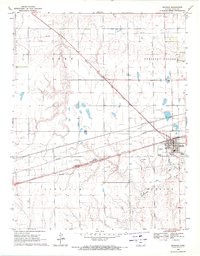 1969 Bucklin1971 Print · USGSBucklin and the high plains of Ford County are captured in the late sixties at a critical rail intersection. Family historians and researchers can trace the town’s layout, including the Bucklin Cemetery, Bucklin Airfield, and the Chicago Rock Island and Pacific rail lines.
 - 1969 Map of Ensign, 1971 Print
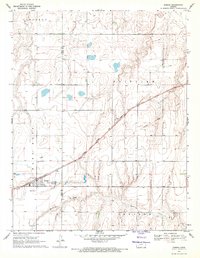 1969 Ensign1971 Print · USGSThe community of Ensign and the surrounding High Plains are captured here during the late sixties. Genealogists and local researchers can trace the diagonal Atchison Topeka and Santa Fe Railroad Grade and locate the Johnson Cem and Ensign Cem.
 - 1969 Map of Ensign SE, 1971 Print
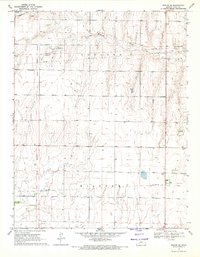 1969 Ensign SE1971 Print · USGSFord County in the late 1960s is captured here, marked by the diagonal path of the Old Indian Treaty Boundary. You can trace rural landmarks like the Concord Cem and the winding course of Mulberry Creek through the open prairie.
 - 1969 Map of Kingsdown, 1971 Print
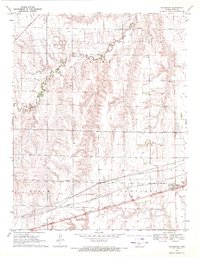 1969 Kingsdown1971 Print · USGSFord County was defined by its railroad and energy infrastructure in the late sixties, centered on the small siding of Kingsdown. Researchers can locate the Sodville Cem or trace the path of the Chicago Rock Island and Pacific railroad as it cuts through the plains.
 - 1969 Map of Bucklin NW, 1971 Print
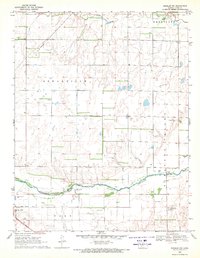 1969 Bucklin NW1971 Print · USGSFord County during the late sixties shows a landscape of river-bottom agriculture and railroad development. Genealogists and historians can locate Ford Cemetery, trace the C R I & P rail line, or find the site of School No 459 and Pleasant Valley Cemetery.
 - 1969 Map of Ford, 1971 Print
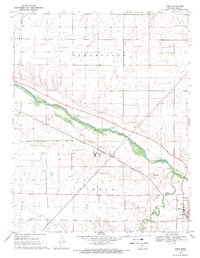 1969 Ford1971 Print · USGSThe Arkansas River valley in Ford County appears here in the late sixties, a landscape of rail-served industry and riverfront agriculture. Researchers can trace the Chicago Rock Island and Pacific line through Ford and locate industrial Gravel Pits along the river.2 unique versions available
 - 1969 Map of Ensign SW, 1971 Print
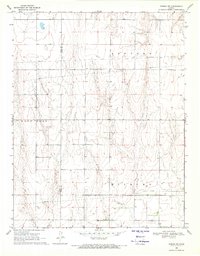 1969 Ensign SW1971 Print · USGSFord and Gray counties are captured here in the late sixties, showing a landscape of rural townships and early energy infrastructure. Researchers can trace the section lines of Wilburn and Concord or locate specific Well sites and the Pipeline route.
 - 1972 Map of Bellefont, 1974 Print
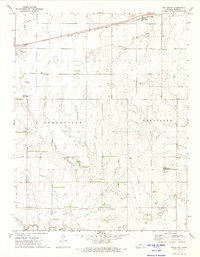 1972 Bellefont1974 Print · USGSIn the early 1970s, this Ford County landscape was defined by the intersection of the Atchison Topeka and Santa Fe rail line and a historic Old Indian Treaty Boundary. Genealogists and local historians can trace the foundations of Windhorst, the Holy Cross Cem, and the small siding at Bellefont.
Showing maps 1-25 of 39
Top cities of Ford County
- Dodge City historical maps
- Spearville historical maps
- Bucklin historical maps
- Ford historical maps
- Bloom historical maps
Frequently asked questions
- What are the different types of historical maps available for Ford County?
- What is the oldest map of Ford County?
- Where can I purchase historical maps of Ford County for my home or office?
- Where can I download high-res historical maps of Ford County?
- Are there historical topographic maps available for Ford County?
- Is there historical aerial imagery available for Ford County?
- Where are historical maps of Ford County sourced from?