Old Maps of Clay County, Kentucky
Explore 111 old maps of Clay County, spanning from 1886 to today. These high-resolution historic maps reveal how streets, neighborhoods, landmarks, and natural features evolved over time — perfect for genealogy, metal detecting, research, and local history exploration.
What you can do with these maps:
- See how Clay County changed over time: Compare historical maps to modern-day views to trace roads, homesites, rail lines & more.
- View detailed metadata: Each map includes creators, publishers, year, scale, and archive source.
- Overlay maps with satellite & LiDAR: Visualize the past alongside modern tools to explore terrain & human change.
- Trusted historical sources: Maps sourced from the USGS, Library of Congress, and other archives.
- Access maps your way: View online, download high-res files, or order prints for personal or research use.
Start exploring old maps of Clay County to uncover forgotten places, hidden landmarks, and the deep history beneath your feet.
Clay County, KY maps
(111)- 1886 Map of Cumberland Gap
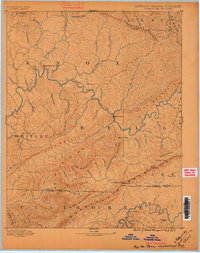 1886 Cumberland Gap1886 Print · USGSThe tri-state border region around the Cumberland Gap appears here in the 1880s, before modern development transformed these mountain passes. Genealogists and historians can trace early river crossings and settlements like Flat Lick, Tye Ferry, and Campbell Ford.
 - 1888 Map of Cumberland Gap
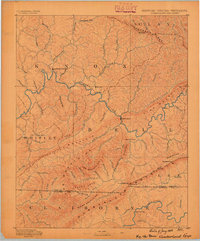 1888 Cumberland Gap1888 Print · USGSThe tri-state wilderness of the Appalachians is captured in the late 1880s, centered on the strategic crossing at the Cumberland Gap. Trace the early river-and-road economy through features like Tye's Ferry, McHenry Ford, and the old town sites of Barboursville and Pineville.
 - 1891 Map of Manchester
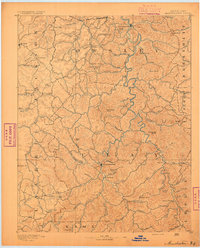 1891 Manchester1891 Print · USGSEastern Kentucky's mountain settlements and early salt industry come to life in the years following the Reconstruction era. Genealogists and historians can locate early family landmarks such as Moore Store, the Salt Works, and Boush Store.7 unique versions available
 - 1891 Map of Cumberland Gap
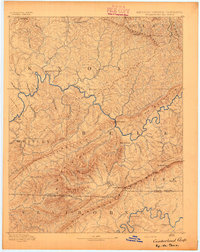 1891 Cumberland Gap1891 Print · USGSThe tri-state mountain corridor appears here in the late nineteenth century, showing the critical gateways through the Cumberland Mountains. Researchers can trace early river crossings like Mshenry Ford and historic settlements such as Barboursville and Pineville.7 unique versions available
 - 1903 Map of Pineville
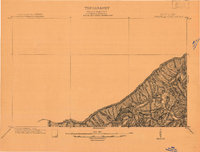 1903 Pineville1903 Print · USGSThe Cumberland Gap region in the early 1900s was a landscape defined by its formidable ridges and vital river passages. Trace the steep ascent of Cumberland Mountain and the winding course of the Cumberland River as they appeared over a century ago.
 - 1952 Map of Portersburg, 1953 Print
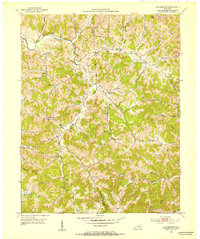 1952 Portersburg1953 Print · USGSClay and Laurel Counties in the early fifties show a landscape defined by isolated homesteads and a remarkable density of local country schools. Genealogists can trace family roots through sites like New Salem Ch, Fogertown, and Langnau Sch.2 unique versions available
 - 1952 Map of Hima, 1953 Print
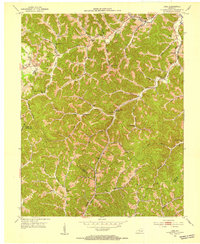 1952 Hima1953 Print · USGSClay County's narrow hollows and ridge-line communities are shown here in the early 1950s. Genealogists and local historians can locate several family cemeteries and rural schoolhouses including Antioch Sch, Cottongim Cem, and New Home.2 unique versions available
 - 1952 Map of Blackwater, 1953 Print
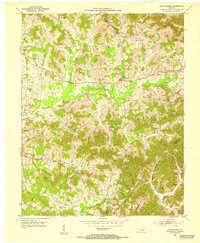 1952 Blackwater1953 Print · USGSLaurel County at the start of the 1950s reveals a landscape deeply connected to its pioneers and local congregations. Genealogists can trace family names through the Wilderness Road corridor and numerous rural landmarks like Camp Ground Sch and Bush Ch.2 unique versions available
 - 1952 Map of Manchester, 1954 Print
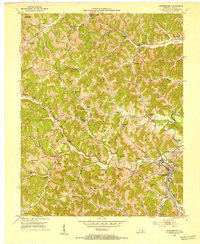 1952 Manchester1954 Print · USGSManchester and its surrounding Clay County hollows are captured in the early fifties, showing a landscape defined by traditional rural life and emerging industry. Genealogists can locate family landmarks like Island Creek Cem, Potters Chapel, and many remote schoolhouses including Rock Gap Sch.2 unique versions available
 - 1953 Map of Oneida, 1954 Print
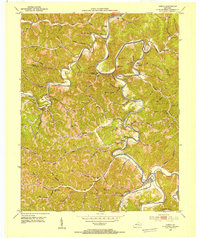 1953 Oneida1954 Print · USGSThe confluence of the South Fork Kentucky River and Red Bird River dominates this mid-century Clay County survey. Genealogists can trace family names at Sizemore Cem and locate vanished local landmarks like Aldridge Rock Sch and the Oneida Lookout Tower.2 unique versions available
 - 1953 Map of Big Creek, 1954 Print
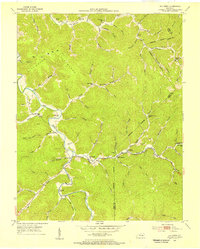 1953 Big Creek1954 Print · USGSThe Red Bird River valley in the early fifties shows a landscape of mountain hollows and riverside communities. Genealogists can trace family footprints at Brutus Ch, New Berry Sch, and old settlements like Big Creek or Peabody.2 unique versions available
 - 1953 Map of Mistletoe, 1955 Print
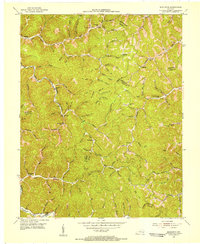 1953 Mistletoe1955 Print · USGSDeep in the Kentucky hills during the early fifties, this area shows a landscape of hollows and ridges at the height of its rural school system. Genealogists can trace family names through landmarks like Morris Fork Cem, Sandlin Sch, and the community at Sebastian.2 unique versions available
 - 1953 Map of Tyner, 1955 Print
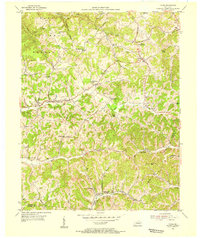 1953 Tyner1955 Print · USGSJackson County hill country is shown here in the early fifties as the regional road network around Tyner and Annville was maturing. Researchers can locate numerous rural landmarks like the Tyner High Sch, the Terrell Creek Tabernacle, and the Collier Sch.2 unique versions available
 - 1954 Map of Barcreek, 1955 Print
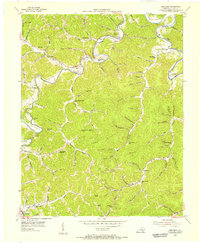 1954 Barcreek1955 Print · USGSClay County in the mid-fifties is seen here through its dense network of hollows and ridge-line gaps. Genealogists can trace family footprints through numerous rural schools like Panama Sch and remote settlements such as Hensley and Hector.2 unique versions available
 - 1954 Map of Maulden, 1955 Print
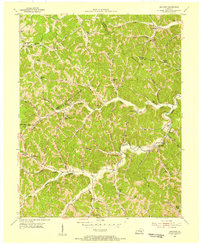 1954 Maulden1955 Print · USGSThe hills of Clay, Jackson, and Owsley Counties show a world of remote hollows and creek-side settlements during the mid-fifties. Genealogists can trace family names at Cradlebow Cem and locate community landmarks like Maulden PO and Silvermine Sch.2 unique versions available
 - 1954 Map of Ogle, 1955 Print
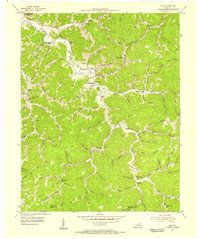 1954 Ogle1955 Print · USGSIn the mid-1950s, the hollows and creek branches of Clay County were home to a dense network of mountain communities and rural schools. Genealogists can trace family footprints through numerous local landmarks like White Cem, the Gooserock Sch, and the settlement of Brightshade.2 unique versions available
 - 1954 Map of Beverly, 1956 Print
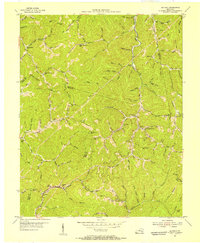 1954 Beverly1956 Print · USGSBell County and the surrounding ridges in the 1950s show a mountain landscape connected by the Red Bird River and the Louisville and Nashville. Trace local history at the Red Bird Mission Hospital or find family roots at Indian Grave Sch and Field.2 unique versions available
 - 1954 Map of Scalf, 1956 Print
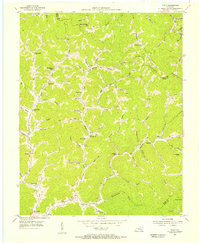 1954 Scalf1956 Print · USGSIn the mid-1950s, this area of Knox County was a network of remote hollows and mountain schools centered around Stinking Creek. You can trace rural life through landmarks like Salt Gum Ch, the Barnyard Sch, and Hammond.2 unique versions available
 - 1954 Map of Creekville, 1956 Print
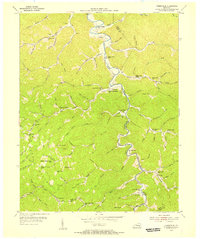 1954 Creekville1956 Print · USGSThe Red Bird River valley in the mid-fifties was a landscape of scattered mountain settlements and hollow-bound schools. Genealogists and historians can trace family locations near Creekville, Queendale, and landmarks like the Flat Creek Mission Ch or Arnetts Cem.2 unique versions available
 - 1955 Map of Johnson City
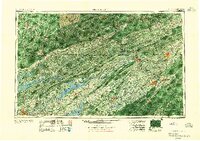 1955 Johnson City1955 Print · USGSEast Tennessee and the bordering highlands of Virginia and Kentucky appear here during the post-war industrial boom. You can trace the complex network of mountain ridges and new TVA lakes, from Johnson City to the coalfields near Middlesboro and Lynch.
 - 1957 Map of Johnson City, 1966 Print
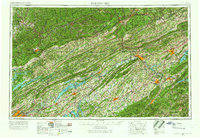 1957 Johnson City1966 Print · USGSUpper East Tennessee and Southwest Virginia are shown here during the mid-sixties transition of the Appalachians. Researchers can trace the industrial rail hubs of Kingsport, the sprawling waters of Cherokee Lake, and the historic Cumberland Gap.
 - 1957 Map of Jenkins, 1974 Print
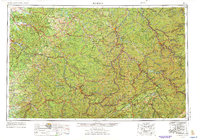 1957 Jenkins1974 Print · USGSThe Cumberland Plateau in the mid-twentieth century reveals a complex landscape of winding river valleys and deep-seated industry. Genealogists and historians can trace the development of Hazard, Jenkins, and Pikeville alongside extensive Numerous Oil and Gas Fields and the routes of the Chesapeake & Ohio Railway.
 - 1960 Map of Jenkins
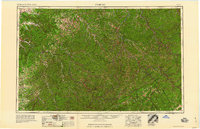 1960 Jenkins1960 Print · USGSEastern Kentucky and the West Virginia borderlands are captured at a mid-century peak of the coal and rail era. Trace the industrial corridors of the Chesapeake and Ohio RR through mountain hubs like Hazard and Jenkins.
 - 1960 Map of Johnson City
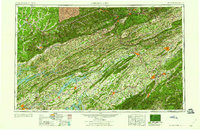 1960 Johnson City1960 Print · USGSUpper East Tennessee and the surrounding tri-state area are shown in the mid-fifties during the height of the TVA reservoir era. Trace the industrial rail lines of the Southern and Louisville and Nashville between Kingsport and Johnson City.
 - 1963 Map of Johnson City
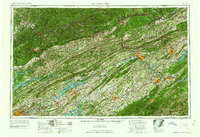 1963 Johnson City1963 Print · USGSThe Tri-Cities and the surrounding Appalachian ridges are shown in detail during the early sixties, highlighting the era's vital rail and river networks. Genealogists and historians can trace the routes of the Clinchfield RR and locate settlements from Rogersville to Elizabethton.
Showing maps 1-25 of 111
Top cities of Clay County
Frequently asked questions
- What are the different types of historical maps available for Clay County?
- What is the oldest map of Clay County?
- Where can I purchase historical maps of Clay County for my home or office?
- Where can I download high-res historical maps of Clay County?
- Are there historical topographic maps available for Clay County?
- Is there historical aerial imagery available for Clay County?
- Where are historical maps of Clay County sourced from?