1900s (20th Century) Maps of Douglass Hills, Kentucky
Explore 18 historic maps of Douglass Hills from the 1900s (20th Century). These maps offer a rare glimpse into what life looked like during the 1900s — showing old roads, neighborhoods, homes, and landmarks that have changed or disappeared over time.
Whether you're researching your family's past, planning a metal detecting trip, or studying how Douglass Hills's landscape evolved across the 1900s, these high-resolution maps are a powerful tool for exploring the history of this region.
- Focus on a specific era: All maps on this page are from the 1900s, giving you a focused view of this time period.
- See what’s changed: Compare century-old streets, trails, and buildings to today's modern landscape using overlays and satellite layers.
- Research with precision: Use these maps for genealogy, historical research, land use analysis, or educational projects.
- View, download, or print: Maps are fully viewable online in high resolution, and can be downloaded or printed for your own records.
Start exploring Douglass Hills's history through authentic maps from the 1900s. This is your window into the past.
Douglass Hills, KY maps
(18)- 1905 Map of Prospect, 1962 Print
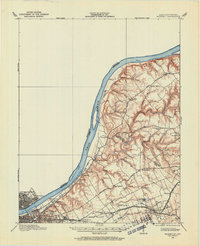 1905 Prospect1962 Print · USGSThe Ohio River corridor north of Louisville comes alive in the early 1900s, showing a landscape of river landings and new electric railways. Researchers can find old landmarks like the Lakeland Asylum, the Kentucky Military Institute, and the Antioch Church.
 - 1907 Map of Louisville
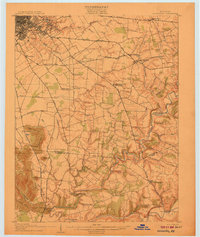 1907 Louisville1907 Print · USGSLouisville and the rolling hills of Jefferson and Bullitt counties are captured here in the early 1900s. Researchers can trace ancestral connections through sites like Cave Hill Cemetery, Pleasant Grove Schoolhouse, and the river crossing at Bells Mill Ford.3 unique versions available
 - 1912 Map of Prospect
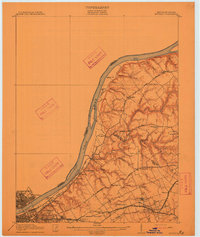 1912 Prospect1912 Print · USGSThe northeastern outskirts of Louisville and the riverbanks of the Ohio River appear here in the early twentieth century. Researchers can trace the development of suburban settlements like Anchorage and St Matthews or locate the sprawling grounds of the Lakeland Asylum.3 unique versions available
 - 1951 Map of Anchorage
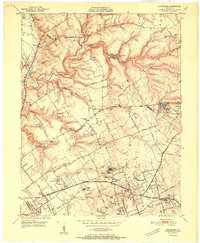 1951 Anchorage1951 Print · USGSJefferson and Oldham Counties appear here in the early fifties, showing a landscape defined by institutional campuses and rail-centered towns. Genealogists and historians can trace Ormsby Village, Berrytown, and the Kentucky Military Institute along the Louisville and Nashville Railroad.
 - 1951 Map of Jeffersontown
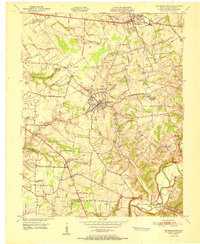 1951 Jeffersontown1951 Print · USGSEastern Jefferson County comes alive in the early fifties as the rural landscape between Jeffersontown and Middletown begins to develop. Genealogists and historians can trace family plots like Bullitt Cem and local landmarks like Eastern High Sch.
 - 1951 Map of Louisville, 1959 Print
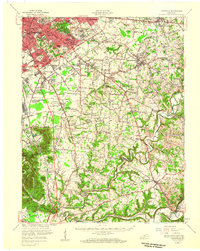 1951 Louisville1959 Print · USGSGreater Louisville and Bullitt County are seen here in a period of rapid suburban growth following the war. Researchers can trace family history through dozens of landmarks like Evergreen Cemetery, Camp Taylor, and the rural schools of Okolona.
 - 1955 Map of Jeffersontown, 1956 Print
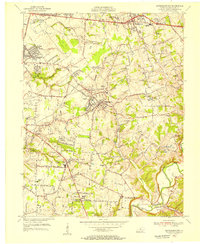 1955 Jeffersontown1956 Print · USGSJefferson County is shown in a period of significant growth during the mid-fifties, as suburban neighborhoods began to replace rural acreage. Genealogists and local historians can trace legacy sites like Spring Meadows Childrens Home, the Southern Railway, and old churches such as Beulah Ch.
 - 1955 Map of Anchorage, 1956 Print
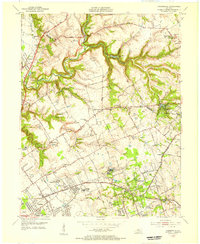 1955 Anchorage1956 Print · USGSEastern Jefferson County and the edge of Oldham County appear in the mid-fifties as a region of institutional campuses and established towns. Genealogists can trace family roots through Anchorage, Lyndon, and Griffytown, or locate landmarks like Central State Hospital and St Thomas Seminary.
 - 1956 Map of Louisville, 1971 Print
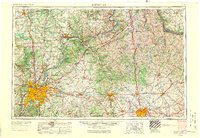 1956 Louisville1971 Print · USGSThe Ohio River valley and the Kentucky Bluegrass are captured here during a period of rapid mid-century growth and industrial activity. Genealogists and historians can trace rail-centered towns and military land use at Fort Knox and the Jefferson Proving Ground.2 unique versions available
 - 1960 Map of Anchorage, 1961 Print
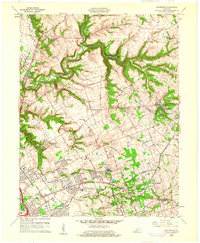 1960 Anchorage1961 Print · USGSEastern Jefferson County is shown at a peak of institutional and suburban growth in the early sixties. Genealogists and historians can trace family locations near the Kentucky Military Institute, Anchorage, and Ormsby Village.
 - 1960 Map of Jeffersontown, 1961 Print
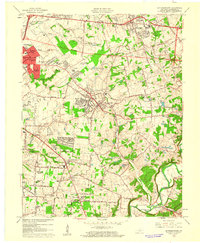 1960 Jeffersontown1961 Print · USGSEastern Jefferson County comes alive in this early 1960s survey, showing the transition from farmland to suburban neighborhoods. Genealogists and local historians can pinpoint family landmarks like Bullitt Cem, Tucker Station, and the Spring Meadows Childrens Home.
 - 1964 Map of Louisville
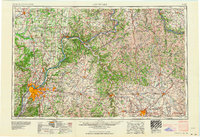 1964 Louisville1964 Print · USGSThe Ohio River valley and Kentucky Bluegrass are captured in the mid-1960s, showing a region balanced between industrial growth and its agrarian roots. Genealogists and historians can trace the development of county seats like Shelbyville and Paris, or locate established institutions such as Georgetown College and Bernheim Forest.
 - 1964 Map of Jeffersontown, 1967 Print
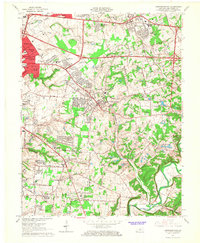 1964 Jeffersontown1967 Print · USGSEastern Jefferson County is shown at a peak of mid-century suburbanization as residential tracts begin to surround established towns like Jeffersontown and Middletown. Genealogists can trace family roots through sites like the Chenoweth Run Cemetery, Seatonville, and the Davis Memorial Chapel.2 unique versions available
 - 1965 Map of Anchorage, 1966 Print
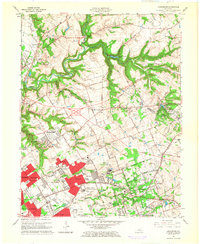 1965 Anchorage1966 Print · USGSEastern Jefferson County was undergoing a major residential and institutional transition in the mid-sixties. Researchers can trace the grounds of the Ormsby Village State Reservation, the Kentucky Military Institute, and the rail lines through Anchorage.2 unique versions available
 - 1981 Map of Anchorage, 1982 Print
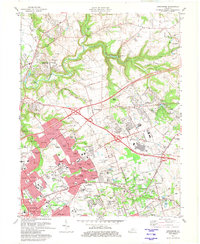 1981 Anchorage1982 Print · USGSSuburban Jefferson County comes into focus in the early eighties as highway expansion reshapes traditional neighborhoods. Genealogists and local historians can trace the footprint of Central State Hospital, the Kentucky Railway Museum, and settlements like Berrytown and O'Bannon.2 unique versions available
 - 1982 Map of Jeffersontown, 1983 Print
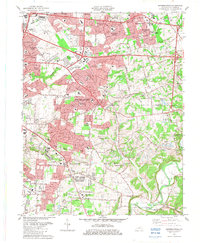 1982 Jeffersontown1983 Print · USGSJeffersontown and the eastern suburbs of Louisville are shown during a period of significant growth in the early eighties. Genealogists can trace family footprints through numerous local landmarks like St Pauls Ch, Seatonville, and Tucker Station.
 - 1984 Map of Jeffersontown, 1987 Print
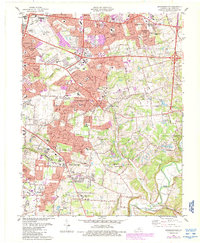 1984 Jeffersontown1987 Print · USGSEastern Jefferson County is shown in a phase of suburban maturation during the mid-eighties as Louisville expands eastward. Genealogists and local historians can trace family locations near Seatonville, Tucker Station, and the historic core of Jeffersontown.2 unique versions available
 - 1986 Map of Louisville
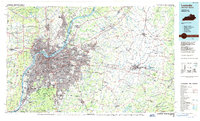 1986 Louisville1986 Print · USGSMid-1980s Louisville and southern Indiana are shown here during a decade of significant suburban growth and infrastructure development. Researchers can trace the layout of Cave Hill Cemetery, the expansion of Standiford Field, and industrial sites like the Indiana Army Ammunition Plant.2 unique versions available
End of results
Showing maps 1-18 of 18
Top cities near Douglass Hills
- Louisville historical maps
- Jeffersonville historical maps
- Jeffersontown historical maps
- Clarksville historical maps
- Mount Washington historical maps
- Lyndon historical maps
See more
Frequently asked questions
- What are the different types of historical maps available for Douglass Hills?
- What is the oldest map of Douglass Hills?
- Where can I purchase historical maps of Douglass Hills for my home or office?
- Where can I download high-res historical maps of Douglass Hills?
- Are there historical topographic maps available for Douglass Hills?
- Is there historical aerial imagery available for Douglass Hills?
- Where are historical maps of Douglass Hills sourced from?