1900s (20th Century) Maps of Martin County, Kentucky
Explore 42 historic maps of Martin County from the 1900s (20th Century). These maps offer a rare glimpse into what life looked like during the 1900s — showing old roads, neighborhoods, homes, and landmarks that have changed or disappeared over time.
Whether you're researching your family's past, planning a metal detecting trip, or studying how Martin County's landscape evolved across the 1900s, these high-resolution maps are a powerful tool for exploring the history of this region.
- Focus on a specific era: All maps on this page are from the 1900s, giving you a focused view of this time period.
- See what’s changed: Compare century-old streets, trails, and buildings to today's modern landscape using overlays and satellite layers.
- Research with precision: Use these maps for genealogy, historical research, land use analysis, or educational projects.
- View, download, or print: Maps are fully viewable online in high resolution, and can be downloaded or printed for your own records.
Start exploring Martin County's history through authentic maps from the 1900s. This is your window into the past.
Martin County, KY maps
(42)- 1910 Map of Naugatuck
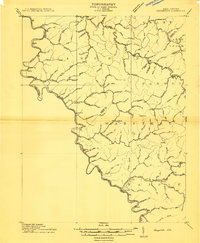 1910 Naugatuck1910 Print · USGSMingo and Wayne Counties come into focus in the early twentieth century as the coal and timber industry transformed these hollows. Genealogists and researchers can trace the Norfolk and Western rail line through early settlements like Kermit, Breeden, and Naugatuck.
 - 1912 Map of Naugatuck
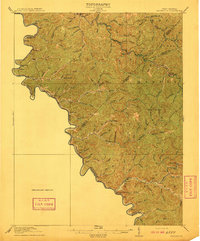 1912 Naugatuck1912 Print · USGSMingo and Wayne County borderlands are shown here in the early twentieth century, as the river-and-rail economy transformed these Appalachian hollows. Genealogists and historians can trace family-named sites along the Tug Fork and Norfolk and Western Ry, including Kermit, Naugatuck, and Breeden.
 - 1914 Map of Laynesville
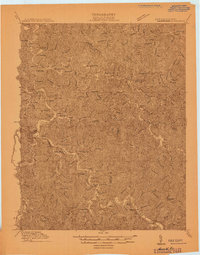 1914 Laynesville1914 Print · USGSEastern Kentucky's river valleys and mountain hollows are meticulously mapped here in the years before the Great War. Genealogists can trace the locations of dozens of early schoolhouses, from School No 16 to the Sandy Valley Normal School, alongside river towns like Laynesville and Betsy Layne.
 - 1914 Map of Inez
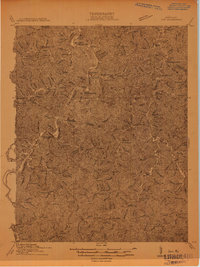 1914 Inez1914 Print · USGSThe Big Sandy River valley in the early twentieth century was a landscape of coal-country settlements and riverside rail stops. Researchers can trace the development of small communities like Whitehouse and Inez or locate vanished landmarks like Wells Chapel and Graves Shoals Sta.
 - 1915 Map of Williamson
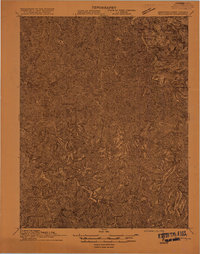 1915 Williamson1915 Print · USGSThe borderlands of the Tug Fork river come alive in this early century survey of the Central Appalachian coal country. Genealogists and local historians can trace the early rail-side growth of Williamson, Chattaroy, and Nolan along the Norfolk and Western Ry.2 unique versions available
 - 1915 Map of Naugatuck
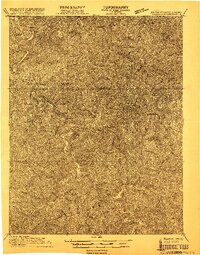 1915 Naugatuck1915 Print · USGSThe Tug Fork valley in the early twentieth century appears in fine detail here along the Kentucky and West Virginia border. Genealogists and historians can trace early settlements and valley schools including Warfield, Naugatuck, and the Priest School.
 - 1916 Map of Harold
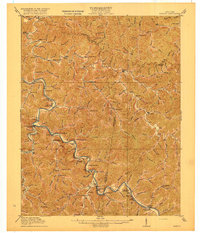 1916 Harold1916 Print · USGSEastern Kentucky's river valleys and railroad corridors come alive in this mid-1910s survey of the Big Sandy region. Researchers can trace the development of the Chesapeake and Ohio line through river towns like Betsy Layne and Laynesville, or locate family-centric sites like Woods Emma PO and the Sandy Valley Normal School.3 unique versions available
 - 1916 Map of Inez
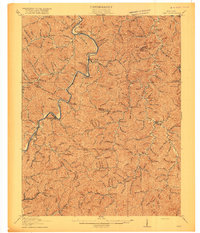 1916 Inez1916 Print · USGSMartin and Lawrence Counties are shown here during a period of rural growth and river-based transport. Genealogists can locate specific homesteads near Wells Chapel, track old post offices like Graves Shoals, or find local landmarks such as Sandlick School.3 unique versions available
 - 1917 Map of Naugatuck
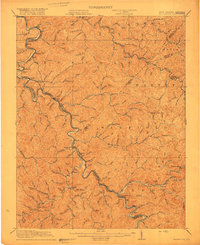 1917 Naugatuck1917 Print · USGSThe Tug Fork borderlands of Mingo and Wayne counties were defined by the rail-and-river economy during the early twentieth century. Genealogists and historians can trace riverside settlements like Kermit and Naugatuck, or search for upland landmarks such as Priest School and the Breeden Breading Post Office.3 unique versions available
 - 1918 Map of Williamson
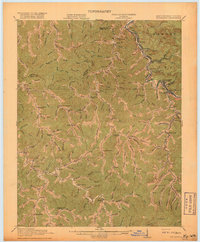 1918 Williamson1918 Print · USGSThe Tug Fork river valley at the Kentucky-West Virginia border comes alive in this survey from the era of the Great War. Researchers can trace the path of the Norfolk and Western RR through Williamson or locate rural schools like Hammon Manor School and the Pinson Fork P O Peg Sta.3 unique versions available
 - 1926 Map of Naugatuck, 1957 Print
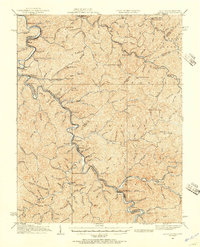 1926 Naugatuck1957 Print · USGSThe Tug Fork valley hums with activity in the 1920s as the rail-and-river economy shapes the West Virginia and Kentucky border. Genealogists and historians can trace numerous rural schools and early settlements like Kermit, Warfield, and the Cassie post office.
 - 1928 Map of Naugatuck
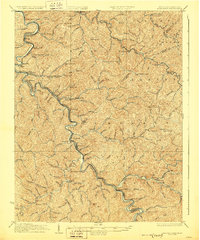 1928 Naugatuck1928 Print · USGSThe Tug Fork valley at the close of the 1920s reveals a landscape defined by the Norfolk and Western RR and riverside coal towns. Genealogists can trace family footprints through remote schoolhouses like The Bend Sch and rural post offices at Cassie Po and Kermit.2 unique versions available
 - 1954 Map of Williamson, 1955 Print
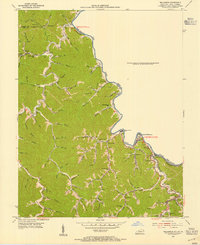 1954 Williamson1955 Print · USGSThe Tug Fork valley at the Kentucky-West Virginia border shows a landscape of coal-town growth and hollow settlements in the mid-1950s. Genealogists can locate family landmarks like Stepp Cem and Scott Cem, or trace the rail-side life of New Camp, Leckieville, and Belfry.2 unique versions available
 - 1954 Map of Kermit, 1955 Print
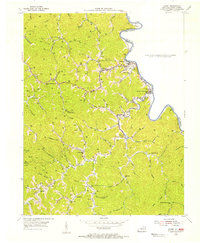 1954 Kermit1955 Print · USGSThe borderlands of the Tug Fork are captured in the mid-fifties, showing a landscape defined by gas extraction and isolated mountain hollows. Genealogists can trace family landmarks and rural institutions like Marcum Cem, Farley Ch, and the Head of Emily Creek Sch.
 - 1954 Map of Webb, 1955 Print
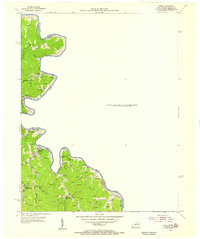 1954 Webb1955 Print · USGSThe Tug Fork borderlands in the mid-fifties reveal a landscape of active energy extraction and tight-knit hollow settlements. Genealogists can trace family footprints through sites like Salmons Cem, Baker Gap Sch, and the community at Hode.
 - 1954 Map of Offutt, 1955 Print
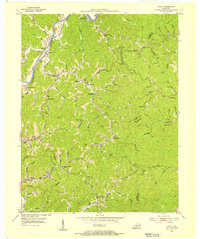 1954 Offutt1955 Print · USGSThe hills of Eastern Kentucky in the mid-fifties are captured here as a dense network of hollows, rail corridors, and early energy extraction. Genealogists can trace family footprints at Butcher Hollow Sch, the Ward Cem, or the small settlement of Boons Camp.3 unique versions available
 - 1954 Map of Inez, 1955 Print
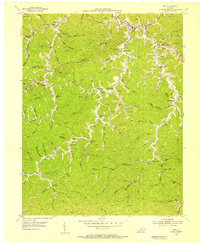 1954 Inez1955 Print · USGSMartin County, Kentucky, is captured here in the mid-fifties during the expansion of its local oil and gas fields. Genealogists can trace family names through landmarks like Ward Cem and rural schools including Sandlick Sch and Beech Fork Sch.3 unique versions available
 - 1954 Map of Varney, 1955 Print
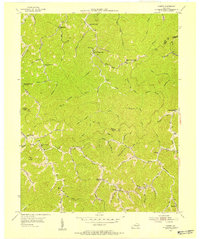 1954 Varney1955 Print · USGSEastern Kentucky life in the mid-fifties is centered on remote hollows and mountain gaps along the Martin and Pike County line. Researchers can trace family roots through numerous local landmarks like Varney, Piso Sch, and Mary Elizabeth Ch.3 unique versions available
 - 1954 Map of Lancer, 1955 Print
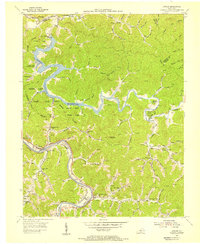 1954 Lancer1955 Print · USGSFloyd County at the mid-century shows a landscape shaped by the new Dewey Reservoir and the winding Levisa Fork. Genealogists and historians can trace local life through dozens of rural landmarks like Brandy Keg Sch, Home Branch Sch, and the railroad stop at Lancer.2 unique versions available
 - 1954 Map of Naugatuck, 1955 Print
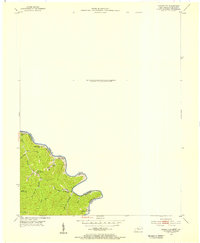 1954 Naugatuck1955 Print · USGSThe Tug Fork valley on the Kentucky-West Virginia border appears in the mid-1950s, showing a landscape shaped by narrow hollows and river bends. Trace local roots at Winco Block, the Marcum Cem, and several schoolhouses including Taylor Sch.
 - 1954 Map of Milo, 1955 Print
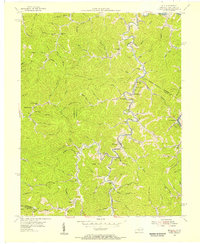 1954 Milo1955 Print · USGSIn the mid-fifties, the rugged hollows along the Tug Fork were home to a dense network of mountain schools and churches. Genealogists can locate the Stidham PO, the Old Friendship Ch, and the isolated Camp Gideon Childrens Home.4 unique versions available
 - 1954 Map of Richardson, 1955 Print
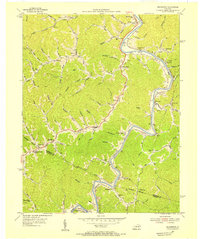 1954 Richardson1955 Print · USGSEastern Kentucky during the mid-fifties is captured here along the Levisa Fork as rail life flourished. Genealogists can trace family landmarks like Belles Chapel, the Chesapeake and Ohio line, and the rural Lost Creek Sch.2 unique versions available
 - 1954 Map of Thomas, 1955 Print
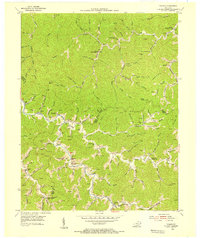 1954 Thomas1955 Print · USGSThe valleys of eastern Kentucky are captured here in the mid-1950s at the height of the local gas and oil boom. Genealogists can locate family landmarks like Thomas PO, McCombs, and several rural schools including Meathouse Creek Sch.3 unique versions available
 - 1957 Map of Jenkins, 1974 Print
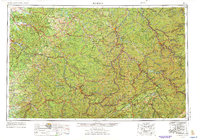 1957 Jenkins1974 Print · USGSThe Cumberland Plateau in the mid-twentieth century reveals a complex landscape of winding river valleys and deep-seated industry. Genealogists and historians can trace the development of Hazard, Jenkins, and Pikeville alongside extensive Numerous Oil and Gas Fields and the routes of the Chesapeake & Ohio Railway.
 - 1960 Map of Jenkins
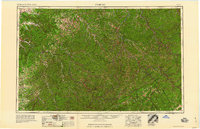 1960 Jenkins1960 Print · USGSEastern Kentucky and the West Virginia borderlands are captured at a mid-century peak of the coal and rail era. Trace the industrial corridors of the Chesapeake and Ohio RR through mountain hubs like Hazard and Jenkins.
Showing maps 1-25 of 42
Top cities of Martin County
Frequently asked questions
- What are the different types of historical maps available for Martin County?
- What is the oldest map of Martin County?
- Where can I purchase historical maps of Martin County for my home or office?
- Where can I download high-res historical maps of Martin County?
- Are there historical topographic maps available for Martin County?
- Is there historical aerial imagery available for Martin County?
- Where are historical maps of Martin County sourced from?