Old Maps of Whitley County, Kentucky for Genealogy
Trace your family roots with 116 historic maps of Whitley County. These high-res maps reveal old neighborhoods, homesites, landmarks, and streets — helping you uncover where your ancestors lived and how the area evolved over time.
- Explore historic neighborhoods: Identify where your relatives may have lived in the 1800s or 1900s.
- Compare maps over time: Trace the changes in streets, buildings, and landmarks for multi-generational research.
- Perfect for genealogy & ancestry research: Used by family historians and researchers to map out lineage and migration.
These maps are an incredible resource for exploring your personal connection to Whitley County's past.
Whitley County, KY maps
(116)- 1886 Map of Cumberland Gap
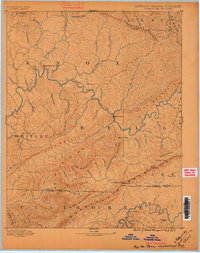 1886 Cumberland Gap1886 Print · USGSThe tri-state border region around the Cumberland Gap appears here in the 1880s, before modern development transformed these mountain passes. Genealogists and historians can trace early river crossings and settlements like Flat Lick, Tye Ferry, and Campbell Ford.
 - 1888 Map of Cumberland Gap
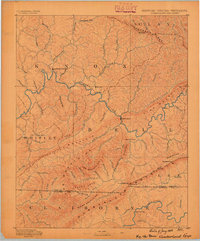 1888 Cumberland Gap1888 Print · USGSThe tri-state wilderness of the Appalachians is captured in the late 1880s, centered on the strategic crossing at the Cumberland Gap. Trace the early river-and-road economy through features like Tye's Ferry, McHenry Ford, and the old town sites of Barboursville and Pineville.
 - 1890 Map of Williamsburg
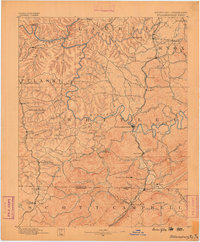 1890 Williamsburg1890 Print · USGSThe Kentucky and Tennessee borderlands come alive in the late nineteenth century as the coal industry and railroads expand. Genealogists can trace family roots in Williamsburgh or locate early industrial sites like Beaver Mines and Steels Mill.2 unique versions available
 - 1891 Map of Cumberland Gap
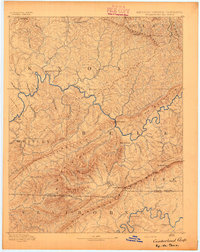 1891 Cumberland Gap1891 Print · USGSThe tri-state mountain corridor appears here in the late nineteenth century, showing the critical gateways through the Cumberland Mountains. Researchers can trace early river crossings like Mshenry Ford and historic settlements such as Barboursville and Pineville.7 unique versions available
 - 1894 Map of Williamsburg
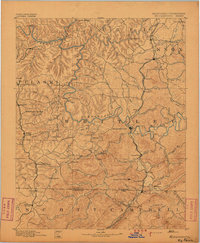 1894 Williamsburg1894 Print · USGSThe Cumberland River valley and the Kentucky-Tennessee borderlands are captured here during the late nineteenth-century coal and rail expansion. Researchers can trace early industrial sites like Beaver Mines and Kensee Coal Mine or locate family roots in Whitley and Chitwood.5 unique versions available
 - 1952 Map of Corbin, 1953 Print
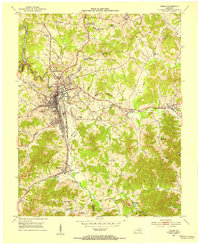 1952 Corbin1953 Print · USGSCorbin and its surrounding coal-country settlements are captured here in the early fifties, showing the vital Louisville and Nashville rail corridor. Researchers can trace family sites at Resthaven Cem or locate community centers like Bacon Creek Sch and Harts Chapel.
 - 1952 Map of Wofford, 1953 Print
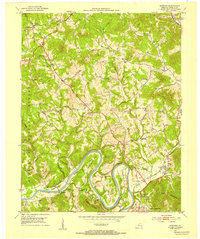 1952 Wofford1953 Print · USGSWhitley County in the early fifties shows a landscape of deep river bends and rural communities along the Louisville and Nashville rail line. Genealogists can trace family footprints through numerous small landmarks like White Oak Ch, Canada Sch, and Shiner Sch.
 - 1952 Map of Barbourville, 1953 Print
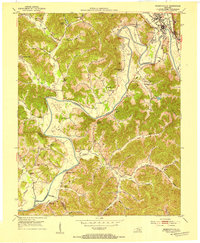 1952 Barbourville1953 Print · USGSBarbourville and the Cumberland River valley are captured in the early fifties during a period of rural transition. Genealogists can trace family lines through dozen of hillslope cemeteries and schools like Ketchen Sch, Dishman Sch, and Union College.2 unique versions available
 - 1952 Map of Vox, 1953 Print
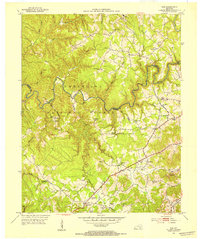 1952 Vox1953 Print · USGSWhitley and Laurel counties appear here in the early fifties, showing a rugged landscape centered on the Laurel River. Genealogists can locate family-named sites like Steele Chapel, Barton Chapel, and the McFarland Cem tucked away in the hollows.2 unique versions available
 - 1952 Map of Saxton, 1954 Print
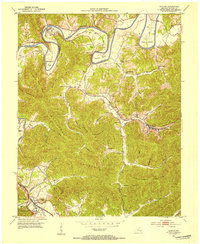 1952 Saxton1954 Print · USGSWhitley County coal and timber country comes alive in this mid-century survey of the Cumberland River valley and its surrounding ridges. Genealogists and local historians can trace family roots through numerous small settlements like Gatliff, Nevisdale, and the many rural schools including Verne Sch.
 - 1952 Map of Hollyhill, 1954 Print
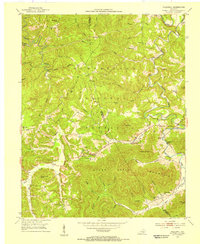 1952 Hollyhill1954 Print · USGSThe rugged coal and timber country of McCreary and Whitley Counties is captured here in the early fifties. Genealogists and historians can locate numerous rural landmarks including Hollyhill, Bear Wallow Sch, and several Strip Mine operations.2 unique versions available
 - 1952 Map of Rockholds, 1954 Print
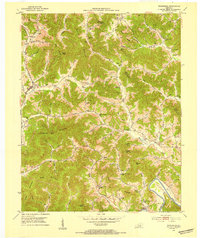 1952 Rockholds1954 Print · USGSWhitley County hill country in the early fifties is mapped here as coal extraction began to shape the landscape around Rockholds. Researchers can trace family history through numerous rural landmarks like Brummett Ch, Cedar Gap Sch, and the McFarland Cem.4 unique versions available
 - 1952 Map of Cumberland Falls, 1954 Print
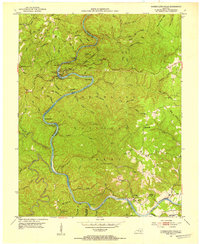 1952 Cumberland Falls1954 Print · USGSWhitley and McCreary Counties in the early fifties reveal a landscape defined by the winding river and deep forest. Genealogists can locate family landmarks like Ridenour Cem and rural centers such as Honeybee, Pleasant Hill Ch, and Sand Hill Sch.2 unique versions available
 - 1952 Map of Williamsburg, 1954 Print
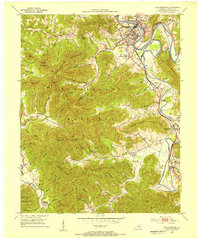 1952 Williamsburg1954 Print · USGSWhitley County's river-and-rail landscape is captured here in the early fifties, centered on the Williamsburg bend. Trace the legacy of rural coal and community through numerous strip mines, the Shelly Knob Lookout Tower, and local landmarks like Cumberland College.
 - 1952 Map of Frakes, 1954 Print
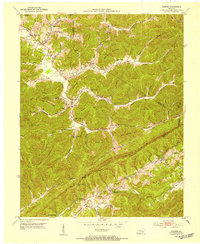 1952 Frakes1954 Print · USGSThe rugged borderlands of Whitley, Knox, and Bell counties are captured in the early fifties, showing a landscape of isolated ridges and tight hollows. Genealogists can locate family landmarks like the Croley Cemetery and the notable Henderson Settlement School.2 unique versions available
 - 1952 Map of Sawyer, 1954 Print
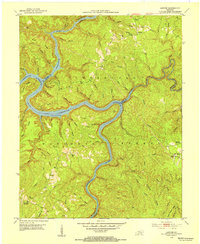 1952 Sawyer1954 Print · USGSThe confluence of the Rockcastle and Laurel Rivers in the early fifties shows a landscape of deep hollows and high ridges within the Cumberland National Forest. Researchers can trace old family sites and rural institutions like Sawyer, Franklin Sch No 2, and Poynters Ch.2 unique versions available
 - 1953 Map of Jellico West, 1954 Print
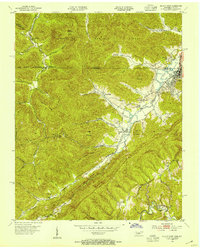 1953 Jellico West1954 Print · USGSThe Tennessee-Kentucky borderlands in the early fifties show a landscape shaped by coal and rail through the narrow valleys of the Cumberland. Trace the path of the Southern Railway past the Standard Mine and find family sites like the Black Oak Cem or the Zion Hill Sch & Ch.2 unique versions available
 - 1953 Map of Eagan, 1955 Print
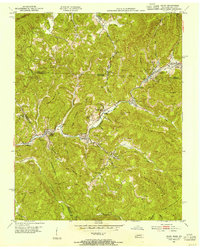 1953 Eagan1955 Print · USGSThe Tennessee-Kentucky border was a bustling coal-mining corridor in the early fifties, defined by rail-dependent valley towns and mountain ridge extractions. Genealogists and historians can trace family locations near Buffalo Sch, Partin Cem, and the mining communities of Eagan and Pruden.3 unique versions available
 - 1953 Map of Jellico East, 1955 Print
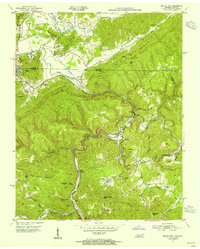 1953 Jellico East1955 Print · USGSThe Tennessee-Kentucky border comes alive in the early fifties, showing the mountain rail corridor before modern development. Genealogists can trace family roots at Bolton Cem or follow the old tracks through Morley and White Oak to find former schools like Ewing Sch.2 unique versions available
 - 1953 Map of Ketchen, 1955 Print
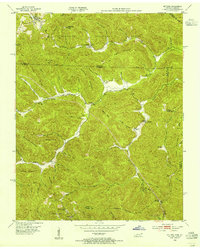 1953 Ketchen1955 Print · USGSThe Tennessee-Kentucky border comes alive in the early fifties, showing a remote landscape of ridge-top schools and creek-side settlements. Genealogists can trace family roots at Blankenship Cem, Hayes Creek Sch, or the small community of Ketchen.2 unique versions available
 - 1955 Map of Johnson City
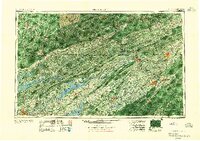 1955 Johnson City1955 Print · USGSEast Tennessee and the bordering highlands of Virginia and Kentucky appear here during the post-war industrial boom. You can trace the complex network of mountain ridges and new TVA lakes, from Johnson City to the coalfields near Middlesboro and Lynch.
 - 1956 Map of Corbin, 1966 Print
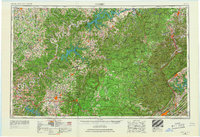 1956 Corbin1966 Print · USGSThe Kentucky and Tennessee borderlands are captured here in the mid-fifties, showing the region's shift toward modern interstate travel and reservoir development. Genealogists and historians can trace old community lines near Albany and Monticello or locate early rail junctions along the Southern and Tennessee Central lines.3 unique versions available
 - 1957 Map of Johnson City, 1966 Print
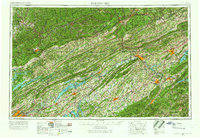 1957 Johnson City1966 Print · USGSUpper East Tennessee and Southwest Virginia are shown here during the mid-sixties transition of the Appalachians. Researchers can trace the industrial rail hubs of Kingsport, the sprawling waters of Cherokee Lake, and the historic Cumberland Gap.
 - 1958 Map of Corbin
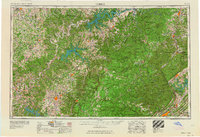 1958 Corbin1958 Print · USGSThe Upper Cumberland borderlands appear in the late 1950s as massive reservoirs and early atomic-era growth reshape the region. Trace family roots and vanished landmarks near Lake Cumberland, Oak Ridge, and the Cumberland National Forest.
 - 1960 Map of Johnson City
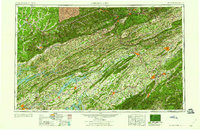 1960 Johnson City1960 Print · USGSUpper East Tennessee and the surrounding tri-state area are shown in the mid-fifties during the height of the TVA reservoir era. Trace the industrial rail lines of the Southern and Louisville and Nashville between Kingsport and Johnson City.
Showing maps 1-25 of 116
Top cities of Whitley County
Frequently asked questions
- What are the different types of historical maps available for Whitley County?
- What is the oldest map of Whitley County?
- Where can I purchase historical maps of Whitley County for my home or office?
- Where can I download high-res historical maps of Whitley County?
- Are there historical topographic maps available for Whitley County?
- Is there historical aerial imagery available for Whitley County?
- Where are historical maps of Whitley County sourced from?