1950s Maps of Le Bleu, Louisiana
Explore 5 historic maps of Le Bleu from the 1950s. These maps offer a rare glimpse into what life looked like during the 1950s — showing old roads, neighborhoods, homes, and landmarks that have changed or disappeared over time.
Whether you're researching your family's past, planning a metal detecting trip, or studying how Le Bleu's landscape evolved across the 1950s, these high-resolution maps are a powerful tool for exploring the history of this region.
- Focus on a specific era: All maps on this page are from the 1950s, giving you a focused view of this time period.
- See what’s changed: Compare century-old streets, trails, and buildings to today's modern landscape using overlays and satellite layers.
- Research with precision: Use these maps for genealogy, historical research, land use analysis, or educational projects.
- View, download, or print: Maps are fully viewable online in high resolution, and can be downloaded or printed for your own records.
Start exploring Le Bleu's history through authentic maps from the 1950s. This is your window into the past.
Le Bleu, LA maps
(5)- 1950 Map of Hecker
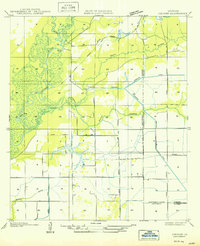 1950 Hecker1950 Print · USGSSouthwestern Louisiana's wetlands and early agricultural infrastructure are visible here in the years following the mid-1930s field surveys. Trace the Old Logging Railroad Grade and the engineering of the Louisiana Irrigation Canal near Hecker.
 - 1952 Map of Lake Charles
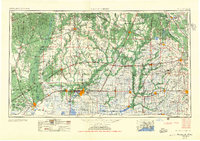 1952 Lake Charles1952 Print · USGSSouthwest Louisiana is captured here in the mid-fifties, showing a landscape defined by the rise of the petrochemical industry and deep-water navigation. Researchers can trace family roots through numerous small-town settlements and oil developments like Nibletts Bluff, the Lockport Oil Field, and Starks.
 - 1954 Map of Lake Charles, 1964 Print
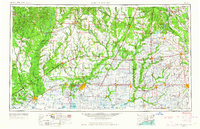 1954 Lake Charles1964 Print · USGSSouthwest Louisiana in the mid-fifties is defined by its massive petroleum industry and its complex network of bayous and rail lines. Researchers can trace the development of the Sulphur Mines Oil Field or locate historic settlements like Longville and De Quincy.3 unique versions available
 - 1956 Map of Hecker, 1957 Print
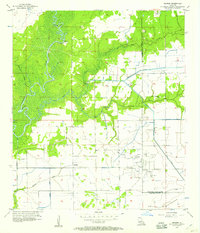 1956 Hecker1957 Print · USGSCalcasieu Parish in the mid-1950s shows a landscape defined by the Iowa Oil and Gas Field and a complex irrigation network. Genealogists and historians can locate family landmarks like Hebert Cem and the settlements of Hecker and Le Bleu.3 unique versions available
 - 1957 Map of Moss Bluff, 1958 Print
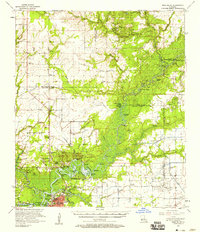 1957 Moss Bluff1958 Print · USGSCalcasieu Parish and its surrounding bayous are captured here in the late fifties as the river economy transitions toward industry. Researchers can trace family roots at Birdnest Cem or locate historic river crossings like Perkins Ferry.3 unique versions available
End of results
Showing maps 1-5 of 5
Top cities near Le Bleu
- Lake Charles historical maps
- Sulphur historical maps
- Westlake historical maps
- Iowa historical maps
- Kinder historical maps
- Hayes historical maps
See more
Frequently asked questions
- What are the different types of historical maps available for Le Bleu?
- What is the oldest map of Le Bleu?
- Where can I purchase historical maps of Le Bleu for my home or office?
- Where can I download high-res historical maps of Le Bleu?
- Are there historical topographic maps available for Le Bleu?
- Is there historical aerial imagery available for Le Bleu?
- Where are historical maps of Le Bleu sourced from?