Old Maps of Farmland, Louisiana for Academic Research
Study the evolution of Farmland with 14 high-resolution historic maps. Whether you're teaching, researching, or modeling changes in land use, these maps provide essential visual documentation of urban, environmental, and geographic change.
- Analyze long-term change: Track patterns in development, transportation, and natural features.
- Ideal for environmental or urban studies: Support academic projects with primary historical map data.
- Use in the classroom or lab: Educators and researchers rely on these maps to bring historical context to life.
These maps are a powerful tool for teaching, research, and visualizing how Farmland has changed over the decades.
Farmland, LA maps
(14)- 1936 Map of Pollock
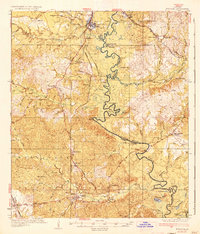 1936 Pollock1936 Print · USGSThe Grant Parish pine woods and the winding Little River bottomlands are captured here in the mid-1930s. Researchers can locate vanished rural schoolhouses like Thayer Sch, early rail stops at Antonia and Sand Spur, and many family burial grounds including Pine Bluff Cem.2 unique versions available
 - 1941 Map of Pollock, 1944 Print
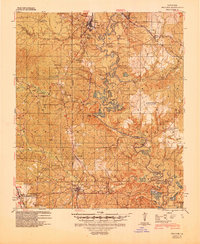 1941 Pollock1944 Print · USGSGrant and La Salle Parishes are defined by the winding oxbows of the Little River and a thriving rail-and-timber network in the early 1940s. Genealogists can trace family roots at Pinebluff Cem, Hawthorne Cem, or the small settlement at Antonia.2 unique versions available
 - 1953 Map of Alexandria, 1963 Print
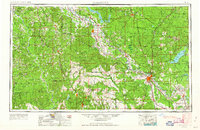 1953 Alexandria1963 Print · USGSCentral Louisiana during the early fifties is mapped here at the intersection of the piney woods and the Red River valley. Genealogists and historians can trace the rail-and-river network connecting towns like Alexandria, Natchitoches, and the grounds of Camp Beauregard.3 unique versions available
 - 1955 Map of Alexandria
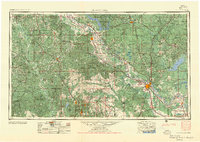 1955 Alexandria1955 Print · USGSCentral Louisiana in the mid-fifties is a landscape of river-port cities, sprawling timberlands, and massive military reservations. Genealogists and historians can trace the rail networks of the Texas & Pacific RR and locate sites like Camp Polk Military Reservation and Natchitoches.
 - 1958 Map of Pollock, 1959 Print
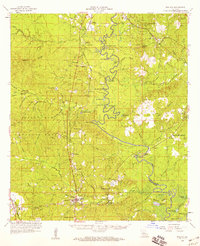 1958 Pollock1959 Print · USGSCentral Louisiana in the late fifties shows a landscape of parish river-crossings and timber-country rail lines. Researchers can trace the river landings at Thompson Ferry, the early infrastructure of Camp Hardtner, and rural life around White Sulphur Springs.3 unique versions available
 - 1985 Map of Pollock
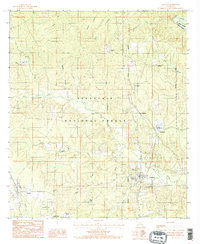 1985 Pollock1985 Print · USGSGrant Parish at the mid-eighties reveals a landscape defined by the deep timber of Kisatchie National Forest and rural crossroads. Local researchers can trace family roots around Pollock and Bentley, or locate landmarks like Stuart Lake and Sand Spur.2 unique versions available
 - 1986 Map of Winnfield
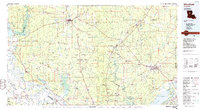 1986 Winnfield1986 Print · USGSCentral Louisiana in the mid-1980s was a landscape of timber towns and rail junctions woven through the Kisatchie National Forest. Researchers can trace the legacy of the lumber and rail eras through settlements like Good Pine, Packton, and Zenoria.2 unique versions available
 - 1999 Map of Pollock, 2001 Print
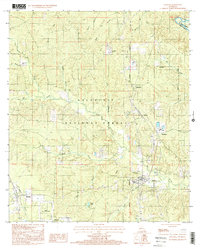 1999 Pollock2001 Print · USGSThe woodlands of Grant Parish are shown in the late 1990s as the Kisatchie National Forest defines the local economy and landscape. Researchers can locate small communities like Pollock, trace the path of the Louisiana Meridian, and find the Stuart Pine Seed Orchard.
 - 2003 Map of Pollock, 2005 Print
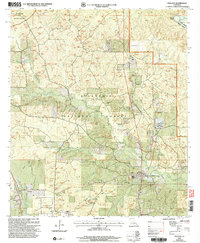 2003 Pollock2005 Print · USGSGrant Parish at the turn of the millennium shows a landscape defined by federal timberlands and small-town junctions. Researchers can trace local landmarks like the Catahoula Ranger Station, Cem, and the distinct No Ground Penetration Area.
 - 2012 Map of Pollock, 2012 Print
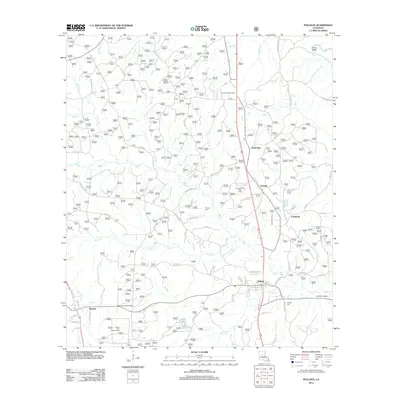 2012 Pollock2012 Print · USGSNorth Louisiana's timber and creek lands are surveyed here during the early twenty-first century. Family researchers can locate Pollock Cem and Guynes Cemetery, or trace rural communities like Antonia and Bentley near Stuart Lake.
 - 2015 Map of Pollock, 2015 Print
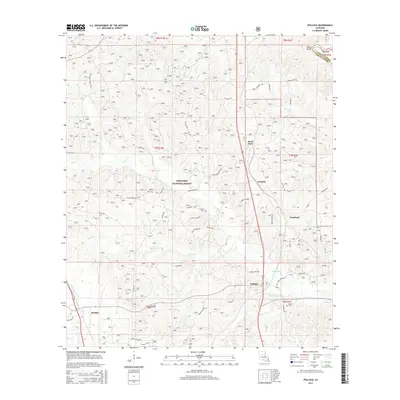 2015 Pollock2015 Print · USGSGrant Parish's timbered terrain and rural settlements are shown here during the early twenty-first century. Researchers can trace family sites near Pollock and Bentley, or locate quiet landmarks like Guynes Cemetery and Stuart Lake.
 - 2018 Map of Pollock, 2018 Print
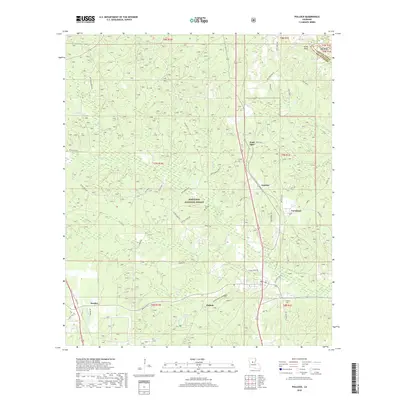 2018 Pollock2018 Print · USGSLouisiana's pinewoods and the Kisatchie National Forest are mapped here in the late 2010s. Researchers can locate local landmarks like Pollock Cem, the settlement of Bentley, and water features including Stuart Lake and Plagon Bayou.
 - 2020 Map of Pollock, 2020 Print
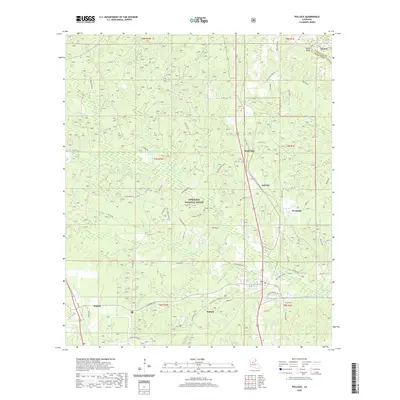 2020 Pollock2020 Print · USGSThe pine-heavy landscape of Grant Parish comes alive in this survey of the Kisatchie National Forest area. Genealogists and historians can trace family locations near Pollock, Bentley, and Guynes Cemetery, or follow the winding courses of Flagon Bayou and Sugar Br.
 - 2024 Map of Pollock, 2024 Print
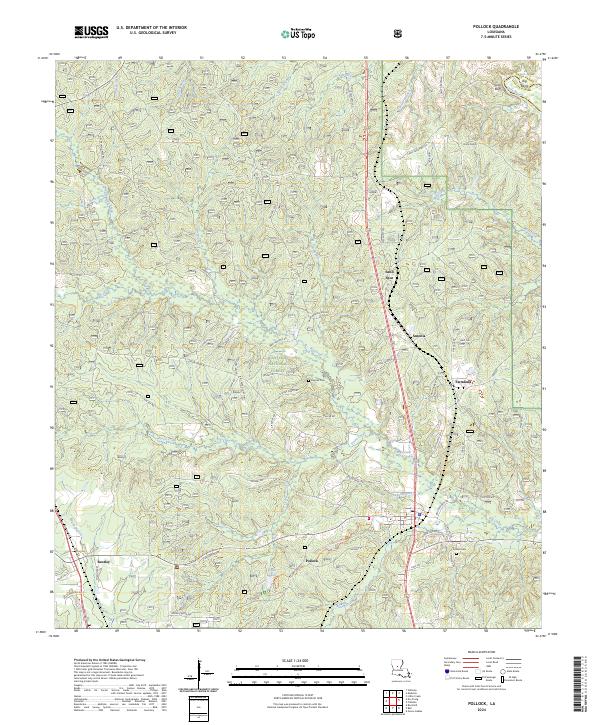 2024 Pollock2024 Print · USGSLouisiana timber country comes to life in this contemporary study of the area surrounding Pollock and the Kisatchie National Forest. Researchers can trace local lineage through the Pollock Cem and Guynes Cem or explore the drainage basins of Big Creek and Stuart Lake.
End of results
Showing maps 1-14 of 14
Top cities near Farmland
- Alexandria historical maps
- Pineville historical maps
- Ball historical maps
- Dry Prong historical maps
- Pollock historical maps
- Georgetown historical maps
Frequently asked questions
- What are the different types of historical maps available for Farmland?
- What is the oldest map of Farmland?
- Where can I purchase historical maps of Farmland for my home or office?
- Where can I download high-res historical maps of Farmland?
- Are there historical topographic maps available for Farmland?
- Is there historical aerial imagery available for Farmland?
- Where are historical maps of Farmland sourced from?