1950s Maps of St. John the Baptist Parish, Louisiana
Explore 11 historic maps of St. John the Baptist Parish from the 1950s. These maps offer a rare glimpse into what life looked like during the 1950s — showing old roads, neighborhoods, homes, and landmarks that have changed or disappeared over time.
Whether you're researching your family's past, planning a metal detecting trip, or studying how St. John the Baptist Parish's landscape evolved across the 1950s, these high-resolution maps are a powerful tool for exploring the history of this region.
- Focus on a specific era: All maps on this page are from the 1950s, giving you a focused view of this time period.
- See what’s changed: Compare century-old streets, trails, and buildings to today's modern landscape using overlays and satellite layers.
- Research with precision: Use these maps for genealogy, historical research, land use analysis, or educational projects.
- View, download, or print: Maps are fully viewable online in high resolution, and can be downloaded or printed for your own records.
Start exploring St. John the Baptist Parish's history through authentic maps from the 1950s. This is your window into the past.
St. John the Baptist Parish, LA maps
(11)- 1950 Map of Covington, 1965 Print
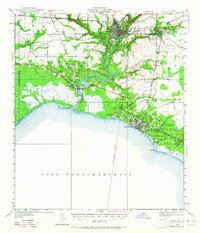 1950 Covington1965 Print · USGSSt. Tammany Parish at mid-century reveals a landscape of river-port towns and growing lakeshore communities before the full expansion of the New Orleans suburbs. Genealogists can trace family sites near White Chapel, St James Ch, and the Rosenwald Sch or follow the historic Illinois Central rail line.
 - 1951 Map of Ponchatoula, 1953 Print
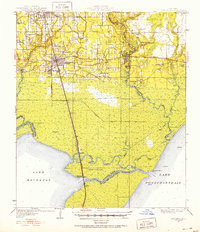 1951 Ponchatoula1953 Print · USGSThe swampy interface of Tangipahoa Parish is captured in the early fifties as the railroad reached across the wetlands toward New Orleans. Trace historical footprints at Manchac Akers P.O., find family sites like Edwards Cem, or locate the Pass Manchac L H.3 unique versions available
 - 1952 Map of Ruddock, 1953 Print
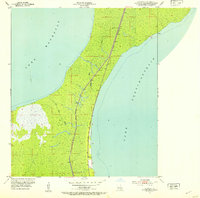 1952 Ruddock1953 Print · USGSThe Louisiana wetlands between the Great Lakes are captured here in the early fifties, centered on the railroad siding of Ruddock. Trace the Illinois Central rail line and local landmarks like the Cem and Ruddock Canal.
 - 1952 Map of Laplace, 1953 Print
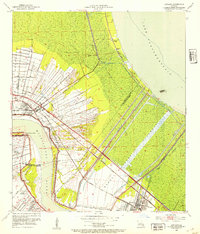 1952 Laplace1953 Print · USGSIn the early fifties, this area of the river parishes was defined by the intersection of industrial growth and massive flood control projects. Researchers can trace the riverfront footprints of Glen Dale Plantation and the Old Killona Sch alongside the sprawling Bonnet Carre Floodway.
 - 1952 Map of La Branche, 1953 Print
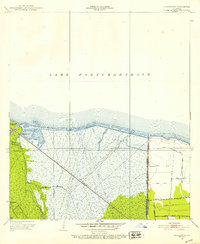 1952 La Branche1953 Print · USGSThe St. Charles Parish shoreline at mid-century reveals a landscape of industrial marshland and massive flood control projects. Historians can trace the Illinois Central rail line through the wetlands, past an Oil Field and the Bonnet Carre Floodway.2 unique versions available
 - 1953 Map of Spanish Fort, 1954 Print
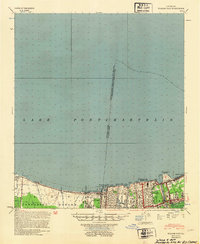 1953 Spanish Fort1954 Print · USGSCoastal Jefferson and Orleans Parishes are shown in the early fifties during a period of significant drainage and airfield expansion. Researchers can trace the development of Metairie and West End or locate landmarks like Spanish Fort and the New Orleans Airport.
 - 1954 Map of Lutcher
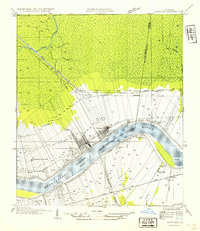 1954 Lutcher1954 Print · USGSMid-century St. James Parish is defined here by its riverbend sugar economy and the distinct ribbon-lot settlement patterns of the riverbanks. Researchers can trace family history through sites like St Martin Cem, St Joseph Ch, and the Longview Sugar Mill.
 - 1954 Map of Petite Amite River
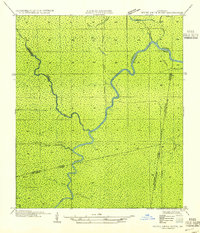 1954 Petite Amite River1954 Print · USGSThe swampy confluence of four Louisiana parishes is captured here in the mid-1930s as industrial footprints begin to fade. Researchers can trace the legacy of lost settlements like Garyville and Northern among the winding paths of the Petite Amite River and Bayou Reponds.
 - 1954 Map of Baton Rouge, 1974 Print
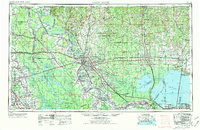 1954 Baton Rouge1974 Print · USGSSoutheast Louisiana in the mid-fifties is captured here during a period of transition for its river and rail economies. Researchers can trace the path of the Mississippi River and find landmarks like the Bonnet Carre Spillway and Bayou Plaquemine.2 unique versions available
 - 1956 Map of Baton Rouge
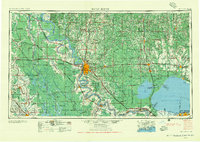 1956 Baton Rouge1956 Print · USGSSouth Louisiana at the height of the mid-century oil boom shows a landscape of river oxbows and rising industry. Researchers can trace family roots through river towns like Scotlandville or locate early industrial sites and Oil wells near Lake Maurepas.
 - 1957 Map of Bonnet Carre, 1958 Print
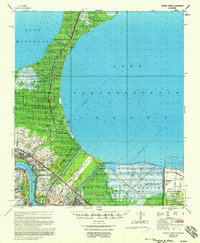 1957 Bonnet Carre1958 Print · USGSCoastal Louisiana at the height of mid-century industrialization reveals a landscape shaped by river management and oil discovery. Trace the footprints of Anchor Plantation, follow the Illinois Central through Ruddock, and see the vast Bonnet Carre Floodway.
End of results
Showing maps 1-11 of 11
Top cities of St. John the Baptist Parish
Frequently asked questions
- What are the different types of historical maps available for St. John the Baptist Parish?
- What is the oldest map of St. John the Baptist Parish?
- Where can I purchase historical maps of St. John the Baptist Parish for my home or office?
- Where can I download high-res historical maps of St. John the Baptist Parish?
- Are there historical topographic maps available for St. John the Baptist Parish?
- Is there historical aerial imagery available for St. John the Baptist Parish?
- Where are historical maps of St. John the Baptist Parish sourced from?