1900s (20th Century) Maps of Magnolia Plantation, Louisiana
Explore 10 historic maps of Magnolia Plantation from the 1900s (20th Century). These maps offer a rare glimpse into what life looked like during the 1900s — showing old roads, neighborhoods, homes, and landmarks that have changed or disappeared over time.
Whether you're researching your family's past, planning a metal detecting trip, or studying how Magnolia Plantation's landscape evolved across the 1900s, these high-resolution maps are a powerful tool for exploring the history of this region.
- Focus on a specific era: All maps on this page are from the 1900s, giving you a focused view of this time period.
- See what’s changed: Compare century-old streets, trails, and buildings to today's modern landscape using overlays and satellite layers.
- Research with precision: Use these maps for genealogy, historical research, land use analysis, or educational projects.
- View, download, or print: Maps are fully viewable online in high resolution, and can be downloaded or printed for your own records.
Start exploring Magnolia Plantation's history through authentic maps from the 1900s. This is your window into the past.
Magnolia Plantation, LA maps
(10)- 1939 Map of Gibson, 1956 Print
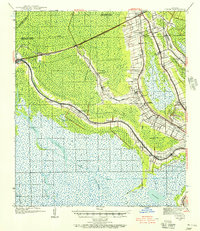 1939 Gibson1956 Print · USGSCoastal Louisiana at the end of the thirties was a world of rail-side settlements and bayou-based commerce. You can trace the lineage of small parish communities through Beattieville Gray P O, Mt Pilgrim Ch, and the Halfway Cem.
 - 1941 Map of Gibson
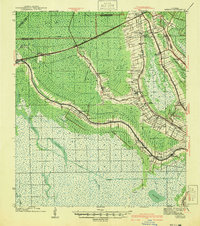 1941 Gibson1941 Print · USGSCajun country and the sugarcane belt are mapped here just before the war, showing the rail-and-water corridors of the southern parishes. Genealogists can trace family names and local landmarks through sites like Beattleville Gray P O, Bull Run Sch, and Halfway Cem.
 - 1944 Map of Gibson
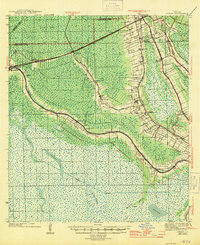 1944 Gibson1944 Print · USGSCoastal Louisiana during the mid-forties reveals a landscape defined by delta bayous and early industrial rail lines. Genealogists can locate family landmarks like Mt Pilgrim Ch, St Johns Ch, and the Beattieville Gray PO.
 - 1945 Map of New Orleans
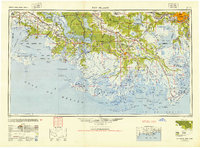 1945 New Orleans1945 Print · USGSCoastal Louisiana and the Mississippi delta are captured here just after the war, showing the region's transition into a modern industrial and transit hub. Genealogists can trace family settlements along Bayou Teche or identify rail stops for the Illinois Central and Texas & Pacific lines.
 - 1963 Map of New Orleans
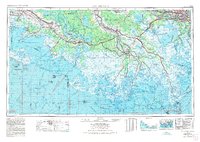 1963 New Orleans1963 Print · USGSCoastal Louisiana in the mid-twentieth century reveals a complex world of bayou settlements, expanding oil fields, and vital rail networks. Genealogists and historians can trace family roots through river towns like Thibodaux or follow the Southern Pacific line through Franklin and Patterson.4 unique versions available
 - 1963 Map of Gray, 1965 Print
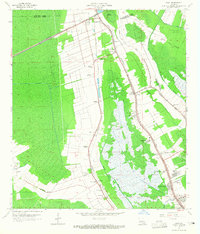 1963 Gray1965 Print · USGSCoastal Louisiana at the height of the mid-century oil boom reveals a landscape of deep-rooted sugar plantations and evolving industrial fields. Researchers can trace historic family lands like Magnolia Plantation or locate local landmarks including St Bridget Ch and the Price Sch.4 unique versions available
 - 1964 Map of Gibson, 1965 Print
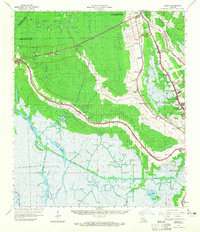 1964 Gibson1965 Print · USGSSouthern Louisiana in the mid-1960s was a landscape defined by the intersection of the energy industry and historic plantations. Genealogists can trace family roots through sites like Magnolia Cem, Buzzard Roost Ch, and the Edward Daigle Drive-in Theater.3 unique versions available
 - 1966 Map of New Orleans
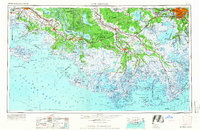 1966 New Orleans1966 Print · USGSCoastal Louisiana in the mid-1960s reveals a transition from traditional bayou life to an intensive offshore oil and gas economy. Researchers can trace the rail lines of the Southern Pacific RR through Morgan City or locate the Eugene Island Lighthouse among the delta's shifting marshes.
 - 1983 Map of New Orleans
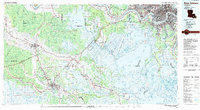 1983 New Orleans1983 Print · USGSSoutheast Louisiana in the early eighties reveals a landscape where the urban density of New Orleans meets the vast wetlands of the Salvador State Wildlife Management Area. Genealogists and historians can trace the traditional bayou settlements of Houma and Thibodaux alongside major rail lines like the Southern Pacific.2 unique versions available
 - 1998 Map of Gray, 2000 Print
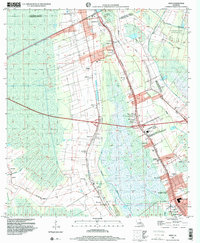 1998 Gray2000 Print · USGSCoastal Louisiana's Terrebonne Parish is captured here at the end of the millennium, showing a landscape defined by historic plantation lands and marshy bayous. Researchers can trace the legacy of sites like Magnolia Plantation and Rebecca Plantation or locate family plots at the Garden of Memories Cemetery and St Lukes Church and Cemetery.
End of results
Showing maps 1-10 of 10
Top cities near Magnolia Plantation
Frequently asked questions
- What are the different types of historical maps available for Magnolia Plantation?
- What is the oldest map of Magnolia Plantation?
- Where can I purchase historical maps of Magnolia Plantation for my home or office?
- Where can I download high-res historical maps of Magnolia Plantation?
- Are there historical topographic maps available for Magnolia Plantation?
- Is there historical aerial imagery available for Magnolia Plantation?
- Where are historical maps of Magnolia Plantation sourced from?