1900s (20th Century) Maps of Sandy Hill, Louisiana
Explore 10 historic maps of Sandy Hill from the 1900s (20th Century). These maps offer a rare glimpse into what life looked like during the 1900s — showing old roads, neighborhoods, homes, and landmarks that have changed or disappeared over time.
Whether you're researching your family's past, planning a metal detecting trip, or studying how Sandy Hill's landscape evolved across the 1900s, these high-resolution maps are a powerful tool for exploring the history of this region.
- Focus on a specific era: All maps on this page are from the 1900s, giving you a focused view of this time period.
- See what’s changed: Compare century-old streets, trails, and buildings to today's modern landscape using overlays and satellite layers.
- Research with precision: Use these maps for genealogy, historical research, land use analysis, or educational projects.
- View, download, or print: Maps are fully viewable online in high resolution, and can be downloaded or printed for your own records.
Start exploring Sandy Hill's history through authentic maps from the 1900s. This is your window into the past.
Sandy Hill, LA maps
(10)- 1941 Map of Slagle
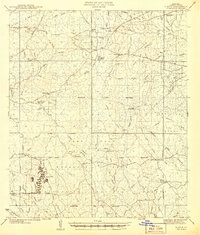 1941 Slagle1941 Print · USGSVernon Parish at the start of the 1940s reveals a landscape rapidly adapting to military mobilization. Genealogists and historians can trace the foundations of Camp Polk alongside rural community landmarks like Slagle, Ebenezer Ch, and the Big Creek Sch.
 - 1944 Map of Slagle
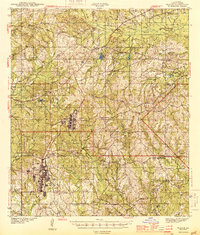 1944 Slagle1944 Print · USGSVernon Parish is shown at the height of World War II activity as the massive Camp Polk Military Reservation expands across the landscape. Genealogists and historians can trace local landmarks like Slagle, Big Creek Sch, and Zion Hill Cem alongside the complex web of an active Logging Railroad.
 - 1953 Map of Alexandria, 1963 Print
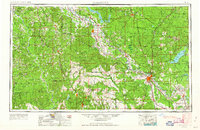 1953 Alexandria1963 Print · USGSCentral Louisiana during the early fifties is mapped here at the intersection of the piney woods and the Red River valley. Genealogists and historians can trace the rail-and-river network connecting towns like Alexandria, Natchitoches, and the grounds of Camp Beauregard.3 unique versions available
 - 1954 Map of Slagle, 1958 Print
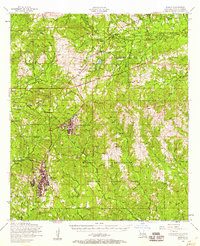 1954 Slagle1958 Print · USGSVernon Parish at the height of the mid-century military era shows the expansive development of North Fort Polk alongside deep-rooted rural communities. Genealogists and local historians can trace family locations through numerous sites like Smart Chapel Cem, Self Cem, and Mt Bethel Church.2 unique versions available
 - 1954 Map of Fort Polk, 1958 Print
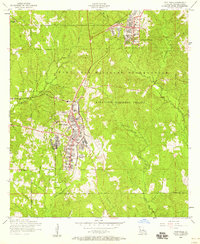 1954 Fort Polk1958 Print · USGSFort Polk and the Vernon Parish pine woods appear here in the mid-fifties during a period of significant military infrastructure development. Researchers can trace historic cemeteries such as 2 In Hill Cemetery, the Kansas City Southern rail line, and the winding course of Whiskey Chitto Creek.2 unique versions available
 - 1955 Map of Alexandria
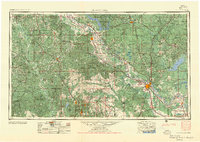 1955 Alexandria1955 Print · USGSCentral Louisiana in the mid-fifties is a landscape of river-port cities, sprawling timberlands, and massive military reservations. Genealogists and historians can trace the rail networks of the Texas & Pacific RR and locate sites like Camp Polk Military Reservation and Natchitoches.
 - 1974 Map of Fort Polk, 1975 Print
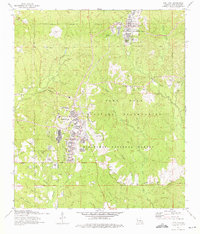 1974 Fort Polk1975 Print · USGSVernon Parish at the height of the mid-seventies reveals a landscape defined by the expansive Fort Polk Military Reservation and national forest lands. Genealogists and historians can trace numerous rural burial sites like Smart Cem and Cemetery Number 7 alongside infrastructure like the Kansas City Southern railroad.3 unique versions available
 - 1974 Map of Fort Polk, 1975 Print
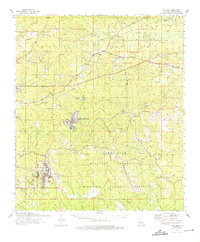 1974 Fort Polk1975 Print · USGSThe piney woods of Vernon Parish are shown during the mid-seventies, defined by the sprawling Fort Polk Military Reservation and national forest lands. Researchers can find numerous family cemeteries and remote outposts like Slagle, Simpson, and the Zion Hill Cem.
 - 1977 Map of Fort Polk
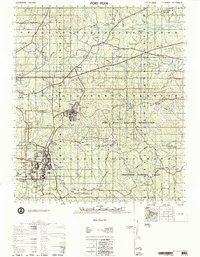 1977 Fort Polk1977 Print · USGSVernon Parish in the late seventies shows the massive footprint of the Fort Polk Military Reservation alongside the Kisatchie National Forest. Genealogists and local historians can trace family roots through numerous sites like Antioch Church & Cem and the remote Glass Window Cemetery.
 - 1986 Map of Leesville, 1988 Print
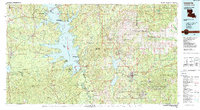 1986 Leesville1988 Print · USGSThe Louisiana-Texas borderlands in the mid-eighties centered on the vast Toledo Bend Reservoir and the timber-rich piney woods. Researchers can trace the Kansas City Southern RR corridor or locate old communities like Wiergate, Rosevine, and Sandel.
End of results
Showing maps 1-10 of 10
Top cities near Sandy Hill
- Leesville historical maps
- New Llano historical maps
- Rosepine historical maps
- Anacoco historical maps
- Simpson historical maps
Frequently asked questions
- What are the different types of historical maps available for Sandy Hill?
- What is the oldest map of Sandy Hill?
- Where can I purchase historical maps of Sandy Hill for my home or office?
- Where can I download high-res historical maps of Sandy Hill?
- Are there historical topographic maps available for Sandy Hill?
- Is there historical aerial imagery available for Sandy Hill?
- Where are historical maps of Sandy Hill sourced from?