Old Maps of Simpson, Louisiana
Explore 46 old maps of Simpson, spanning from 1937 to today. These high-resolution historic maps reveal how streets, neighborhoods, landmarks, and natural features evolved over time — perfect for genealogy, metal detecting, research, and local history exploration.
What you can do with these maps:
- See how Simpson changed over time: Compare historical maps to modern-day views to trace roads, homesites, rail lines & more.
- View detailed metadata: Each map includes creators, publishers, year, scale, and archive source.
- Overlay maps with satellite & LiDAR: Visualize the past alongside modern tools to explore terrain & human change.
- Trusted historical sources: Maps sourced from the USGS, Library of Congress, and other archives.
- Access maps your way: View online, download high-res files, or order prints for personal or research use.
Start exploring old maps of Simpson to uncover forgotten places, hidden landmarks, and the deep history beneath your feet.
Simpson, LA maps
(46)- 1937 Map of Chopin SW
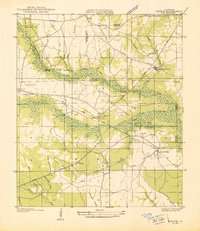 1937 Chopin SW1937 Print · USGSThe timber-rich borderlands of Natchitoches, Rapides, and Vernon parishes are captured here in the late thirties as logging operations dominated the landscape. Researchers can trace old Logging Railroad routes and find long-established sites like Comrade Cem and Burnstown.
 - 1941 Map of Slagle
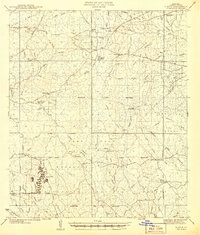 1941 Slagle1941 Print · USGSVernon Parish at the start of the 1940s reveals a landscape rapidly adapting to military mobilization. Genealogists and historians can trace the foundations of Camp Polk alongside rural community landmarks like Slagle, Ebenezer Ch, and the Big Creek Sch.
 - 1942 Map of Kisatchie
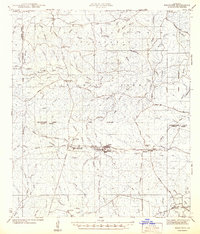 1942 Kisatchie1942 Print · USGSThe timberlands of Natchitoches and Vernon Parishes are captured here in the early 1940s, showing the dense network of company towns and rail lines. Genealogists and researchers can locate timber settlements like Alco, Kurthwood, and Hutton, plus the CCC Camp and Silver Creek Church.
 - 1943 Map of Leander
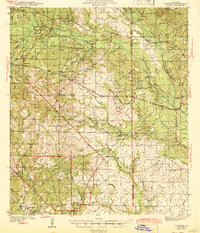 1943 Leander1943 Print · USGSVernon and Rapides Parishes are shown in the early 1940s as the regional economy shifted from timber production to military training. Researchers can trace the Old Logging Railroad and locate vanished company centers like Fullerton or rural landmarks like Mt Moriah Ch.2 unique versions available
 - 1943 Map of Kisatchie
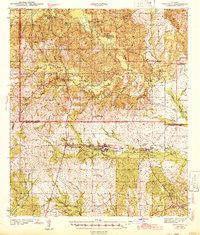 1943 Kisatchie1943 Print · USGSDuring the early 1940s, this portion of Natchitoches Parish was a hive of timber activity centered around the Red River and Gulf Railroad. Researchers can trace old industry sites like Kurthwood and Alco or locate family sites at Robinson Cem and Kisatchie Union Ch.
 - 1944 Map of Chopin
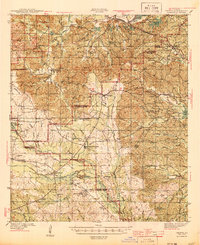 1944 Chopin1944 Print · USGSCentral Louisiana during the early 1940s shows a landscape defined by timber harvesting and the winding Red River. Local historians can trace logging tracks and old community centers like Zimmerman Camp, Mora Ch, and Galbraith Sta.
 - 1944 Map of Slagle
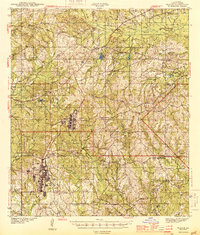 1944 Slagle1944 Print · USGSVernon Parish is shown at the height of World War II activity as the massive Camp Polk Military Reservation expands across the landscape. Genealogists and historians can trace local landmarks like Slagle, Big Creek Sch, and Zion Hill Cem alongside the complex web of an active Logging Railroad.
 - 1948 Map of Chopin, 1956 Print
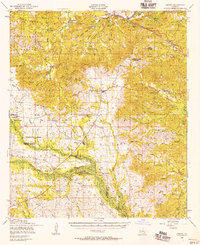 1948 Chopin1956 Print · USGSLouisiana's timber and rail history comes to life in this mid-century survey of the rural backcountry spanning Natchitoches and Rapides Parishes. Researchers can trace the legacy of small communities and family-named sites like Galbraith Sta, Temple Spur, and the Blackwell Cem.
 - 1953 Map of Alexandria, 1963 Print
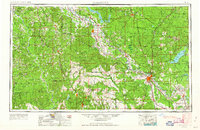 1953 Alexandria1963 Print · USGSCentral Louisiana during the early fifties is mapped here at the intersection of the piney woods and the Red River valley. Genealogists and historians can trace the rail-and-river network connecting towns like Alexandria, Natchitoches, and the grounds of Camp Beauregard.3 unique versions available
 - 1954 Map of Slagle, 1958 Print
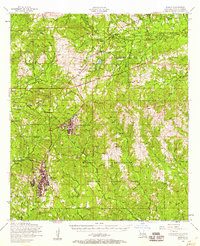 1954 Slagle1958 Print · USGSVernon Parish at the height of the mid-century military era shows the expansive development of North Fort Polk alongside deep-rooted rural communities. Genealogists and local historians can trace family locations through numerous sites like Smart Chapel Cem, Self Cem, and Mt Bethel Church.2 unique versions available
 - 1954 Map of Leander, 1958 Print
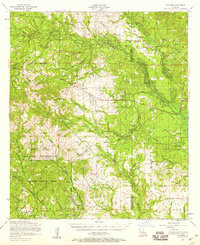 1954 Leander1958 Print · USGSIn the mid-1950s, this portion of Louisiana shows the evolving landscape of Fort Polk and the timber-rich Kisatchie National Forest. Researchers can trace old logging routes like the dismantled railroad and locate sites like the Floctaw School and Hicks Crossing.2 unique versions available
 - 1954 Map of Kisatchie, 1958 Print
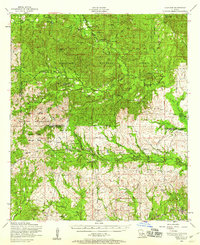 1954 Kisatchie1958 Print · USGSNatchitoches and Vernon Parishes come alive in this mid-century survey of timberlands and military training grounds. Genealogists can trace family names at the Billy Dowden Cem and West Cem, or locate lost homes near Kurthwood and the dismantled railroad.3 unique versions available
 - 1954 Map of Burton Creek, 1958 Print
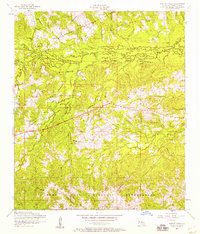 1954 Burton Creek1958 Print · USGSVernon Parish in the mid-fifties shows a landscape transitioning between rural life and military expansion. Genealogists and local historians can trace family ties at Mt Pleasant Cemetery or Glass Window Cemetery, while locating the dismantled railroad and the community at Hicks.
 - 1954 Map of Hutton, 1958 Print
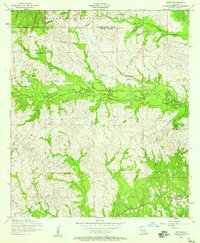 1954 Hutton1958 Print · USGSLouisiana's central piney woods come into focus during the mid-fifties, showing the rural communities of Natchitoches and Vernon parishes. You can trace the path of a dismantled railroad and locate family sites like Robinson Cemetery or Ballview Cemetery.3 unique versions available
 - 1954 Map of Temple, 1959 Print
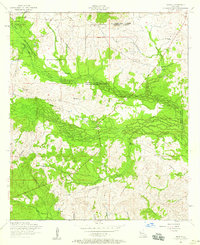 1954 Temple1959 Print · USGSCentral Louisiana parish borders meet in the mid-1950s within the wooded reaches of the Kisatchie National Forest. Genealogists can locate family landmarks like Comrade Cemetery, Burnstown, and the winding path of a dismantled railroad.2 unique versions available
 - 1954 Map of Lacamp, 1959 Print
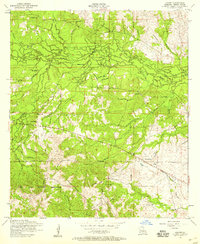 1954 Lacamp1959 Print · USGSThe timber lands and military grounds of Vernon Parish are captured here in the mid-1950s during a period of transition. Genealogists and historians can trace former rail lines and remote communities at Hicks, Pine Island Cemetery, and the Fort Polk Military Reservation.
 - 1954 Map of Chopin, 1959 Print
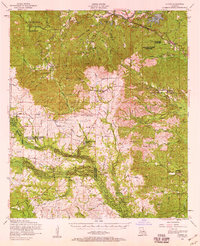 1954 Chopin1959 Print · USGSCentral Louisiana in the mid-fifties shows a landscape defined by timber and the Cane River valley. Genealogists and historians can trace numerous remote cemeteries and churches, such as Gorum Cem, Holy Family Church, and the logging community at Zimmerman Camp.2 unique versions available
 - 1955 Map of Alexandria
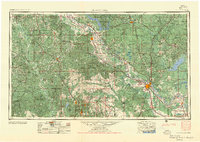 1955 Alexandria1955 Print · USGSCentral Louisiana in the mid-fifties is a landscape of river-port cities, sprawling timberlands, and massive military reservations. Genealogists and historians can trace the rail networks of the Texas & Pacific RR and locate sites like Camp Polk Military Reservation and Natchitoches.
 - 1974 Map of Simpson South, 1975 Print
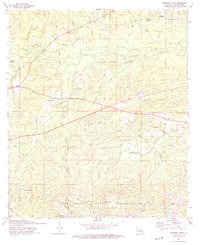 1974 Simpson South1975 Print · USGSIn the piney woods of mid-1970s Vernon Parish, this survey reveals the convergence of rural life and military expansion. Genealogists can trace family roots through the Union Grove Cem, Glass Window Cem, and the historic Schoolhouse near Mayo.2 unique versions available
 - 1974 Map of Fort Polk, 1975 Print
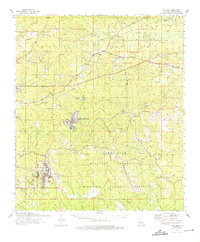 1974 Fort Polk1975 Print · USGSThe piney woods of Vernon Parish are shown during the mid-seventies, defined by the sprawling Fort Polk Military Reservation and national forest lands. Researchers can find numerous family cemeteries and remote outposts like Slagle, Simpson, and the Zion Hill Cem.
 - 1977 Map of Fort Polk
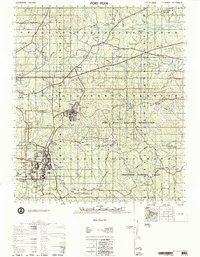 1977 Fort Polk1977 Print · USGSVernon Parish in the late seventies shows the massive footprint of the Fort Polk Military Reservation alongside the Kisatchie National Forest. Genealogists and local historians can trace family roots through numerous sites like Antioch Church & Cem and the remote Glass Window Cemetery.
 - 1978 Map of Lacamp, 1979 Print
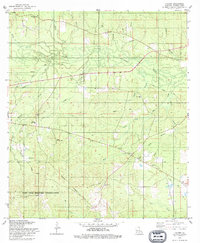 1978 Lacamp1979 Print · USGSVernon Parish in the late seventies is a landscape of creek-fed bottomlands and the expanding footprint of a major army base. Genealogists can locate family sites at Pine Island Cem and Scott Cem, or trace the Old Railroad Grade near Hicks Crossing.
 - 1986 Map of Alexandria
 1986 Alexandria1986 Print · USGSCentral Louisiana in the mid-eighties shows a landscape of strategic military installations and deep river-valley agriculture. Researchers can trace the footprints of England Air Force Base, Camp Beauregard, and the extensive Kisatchie National Forest.2 unique versions available
 - 1986 Map of Leesville, 1988 Print
 1986 Leesville1988 Print · USGSThe Louisiana-Texas borderlands in the mid-eighties centered on the vast Toledo Bend Reservoir and the timber-rich piney woods. Researchers can trace the Kansas City Southern RR corridor or locate old communities like Wiergate, Rosevine, and Sandel.
 - 2003 Map of Simpson North, 2005 Print
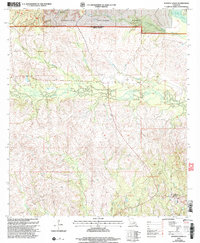 2003 Simpson North2005 Print · USGSNorth of Simpson at the turn of the millennium, this area of Vernon Parish shows a landscape of timber and winding creeks. Genealogists can locate family sites such as Robinson Cem and Welcome Cem or the settlements of Hutton and Simpson.
Showing maps 1-25 of 46
Frequently asked questions
- What are the different types of historical maps available for Simpson?
- What is the oldest map of Simpson?
- Where can I purchase historical maps of Simpson for my home or office?
- Where can I download high-res historical maps of Simpson?
- Are there historical topographic maps available for Simpson?
- Is there historical aerial imagery available for Simpson?
- Where are historical maps of Simpson sourced from?