1980s Maps of Milo, Maine
Explore 7 historic maps of Milo from the 1980s. These maps offer a rare glimpse into what life looked like during the 1980s — showing old roads, neighborhoods, homes, and landmarks that have changed or disappeared over time.
Whether you're researching your family's past, planning a metal detecting trip, or studying how Milo's landscape evolved across the 1980s, these high-resolution maps are a powerful tool for exploring the history of this region.
- Focus on a specific era: All maps on this page are from the 1980s, giving you a focused view of this time period.
- See what’s changed: Compare century-old streets, trails, and buildings to today's modern landscape using overlays and satellite layers.
- Research with precision: Use these maps for genealogy, historical research, land use analysis, or educational projects.
- View, download, or print: Maps are fully viewable online in high resolution, and can be downloaded or printed for your own records.
Start exploring Milo's history through authentic maps from the 1980s. This is your window into the past.
Milo, ME maps
(7)- 1983 Map of Milo South, 1984 Print
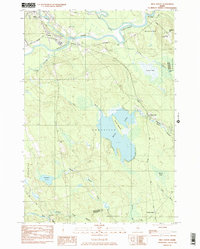 1983 Milo South1984 Print · USGSSouthern Piscataquis County in the early 1980s reveals a landscape of railroad junctions and river valleys. Genealogists and local historians can trace the B & A line through Derby or locate ancestral sites like Orneville Cem and Storers Corner.
 - 1983 Map of South Sebec, 1984 Print
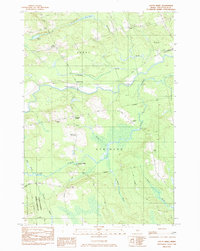 1983 South Sebec1984 Print · USGSPiscataquis County remains a patchwork of riverfront settlements and managed woodlands in the early eighties. Genealogists and local historians can trace the foundations of Atkinson Mills or locate family plots at Hart Cem and Farnham Cem.
 - 1985 Map of Lincoln, 1994 Print
 1985 Lincoln1994 Print · USGSPenobscot County in the mid-eighties remains a landscape of river-based commerce and sprawling timberlands connected by rail. You can trace the historic paths of the Maine Central RR and Canadian Pacific RR or locate rural sites like Enfield Station and the Winn Cem.
 - 1986 Map of Dover-Foxcroft
 1986 Dover-Foxcroft1986 Print · USGSPiscataquis County at the edge of the great Maine woods is documented here in the mid-1980s, centered on the river-and-rail hubs of the interior. Trace the industrial footprints of Dover South Mills, the rail yards at Brownville Junction, or the historic Katahdin Iron Works.
 - 1986 Map of Lincoln
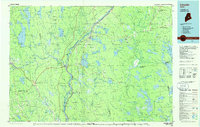 1986 Lincoln1986 Print · USGSMid-century Maine settlement and industry converge along the Penobscot and Piscataquis rivers during the 1980s. Researchers can trace the rail networks of the Maine Central and Bangor and Aroostook through towns like Howland and Milo.
 - 1988 Map of Milo North
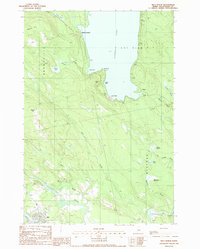 1988 Milo North1988 Print · USGSPiscataquis County's river valleys and wooded lakefronts are shown here in the late eighties, just as the landscape around Milo remained defined by its waterways. Researchers can trace the three-river confluence and find local landmarks like Knights Landing, Adams, and the Cem.
 - 1988 Map of Brownville Junction
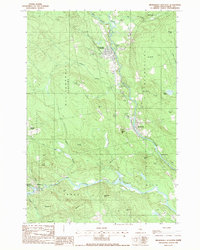 1988 Brownville Junction1988 Print · USGSPiscataquis County timber and rail lands come into focus in the late eighties at the meeting of the two river branches. Genealogists and local historians can trace family-named landmarks like Town Farm Hill or the small settlement at Barnard Corner.
End of results
Showing maps 1-7 of 7
Top cities near Milo
- Dover-Foxcroft historical maps
- Charleston historical maps
- Hudson historical maps
- Bradford historical maps
- Brownville historical maps
- Howland historical maps
See more
Top neighborhoods of Milo
Frequently asked questions
- What are the different types of historical maps available for Milo?
- What is the oldest map of Milo?
- Where can I purchase historical maps of Milo for my home or office?
- Where can I download high-res historical maps of Milo?
- Are there historical topographic maps available for Milo?
- Is there historical aerial imagery available for Milo?
- Where are historical maps of Milo sourced from?