Old Maps of Cherryfield, Maine for Genealogy
Trace your family roots with 57 historic maps of Cherryfield. These high-res maps reveal old neighborhoods, homesites, landmarks, and streets — helping you uncover where your ancestors lived and how the area evolved over time.
- Explore historic neighborhoods: Identify where your relatives may have lived in the 1800s or 1900s.
- Compare maps over time: Trace the changes in streets, buildings, and landmarks for multi-generational research.
- Perfect for genealogy & ancestry research: Used by family historians and researchers to map out lineage and migration.
These maps are an incredible resource for exploring your personal connection to Cherryfield's past.
Cherryfield, ME maps
(57)- 1902 Map of Cherryfield, 1962 Print
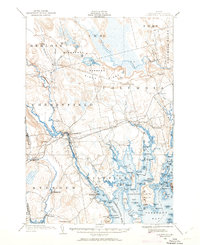 1902 Cherryfield1962 Print · USGSCoastal Washington County comes alive in the early 1900s, showing the vital connections between tidal rivers and the rails. Genealogists can trace family roots in Milbridge and Cherryfield, or locate old landings along the Steamboat Route.2 unique versions available
 - 1904 Map of Cherryfield
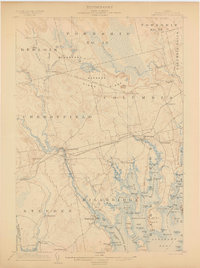 1904 Cherryfield1904 Print · USGSThe coastal and barrens landscape of Washington County is captured here at the start of the twentieth century. Genealogists and local historians can trace family-named points and early settlements from Cherryfield down to the shores of Narraguagus Bay and Millbridge.5 unique versions available
 - 1930 Map of Tunk Lake
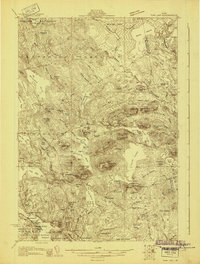 1930 Tunk Lake1930 Print · USGSHancock County was a landscape of timber and tide in the early 1930s, where the Maine Central rail line linked small coastal villages to the deep woods. Genealogists and historians can trace old homesteads in Donnells, rural education at Tunk Lake Sch, and the locations of sporting retreats like the Wichyup Club.
 - 1932 Map of Tunk Lake
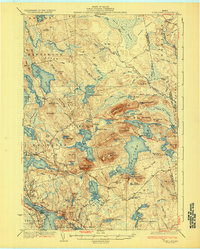 1932 Tunk Lake1932 Print · USGSThe coastal inlets and glacial highlands of Hancock County are meticulously detailed in the early 1930s. Researchers can trace the Maine Central rail line through Sullivan and locate vanished local landmarks like the Think Lake Sch and Wickypup Club.4 unique versions available
 - 1942 Map of Cherryfield
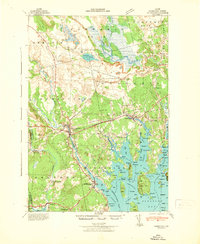 1942 Cherryfield1942 Print · USGSCoastal Washington County in the early 1940s reveals a landscape of tidal bays and glacial barrens. Trace family roots and old land patterns in Cherryfield, Millbridge, and Harrington, or locate the scientific U S C & G SURVEY BASE LINE.
 - 1942 Map of Tunk Lake
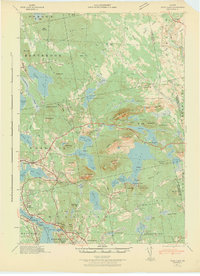 1942 Tunk Lake1942 Print · USGSHancock County’s inland peaks and coastal villages are captured here during the early 1940s, just as aerial photography began to modernize regional mapping. Researchers can locate the Tunk Lake Sch, coastal rail stops at Waukeag, and the prominent Fire Tower on Schoodic Mtn.
 - 1948 Map of Bangor
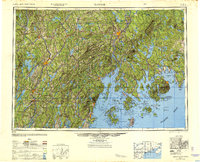 1948 Bangor1948 Print · USGSThe Maine coast and its industrial river valleys are captured here shortly after the war, showing the vital shipping and rail hubs of the late 1940s. Genealogists and historians can trace the tracks of the Maine Central RR connecting Bangor, Augusta, and Old Town.
 - 1948 Map of Harrington, 1971 Print
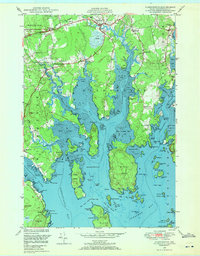 1948 Harrington1971 Print · USGSThe Downeast coast of Maine in the late 1940s reveals a landscape of tidal rivers and scattered coastal hamlets. Genealogists and historians can trace the foundations of Harrington and Marshville, locating community landmarks like Flat Bay Cem, Union Ch, and Eastside Sch.2 unique versions available
 - 1948 Map of Cherryfield, 1978 Print
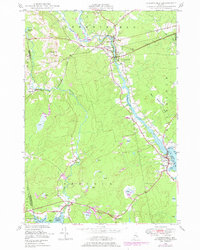 1948 Cherryfield1978 Print · USGSCoastal Washington County is captured here in the mid-twentieth century as the rail and river networks connected inland timber to the sea. Researchers can trace family sites in Cherryfield and Milbridge, or locate small historic settlements like Smithville and Unionville.
 - 1950 Map of Cherryfield
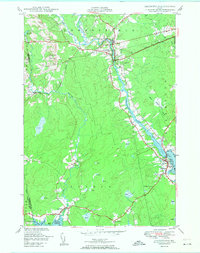 1950 Cherryfield1950 Print · USGSThe Narraguagus River valley and the coastal harbors of Washington County are shown here in the years following World War II. Local historians can trace the Maine Central railroad line through Unionville and Cherryfield, or locate family sites near Evergreen Cem and Steuben Harbor.
 - 1951 Map of Harrington
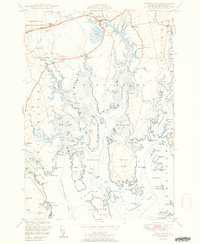 1951 Harrington1951 Print · USGSCoastal Washington County is captured here in the mid-century, showcasing a landscape of tidal inlets and small Down East villages. Researchers can locate family landmarks like Rock Maple Cem, the Union Ch, and rural schoolhouses including Marshville Sch.2 unique versions available
 - 1954 Map of Cherryfield
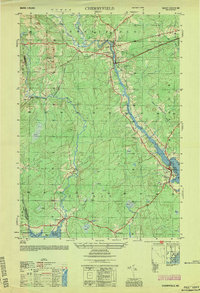 1954 Cherryfield1954 Print · USGSThe Narraguagus River valley and the coastal reaches of Washington County are shown here in the mid-fifties. Researchers can trace the Maine Central rail line through rural outposts like Unionville and Smithville or locate the Evergreen Cem near the riverbanks.
 - 1956 Map of Bangor, 1966 Print
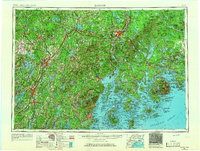 1956 Bangor1966 Print · USGSMid-century Maine comes alive in this survey of the rugged coast and river valleys during the 1950s. Genealogists and historians can trace the vital rail corridors of the Maine Central RR connecting timber towns like Old Town to the coast at Bar Harbor.3 unique versions available
 - 1957 Map of Tunk Lake, 1959 Print
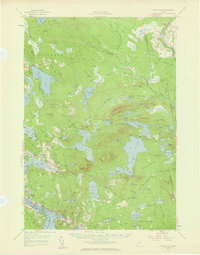 1957 Tunk Lake1959 Print · USGSCoastal Maine in the late 1950s shows a landscape defined by the Maine Central RR and tidal waters like Hog Bay. Local historians can trace family locations near Bayview Cem, the Union Ch, and settlements from Deblois to East Sullivan.4 unique versions available
 - 1960 Map of Bangor
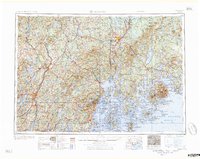 1960 Bangor1960 Print · USGSCentral Maine in the sixties reveals a landscape of river-powered industry and sprawling coastal island chains. Researchers can trace the rail corridors of the Maine Central or locate mid-century aviation landmarks like Dow Air Force Base.
 - 1961 Map of Bangor
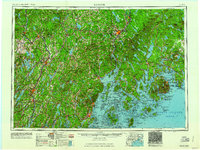 1961 Bangor1961 Print · USGSMid-century Maine comes alive through its busy river ports and rocky archipelagoes during a period of steady maritime and rail commerce. Researchers can trace the path of the Maine Central railroad and locate coastal landmarks from Acadia National Park to Vinalhaven Island.
 - 1961 Map of Eastport
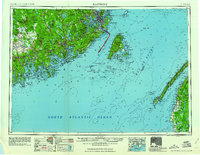 1961 Eastport1961 Print · USGSThe maritime borderlands of Maine and New Brunswick are captured here in the early sixties, showing a world defined by the Bay of Fundy. Researchers can trace the Maine Central Railroad to Machiasport or explore remote island villages like Grand Harbour and Welchpool.
 - 1969 Map of Eastport
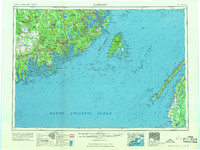 1969 Eastport1969 Print · USGSThe maritime borderlands of Washington County and New Brunswick appear in detail during the late sixties. Researchers can trace historic rail lines like the Maine Central Railroad and explore coastal settlements from Machias to St. Andrews.
 - 1976 Map of Eastport
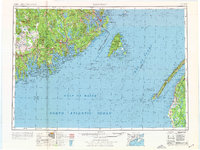 1976 Eastport1976 Print · USGSThe maritime borderlands of Maine and Nova Scotia come alive in this mid-seventies survey of the Downeast coast. Genealogists and historians can trace the shoreline settlements of Eastport, Lubec, and Machias, or cross the channel to find Acadian villages like Church Point and Meteghan Centre.
 - 1982 Map of Tunk Mountain, 1983 Print
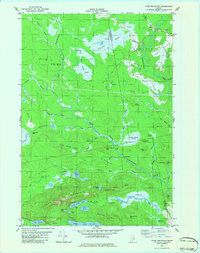 1982 Tunk Mountain1983 Print · USGSCoastal Maine's interior wetlands and granite peaks are documented in the early eighties as industry and nature intersected in the Deblois region. Genealogists and historians can trace family-named sites like Colson Branch Hill, the local Cem, and the old Spring River Dam.2 unique versions available
 - 1982 Map of Tunk Lake, 1983 Print
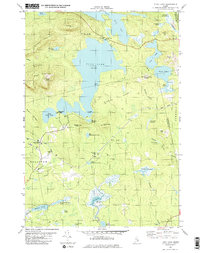 1982 Tunk Lake1983 Print · USGSHancock and Washington Counties are captured in the early 1980s, centered on the vast waters of Tunk Lake. Researchers can trace the path of the Maine Central railroad and locate historical sites like Big Chief Camps or Goodwin Siding.
 - 1984 Map of Schoodic Lake, 1985 Print
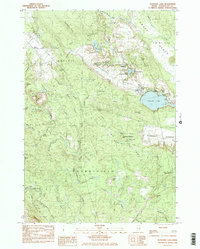 1984 Schoodic Lake1985 Print · USGSWashington County in the late 1970s and early 80s shows a landscape of blueberry production and wild river corridors. Trace family landmarks and local history through the Morse Cem, the Deblois Flight Strip, and the shores of Schoodic Lake.2 unique versions available
 - 1984 Map of Epping, 1985 Print
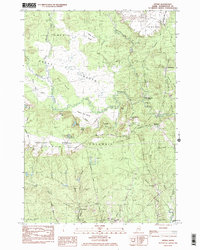 1984 Epping1985 Print · USGSCoastal Washington County in the late seventies is captured here, showing a landscape defined by vast peatlands and small river settlements. Researchers can locate Columbia Cem, the Little River Ch, and the winding Pleasant River through the Great Heath.2 unique versions available
 - 1985 Map of Bangor
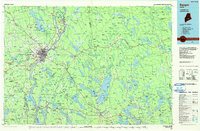 1985 Bangor1985 Print · USGSMid-Maine during the mid-eighties centers on the industrial pulse of the Penobscot River and its critical rail connections. Genealogists and historians can trace the development of river towns from Old Town to Ellsworth and locate regional landmarks like Fort Knox State Park.
 - 1985 Map of Machias, 1986 Print
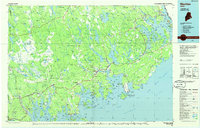 1985 Machias1986 Print · USGSThe Downeast coast of Maine in the 1980s reveals a landscape of deep-water bays, tidal rivers, and isolated timberlands. Researchers can trace the Maine Central rail line and locate coastal landmarks from Leighton Point to the U.S. Naval Radio Station.
Showing maps 1-25 of 57
Top cities near Cherryfield
- Bar Harbor historical maps
- Gouldsboro historical maps
- Franklin historical maps
- Milbridge historical maps
- Sullivan historical maps
- Addison historical maps
See more
Frequently asked questions
- What are the different types of historical maps available for Cherryfield?
- What is the oldest map of Cherryfield?
- Where can I purchase historical maps of Cherryfield for my home or office?
- Where can I download high-res historical maps of Cherryfield?
- Are there historical topographic maps available for Cherryfield?
- Is there historical aerial imagery available for Cherryfield?
- Where are historical maps of Cherryfield sourced from?