Old Maps of Cecil County, Maryland for Hiking & Exploration
Hike through history with 129 historic maps of Cecil County. Explore old trails, ghost towns, and forgotten backroads — perfect for outdoor adventurers and local explorers.
- Rediscover forgotten places: Map out old mining camps, roads, and footpaths that no longer exist on modern maps.
- Layer with modern tools: Combine with LiDAR or satellite views to plan hikes through historical terrain.
- Made for exploration: Popular among hikers, overlanders, and local history lovers.
Use these maps to find adventure and explore the hidden past of Cecil County.
Cecil County, MD maps
(129)- 1898 Map of Elkton
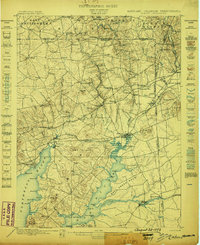 1898 Elkton1898 Print · USGSMaryland's Upper Chesapeake shoreline and the Pennsylvania borderlands come alive in this survey of late-Victorian Cecil County. Genealogists and historians can trace the early waterfront at Elkton Landing, find the Pivot Bridge on the canal, and locate vanished rail stops at Singerly and Bacon Hill.
 - 1898 Map of Tolchester
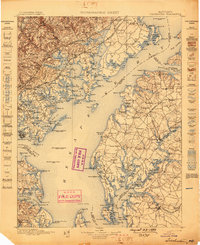 1898 Tolchester1898 Print · USGSThe upper Chesapeake Bay and its tidal tributaries are shown in the late 1890s, when steamships and railroads still dominated regional commerce. Trace the landings and rail stops that fueled the bay economy, from Buck Neck Landing to Stillpond Sta. and the historic Harford Furnace.
 - 1899 Map of Dover
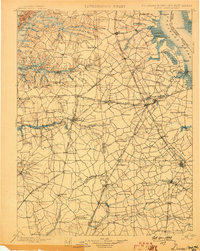 1899 Dover1899 Print · USGSDelaware and Maryland river country thrived in the late nineteenth century as a network of landings and rail lines. Trace old wharves at Cassidy Ldg., explore the area around Bohemia Mills, or locate maritime landmarks like Bombay Hook Light.2 unique versions available
 - 1900 Map of Elkton
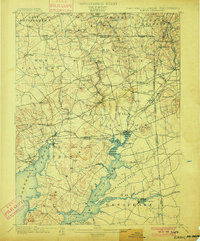 1900 Elkton1900 Print · USGSMaryland's tidewater and rail corridors meet at the turn of the century in this detailed survey of Cecil County. Genealogists can trace family roots through old settlements like McClellandville and Singerly or locate ancestors near the Pivot Bridge.7 unique versions available
 - 1900 Map of Cecilton
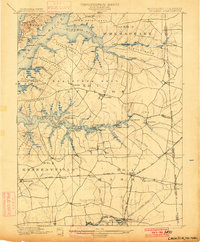 1900 Cecilton1900 Print · USGSUpper Chesapeake life at the turn of the century was defined by the deep tidal necks of the Sassafras River. You can trace old steamboat landings like Wilson Point Whf. and rural rail stops along the Baltimore and Delaware Bay R. R.6 unique versions available
 - 1900 Map of Havre De Grace
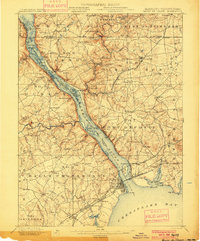 1900 Havre De Grace1900 Print · USGSThe Susquehanna River valley at the turn of the century shows a landscape transitioning from the canal era to the railroad age. Genealogists and historians can trace defunct transport routes like the Tidewater Canal alongside active hubs like Rising Sun and Port Deposit.7 unique versions available
 - 1900 Map of Betterton
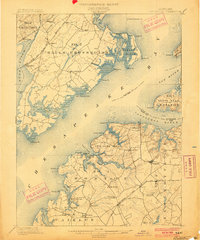 1900 Betterton1900 Print · USGSThe Upper Chesapeake Bay at the turn of the century reveals a landscape of thriving steamboat wharves and primary rail corridors. Local historians can trace early landings and forgotten infrastructure at Harris Wharf, Gales Whf., and the Fishing Battery L.H.6 unique versions available
 - 1903 Map of Tolchester
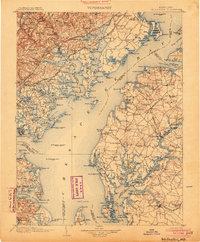 1903 Tolchester1903 Print · USGSThe upper Chesapeake Bay at the turn of the century shows a bustling maritime landscape where steamship wharves and major rail lines met. Researchers can trace defunct stops like Baldwin Sta. and Clayton Sta. or locate historic landings such as Rockhall Landing and Quaker Wharf.
 - 1906 Map of Dover
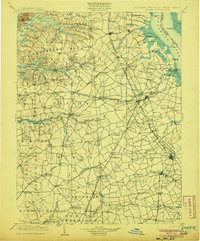 1906 Dover1906 Print · USGSCentral Delaware and Maryland's Eastern Shore appear at the start of the twentieth century, focused on the bustling rail-and-river economy. Genealogists can trace old family landing sites and crossroads villages like Bohemia Mills, Deakyneville Ldg., and Seven Hickories.3 unique versions available
 - 1908 Map of Tolchester
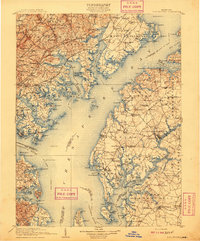 1908 Tolchester1908 Print · USGSChesapeake Bay life at the turn of the century centered on a complex network of tidewater landings and strategic railroad lines. Researchers can trace historic family settlements and maritime landmarks like Fort Howard, Harford Furnace, and the Sevenfoot Knoll LH.4 unique versions available
 - 1917 Map of Elkton
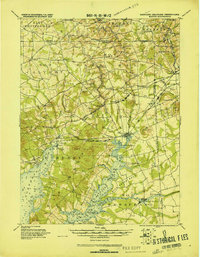 1917 Elkton1917 Print · USGSNorthern Cecil County and the Delaware borderlands appear here in the era of rail and canal dominance. Genealogists can trace family names across Back Creek Neck or locate early settlements like Lewisville and Mechanic Valley.
 - 1920 Map of Dover
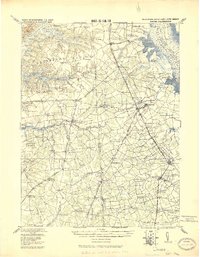 1920 Dover1920 Print · USGSThe Maryland and Delaware borderlands at the end of the Great War reveal a landscape of tidewater landings and evolving rail lines. Trace family roots and vanished wharves through Fredericktown, the Mason and Dixon Line, and the Bombay Hook Light.
 - 1942 Map of Havre De Grace
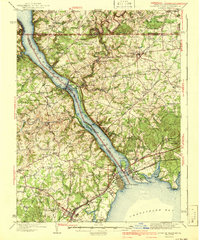 1942 Havre De Grace1942 Print · USGSThe Susquehanna riverfront and Mason-Dixon borderlands are captured here in the early 1940s, just as modern infrastructure began to reshape the region. Genealogists can trace family roots through landmarks like Smith Chapel, Lees Mill, and the Brookview Cem near Rising Sun.4 unique versions available
 - 1942 Map of Elkton
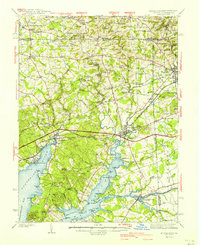 1942 Elkton1942 Print · USGSElkton and the tristate borderlands of Maryland, Delaware, and Pennsylvania are captured here just before the mid-century expansion. Genealogists can trace family names and landmarks like Old Frenchtown Wharf, St Johns Ch, and the historic Tangent Stone.4 unique versions available
 - 1944 Map of Earleville
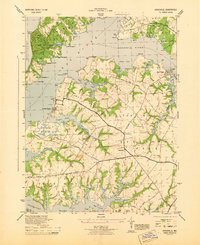 1944 Earleville1944 Print · USGSCoastal Maryland during the mid-forties reveals a world of agricultural necks and deep-water creeks along the Elk River. Researchers can trace old family landing sites and rural congregations at St Stephens Ch, Cassidy Wharf, and Town Point.
 - 1944 Map of Cecilton
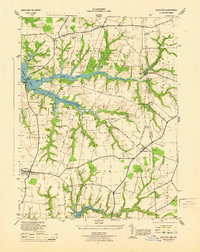 1944 Cecilton1944 Print · USGSThe rural borderlands of Cecil County and New Castle County are captured here during the 1940s, showing a landscape defined by tidal creeks and historic necks of land. Researchers can locate early boundary markers like MD-Del Boundary Mon No 1 and old community hubs including Bohemia Mills and St Francis Xavier Church.
 - 1944 Map of Galena
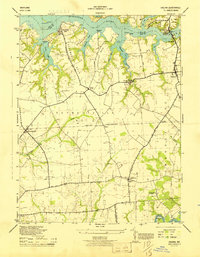 1944 Galena1944 Print · USGSMaryland's Eastern Shore in the mid-1940s remains a landscape of river wharves and rural parishes tied together by rail. Genealogists can trace historic congregations at Shrewsbury Church and Asbury Ch, or locate old landings like Raisins Wharf and Shellcross Wharf.
 - 1944 Map of Millington
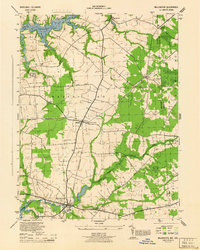 1944 Millington1944 Print · USGSUpper Kent County and the Delaware borderlands come alive in the mid-1940s, highlighting a landscape defined by rail junctions and river systems. You can trace family roots through small communities like Golts, Massey, and Crumpton, or locate historic sites like St Clements Church.
 - 1944 Map of Spesutie
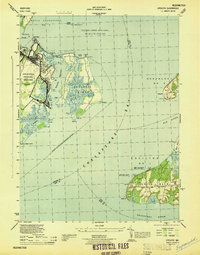 1944 Spesutie1944 Print · USGSCoastal Harford and Cecil Counties are seen here during the mid-forties, balanced between military expansion and traditional maritime life. Researchers can trace the boundaries of Aberdeen Proving Ground or locate family landmarks like Turkey Point LH and Woodcrest.
 - 1946 Map of Wilmington, 1948 Print
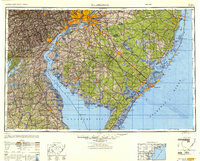 1946 Wilmington1948 Print · USGSThe Delaware Valley and Jersey Shore emerge in this mid-century portrait of a region defined by river commerce and seaside growth. Genealogists and historians can trace the rail networks of the Pennsylvania Railroad, locate early airfields like Dover Airpark, and find river defenses at Fort Delaware.2 unique versions available
 - 1948 Map of Baltimore
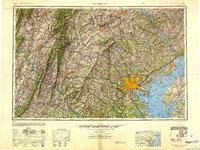 1948 Baltimore1948 Print · USGSMaryland and Pennsylvania crossroads are captured in the late 1940s, showing a landscape defined by historic rail lines and major military installations. Genealogists can trace family connections in Gettysburg, Westminster, and near the U.S. Naval Academy in Annapolis.2 unique versions available
 - 1948 Map of Spesutie
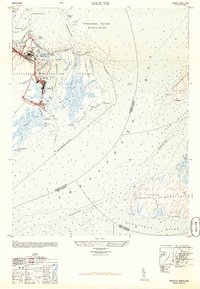 1948 Spesutie1948 Print · USGSThe Upper Chesapeake Bay comes alive in the late 1940s, showing the intersection of military testing grounds and quiet coastal necks. Trace the infrastructure of the Aberdeen Proving Ground or locate the lighthouse at Turkey Point and the small settlement of Grove.4 unique versions available
 - 1951 Map of Betterton
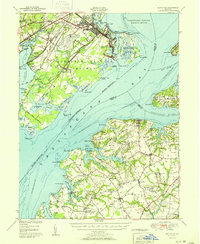 1951 Betterton1951 Print · USGSUpper Chesapeake Bay communities and military installations are captured here just after the war, showing the expansion of the Aberdeen Proving Grounds. Researchers can trace rural life and coastal trade through sites like the Still Pond Sta, Harris Wharf, and the Harford Furnace School.2 unique versions available
 - 1951 Map of Cecilton
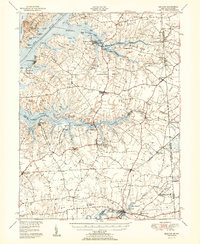 1951 Cecilton1951 Print · USGSThe upper Eastern Shore at mid-century reveals a landscape defined by deep river necks and quiet crossroads. Genealogists can locate family landmarks such as Bohemia Manor, Shrewsbury Ch, and small settlements like Earleville or Galena.2 unique versions available
 - 1953 Map of Cecilton
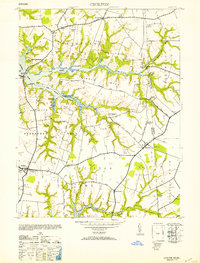 1953 Cecilton1953 Print · USGSThe Cecil County shoreline and the Maryland-Delaware border are captured here in the mid-1940s. Genealogists and local historians can trace the estates and rural hubs of Cecilton, locate Bohemia Manor Church, and find markers like MD-DEL Boundary Mon 5.2 unique versions available
Showing maps 1-25 of 129
Top cities of Cecil County
- Elkton historical maps
- Perryville historical maps
- North East historical maps
- Rising Sun historical maps
- Charlestown historical maps
- Chesapeake City historical maps
See more
Frequently asked questions
- What are the different types of historical maps available for Cecil County?
- What is the oldest map of Cecil County?
- Where can I purchase historical maps of Cecil County for my home or office?
- Where can I download high-res historical maps of Cecil County?
- Are there historical topographic maps available for Cecil County?
- Is there historical aerial imagery available for Cecil County?
- Where are historical maps of Cecil County sourced from?