Old Maps of Potomac Gateway, Maryland for Genealogy
Trace your family roots with 21 historic maps of Potomac Gateway. These high-res maps reveal old neighborhoods, homesites, landmarks, and streets — helping you uncover where your ancestors lived and how the area evolved over time.
- Explore historic neighborhoods: Identify where your relatives may have lived in the 1800s or 1900s.
- Compare maps over time: Trace the changes in streets, buildings, and landmarks for multi-generational research.
- Perfect for genealogy & ancestry research: Used by family historians and researchers to map out lineage and migration.
These maps are an incredible resource for exploring your personal connection to Potomac Gateway's past.
Potomac Gateway, MD maps
(21)- 1884 Map of Harpers Ferry
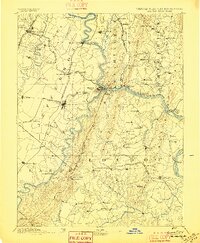 1884 Harpers Ferry1884 Print · USGSThe confluence of the Potomac and Shenandoah rivers is captured in the mid-1880s, documenting a landscape of strategic gaps and vital transit corridors. Researchers can trace the path of the Chesapeake and Ohio Canal and locate historic river crossings like Conrad Ferry and Castleman Ferry.
 - 1891 Map of Harpers Ferry
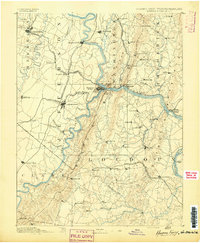 1891 Harpers Ferry1891 Print · USGSThe tri-state borderlands of the Potomac and Shenandoah valleys were a vital hub of transport and trade in the late 1800s. Researchers can trace historic river crossings like Castlemans Ferry, follow the route of the Chesapeake and Ohio Canal, or locate family-named settlements like Oatlands and Taylorstown.
 - 1893 Map of Harpers Ferry, 1898 Print
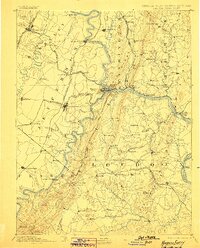 1893 Harpers Ferry1898 Print · USGSThe tri-state region of the Potomac and Shenandoah valleys is captured here in the late nineteenth century, showing a landscape defined by water and rail. Trace the historic Chesapeake and Ohio Canal or locate local landmarks like Snyder Mills and Harpers Ferry.7 unique versions available
 - 1908 Map of Middletown
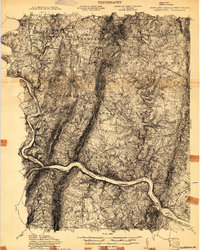 1908 Middletown1908 Print · USGSThe Potomac River valley in the early twentieth century shows a landscape defined by the convergence of major rail lines and the historic Chesapeake and Ohio Canal. Genealogists and historians can trace the foundations of Eakles Mills, Burkittsville, and Washington Junction.
 - 1910 Map of Antietam
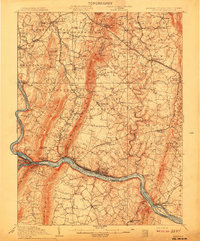 1910 Antietam1910 Print · USGSMaryland's borderlands and the Potomac River valley are captured here in the early twentieth century. Genealogists can locate family landmarks like Garretts Mill, trace the Chesapeake and Ohio Canal, or find historic sites including Dunkard Church.6 unique versions available
 - 1944 Map of Point Of Rocks
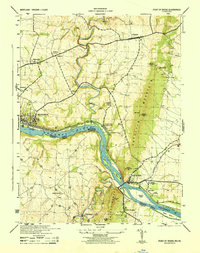 1944 Point Of Rocks1944 Print · USGSThe Potomac River corridor in the mid-1940s reveals a landscape defined by the parallel paths of the Baltimore and Ohio railroad and the historic Baltimore and Ohio Canal. Genealogists and historians can trace riverside settlements like Catoctin Sta (Lander P O) and rural landmarks such as Lewis Mill and St Marks Church.
 - 1948 Map of Baltimore
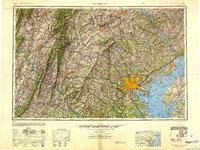 1948 Baltimore1948 Print · USGSMaryland and Pennsylvania crossroads are captured in the late 1940s, showing a landscape defined by historic rail lines and major military installations. Genealogists can trace family connections in Gettysburg, Westminster, and near the U.S. Naval Academy in Annapolis.2 unique versions available
 - 1953 Map of Point of Rocks
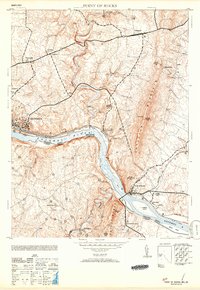 1953 Point of Rocks1953 Print · USGSThe Potomac River borderlands thrive in the early 1950s as a vital corridor for the Baltimore and Ohio railroad and historic canal. Researchers can pinpoint long-standing community centers like the Lander P O, St Marks Church, and Lewis Mill.2 unique versions available
 - 1954 Map of Baltimore
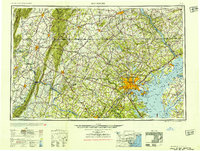 1954 Baltimore1954 Print · USGSThe Mid-Atlantic region in the early fifties shows a landscape of growing suburban centers and heavy rail corridors. Trace mid-century transit networks and military landmarks from the Aberdeen Proving Ground to the Gettysburg National Military Park.
 - 1955 Map of Point Of Rocks, 1956 Print
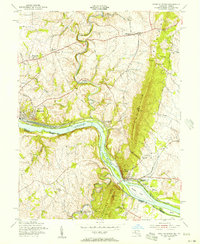 1955 Point Of Rocks1956 Print · USGSThe river gap at Point of Rocks was a vital Maryland transportation nexus in the mid-fifties, where the rail and canal era met the river. Researchers can trace historic church sites like St Marks Ch and small hubs like Slabtown or Bells Mill.2 unique versions available
 - 1956 Map of Baltimore
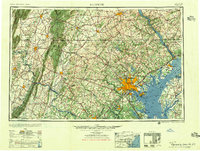 1956 Baltimore1956 Print · USGSMid-century Maryland and Pennsylvania are captured here during a period of massive suburban and military growth across the Chesapeake region. Genealogists and historians can trace the rail corridors of the Baltimore & Ohio RR and locate landmarks like Fort McHenry or the Aberdeen Proving Ground.
 - 1957 Map of Baltimore, 1964 Print
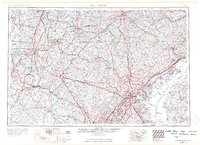 1957 Baltimore1964 Print · USGSMaryland and Southern Pennsylvania are shown during the mid-century expansion of the Baltimore-Washington corridor. Researchers can trace the extensive rail lines of the Baltimore & Ohio RR and locate sites like Fort Detrick and Gettysburg National Military Park.5 unique versions available
 - 1961 Map of Baltimore
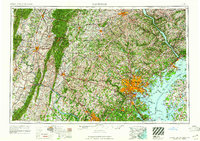 1961 Baltimore1961 Print · USGSMaryland and Pennsylvania are captured at a mid-century peak of industrial and military expansion. Genealogists and historians can trace rail corridors like the Western Maryland Ry or locate regional landmarks such as Camp Detrick and Kent Island.
 - 1970 Map of Point Of Rocks, 1972 Print
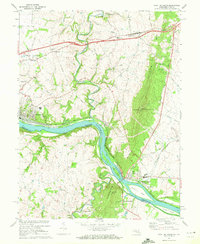 1970 Point Of Rocks1972 Print · USGSMaryland and Virginia meet along the Potomac River corridor in the early 1970s, where rail and canal history remains visible. Genealogists and historians can trace riverside settlements like Brunswick and Lander, or locate rural landmarks like St Pauls Ch and Lewis Mill.2 unique versions available
 - 1984 Map of Frederick, 1985 Print
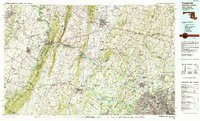 1984 Frederick1985 Print · USGSMaryland's Piedmont and the Potomac River valley are shown here in the mid-eighties as suburban growth began to meet historic rural landscapes. Genealogists and historians can trace the paths of the Baltimore and Ohio RR or locate the boundaries of Antietam National Battlefield and Fort Detrick.
 - 1989 Map of Baltimore
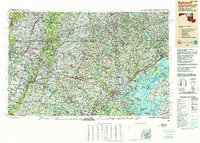 1989 Baltimore1989 Print · USGSThe Mid-Atlantic corridor in the late eighties is captured here, from the Baltimore harbor to the Blue Ridge foothills. Researchers can trace the sprawling footprints of Aberdeen Proving Ground, the historic grounds of Gettysburg National Military Park, and the winding Susquehanna River.
 - 2011 Map of Point of Rocks, 2011 Print
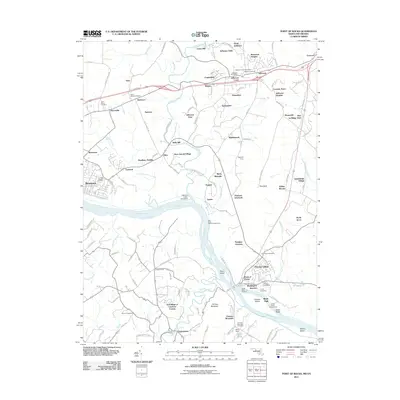 2011 Point of Rocks2011 Print · USGSMaryland's riverfront heritage is on full display here as the Potomac corridor passes through Frederick County in the early twenty-first century. Researchers can trace ancestral sites like Saint Pauls Cemetery or explore landmarks of the old river economy such as the Catoctin Creek Aqueduct and Lewis Mill.
 - 2014 Map of Point of Rocks, 2014 Print
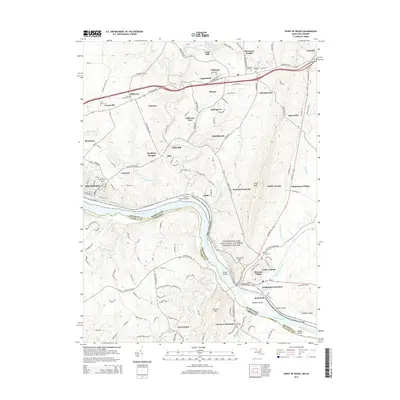 2014 Point of Rocks2014 Print · USGSMaryland's river border and the Potomac valley are shown here just after the millennium, following the historic B&O rail line and C&O Canal. Genealogists can locate family names and burial sites at Saint Pauls Cem, Jefferson Union Cem, and Lewis Mill.
 - 2016 Map of Point of Rocks, 2016 Print
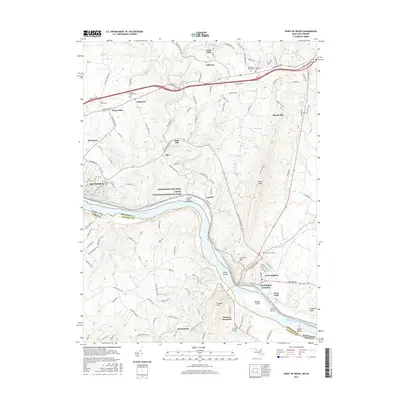 2016 Point of Rocks2016 Print · USGSThe Potomac River valley and the historic C&O Canal corridor come to life in this survey of the Maryland-Virginia borderlands. Trace the local rail-and-river network through Washington Junction or locate family sites at Saint Marys Cem and Bells Mill.
 - 2019 Map of Point of Rocks, 2019 Print
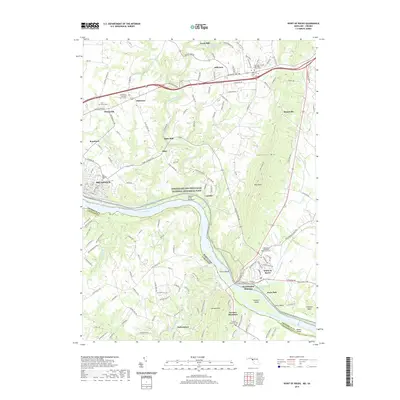 2019 Point of Rocks2019 Print · USGSMaryland and Virginia meet along the Potomac in this 2019 survey of the river valley and its surrounding peaks. Researchers can trace historic church sites and family burial grounds like Saint Pauls Episcopal Church Cem and the Catoctin Creek Aqueduct near Point of Rocks.
 - 2023 Map of Point of Rocks, 2023 Print
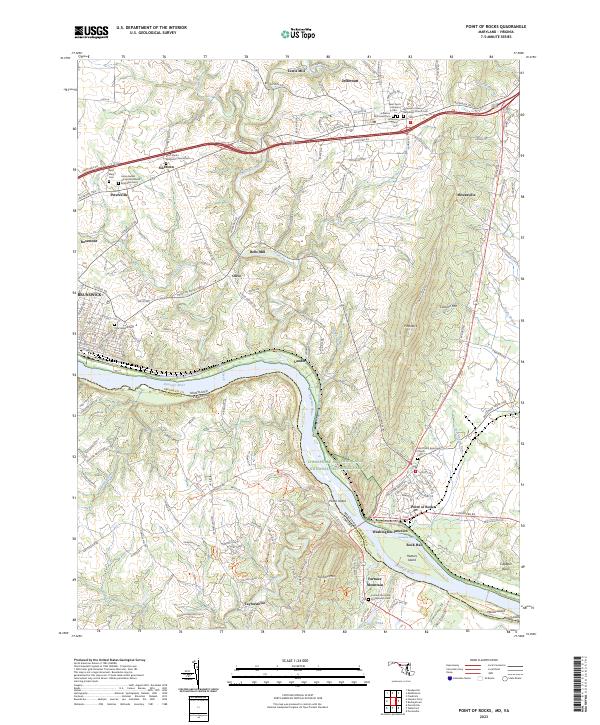 2023 Point of Rocks2023 Print · USGSThe Maryland-Virginia border along the Potomac River comes to life in this contemporary survey of the river valley. Genealogists and historians can trace numerous family and church burial grounds, from Saint Pauls Episcopal Church Cem to the Union Bethel African Methodist Episcopal Cem.
End of results
Showing maps 1-21 of 21
Top cities near Potomac Gateway
- Frederick historical maps
- Leesburg historical maps
- Ballenger Creek historical maps
- Lansdowne historical maps
- Urbana historical maps
- Purcellville historical maps
See more
Frequently asked questions
- What are the different types of historical maps available for Potomac Gateway?
- What is the oldest map of Potomac Gateway?
- Where can I purchase historical maps of Potomac Gateway for my home or office?
- Where can I download high-res historical maps of Potomac Gateway?
- Are there historical topographic maps available for Potomac Gateway?
- Is there historical aerial imagery available for Potomac Gateway?
- Where are historical maps of Potomac Gateway sourced from?