Old Maps of Montgomery County, Maryland for Metal Detecting
Plan your next treasure hunt with 225 historic maps of Montgomery County. Find old homesites, ghost towns, trails, and gathering spots that may be lost to time — perfect for identifying promising metal detecting locations.
- Locate forgotten sites: Uncover places like long-lost settlements, abandoned rail lines, or gathering spots.
- Plan better hunts: Use map overlays combined with LiDAR or satellite views to narrow in on historically rich areas.
- Made for detectorists: Thousands of hobbyists use these maps to discover relics, coins, and hidden history.
Use these historic maps to boost your research and find new opportunities beneath the surface of Montgomery County.
Montgomery County, MD maps
(225)- 1884 Map of Harpers Ferry
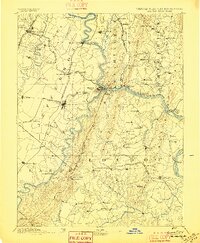 1884 Harpers Ferry1884 Print · USGSThe confluence of the Potomac and Shenandoah rivers is captured in the mid-1880s, documenting a landscape of strategic gaps and vital transit corridors. Researchers can trace the path of the Chesapeake and Ohio Canal and locate historic river crossings like Conrad Ferry and Castleman Ferry.
 - 1890 Map of Mt. Vernon
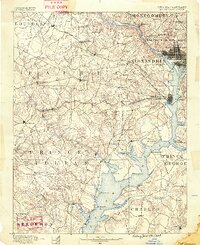 1890 Mt. Vernon1890 Print · USGSNorthern Virginia and the capital region appear here in the decade before the turn of the century, showing a landscape of river estates and rail-connected villages. Researchers can trace early property sites and historic river landings from Mt. Vernon to Occoquan and Falls Church.
 - 1891 Map of Harpers Ferry
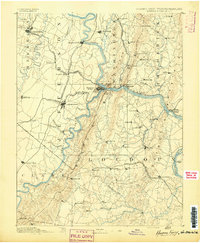 1891 Harpers Ferry1891 Print · USGSThe tri-state borderlands of the Potomac and Shenandoah valleys were a vital hub of transport and trade in the late 1800s. Researchers can trace historic river crossings like Castlemans Ferry, follow the route of the Chesapeake and Ohio Canal, or locate family-named settlements like Oatlands and Taylorstown.
 - 1891 Map of Mt. Vernon
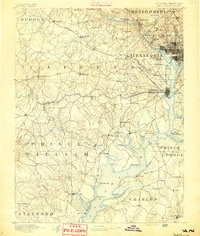 1891 Mt. Vernon1891 Print · USGSNorthern Virginia and the D.C. area appear here in the late nineteenth century, as the rail-and-river economy connected rural counties to the capital. Researchers can trace ancestral roots through dozens of local landmarks, including Arlington National Cemetery, the Fox Ferry, and historic towns like Occoquan and Vienna.
 - 1892 Map of Laurel
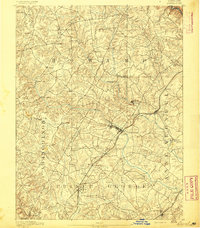 1892 Laurel1892 Print · USGSCentral Maryland at the end of the nineteenth century centers on the busy corridor between Baltimore and Washington. Genealogists and historians can trace rail-side industrial sites like Muirkirk, family-named crossings at Snell Bridge, and numerous Iron Ore deposits.
 - 1893 Map of Frederick
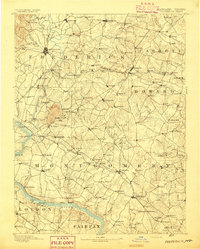 1893 Frederick1893 Print · USGSMaryland's Piedmont region at the end of the nineteenth century reveals a landscape defined by the Potomac River and the rise of rail transit. Researchers can trace the path of the Chesapeake and Ohio Canal or locate local hubs like Poolesville and Buckeystown.
 - 1893 Map of Harpers Ferry, 1898 Print
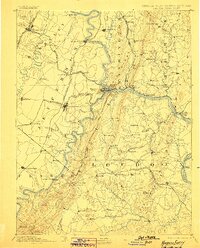 1893 Harpers Ferry1898 Print · USGSThe tri-state region of the Potomac and Shenandoah valleys is captured here in the late nineteenth century, showing a landscape defined by water and rail. Trace the historic Chesapeake and Ohio Canal or locate local landmarks like Snyder Mills and Harpers Ferry.7 unique versions available
 - 1894 Map of Laurel
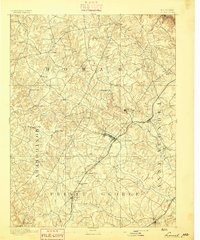 1894 Laurel1894 Print · USGSMaryland's central corridor in the 1890s reveals a landscape of growing rail towns and early industrial activity between major cities. Genealogists and historians can trace family-named crossroads and rail stops from Savage Sta. and Annapolis Junc. to the iron deposits near Muirkirk.4 unique versions available
 - 1894 Map of Frederick
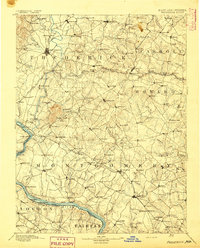 1894 Frederick1894 Print · USGSMaryland's Piedmont region in the late nineteenth century was a complex network of river crossings and railway junctions. Researchers can trace the path of the Baltimore & Ohio R. R. past Sugar Loaf Mtn. and locate historic river sites like Nolands Ferry.5 unique versions available
 - 1894 Map of Mt. Vernon, 1904 Print
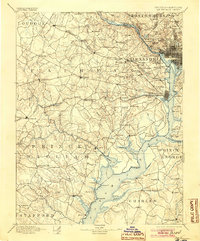 1894 Mt. Vernon1904 Print · USGSThe Potomac River valley south of the capital was still largely a landscape of crossroads and rail depots in the late nineteenth century. Genealogists can trace the rural reaches of Fairfax through landmarks like Arlington National Cemetery, Mt. Vernon, and Tyson Cross Roads.6 unique versions available
 - 1897 Map of Laurel
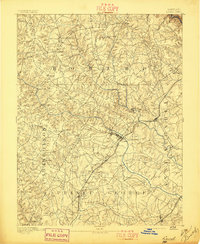 1897 Laurel1897 Print · USGSMaryland's central corridor comes to life in the 1890s, capturing the rail-and-river economy where Howard and Prince George's counties meet. Researchers can trace historic stops along the Baltimore and Ohio RR, locate local Iron Ore pits, and find old community hubs like Savage Sta. and Oakland Mills.
 - 1897 Map of Mt. Vernon
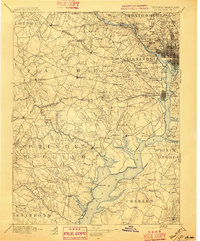 1897 Mt. Vernon1897 Print · USGSNorthern Virginia and the Potomac River appear in the late nineteenth century as a landscape of rural crossroads and strategic fortifications. Trace the early footprints of Vienna, Herndon, and Manassas along the path of the Southern R. R.2 unique versions available
 - 1899 Map of Patuxent
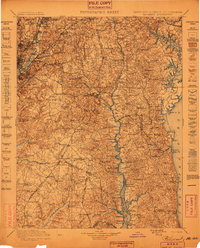 1899 Patuxent1899 Print · USGSSouthern Maryland in the late nineteenth century was a world of river wharves and emerging rail lines. Genealogists can trace family names across landings and settlements like Bladensburg, Upper Marlboro, and Piscataway Reform School before the landscape was modernised.3 unique versions available
 - 1900 Map of Washington
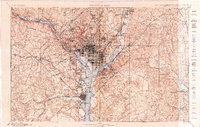 1900 Washington1900 Print · USGSThe capital region at the turn of the century shows a landscape of river-borne commerce and expanding rail lines. Genealogists and historians can trace defunct transport links like the Shepherd Ferry and early suburbs like North Takoma and Jackson City.2 unique versions available
 - 1906 Map of Patuxent
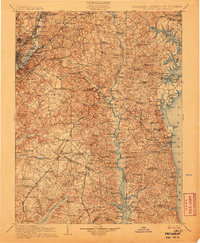 1906 Patuxent1906 Print · USGSThe Tidewater region of Maryland and the outskirts of the District of Columbia are shown here at the turn of the century. Researchers can trace the early footprints of Maryland Agril. College, find riverfront infrastructure at Milltown Landing, and follow long-established routes like the Marlboro Turnpike.4 unique versions available
 - 1907 Map of Laurel
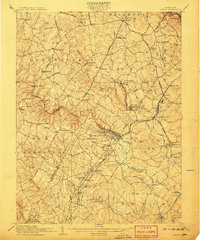 1907 Laurel1907 Print · USGSMaryland's transit corridor between Washington and Baltimore comes alive in the early 1900s as railroads and old turnpikes cross the Patuxent valley. Trace historical landmarks from the House of Reformation to old crossings like Old Forge Bridge and Brock Bridge.3 unique versions available
 - 1908 Map of Patapsco
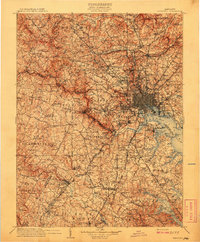 1908 Patapsco1908 Print · USGSMaryland's central corridor at the opening of the twentieth century reveals a dense network of harbor defenses and rail-line economies. Genealogists and historians can trace the foundations of Baltimore alongside local landmarks like Ashland Furnace, St Charles College, and Fort McHenry.4 unique versions available
 - 1908 Map of Rockville
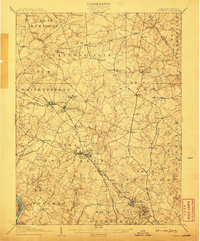 1908 Rockville1908 Print · USGSMontgomery County was a rural landscape of crossroads and rail towns in the early twentieth century. Genealogists and historians can trace the paths of the Metropolitan Branch and early transit lines like the Georgetown and Rockville Electric Road through towns such as Rockville and Washington Grove.3 unique versions available
 - 1908 Map of Seneca
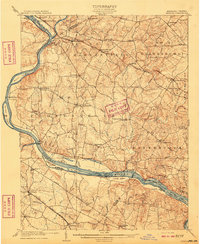 1908 Seneca1908 Print · USGSThe Potomac River valley at the turn of the century shows a vital landscape of canal commerce and emerging rail lines. Genealogists and historians can trace family-named sites across the Maryland-Virginia border, from Poolesville to river crossings at Whites Ferry and Edwards Ferry.7 unique versions available
 - 1908 Map of Ijamsville, 1921 Print
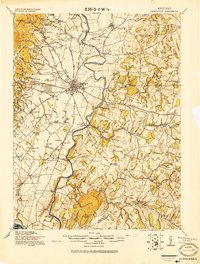 1908 Ijamsville1921 Print · USGSFrederick and its surrounding valley are captured here just after the turn of the century, showing a landscape defined by historic turnpikes and the winding Monocacy River. Genealogists and historians can trace defunct schoolhouses, early turnpike toll gates like Fountain Rock T.G., and family landmarks near Sugarloaf Mtn.
 - 1909 Map of Mount Airy
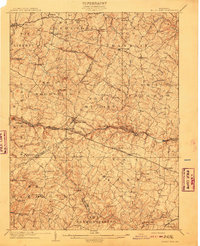 1909 Mount Airy1909 Print · USGSCentral Maryland's Piedmont region is captured here during the height of the steam-rail era, centered on the strategic crossing at Mount Airy. Genealogists and historians can trace old property locations near Shipleys Mill, the winding Gary Turnpike, and rural settlements like Winfield and Libertytown.7 unique versions available
 - 1909 Map of Ijamsville
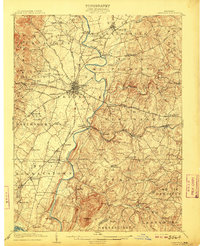 1909 Ijamsville1909 Print · USGSFrederick County and parts of Montgomery County are documented here during an era of significant rail and turnpike expansion. Genealogists and historians can locate early post offices and stations such as Araby P O, Ijamsville, and the Almshouse near Frederick.9 unique versions available
 - 1915 Map of Fairfax
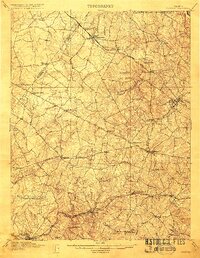 1915 Fairfax1915 Print · USGSNorthern Virginia in the early twentieth century appears as a collection of quiet rail towns and farmsteads. Trace the old routes of the Southern RR and find family-named landmarks like Sideburn, Balls Ford, and Bear School.4 unique versions available
 - 1923 Map of Rockville
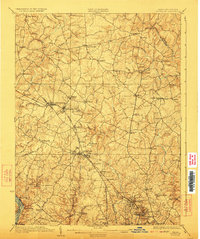 1923 Rockville1923 Print · USGSMontgomery County was a landscape of rail-linked towns and river valleys in the early twentieth century. Genealogists and historians can trace the foundations of Rockville or search for family-named landmarks like Mt Zion and the path of the Chesapeake and Ohio Canal.4 unique versions available
 - 1926 Map of Laurel
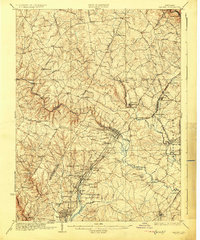 1926 Laurel1926 Print · USGSThe corridor between Baltimore and Washington is captured here in the mid-twenties, showcasing a landscape of river-powered industry and early rail networks. Genealogists can locate family landmarks like Hicks Mill, the Willis School, and the Montgomery Chapel Cem.4 unique versions available
Showing maps 1-25 of 225
Top cities of Montgomery County
- Germantown historical maps
- Silver Spring historical maps
- Gaithersburg historical maps
- Bethesda historical maps
- Rockville historical maps
- Wheaton historical maps
See more
Frequently asked questions
- What are the different types of historical maps available for Montgomery County?
- What is the oldest map of Montgomery County?
- Where can I purchase historical maps of Montgomery County for my home or office?
- Where can I download high-res historical maps of Montgomery County?
- Are there historical topographic maps available for Montgomery County?
- Is there historical aerial imagery available for Montgomery County?
- Where are historical maps of Montgomery County sourced from?