1900s (20th Century) Maps of Freetown, Massachusetts
Explore 39 historic maps of Freetown from the 1900s (20th Century). These maps offer a rare glimpse into what life looked like during the 1900s — showing old roads, neighborhoods, homes, and landmarks that have changed or disappeared over time.
Whether you're researching your family's past, planning a metal detecting trip, or studying how Freetown's landscape evolved across the 1900s, these high-resolution maps are a powerful tool for exploring the history of this region.
- Focus on a specific era: All maps on this page are from the 1900s, giving you a focused view of this time period.
- See what’s changed: Compare century-old streets, trails, and buildings to today's modern landscape using overlays and satellite layers.
- Research with precision: Use these maps for genealogy, historical research, land use analysis, or educational projects.
- View, download, or print: Maps are fully viewable online in high resolution, and can be downloaded or printed for your own records.
Start exploring Freetown's history through authentic maps from the 1900s. This is your window into the past.
Freetown, MA maps
(39)- 1916 Map of Middleboro
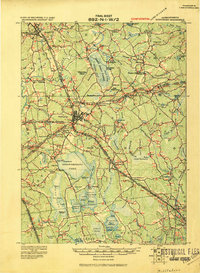 1916 Middleboro1916 Print · USGSSoutheastern Massachusetts at the height of its rail-and-mill era shows a dense network of stations and wetlands. Trace the Old Colony Railroad lines to sites like Haskins Station, Paper Mill Village, and the Lakeville State Sanatarium.
 - 1918 Map of Middleboro, 1921 Print
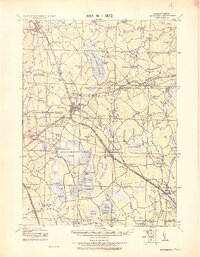 1918 Middleboro1921 Print · USGSSoutheastern Massachusetts at the end of the Great War reveals a landscape defined by cranberry bogs, cedar swamps, and a dense network of Old Colony Railroad lines. Genealogists and historians can trace rail stops like Haskins Station, the grounds of the Lakeville State Sanatarium, and old villages like The Green.
 - 1918 Map of New Bedford, 1921 Print
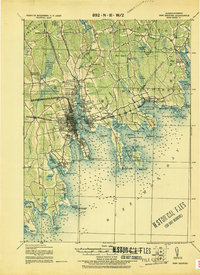 1918 New Bedford1921 Print · USGSThe Buzzards Bay coastline thrived with rail and maritime commerce during the early twentieth century. Researchers can trace historic shorelines and infrastructure at New Bedford, Fairhaven, and Clark Point Light.
 - 1918 Map of Taunton, 1921 Print
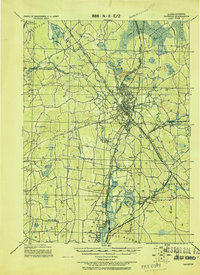 1918 Taunton1921 Print · USGSSoutheastern Massachusetts at the close of the Great War is a dense network of industrial rail lines and riverside villages. You can trace the path of the Old Colony Railroad Main Line or locate local landmarks like the Copper Works and Annawon Rock.
 - 1919 Map of Fall River
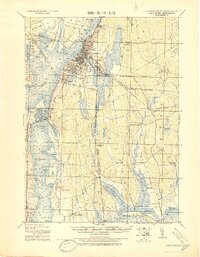 1919 Fall River1919 Print · USGSThe coastal borderlands of Massachusetts and Rhode Island are captured here just after the Great War, showing the transition from industrial Fall River to rural seaside hamlets. Genealogists can locate family landmarks in Little Compton The Commons, trace the Old Colony Railroad, or explore old landings at Westport Point.
 - 1936 Map of New Bedford North
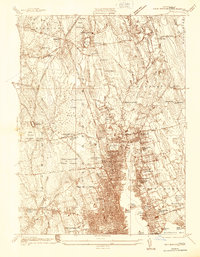 1936 New Bedford North1936 Print · USGSGreater New Bedford in the mid-thirties shows a fascinating contrast between its bustling riverfront and the expansive cedar swamps to the north. Genealogists and historians can trace family plots in Riverside Cem, locate the Bluestone Quarry, or find old schoolhouses like the Faunces Cor Sch.
 - 1937 Map of Assawompset Pond
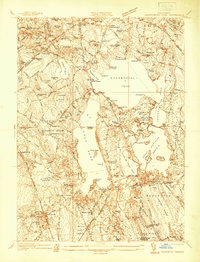 1937 Assawompset Pond1937 Print · USGSThe Lakeville and Freetown area in the late thirties is defined by its massive pond systems and a transition toward regional water management. Genealogists can locate family burial grounds like Strowbridge Cem or trace the early industrial footprint of Bettys Neck Cranberry Co and the Taunton Water Works.
 - 1941 Map of New Bedford North
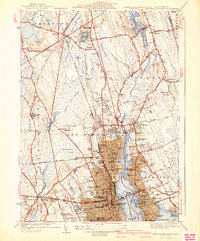 1941 New Bedford North1941 Print · USGSIn the early 1940s, the New Bedford waterfront was a complex network of rail and industry. Trace the historic neighborhoods of Fairhaven and Acushnet, locating family landmarks like St Marys Cem or the Evergreen Racetrack.3 unique versions available
 - 1941 Map of Assawompset Pond
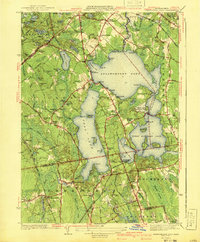 1941 Assawompset Pond1941 Print · USGSSoutheastern Massachusetts in the early 1940s is defined here by its massive freshwater pond systems and the infrastructure of the local waterworks. Genealogists can trace family footprints across dozens of local landmarks like Haskins Cem, Bettys Neck, and the East Freetown Sta.3 unique versions available
 - 1942 Map of New Bedford
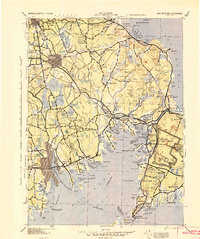 1942 New Bedford1942 Print · USGSSoutheastern Massachusetts at the start of the 1940s shows a region defined by maritime defense and industrial rail corridors. Genealogists and historians can trace the massive Camp Edwards boundary, old rail stops like Rock Station, and vanished local industry at Paper Mill Village.2 unique versions available
 - 1943 Map of Assonet
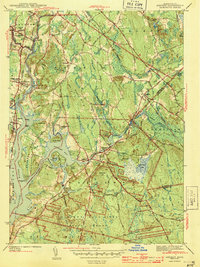 1943 Assonet1943 Print · USGSBristol County at the height of the war years reveals a landscape defined by tidal rivers and the steady pulse of the New Haven and Hartford Railroad. Researchers can trace ancestral sites from Dighton Rock to several family plots like Winslow Cem and the Old Quaker Cem.2 unique versions available
 - 1943 Map of Providence
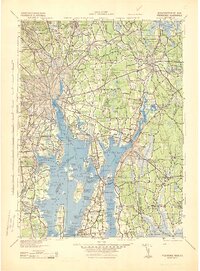 1943 Providence1943 Print · USGSNarragansett Bay and the industrial Blackstone Valley appear here in the midst of the Second World War. Genealogists and researchers can trace local landmarks like Lonsdale Station, the St Marys Reservoir, and the Rhode Island State Airport.
 - 1944 Map of Fall River East
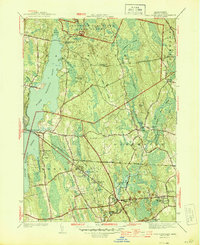 1944 Fall River East1944 Print · USGSBristol County during the mid-forties shows a landscape of growing townships and preserved woodlands before the modern suburban boom. Researchers can trace ancestral property near Fighting Rock Corner, Westport Mills, and the Evergreen Cem.2 unique versions available
 - 1947 Map of Providence, 1948 Print
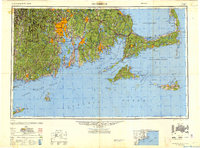 1947 Providence1948 Print · USGSSouthern New England is captured in the mid-1940s, showing a landscape defined by busy industrial ports and expanding military installations. Researchers can trace the rail lines of the N.Y. N.H. & H. RR or locate coastal defenses like Fort Adams and Quonset Point.5 unique versions available
 - 1948 Map of Providence, 1951 Print
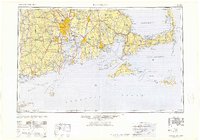 1948 Providence1951 Print · USGSSouthern New England’s coastal reaches are captured here in the late 1940s, from the industrial heart of Providence to the tip of Provincetown. Genealogists and historians can trace rail lines like the Central Vermont Railway and locate active military sites such as Otis Air Force Base and Fort Rodman.
 - 1948 Map of Assawompset Pond, 1957 Print
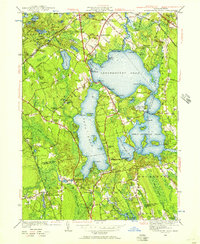 1948 Assawompset Pond1957 Print · USGSSoutheastern Massachusetts in the late 1940s was defined by its massive glacial pond systems and the cranberry industry. Genealogists and historians can trace the community life of Lakeville and Freetown through family-named landmarks like Strowbridge Cem and Sampsons Corner.
 - 1948 Map of New Bedford North, 1958 Print
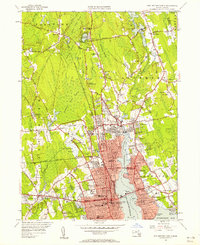 1948 New Bedford North1958 Print · USGSCoastal Massachusetts at the end of the 1940s reveals a bustling maritime economy anchored by the New Bedford Harbor. Researchers can trace old neighborhood lines, find family plots at Oak Grove Cem, or locate the historic Whaling Museum and Bluestone Quarry.
 - 1951 Map of Fall River East
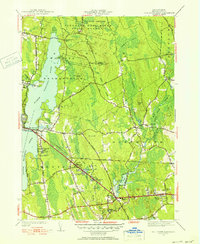 1951 Fall River East1951 Print · USGSBristol County in the early fifties showcases a transition from dense state forest to the industrial corridors of the South Coast. Local historians can trace the footprint of Westport Factory, visit Lincoln Park, or locate the Collins Sch near the Freetown border.3 unique versions available
 - 1951 Map of Assonet
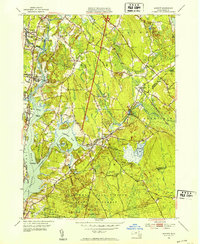 1951 Assonet1951 Print · USGSSoutheastern Massachusetts in the early fifties reveals a landscape defined by the winding Taunton River and its industrial and agricultural shoreline. Researchers can trace family history through dozens of landmarks like the Assonet Burial Ground, Dighton Cem, and the County Agricultural School.3 unique versions available
 - 1957 Map of Providence
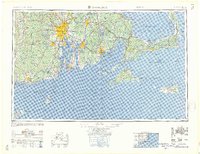 1957 Providence1957 Print · USGSCoastal New England at the height of the mid-century era shows a landscape shaped by maritime industry and Cold War defense. Genealogists and historians can trace the reach of the New York, New Haven & Hartford RR and locate legacy sites like Fort Adams and Quonset Point Naval Air Station.
 - 1958 Map of Providence
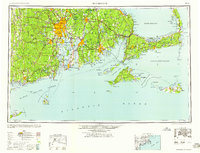 1958 Providence1958 Print · USGSThe Rhode Island and Massachusetts coastlines are shown in detail during the late 1950s, from the urban cores to the tips of the islands. Researchers can trace the mid-century footprint of Quonset Point Naval Air Station, the defense works at Fort Adams, and the rail network of the New York, New Haven and Hartford RR.
 - 1963 Map of Providence
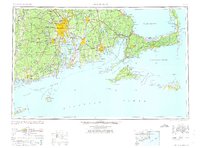 1963 Providence1963 Print · USGSSouthern New England's coastal and industrial heartland is captured here in the early sixties, from the Rhode Island mainland to the far reaches of the Cape. Researchers can trace mid-century growth in Providence or locate landmarks on Marthas Vineyard and Nantucket Island.
 - 1963 Map of Assawompset Pond, 1965 Print
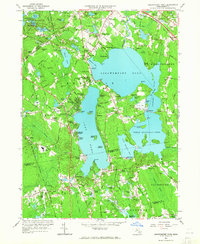 1963 Assawompset Pond1965 Print · USGSSoutheastern Massachusetts’ massive lake system is shown here in the early sixties, capturing the growth of new shoreline communities. Researchers can trace family ties at Morton Cem, locate the Apponequet Regional High Sch, or explore the storied grounds of Bettys Neck.
 - 1963 Map of Fall River East, 1965 Print
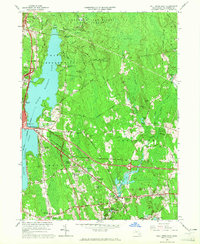 1963 Fall River East1965 Print · USGSCoastal Massachusetts at the start of the 1960s reveals a landscape of industrial borders and dense forests. Researchers can trace family sites near Hixville, Westport Factory, and Beulah Corners, or locate landmarks like St Patricks Cem.
 - 1963 Map of Assonet, 1965 Print
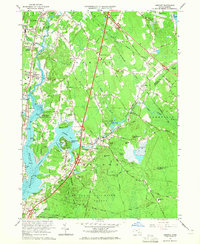 1963 Assonet1965 Print · USGSSoutheastern Massachusetts in the early sixties showcases a transition from historic riverfront settlements to a modernizing transportation hub. Trace the heritage of Assonet and Dighton through landmarks like the Assonet Burying Ground and Old Quaker Cem.2 unique versions available
Showing maps 1-25 of 39
Top cities near Freetown
- New Bedford historical maps
- Fall River historical maps
- Taunton historical maps
- Attleboro historical maps
- Dartmouth historical maps
- Bridgewater historical maps
See more
Top neighborhoods of Freetown
- Masons Corner historical maps
- Buffington Corner historical maps
- Camp Welch historical maps
- Braleys historical maps
- East Freetown historical maps
- Assonet historical maps
See more
Frequently asked questions
- What are the different types of historical maps available for Freetown?
- What is the oldest map of Freetown?
- Where can I purchase historical maps of Freetown for my home or office?
- Where can I download high-res historical maps of Freetown?
- Are there historical topographic maps available for Freetown?
- Is there historical aerial imagery available for Freetown?
- Where are historical maps of Freetown sourced from?