Old Maps of Amesbury, Massachusetts for Academic Research
Study the evolution of Amesbury with 53 high-resolution historic maps. Whether you're teaching, researching, or modeling changes in land use, these maps provide essential visual documentation of urban, environmental, and geographic change.
- Analyze long-term change: Track patterns in development, transportation, and natural features.
- Ideal for environmental or urban studies: Support academic projects with primary historical map data.
- Use in the classroom or lab: Educators and researchers rely on these maps to bring historical context to life.
These maps are a powerful tool for teaching, research, and visualizing how Amesbury has changed over the decades.
Amesbury, MA maps
(53)- 1888 Map of Newburyport
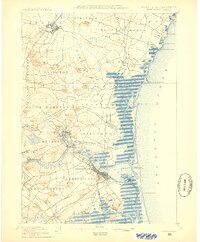 1888 Newburyport1888 Print · USGSThe North Shore and Seacoast regions meet at the turn of the century along the Merrimac River. Trace the early rail lines of the Boston and Maine Railroad or locate coastal landmarks like the U.S. Life Saving Station and Range Light.
 - 1888 Map of Haverhill
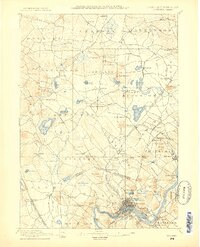 1888 Haverhill1888 Print · USGSThe Merrimack Valley at the end of the nineteenth century reveals a landscape shaped by heavy rail and river industry. Genealogists can trace family footprints through historic hubs like Salem Depot, Ayers Village, and the bustling streets of Haverhill.
 - 1890 Map of Haverhill
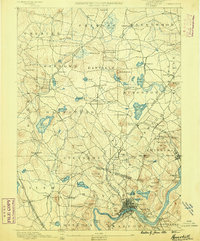 1890 Haverhill1890 Print · USGSSoutheastern New Hampshire and northern Massachusetts meet here in the 1890s along the industrial corridor of the Merrimac River. Local historians can trace the early rail network through Newton Junction, Salem Depot, and the dense street grids of Haverhill.
 - 1890 Map of Newburyport
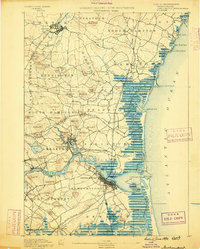 1890 Newburyport1890 Print · USGSThe coastal borderlands of Massachusetts and New Hampshire are shown here during a peak era of maritime and rail activity. Genealogists and local historians can trace family-named sites across Newbury Old Town, Byfield, and the bustling docks at Salisbury Point.
 - 1893 Map of Haverhill
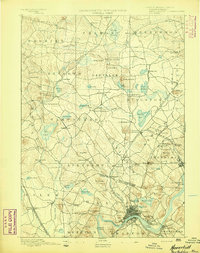 1893 Haverhill1893 Print · USGSThe Merrimack Valley at the end of the nineteenth century was a bustling network of rail-side villages and river industry. Genealogists can trace family lines through transit hubs like Newton Junction, rural hamlets like Ayer Village, and local landmarks like Spicket Hill.7 unique versions available
 - 1894 Map of Newburyport
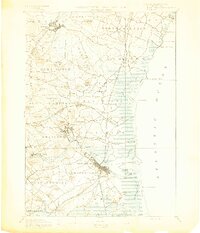 1894 Newburyport1894 Print · USGSCoastal Massachusetts and New Hampshire are captured here in the late nineteenth century, from the bustling riverfront of Newburyport to the marshes of Hampton. Genealogists and historians can trace rail lines, coastal landmarks like the U.S. Life Saving Station, and old neighborhoods in Amesbury or Newbury Old Town.7 unique versions available
 - 1932 Map of Newburyport
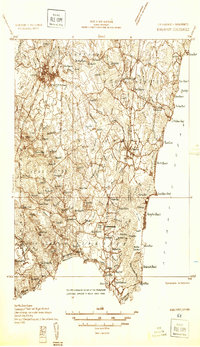 1932 Newburyport1932 Print · USGSThe New Hampshire seacoast and southern Rockingham County are shown here in the early thirties, just as coastal recreation and inland farming reached a mature balance. Genealogists can locate family-named landmarks like Nason Corner, Dearborn Academy, and various district schools.4 unique versions available
 - 1934 Map of Exeter
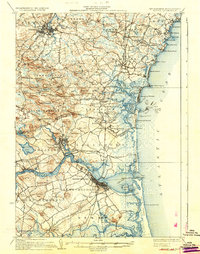 1934 Exeter1934 Print · USGSThe New Hampshire seacoast and Merrimack Valley met the Atlantic in the mid-thirties as a network of rail and river commerce. Genealogists can trace family lines through Newbury Old Town or locate historic institutions like Phillips Exeter Academy and Dearborn Academy.5 unique versions available
 - 1935 Map of Haverhill
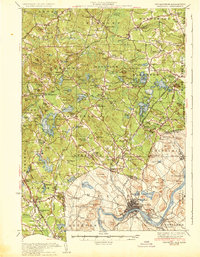 1935 Haverhill1935 Print · USGSThe borderlands of New Hampshire and Massachusetts appear here in the mid-1930s, showing a landscape defined by the Merrimack River and a dense rail network. Genealogists can trace family landmarks like Philbrick Hill or locate old schoolhouses including South Road Sch and the Depot Sch.5 unique versions available
 - 1943 Map of Lowell
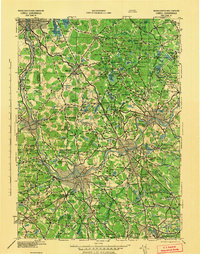 1943 Lowell1943 Print · USGSCentral New England industrial hubs and rural borderlands are mapped here during the early 1940s. Genealogists can trace family names across Mt Misery, Barrett Hill, and small settlements like Collinsville or North Pelham.
 - 1943 Map of Haverhill
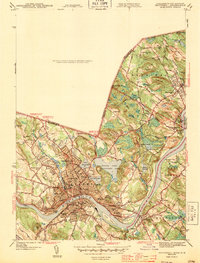 1943 Haverhill1943 Print · USGSThe Merrimack River valley during the early 1940s reveals a bustling corridor of industry and education between Haverhill and Groveland. Genealogists and historians can trace neighborhood school sites like Hannah Duston Sch and significant cemeteries such as Linwood Cem.2 unique versions available
 - 1943 Map of Cape Ann
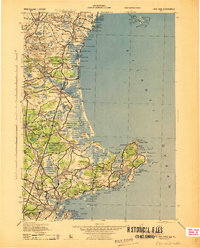 1943 Cape Ann1943 Print · USGSCoastal Massachusetts and New Hampshire appear here during the wartime era, showing the maritime and rail infrastructure that defined the North Shore. Genealogists can trace family names across Asbury Grove, Merrimacport, and the Boston & Maine RR rail corridor.
 - 1944 Map of Newburyport West
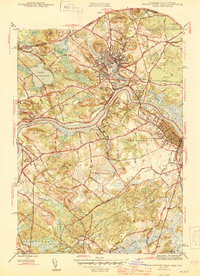 1944 Newburyport West1944 Print · USGSThe Lower Merrimack Valley at the height of the 1940s reveals a landscape of manufacturing towns and riverside villages. Genealogists can trace family footprints across Union Cem, Bridge Street Cem, and the old neighborhoods of Amesbury and Newburyport.3 unique versions available
 - 1948 Map of Boston
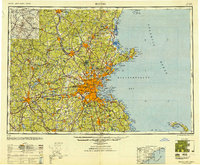 1948 Boston1948 Print · USGSEastern Massachusetts and southern New Hampshire appear at an industrial peak in the late 1940s, just as suburban growth began to accelerate. Genealogists and historians can trace rail lines like the Boston and Albany RR or locate coastal landmarks like Graves Lighthouse and Fort Devens.2 unique versions available
 - 1950 Map of Exeter, 1952 Print
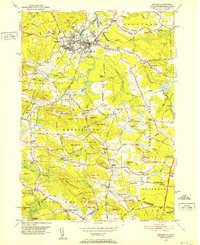 1950 Exeter1952 Print · USGSCoastal New Hampshire's rural character and established town centers are captured here at mid-century, just as local road networks began to expand. Researchers can trace ancestral roots through family-named landmarks like Gooch Corner, Dows Corner, and the Westview Cem.5 unique versions available
 - 1952 Map of Haverhill, 1953 Print
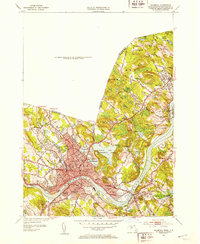 1952 Haverhill1953 Print · USGSHaverhill and the Merrimack River valley are captured in the early fifties, showing a thriving industrial city and its surrounding hill country. Genealogists can locate family names and sites across Bradford Junior College, Whittier Birthplace, and several local schools.2 unique versions available
 - 1952 Map of Newburyport West, 1953 Print
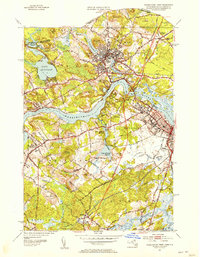 1952 Newburyport West1953 Print · USGSThe Merrimack River valley in the early fifties shows a landscape of established river towns and growing transit corridors. Genealogists can locate family burial sites at Sawyers Hill Burying Ground or trace the early campus of Governor Dummer Academy.4 unique versions available
 - 1955 Map of Haverhill, 1957 Print
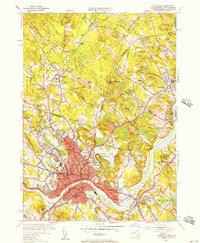 1955 Haverhill1957 Print · USGSHaverhill and Bradford sit at a crossroads of industry and education along the Merrimack River during the mid-fifties. Researchers can trace the legacy of local institutions like Bradford Junior College, find the Whittier Birthplace, and locate numerous neighborhood schools and cemeteries.2 unique versions available
 - 1956 Map of Haverhill, 1959 Print
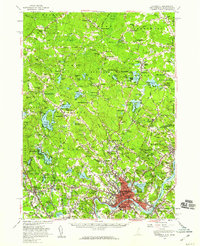 1956 Haverhill1959 Print · USGSMid-century New England comes to life across the New Hampshire and Massachusetts border during this period of significant growth. Genealogists and historians can trace the Whittier Birthplace, numerous local schools like Tilton Sch, and the busy corridors of the Boston and Maine Railroad.3 unique versions available
 - 1956 Map of Boston, 1967 Print
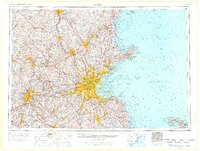 1956 Boston1967 Print · USGSThe Massachusetts coastline and industrial interior are seen here during the mid-century peak of suburban and highway expansion. Researchers can trace historic harbor defenses like Fort Revere, local landmarks such as Faneuil Hall, and the vast Parker River National Wildlife Refuge.6 unique versions available
 - 1958 Map of Boston
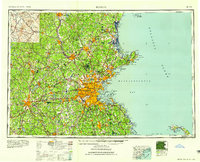 1958 Boston1958 Print · USGSEastern Massachusetts and southern New Hampshire are shown at the height of the industrial era, before the full expansion of the interstate system. Trace coastal defenses at Fort Warren, historic rail lines like the Boston and Maine, and the development of the Mass. 128 corridor.2 unique versions available
 - 1961 Map of Boston
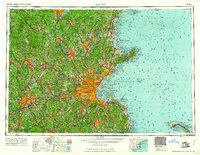 1961 Boston1961 Print · USGSThe Massachusetts coastline and its industrial interior are detailed here in the mid-twentieth century, from the Monadnock highlands to Cape Cod. Researchers can trace the rail routes of the Boston and Maine or locate landmarks like Fort Devens and the Wachusett Reservoir.2 unique versions available
 - 1968 Map of Newburyport West, 1970 Print
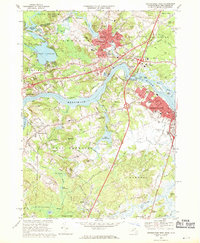 1968 Newburyport West1970 Print · USGSCoastal Essex County in the late sixties shows the intersection of historic river settlements and modern highway expansion. Genealogists can trace family lines through the Sawyer Hill Burying Ground or locate the storied Governor Dummer Academy and Merrimacport.4 unique versions available
 - 1972 Map of Haverhill, 1973 Print
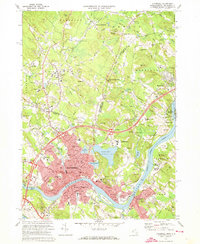 1972 Haverhill1973 Print · USGSHaverhill and the Merrimack River valley are caught in a moment of regional growth during the early seventies. Genealogists and local historians can trace the development of Bradford and Groveland, locate family plots in Linwood Cem, or find the Whittier Birthplace.4 unique versions available
 - 1977 Map of Haverhill, 1981 Print
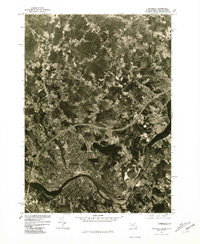 1977 Haverhill1981 Print · USGSThe Merrimack Valley at the end of the seventies shows a region in transition from its industrial roots to modern suburban expansion. Genealogists and local historians can trace property boundaries and neighborhood growth around Haverhill, Plaistow, and Kenoza Lake.
Showing maps 1-25 of 53
Top cities near Amesbury
- Lawrence historical maps
- Haverhill historical maps
- Methuen historical maps
- Andover historical maps
- Gloucester historical maps
- Salem historical maps
See more
Top neighborhoods of Amesbury
- Salisbury Point historical maps
- Amesbury and Salisbury Mills Village Historic District historical maps
Frequently asked questions
- What are the different types of historical maps available for Amesbury?
- What is the oldest map of Amesbury?
- Where can I purchase historical maps of Amesbury for my home or office?
- Where can I download high-res historical maps of Amesbury?
- Are there historical topographic maps available for Amesbury?
- Is there historical aerial imagery available for Amesbury?
- Where are historical maps of Amesbury sourced from?