Old Maps of Amherst, Massachusetts for Genealogy
Trace your family roots with 63 historic maps of Amherst. These high-res maps reveal old neighborhoods, homesites, landmarks, and streets — helping you uncover where your ancestors lived and how the area evolved over time.
- Explore historic neighborhoods: Identify where your relatives may have lived in the 1800s or 1900s.
- Compare maps over time: Trace the changes in streets, buildings, and landmarks for multi-generational research.
- Perfect for genealogy & ancestry research: Used by family historians and researchers to map out lineage and migration.
These maps are an incredible resource for exploring your personal connection to Amherst's past.
Amherst, MA maps
(63)- 1885 Map of Northampton
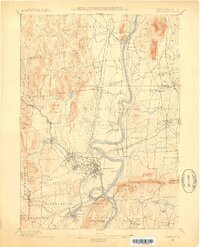 1885 Northampton1885 Print · USGSThe Pioneer Valley in the late 1800s was a hub of academic and industrial energy centered on the Connecticut River. Genealogists can trace family roots through hamlets like Hockanum and Loudville or locate early campus sites like the Agricultural College.
 - 1886 Map of Northampton
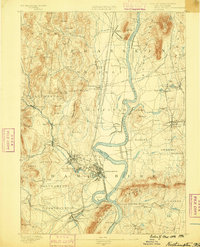 1886 Northampton1886 Print · USGSThe Pioneer Valley in the mid-1880s is captured here at a peak of rail expansion and educational growth. Researchers can trace the early footprints of the Agricultural College, the industrial works at Haydenville, and the landmark Insane Asylum.
 - 1887 Map of Belchertown
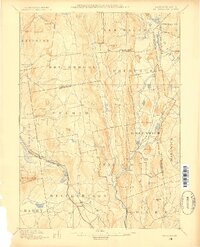 1887 Belchertown1887 Print · USGSThe Swift River valley is shown here in the late 1880s, before the landscape was transformed. Researchers can trace the original rail lines of the Boston & Albany R. R. and locate the lost streets of Enfield, Greenwich, and Prescott.
 - 1890 Map of Belchertown
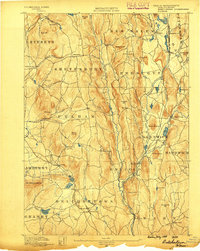 1890 Belchertown1890 Print · USGSThe Swift River valley is seen here in the late nineteenth century, long before the creation of the Quabbin Reservoir. Genealogists and local historians can trace the vanished streets of Enfield, Greenwich, and North Dana, or follow the old Boston & Albany R. R. line.
 - 1891 Map of Northampton
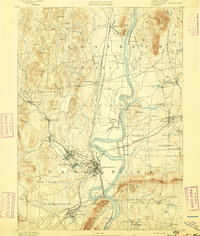 1891 Northampton1891 Print · USGSThe Pioneer Valley in the early nineties shows a landscape of river-driven industry and rising academic centers. Genealogists can trace family roots through old settlements like Bay State Village and Hockanum, or locate early campus sites at the Agricultural College.
 - 1893 Map of Northampton
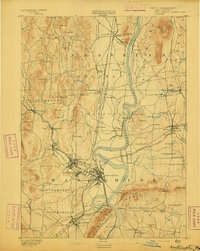 1893 Northampton1893 Print · USGSHampshire County in the late nineteenth century is a landscape of thriving mill towns and emerging college campuses. Trace the industrial operations at Factory Hollow or locate old crossings like the Smith Ferry and the Ferry at Hatfield.
 - 1893 Map of Belchertown
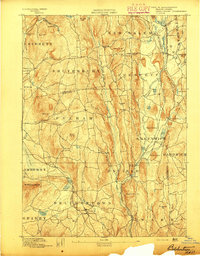 1893 Belchertown1893 Print · USGSThe Swift River valley is shown here in the 1890s, years before the landscape was fundamentally altered. Genealogists can trace family homes and rail routes through Enfield, Prescott, North Dana, and the Boston & Albany R R.8 unique versions available
 - 1895 Map of Northampton
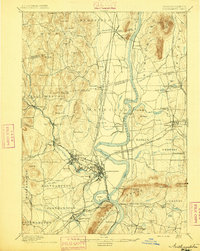 1895 Northampton1895 Print · USGSThe Pioneer Valley is captured here in the late nineteenth century, showing a landscape of burgeoning industrial villages and prestigious colleges. Researchers can trace the early rail networks like the Williamsburg Br. or locate historic sites like the Insane Asylum and Hockanum.10 unique versions available
 - 1896 Map of Holyoke
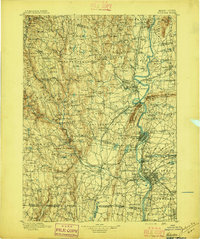 1896 Holyoke1896 Print · USGSThe Pioneer Valley and the eastern Berkshire foothills thrive in the 1890s as a complex network of industrial towns and upland farming communities. Historians can trace early infrastructure through the Bisbee Mill, the Agricultural College, and the prominent Ox Bow on the Connecticut River.
 - 1897 Map of Holyoke
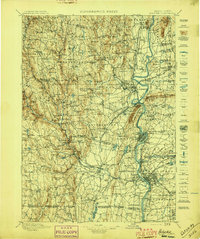 1897 Holyoke1897 Print · USGSThe Pioneer Valley and surrounding highlands thrive in the 1890s, caught here at the height of the region's industrial and agricultural development. Genealogists and historians can trace family roots through dozens of hill towns and river settlements, from Agricultural College in Amherst to the mills of Holyoke and the remote tracks of the Athol Br. R. R..
 - 1901 Map of Holyoke
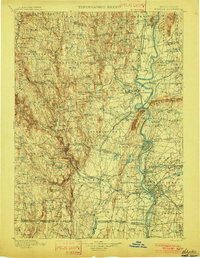 1901 Holyoke1901 Print · USGSThe Pioneer Valley and surrounding highlands thrive at the turn of the century, showing a landscape defined by mill towns and early rail networks. Genealogists and historians can trace old homesteads and local landmarks like Bisbee Mill, South Ferry, and the Agricultural College.4 unique versions available
 - 1908 Map of Ware
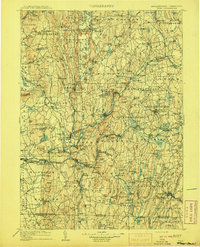 1908 Ware1908 Print · USGSCentral Massachusetts at the turn of the century reveals the Swift River Valley decades before the Quabbin Reservoir changed the landscape forever. Trace the lost footprints of Enfield and Dana, or follow the Central Vermont RR through Greenwich Village and Ware.2 unique versions available
 - 1935 Map of Mt Holyoke
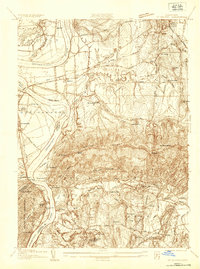 1935 Mt Holyoke1935 Print · USGSThe Connecticut River Valley's academic and agricultural landscape is captured in the mid-1930s, showing the early footprints of storied institutions. Researchers can trace the grounds of Amherst College, find the rural Smiths Ferry Ch, and locate old settlements like Pearl City and Hockanum.
 - 1935 Map of Mount Toby
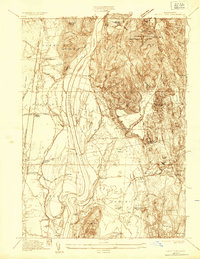 1935 Mount Toby1935 Print · USGSThe Connecticut River Valley comes alive in the mid-1930s, showing the intersection of rail-and-river life. Genealogists can locate family sites near North Sunderland Cemetery, East Whately Station, and the early Massachusetts State College campus.
 - 1941 Map of Mt Holyoke
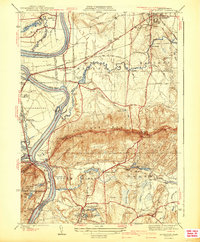 1941 Mt Holyoke1941 Print · USGSHampshire County thrives along the Connecticut River in the years before the Second World War. Researchers can trace the early footprints of Amherst College, locate family sites at Smiths Ferry, or find small rural centers like Moody Corner and Aldrich Mills.3 unique versions available
 - 1941 Map of Mt Toby
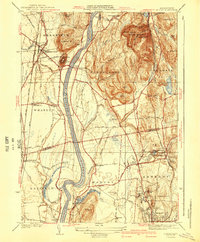 1941 Mt Toby1941 Print · USGSThe Pioneer Valley in the mid-thirties was a vital corridor for three major rail lines and a center for higher education. Genealogists can trace family names and landmarks across Sunderland and Amherst, including Massachusetts State College and the East Whately Cem.3 unique versions available
 - 1942 Map of Ware
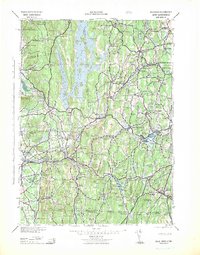 1942 Ware1942 Print · USGSCentral Massachusetts and the Connecticut border are captured here during the early years of the war, just as the landscape was being reshaped by the Quabbin Reservoir. Researchers can trace rail-era industry and local landmarks like the Lead Mine and the Bald Peak Hospital.
 - 1942 Map of Shutesbury
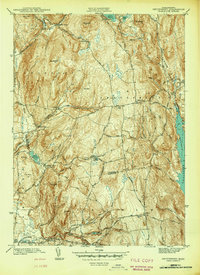 1942 Shutesbury1942 Print · USGSThe western edge of the newly formed Quabbin Reservoir meets the wooded uplands of Franklin County in the early 1940s. Local researchers can trace family homesteads and rural crossroads near Shutesbury, East Leverett, and the Rhodes Sch at a time when mountain agriculture still shaped the land.
 - 1942 Map of Belchertown
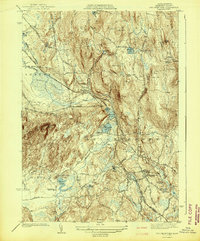 1942 Belchertown1942 Print · USGSHampshire County at the start of the 1940s reveals a landscape of rural crossroads and growing state institutions. Genealogists and historians can trace family-named landmarks like Cooks Corner and Meads Corner or locate the sprawling State School grounds.
 - 1943 Map of Belchertown
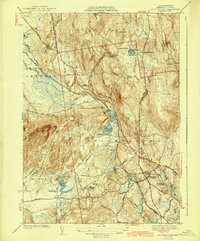 1943 Belchertown1943 Print · USGSHampshire County at the onset of the 1940s reveals a landscape where rail lines and rural schools defined the community. Genealogists and historians can trace family roots at Dwight Cem or locate institutional landmarks like St Hyacinths Seminary and the State School.4 unique versions available
 - 1943 Map of Shutesbury
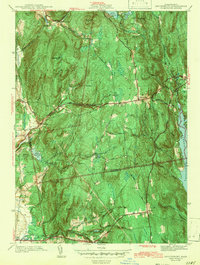 1943 Shutesbury1943 Print · USGSFranklin and Hampshire counties appear here during the early 1940s as the eastern landscape adjusted to the presence of the Quabbin Reservoir. Local historians can trace family locations near Shutesbury and Pelham, locating landmarks like Rhodes Sch and West Cem.4 unique versions available
 - 1943 Map of Holyoke
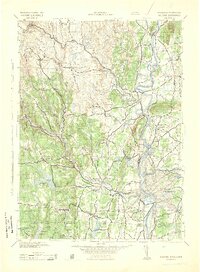 1943 Holyoke1943 Print · USGSThe Pioneer Valley and the eastern Berkshires are captured here in the early 1940s, showing a robust network of river-side industry and hill-country forests. Researchers can locate vanished landmarks and institutional grounds like Northampton State Hospital, Barnes Airport, and the Nat Gd Rifle Range.
 - 1944 Map of Mt Toby, 1954 Print
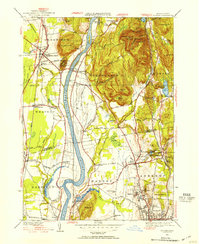 1944 Mt Toby1954 Print · USGSThe Pioneer Valley in the mid-forties shows a landscape defined by the Connecticut River and its railroads. Genealogists can trace family names through Wildwood Cemetery or North Sunderland Cem and locate schools like Three Corners Sch.2 unique versions available
 - 1947 Map of Mt Holyoke, 1955 Print
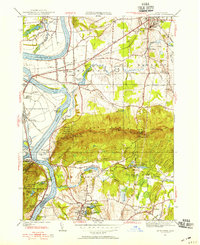 1947 Mt Holyoke1955 Print · USGSHampshire County in the late nineteen-forties centers on the academic hubs of Amherst and South Hadley amidst the dramatic ridgelines of the Holyoke Range. Researchers can trace historic river crossings at Smiths Ferry, explore the grounds of Amherst College, and locate rural settlements like Aldrich Mills.3 unique versions available
 - 1948 Map of Mt Holyoke
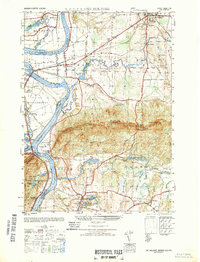 1948 Mt Holyoke1948 Print · USGSHampshire County in the late 1940s is defined by the high ridges of the Holyoke Range and the industrial river valley. Researchers can trace the mid-century footprints of Amherst College, the rail sidings of Aldrich Mills, and the old river crossing at Smiths Ferry.
Showing maps 1-25 of 63
Top cities near Amherst
- Springfield historical maps
- Chicopee historical maps
- Westfield historical maps
- Holyoke historical maps
- Northampton historical maps
- West Springfield historical maps
See more
Top neighborhoods of Amherst
- Factory Hollow historical maps
- Cushman historical maps
- North Amherst historical maps
- Amherst Woods historical maps
- South Amherst historical maps
- Mill Valley historical maps
See more
Frequently asked questions
- What are the different types of historical maps available for Amherst?
- What is the oldest map of Amherst?
- Where can I purchase historical maps of Amherst for my home or office?
- Where can I download high-res historical maps of Amherst?
- Are there historical topographic maps available for Amherst?
- Is there historical aerial imagery available for Amherst?
- Where are historical maps of Amherst sourced from?