Old Maps of Huntington, Massachusetts for Academic Research
Study the evolution of Huntington with 60 high-resolution historic maps. Whether you're teaching, researching, or modeling changes in land use, these maps provide essential visual documentation of urban, environmental, and geographic change.
- Analyze long-term change: Track patterns in development, transportation, and natural features.
- Ideal for environmental or urban studies: Support academic projects with primary historical map data.
- Use in the classroom or lab: Educators and researchers rely on these maps to bring historical context to life.
These maps are a powerful tool for teaching, research, and visualizing how Huntington has changed over the decades.
Huntington, MA maps
(60)- 1886 Map of Chesterfield
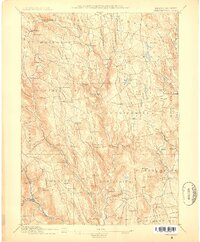 1886 Chesterfield1886 Print · USGSThe Hampshire Hills are captured here in the late nineteenth century, showing a network of upland hamlets and river-powered industry. Researchers can trace historic family locations along Ireland Street or locate the old Bisbee Mill and the Boston and Albany rail line.
 - 1887 Map of Granville
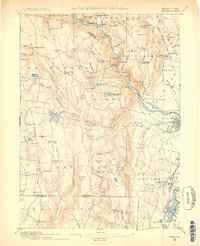 1887 Granville1887 Print · USGSHampden County's river valleys and rugged uplands are captured here in the late nineteenth century as industry and railroads transformed the terrain. Trace family-named landmarks and infrastructure like Ore Hill, the Borden Br. Res., and the Boston and Albany Railroad.
 - 1888 Map of Chesterfield
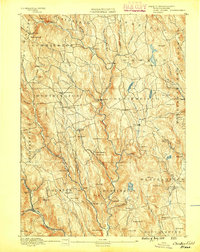 1888 Chesterfield1888 Print · USGSHampshire County in the late 1880s is shown here as a landscape of river-driven hamlets and upland farms. Genealogists can trace family holdings near rural crossroads like Ireland Street, Shack Street, and the riverside Bisbee Mill.
 - 1889 Map of Granville
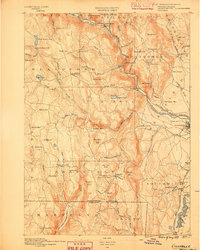 1889 Granville1889 Print · USGSThe hill towns of Hampden County are shown here in the late nineteenth century, capturing a period of upland farming and early industrial rail. Researchers can trace the Boston and Albany Railroad through the Westfield River valley or locate family sites in North Blandford and East Granville.
 - 1893 Map of Granville
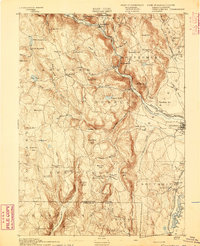 1893 Granville1893 Print · USGSHampden County and the northern Connecticut border are captured here in the late nineteenth century as the regional rail network matured. Genealogists and local historians can trace the early homesteads and hamlets of Blandford, Granville, and West Parish, while locating landmarks like Ore Hill and Salmon Falls.
 - 1893 Map of Chesterfield
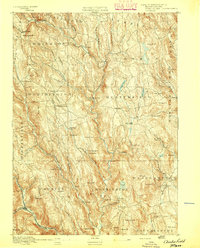 1893 Chesterfield1893 Print · USGSThe Hampshire County highlands are captured here in the late nineteenth century as a network of river-powered mill towns and mountain farmsteads. Local historians can trace early neighborhood clusters like Ireland Street and Shack Street or locate industrial sites like Risbee Mill.
 - 1895 Map of Granville
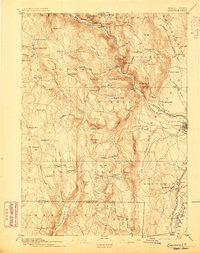 1895 Granville1895 Print · USGSWestern Massachusetts and northern Connecticut hill towns are captured in the 1890s, revealing a landscape of remote mountain hamlets and early river railroads. Genealogists can trace family holdings near East Granville, North Blandford, and the distinct peaks of Liberty Hill or Winchell Mtn.8 unique versions available
 - 1895 Map of Chesterfield
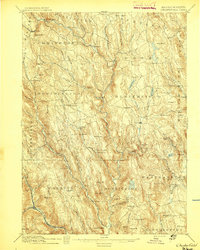 1895 Chesterfield1895 Print · USGSThe Hampshire County uplands in the late nineteenth century show a landscape of steep river valleys and small mill towns. Researchers can trace the early industrial footprint at Risbees Mill or locate family homesteads in hamlets like Ireland Street and Jordansville.8 unique versions available
 - 1896 Map of Holyoke
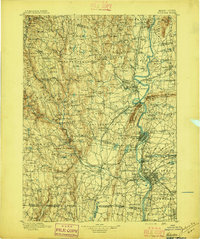 1896 Holyoke1896 Print · USGSThe Pioneer Valley and the eastern Berkshire foothills thrive in the 1890s as a complex network of industrial towns and upland farming communities. Historians can trace early infrastructure through the Bisbee Mill, the Agricultural College, and the prominent Ox Bow on the Connecticut River.
 - 1897 Map of Holyoke
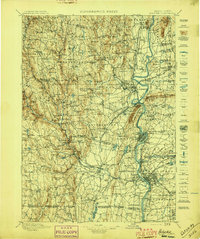 1897 Holyoke1897 Print · USGSThe Pioneer Valley and surrounding highlands thrive in the 1890s, caught here at the height of the region's industrial and agricultural development. Genealogists and historians can trace family roots through dozens of hill towns and river settlements, from Agricultural College in Amherst to the mills of Holyoke and the remote tracks of the Athol Br. R. R..
 - 1901 Map of Holyoke
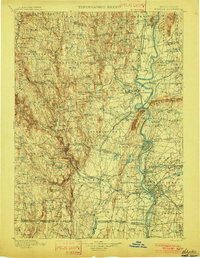 1901 Holyoke1901 Print · USGSThe Pioneer Valley and surrounding highlands thrive at the turn of the century, showing a landscape defined by mill towns and early rail networks. Genealogists and historians can trace old homesteads and local landmarks like Bisbee Mill, South Ferry, and the Agricultural College.4 unique versions available
 - 1937 Map of Woronoco
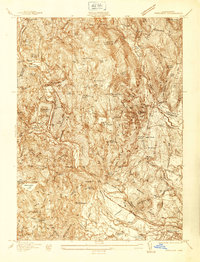 1937 Woronoco1937 Print · USGSThe Westfield River valley and the hills of Hampden County are shown here as they appeared in the years before World War II. Researchers can trace the path of the Abandoned Canal, explore the Westfield Marble Quarries, or locate family sites near St Thomas Cem and the New State Sch.
 - 1942 Map of Woronoco
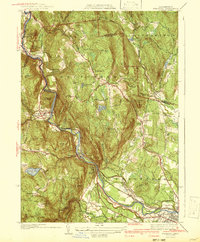 1942 Woronoco1942 Print · USGSThe Berkshires meet industrial river valleys in the early 1940s, where the railroad and river define local life. Trace historic marble extraction at the Marble Quarries or find family roots at Clarks Cem and settlements like Woronoco Heights.2 unique versions available
 - 1943 Map of Holyoke
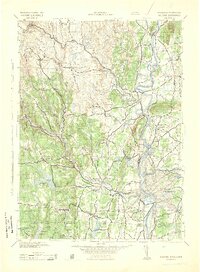 1943 Holyoke1943 Print · USGSThe Pioneer Valley and the eastern Berkshires are captured here in the early 1940s, showing a robust network of river-side industry and hill-country forests. Researchers can locate vanished landmarks and institutional grounds like Northampton State Hospital, Barnes Airport, and the Nat Gd Rifle Range.
 - 1946 Map of Blandford
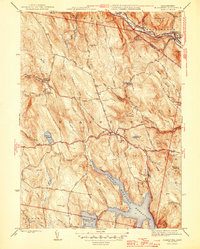 1946 Blandford1946 Print · USGSBlandford and Huntington are captured here in the mid-1940s, a period defined by the expansion of reservoirs and old mountain turnpikes. Researchers can trace the General Knox Trail, locate the North Blandford Cem, and study the industrial rail lines of the Boston and Albany RR.2 unique versions available
 - 1946 Map of Westhampton
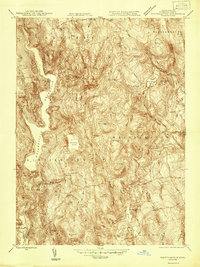 1946 Westhampton1946 Print · USGSHampshire County at the dawn of the post-war era shows a landscape transitioning between traditional milling and modern water management. Researchers can trace historic family cemeteries like Torrey Cem and early industrial sites such as Bisbee Mill near the Knightville Reservoir.
 - 1947 Map of Westhampton
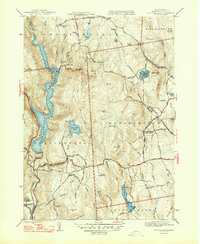 1947 Westhampton1947 Print · USGSHampshire County's hill country is frozen in time during the late 1940s, showing the rural character of Westhampton and Norwich. Researchers can find small family burial grounds like Damon Cem, old industrial sites like Bisbee Mill, and landmarks like Pine Island Lake.2 unique versions available
 - 1948 Map of Chester
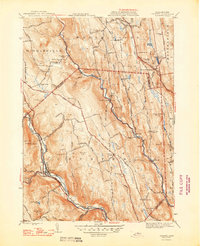 1948 Chester1948 Print · USGSThe Berkshires hill country comes alive in this post-war survey of the Westfield River valley and its surrounding ridges. Genealogists can locate family burial grounds like Converse Cem and trace the winding Boston and Albany RR through Chester.2 unique versions available
 - 1948 Map of Albany, 1951 Print
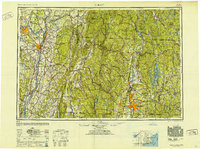 1948 Albany1951 Print · USGSThe Hudson and Connecticut River valleys are captured here in the late 1940s, showing the vital rail and water corridors of the Northeast. You can trace the Boston and Maine tracks past Mt Greylock or locate early settlements like Great Barrington and Bennington.
 - 1951 Map of Woronoco
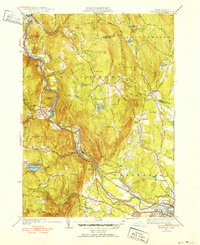 1951 Woronoco1951 Print · USGSThe Westfield River valley in the early 1950s shows a landscape of industrial hamlets and mountain trails. Genealogists can trace family landmarks like St Thomas Cem, Montgomery Ch, and the Wyben Sch nestled among the Berkshire foothills.3 unique versions available
 - 1955 Map of Blandford, 1956 Print
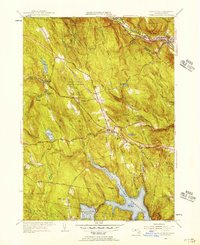 1955 Blandford1956 Print · USGSHampden County's upland terrain is shown here during a period of major infrastructure expansion in the mid-fifties. Researchers can locate remote family burial sites like Warfield Cem and trace the route of the Mass Turnpike as it carves through the Blandford State Forest.3 unique versions available
 - 1955 Map of Westhampton, 1957 Print
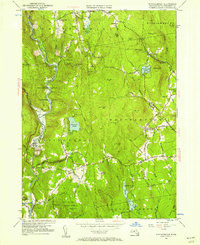 1955 Westhampton1957 Print · USGSHampshire County hill towns were entering a new era of conservation and forest regrowth in the mid-fifties. Researchers can trace old family burial grounds like Damon Cem, locate the Bisbee Mill site, and study the evolving boundary of the Huntington State Forest.2 unique versions available
 - 1956 Map of Chester, 1957 Print
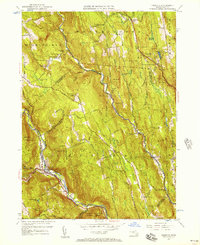 1956 Chester1957 Print · USGSThe Berkshires highlands come to life in the mid-fifties, showing the rugged river valley development along the Boston and Albany railroad. Genealogists can locate family landmarks like Wright Cem and South Worthington, or trace the winding Middle Branch Westfield River.2 unique versions available
 - 1956 Map of Albany, 1968 Print
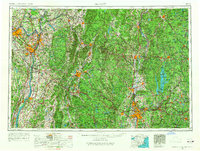 1956 Albany1968 Print · USGSThe industrial heart of the Northeast is revealed in the mid-1950s, from the Hudson Valley to the Connecticut River. Researchers can trace the legacy of the Quabbin Reservoir, locate Westover Air Force Base, or follow the Rutland RR through the Green Mountains.2 unique versions available
 - 1957 Map of Albany
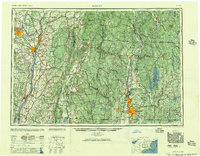 1957 Albany1957 Print · USGSThe Tri-State region and Connecticut River Valley are captured here during a period of significant postwar growth and infrastructure expansion. Genealogists and historians can trace the rail-and-river economy through landmarks like the Boston and Maine railroad, Quabbin Reservoir, and Westover Air Force Base.
Showing maps 1-25 of 60
Top cities near Huntington
- Westfield historical maps
- Holyoke historical maps
- Northampton historical maps
- Agawam historical maps
- West Springfield historical maps
- Easthampton historical maps
See more
Top neighborhoods of Huntington
- Littleville Lake historical maps
- Norwich historical maps
- Goss Heights historical maps
- Knightville historical maps
Frequently asked questions
- What are the different types of historical maps available for Huntington?
- What is the oldest map of Huntington?
- Where can I purchase historical maps of Huntington for my home or office?
- Where can I download high-res historical maps of Huntington?
- Are there historical topographic maps available for Huntington?
- Is there historical aerial imagery available for Huntington?
- Where are historical maps of Huntington sourced from?