Old Maps of Woburn, Massachusetts for Hiking & Exploration
Hike through history with 57 historic maps of Woburn. Explore old trails, ghost towns, and forgotten backroads — perfect for outdoor adventurers and local explorers.
- Rediscover forgotten places: Map out old mining camps, roads, and footpaths that no longer exist on modern maps.
- Layer with modern tools: Combine with LiDAR or satellite views to plan hikes through historical terrain.
- Made for exploration: Popular among hikers, overlanders, and local history lovers.
Use these maps to find adventure and explore the hidden past of Woburn.
Woburn, MA maps
(57)- 1886 Map of Lawrence
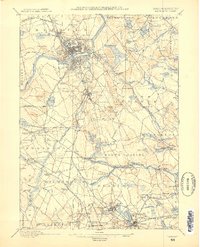 1886 Lawrence1886 Print · USGSThe Merrimack Valley at the close of the nineteenth century was a bustling hub of industry and transit. Researchers can trace ancestral roots through vanished hamlets like Frye Village, locate the original Andover Theological Seminary, and follow the old Salem and Lawrence Railroad line.
 - 1888 Map of Lawrence
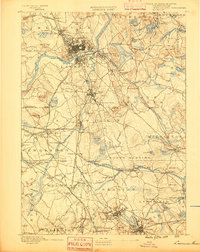 1888 Lawrence1888 Print · USGSThe Merrimack Valley industrial corridor is captured here in the late nineteenth century as a thriving rail and textile hub. Researchers can trace the footprints of the Andover Theological Seminary, locate the State Almshouse, and follow the iron tracks through Ballardvale.
 - 1893 Map of Boston
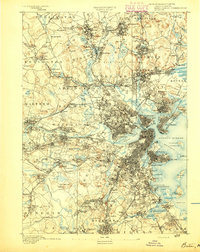 1893 Boston1893 Print · USGSGreater Boston and the Massachusetts coast are captured here in the late nineteenth century as streetcar suburbs and rail lines redefined the region. Trace family roots and local history across old neighborhoods like Washington Village, coastal landmarks like Fort Independence, and the sprawling Middlesex Fells.4 unique versions available
 - 1893 Map of Lawrence
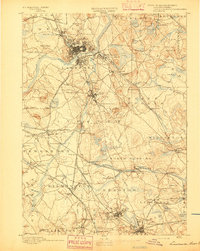 1893 Lawrence1893 Print · USGSThe Merrimac River valley and its surrounding textile and rail hubs are captured here at their industrial peak during the 1880s. Genealogists can trace family footprints through the State Almshouse, the Andover Theological Seminary, and vanished stops like Burtts Crossing Station.10 unique versions available
 - 1903 Map of Boston
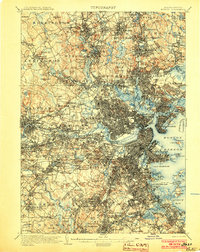 1903 Boston1903 Print · USGSThe Greater Boston area and its sprawling rail-and-river network are captured here at the turn of the century. Genealogists and historians can trace neighborhood blocks, the grounds of Tufts College, and military landmarks like Ft. Winthrop and Ft. Independence.13 unique versions available
 - 1918 Map of Lawrence
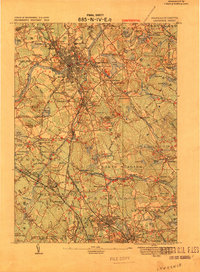 1918 Lawrence1918 Print · USGSGreater Lawrence and the Merrimac Valley are captured here during the late First World War era, showing a landscape defined by industrial rail and historic village centers. Researchers can trace the sprawling Boston and Maine Railroad network to specific sites like the State Almshouse or the Andover Theological Seminary.2 unique versions available
 - 1943 Map of Boston
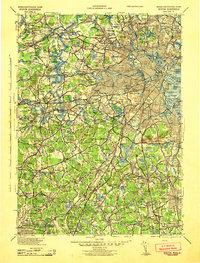 1943 Boston1943 Print · USGSGreater Boston and its southern suburbs appear here during the mobilization of the early 1940s. Genealogists and historians can trace the early footprints of Commonwealth Airport, military sites like Fort Winthrop, and local institutions such as Pondville State Hospital.
 - 1943 Map of Lowell
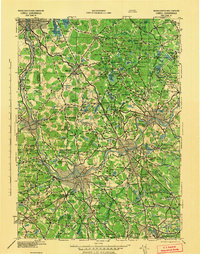 1943 Lowell1943 Print · USGSCentral New England industrial hubs and rural borderlands are mapped here during the early 1940s. Genealogists can trace family names across Mt Misery, Barrett Hill, and small settlements like Collinsville or North Pelham.
 - 1943 Map of Boston North
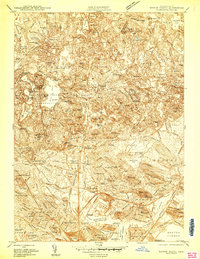 1943 Boston North1943 Print · USGSGreater Boston's northern suburbs and industrial waterfronts appear in high detail during the early 1940s. Genealogists and historians can trace the limits of neighborhoods like Orient Heights and find landmarks like Tufts College and the Mass Soldiers Home.
 - 1944 Map of Lexington
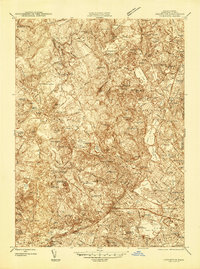 1944 Lexington1944 Print · USGSMiddlesex County is shown in the early 1940s, capturing a landscape of historic town centers and massive institutional estates. Researchers can trace ancestral sites at Ye Old Burying Ground or locate vanished rail stops like Munroe Sta and Beaver Bk Sta.
 - 1944 Map of Wilmington
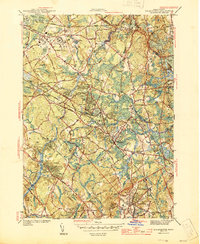 1944 Wilmington1944 Print · USGSWilmington and its surrounding Middlesex County hamlets are shown during the mid-1940s, a period when the Boston and Maine Railroad still anchored the local economy. Genealogists and researchers can trace family landmarks like the State Infirmary, Wildwood Cem, and rural schoolhouses such as the Shawsheen Sch.2 unique versions available
 - 1944 Map of Reading
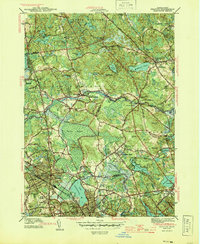 1944 Reading1944 Print · USGSReading and North Reading are shown here during the height of the Second World War as the region balanced its colonial roots with modern military needs. Researchers can locate the Military Police Camp, historic burial sites like Oakdale Cem, and the tracks of the Boston and Maine RR.2 unique versions available
 - 1946 Map of Lexington
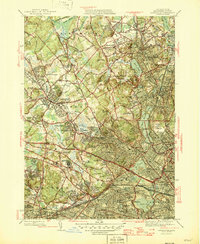 1946 Lexington1946 Print · USGSSuburban Middlesex County comes alive in the mid-forties, showing the postwar density of these classic Boston-area towns. Researchers can locate significant institutional grounds like the Metropolitan State Hospital or trace family roots at Wildwood Cem and Oak Grove Cemetery.3 unique versions available
 - 1946 Map of Boston North
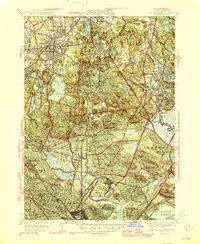 1946 Boston North1946 Print · USGSGreater Boston's northern suburbs emerge in the mid-1940s as a hub of industry and academic life. Genealogists and researchers can trace family plots in Woodlawn Cem or locate historic campuses like Tufts College and Radcliffe College.2 unique versions available
 - 1948 Map of Boston
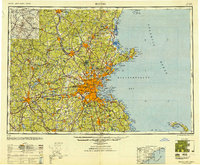 1948 Boston1948 Print · USGSEastern Massachusetts and southern New Hampshire appear at an industrial peak in the late 1940s, just as suburban growth began to accelerate. Genealogists and historians can trace rail lines like the Boston and Albany RR or locate coastal landmarks like Graves Lighthouse and Fort Devens.2 unique versions available
 - 1949 Map of Boston North, 1957 Print
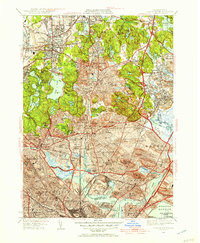 1949 Boston North1957 Print · USGSThe northern Boston suburbs and Middlesex Fells are documented here during the late 1940s as post-war development filled the landscape. Researchers can trace the legacy of local institutions and neighborhoods from the Stoneham Zoological Park to the Naval Hospital and Wyoming Cem.
 - 1950 Map of Wilmington, 1952 Print
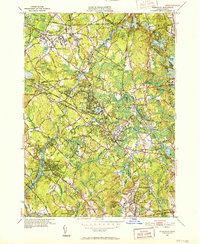 1950 Wilmington1952 Print · USGSWilmington and Tewksbury are shown during a period of significant mid-century growth along the Boston and Maine rail lines. Researchers can trace the sprawling grounds of the State Infirmary and locate vanished local landmarks like the Whitefield Sch and Silver Lake.4 unique versions available
 - 1951 Map of Reading, 1952 Print
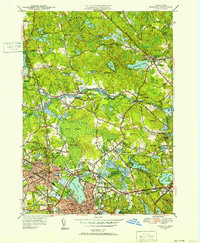 1951 Reading1952 Print · USGSNorth of Boston in the early fifties, the landscape around Reading and Wakefield shows a mix of growing residential centers and military training grounds. You can trace family roots at Lakeside Cem, locate the old Bachelder Sch, or explore the grounds of Camp Curtis Guild.3 unique versions available
 - 1956 Map of Lexington
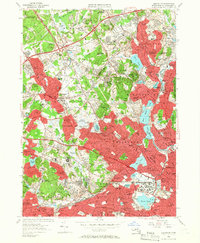 1956 Lexington1956 Print · USGSMiddlesex County was rapidly evolving in the mid-1950s as suburban residential belts thickened between established town centers. Genealogists and historians can trace institutional history at Metropolitan State Hospital or locate ancestral sites like the Old Burying Ground and St Patricks Cem.3 unique versions available
 - 1956 Map of Boston North, 1958 Print
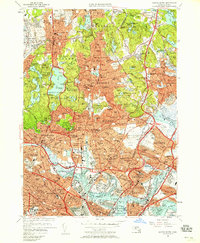 1956 Boston North1958 Print · USGSThe industrial and residential landscape north of Boston comes alive in the mid-fifties, from the shipyards to the suburban fells. Local historians can trace the extensive rail lines of the B & M Yards and landmark sites like the Bunker Hill Monument and Saugus Race Track.3 unique versions available
 - 1956 Map of Boston, 1967 Print
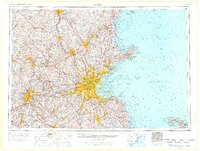 1956 Boston1967 Print · USGSThe Massachusetts coastline and industrial interior are seen here during the mid-century peak of suburban and highway expansion. Researchers can trace historic harbor defenses like Fort Revere, local landmarks such as Faneuil Hall, and the vast Parker River National Wildlife Refuge.6 unique versions available
 - 1958 Map of Boston
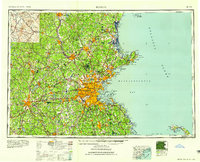 1958 Boston1958 Print · USGSEastern Massachusetts and southern New Hampshire are shown at the height of the industrial era, before the full expansion of the interstate system. Trace coastal defenses at Fort Warren, historic rail lines like the Boston and Maine, and the development of the Mass. 128 corridor.2 unique versions available
 - 1961 Map of Boston
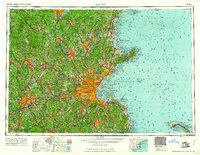 1961 Boston1961 Print · USGSThe Massachusetts coastline and its industrial interior are detailed here in the mid-twentieth century, from the Monadnock highlands to Cape Cod. Researchers can trace the rail routes of the Boston and Maine or locate landmarks like Fort Devens and the Wachusett Reservoir.2 unique versions available
 - 1965 Map of Wilmington, 1968 Print
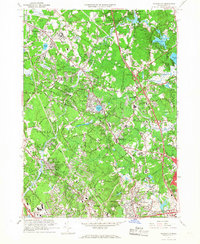 1965 Wilmington1968 Print · USGSWilmington and Tewksbury are captured in the mid-sixties as post-war suburban growth begins to surround established institutions and rail lines. Researchers can trace family history through the Tewksbury State Hospital, Wildwood Cemetery, and local schools like North Street Sch.2 unique versions available
 - 1966 Map of Reading, 1968 Print
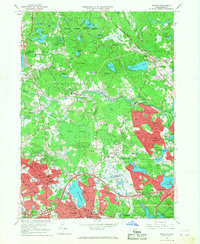 1966 Reading1968 Print · USGSMiddlesex and Essex counties are shown here in the mid-sixties, a period of notable suburban growth surrounding the historic towns of Reading and Wakefield. Researchers can trace family sites near Quannapowitt Lake, the Puritan Lawn Memorial Park, or the sprawling Harold Parker State Forest.2 unique versions available
Showing maps 1-25 of 57
Top cities near Woburn
- Boston historical maps
- Lowell historical maps
- Cambridge historical maps
- Quincy historical maps
- Lynn historical maps
- Newton historical maps
See more
Top neighborhoods of Woburn
- Montvale historical maps
- Mishawum historical maps
- North Woburn historical maps
- Woburn Highlands historical maps
- Central Square historical maps
- Cummingsville historical maps
See more
Frequently asked questions
- What are the different types of historical maps available for Woburn?
- What is the oldest map of Woburn?
- Where can I purchase historical maps of Woburn for my home or office?
- Where can I download high-res historical maps of Woburn?
- Are there historical topographic maps available for Woburn?
- Is there historical aerial imagery available for Woburn?
- Where are historical maps of Woburn sourced from?