1900s (20th Century) Maps of Dover, Massachusetts
Explore 40 historic maps of Dover from the 1900s (20th Century). These maps offer a rare glimpse into what life looked like during the 1900s — showing old roads, neighborhoods, homes, and landmarks that have changed or disappeared over time.
Whether you're researching your family's past, planning a metal detecting trip, or studying how Dover's landscape evolved across the 1900s, these high-resolution maps are a powerful tool for exploring the history of this region.
- Focus on a specific era: All maps on this page are from the 1900s, giving you a focused view of this time period.
- See what’s changed: Compare century-old streets, trails, and buildings to today's modern landscape using overlays and satellite layers.
- Research with precision: Use these maps for genealogy, historical research, land use analysis, or educational projects.
- View, download, or print: Maps are fully viewable online in high resolution, and can be downloaded or printed for your own records.
Start exploring Dover's history through authentic maps from the 1900s. This is your window into the past.
Dover, MA maps
(40)- 1903 Map of Boston
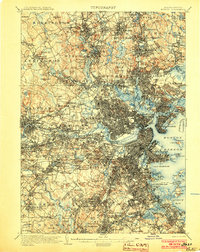 1903 Boston1903 Print · USGSThe Greater Boston area and its sprawling rail-and-river network are captured here at the turn of the century. Genealogists and historians can trace neighborhood blocks, the grounds of Tufts College, and military landmarks like Ft. Winthrop and Ft. Independence.13 unique versions available
 - 1918 Map of Framingham
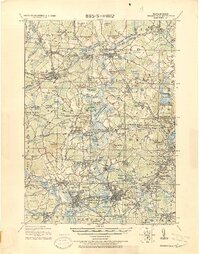 1918 Framingham1918 Print · USGSEastern Massachusetts is seen here as a bustling rail-and-river corridor during the early twentieth century. Genealogists and historians can trace old property lines and landmarks like the Wayside Inn, the State Prison, and Nine Acre Corner.2 unique versions available
 - 1919 Map of Dedham
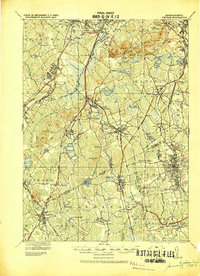 1919 Dedham1919 Print · USGSNorfolk County at the close of the Great War reveals a landscape defined by the Blue Hills Reservation and a dense network of industrial rail lines. Genealogists and historians can trace old neighborhood boundaries in Readville and Islington or locate lost trackside stops along the Old Colony RR.
 - 1919 Map of Franklin
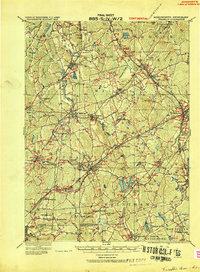 1919 Franklin1919 Print · USGSEastern Massachusetts at the end of the Great War was a landscape defined by its river-powered mill towns and expanding rail corridors. Genealogists and local historians can trace family roots through industrial hamlets like City Mills, Unionville, and Sheldonville.2 unique versions available
 - 1921 Map of Franklin, 1942 Print
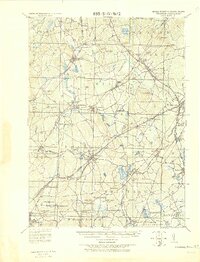 1921 Franklin1942 Print · USGSThe Charles River valley was a network of bustling rail junctions and mill villages in the years following the Great War. You can trace the development of towns like Franklin and Medway or locate smaller centers such as City Mills and Unionville.
 - 1936 Map of Norwood
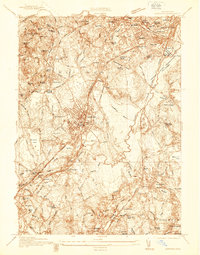 1936 Norwood1936 Print · USGSNorfolk County in the mid-1930s shows a landscape of busy rail corridors and river-powered industry centered on the Neponset River. Genealogists and historians can trace neighborhood growth through local landmarks like Plumptonville, the Colburn Sch, and the Norwood Central Sta.
 - 1940 Map of Medfield
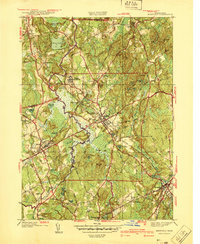 1940 Medfield1940 Print · USGSMedfield and the surrounding Charles River valley appear here just before the Second World War, showing a landscape of small villages and large institutional grounds. Researchers can trace the old rail beds of the New York New Haven and Hartford and find local landmarks like Schoolhouse No 14 and the Medfield State Hospital.2 unique versions available
 - 1941 Map of Norwood
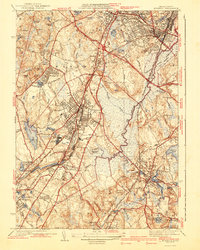 1941 Norwood1941 Print · USGSNorfolk County during the mid-1930s shows a landscape of growing town centers and industrial rail corridors along the Neponset River. Researchers can trace local landmarks like the Sharon Sanitorium, Highland Cem, and the specialized Norfolk County Agricultural Sch.3 unique versions available
 - 1943 Map of Boston
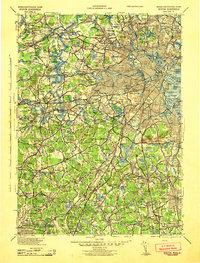 1943 Boston1943 Print · USGSGreater Boston and its southern suburbs appear here during the mobilization of the early 1940s. Genealogists and historians can trace the early footprints of Commonwealth Airport, military sites like Fort Winthrop, and local institutions such as Pondville State Hospital.
 - 1943 Map of Natick
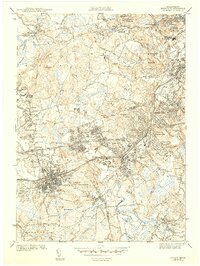 1943 Natick1943 Print · USGSMiddlesex and Norfolk Counties are shown here during the early 1940s as suburban growth began to surround historic town centers. Researchers can trace family sites near Wellesley College, find old burials at South Cem, and follow the Boston and Maine rail lines.5 unique versions available
 - 1944 Map of Newton
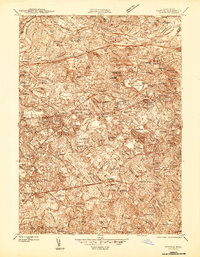 1944 Newton1944 Print · USGSThe western suburbs of Boston thrive in the mid-1940s, defined by the winding Charles River and a dense network of rail lines. Genealogists and local historians can trace family plots and parish boundaries at Newton Cem, St Gabriels Monastery, and the Christian Science Sanatorium.
 - 1945 Map of Medfield, 1954 Print
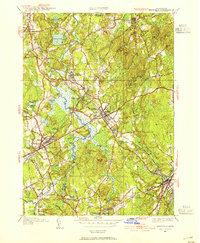 1945 Medfield1954 Print · USGSThe Charles River valley and its rail-connected towns appear here during the mid-forties. Genealogists and historians can trace family locations near Medfield State Hospital, Farm St Sta, and Vine Lake Cem.3 unique versions available
 - 1946 Map of Medfield
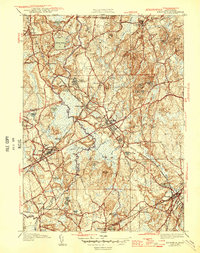 1946 Medfield1946 Print · USGSPost-war Norfolk County is captured here just as local rail service and institutional life centered on the Medfield State Hospital remained vital. Trace family lands near Pine Hill Cem or follow the New Haven and Hartford RR through Medfield Junction.2 unique versions available
 - 1946 Map of Newton
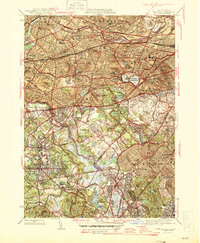 1946 Newton1946 Print · USGSNewton and the western Boston suburbs are captured in the mid-1940s, showcasing a landscape of established estates, institutions, and rail lines. You can trace early 20th-century neighborhoods and landmarks like the Chestnut Hill Reservoir, Boston College, and Needham Junction.3 unique versions available
 - 1946 Map of Norwood, 1958 Print
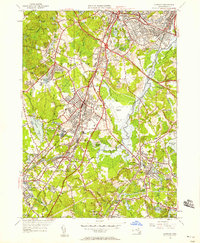 1946 Norwood1958 Print · USGSNorfolk County during the postwar expansion era reveals a landscape shaped by the Neponset River and thriving rail corridors. Researchers can trace the development of local centers like Islington and East Walpole or locate landmarks such as the Norwood Airfield and Colburn Sch.
 - 1947 Map of Norwood
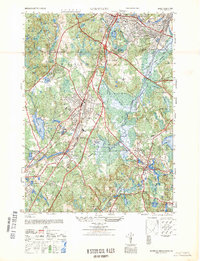 1947 Norwood1947 Print · USGSPost-war Norfolk County centers on the busy rail-and-river corridor of the late forties. Researchers can trace the neighborhood growth of Islington and East Walpole or locate family markers at Fairview Cemetery and Highland Cem.
 - 1948 Map of Boston
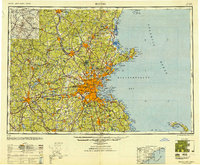 1948 Boston1948 Print · USGSEastern Massachusetts and southern New Hampshire appear at an industrial peak in the late 1940s, just as suburban growth began to accelerate. Genealogists and historians can trace rail lines like the Boston and Albany RR or locate coastal landmarks like Graves Lighthouse and Fort Devens.2 unique versions available
 - 1950 Map of Natick, 1956 Print
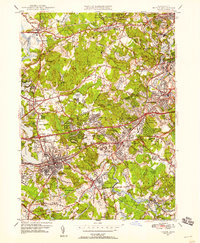 1950 Natick1956 Print · USGSPost-war expansion meets established academic life in this study of the western Boston suburbs. Trace family roots and local growth through Wellesley College, the Boston and Albany RR, and old burial sites like Linwood Cem.3 unique versions available
 - 1954 Map of Newton
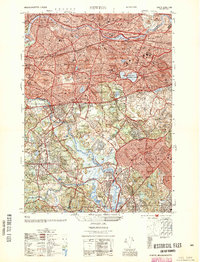 1954 Newton1954 Print · USGSGreater Boston was undergoing rapid postwar transition during the early fifties as highways began to reshape the suburbs. Genealogists and historians can trace family plots and local landmarks like Newton Cem, the Perkins Institution for Blind, and the Boston and Albany RR corridor.
 - 1956 Map of Newton
 1956 Newton1956 Print · USGSThe Charles River corridor in the mid-fifties shows a mature landscape of commuter rail suburbs and prestigious institutions. Researchers can trace family history through local landmarks like Newton Cemetery, neighborhood hubs like Waban Sta, and Hancock Village.3 unique versions available
 - 1956 Map of Boston, 1967 Print
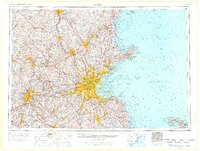 1956 Boston1967 Print · USGSThe Massachusetts coastline and industrial interior are seen here during the mid-century peak of suburban and highway expansion. Researchers can trace historic harbor defenses like Fort Revere, local landmarks such as Faneuil Hall, and the vast Parker River National Wildlife Refuge.6 unique versions available
 - 1957 Map of Medfield, 1960 Print
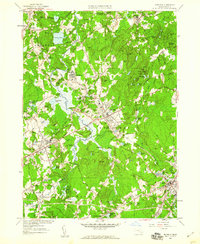 1957 Medfield1960 Print · USGSMid-century Norfolk County is captured here during a period of suburban expansion along the Charles River. Researchers can trace the rail infrastructure of the New Haven Railroad and locate local landmarks like the Medfield State Hospital and St Stephens Priory.2 unique versions available
 - 1958 Map of Boston
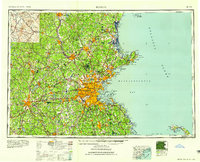 1958 Boston1958 Print · USGSEastern Massachusetts and southern New Hampshire are shown at the height of the industrial era, before the full expansion of the interstate system. Trace coastal defenses at Fort Warren, historic rail lines like the Boston and Maine, and the development of the Mass. 128 corridor.2 unique versions available
 - 1958 Map of Norwood, 1960 Print
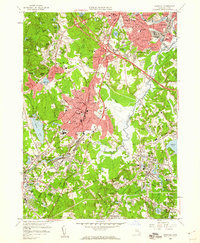 1958 Norwood1960 Print · USGSMid-century Norfolk County comes alive in this survey, showing a landscape defined by suburban growth and the busy Neponset River corridor. Genealogists and local historians can trace family roots through Fairview Cemetery or explore landmarks like the Norwood Memorial Airport and Morrill Mem Library.2 unique versions available
 - 1958 Map of Natick, 1960 Print
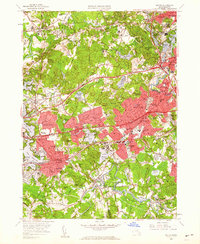 1958 Natick1960 Print · USGSMiddlesex and Norfolk Counties are shown here during a period of rapid suburban maturation in the late fifties. Genealogists and local historians can trace family roots through numerous neighborhood schools and cemeteries like St Patrick Cem, or locate landmarks such as Babson Institute and Lake Cochituate.2 unique versions available
Showing maps 1-25 of 40
Top cities near Dover
- Boston historical maps
- Cambridge historical maps
- Brockton historical maps
- Quincy historical maps
- Newton historical maps
- Somerville historical maps
See more
Top neighborhoods of Dover
Frequently asked questions
- What are the different types of historical maps available for Dover?
- What is the oldest map of Dover?
- Where can I purchase historical maps of Dover for my home or office?
- Where can I download high-res historical maps of Dover?
- Are there historical topographic maps available for Dover?
- Is there historical aerial imagery available for Dover?
- Where are historical maps of Dover sourced from?