Old Maps of Gratiot County, Michigan for Genealogy
Trace your family roots with 133 historic maps of Gratiot County. These high-res maps reveal old neighborhoods, homesites, landmarks, and streets — helping you uncover where your ancestors lived and how the area evolved over time.
- Explore historic neighborhoods: Identify where your relatives may have lived in the 1800s or 1900s.
- Compare maps over time: Trace the changes in streets, buildings, and landmarks for multi-generational research.
- Perfect for genealogy & ancestry research: Used by family historians and researchers to map out lineage and migration.
These maps are an incredible resource for exploring your personal connection to Gratiot County's past.
Gratiot County, MI maps
(133)- 1918 Map of Elsie
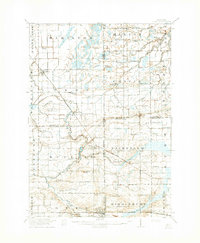 1918 Elsie1918 Print · USGSCentral Michigan farmland and river valleys are captured here at the end of the Great War. Genealogists can trace family roots through numerous schoolhouses like Elba Center School and early rail stops at Carland, Bannister, and Munson Crossing.3 unique versions available
 - 1918 Map of Perrinton
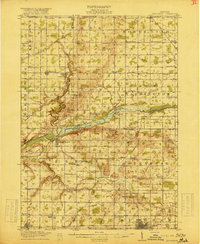 1918 Perrinton1918 Print · USGSCentral Michigan's fertile farm country is captured here during the First World War era, showing a landscape tightly organized around rail lines and township schools. Researchers can trace the family-named school districts and small village centers like Perrinton, Eureka, and the commercial hub at Newark Store.2 unique versions available
 - 1934 Map of Merrill, 1987 Print
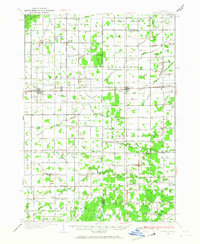 1934 Merrill1987 Print · USGSThe Gratiot and Saginaw county line in the mid-1930s is a landscape of established farmsteads and rural school districts. Genealogists can trace family roots through numerous local landmarks like Sacred Heart Cem and schools such as Cozy Corner Sch and Sunnylawn Sch.
 - 1935 Map of Alma, 1959 Print
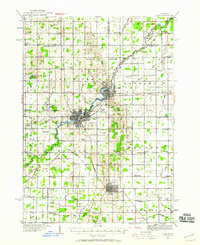 1935 Alma1959 Print · USGSGratiot County thrived as a rail-and-river hub in the mid-thirties, centered on the growing industrial and agricultural corridor between Alma and St Louis. Genealogists and historians can trace dozens of rural schoolhouses and family landmarks, from Jack Day Sch to the County Home near Ithaca.2 unique versions available
 - 1937 Map of Merrill
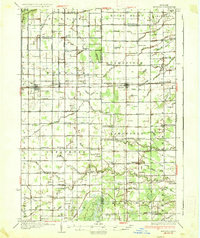 1937 Merrill1937 Print · USGSThe borderlands of Saginaw and Gratiot Counties are captured here in the 1930s, showing a landscape defined by rail and rural drainage. Genealogists can trace family connections through dozens of local schools and landmarks like Sacred Heart Cem, Merrill, and the Pere Marquette line.
 - 1938 Map of Alma
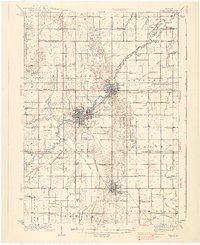 1938 Alma1938 Print · USGSThe Gratiot County landscape at the height of the New Deal era reveals a dense network of country schools and rail lines. Genealogists can trace family roots through numerous named sites like Jack Day Sch, Pine Grove Cem, and the County Home.2 unique versions available
 - 1943 Map of Perrinton
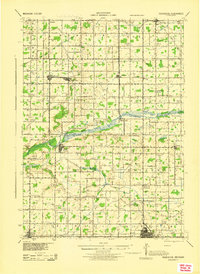 1943 Perrinton1943 Print · USGSGratiot and Clinton counties are captured here in the early 1940s, showing a landscape of fertile river valleys and established rail towns. Local historians can trace family ties through dozens of district schoolhouses like Yond Sch, industry at Stevensons Tile Mill, and the rail corridors of the Ann Arbor line.
 - 1943 Map of Elsie, 1944 Print
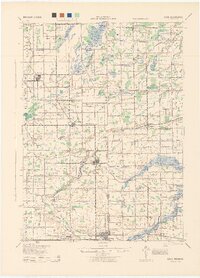 1943 Elsie1944 Print · USGSMid-century central Michigan is captured here during the wartime years, showing the intersection of four counties. Genealogists can locate dozens of country schoolhouses like Kelsey Sch and Munson Sch or trace family roots in settlements such as Elsie, Ashley, and Bannister.
 - 1954 Map of Midland, 1967 Print
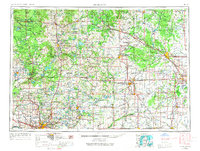 1954 Midland1967 Print · USGSMid-Michigan at the peak of the post-war era shows a landscape balancing industrial growth in Midland with the deep timberlands of the Manistee National Forest. Researchers can trace the legacy of the timber and rail era along the Pennsylvania RR or find family roots in river towns like Chesaning and Big Rapids.4 unique versions available
 - 1958 Map of Midland
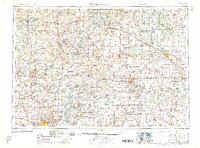 1958 Midland1958 Print · USGSCentral Michigan in the late fifties is captured here during a period of transition for its university towns and industrial hubs. Genealogists and researchers can trace family lines through old rail-stop towns like Breckenridge and Chesaning or locate property near the Muskegon River and Prairie Farm.
 - 1959 Map of Midland
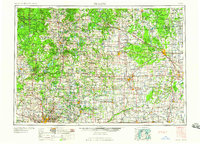 1959 Midland1959 Print · USGSMid-century Michigan comes alive in this survey of the central Lower Peninsula, from the streets of Grand Rapids to the Houghton Lake timberlands. Genealogists and rail fans can trace the Ann Arbor RR and Chesapeake and Ohio RR through towns like Big Rapids and Mount Pleasant.
 - 1965 Map of Sumner, 1966 Print
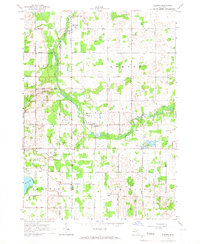 1965 Sumner1966 Print · USGSGratiot and Montcalm counties are captured here in the mid-1960s, showing a rural landscape where the Pine River winds through agricultural townships. Researchers can trace family history through local sites like Spencer Chapel, Elm Hall Cem, and Crystal Sch.2 unique versions available
 - 1965 Map of Perrinton, 1966 Print
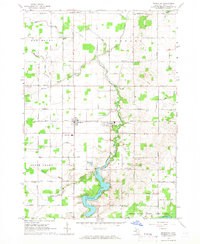 1965 Perrinton1966 Print · USGSGratiot County's agricultural heartland is captured here in the mid-sixties as the Pine River flows toward the Rainbow Lake reservoir. Researchers can trace family roots through numerous rural landmarks like Old Fulton Cem, Fulton High Sch, and the Middleton settlement.2 unique versions available
 - 1965 Map of Pompeii, 1966 Print
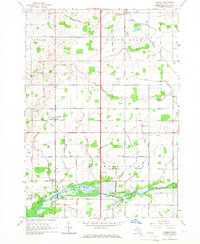 1965 Pompeii1966 Print · USGSGratiot County in the mid-sixties shows a landscape of productive Michigan farmland organized around small rural crossings and the winding river bottoms. Genealogists can trace family roots at North Star Cemetery or locate the Washington Center Sch and Ola settlement.
 - 1965 Map of St. Johns North, 1967 Print
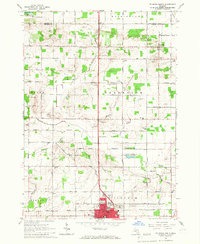 1965 St. Johns North1967 Print · USGSClinton County agriculture and the growing city of St Johns are captured here in the mid-1960s. Researchers can trace rural life through landmarks like Union Home Cem, the Sage Sch, and the Maple River State Game Area.2 unique versions available
 - 1965 Map of Riverdale, 1967 Print
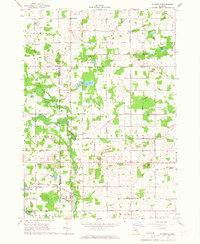 1965 Riverdale1967 Print · USGSThe Pine River valley and the Chesapeake and Ohio railroad define this mid-1960s landscape where Gratiot, Montcalm, and Isabella counties meet. Genealogists and local historians can trace rural roots at Rust and Hay Sch, Jerseyville Ch, and Sibley Cem.
 - 1965 Map of Maple Rapids, 1967 Print
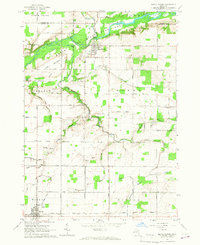 1965 Maple Rapids1967 Print · USGSClinton County's river valley comes into sharp focus during the mid-sixties, showing the agricultural heartland between Maple Rapids and Fowler. Researchers can trace the locations of the Frink Sch, Lowe Ch, and numerous family cemeteries like Beech Cem.2 unique versions available
 - 1966 Map of Midland
 1966 Midland1966 Print · USGSCentral Michigan in the mid-1960s shows a landscape of growing manufacturing hubs and active resource extraction. Genealogists and historians can trace the rail corridors of the Grand Trunk Western or locate family-named landmarks near Oil wells and the Muskegon River.
 - 1967 Map of Hubbardston, 1968 Print
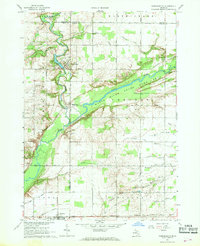 1967 Hubbardston1968 Print · USGSThe borderlands of Ionia and Clinton counties in the late sixties reveal a landscape of river-fed agriculture and expanding state lands. Genealogists and local historians can trace the foundations of Hubbardston and Pewamo or locate rural sites like West Side Cem and the Grand Trunk rail corridor.
 - 1967 Map of Carson City, 1968 Print
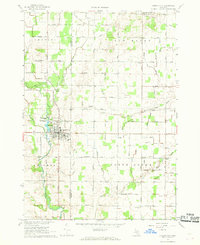 1967 Carson City1968 Print · USGSMid-Michigan farm country and the industrial center of Carson City are captured here in the late sixties. Genealogists and local historians can trace the foundations of the community through landmarks like the Oil Refinery, North Shade Sch, and Mt Hope Ch.
 - 1973 Map of Alma South, 1976 Print
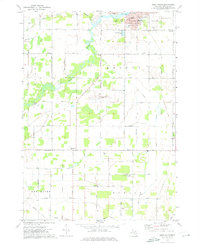 1973 Alma South1976 Print · USGSThe Gratiot County countryside south of Alma comes into focus in the early 1970s, showcasing a landscape of section-line roads and family-named landmarks. Genealogists can trace sites like Pritchard Cem, Newark Ch, and the Migrant Workers Camp.
 - 1973 Map of Alma North, 1976 Print
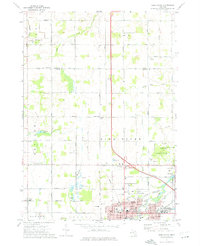 1973 Alma North1976 Print · USGSGratiot County's agricultural and academic heart comes into focus in the early 1970s as Alma and St Louis continue their growth along the Pine River. Genealogists and local historians can locate long-standing rural landmarks like Brady Cem, St Johns Ch, and the outlying village of Elwell.
 - 1973 Map of Ithaca, 1976 Print
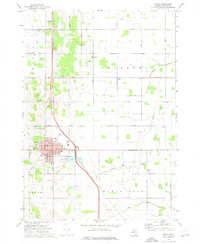 1973 Ithaca1976 Print · USGSIthaca and the surrounding townships of Emerson and Newark are shown in the early seventies as a mature agricultural hub. Researchers can locate family landmarks like Beebe Cem, Herron Sch, and the Dodge Sett amidst the local stream network.
 - 1973 Map of Merrill, 1977 Print
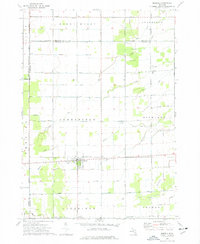 1973 Merrill1977 Print · USGSMerrill and its surrounding townships are shown in the early seventies as a thriving agricultural and industrial landscape. Genealogists and historians can trace family locations along O'Hara Road, locate the Merrill Ch, or find industrial sites like the Brine Well.
 - 1973 Map of Lakefield, 1977 Print
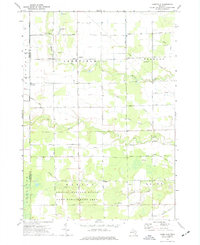 1973 Lakefield1977 Print · USGSSaginaw County's rural townships are captured in the early seventies, showing a landscape defined by its river systems and agricultural grid. Genealogists and local historians can trace family roots near Lakefield and Galloway or locate the Sacred Heart Cem.
Showing maps 1-25 of 133
Top cities of Gratiot County
Frequently asked questions
- What are the different types of historical maps available for Gratiot County?
- What is the oldest map of Gratiot County?
- Where can I purchase historical maps of Gratiot County for my home or office?
- Where can I download high-res historical maps of Gratiot County?
- Are there historical topographic maps available for Gratiot County?
- Is there historical aerial imagery available for Gratiot County?
- Where are historical maps of Gratiot County sourced from?