1940s Maps of Ross Township, Michigan
Explore 6 historic maps of Ross Township from the 1940s. These maps offer a rare glimpse into what life looked like during the 1940s — showing old roads, neighborhoods, homes, and landmarks that have changed or disappeared over time.
Whether you're researching your family's past, planning a metal detecting trip, or studying how Ross Township's landscape evolved across the 1940s, these high-resolution maps are a powerful tool for exploring the history of this region.
- Focus on a specific era: All maps on this page are from the 1940s, giving you a focused view of this time period.
- See what’s changed: Compare century-old streets, trails, and buildings to today's modern landscape using overlays and satellite layers.
- Research with precision: Use these maps for genealogy, historical research, land use analysis, or educational projects.
- View, download, or print: Maps are fully viewable online in high resolution, and can be downloaded or printed for your own records.
Start exploring Ross Township's history through authentic maps from the 1940s. This is your window into the past.
Ross Township, MI maps
(6)- 1944 Map of Galesburg
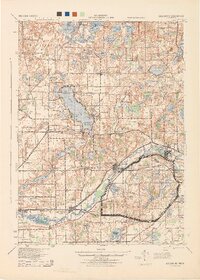 1944 Galesburg1944 Print · USGSDuring the height of World War II, this region was defined by the presence of Fort Custer and the busy Michigan Central rail corridor. Researchers can trace dozens of early rural schoolhouses like Toad Hollow Sch and Grey Sch alongside the sprawling waters of Gull Lake.
 - 1947 Map of Augusta, 1955 Print
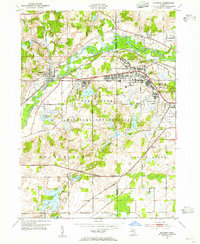 1947 Augusta1955 Print · USGSThe Kalamazoo and Calhoun county line was a hub of military and medical activity in the late 1940s. Researchers can trace the extensive grounds of the Fort Custer Military Reservation and locate local landmarks like the Veterans Hospital and Martin Sch.
 - 1947 Map of Delton, 1955 Print
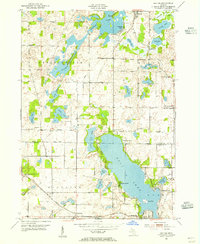 1947 Delton1955 Print · USGSThe glacial lake country of Barry and Kalamazoo counties comes into focus in the years following the war. Researchers can trace the heritage of local school districts and small rail junctions through sites like Calkin School, Richland Junction, and the Cressey Cemetery.
 - 1947 Map of Galesburg, 1955 Print
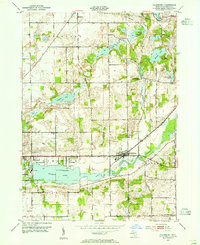 1947 Galesburg1955 Print · USGSGalesburg and the Kalamazoo River valley are seen here just after the war, showcasing the region's transition from rural mills to industrial centers. Researchers can trace family history at Shafter Cem, locate the Indian Mounds on Rowe Island, and see the early layout of Morrow Lake.
 - 1947 Map of Banfield, 1955 Print
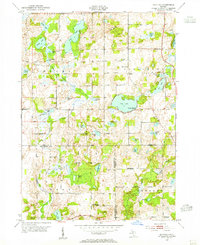 1947 Banfield1955 Print · USGSBarry County was a landscape of quiet glacial lakes and rural schoolhouses just after the war. You can trace the development of lakeside communities like Poplar Beach or locate family roots at Banfield Cem and the King Sch.
 - 1947 Map of Galesburg, 1965 Print
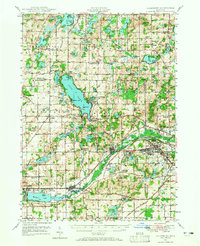 1947 Galesburg1965 Print · USGSThe Kalamazoo and Barry County line comes alive in the late 1940s, showing a landscape of lakeside retreats and growing military installations. Genealogists can trace family names at Stony Lake Cem or Bansfield Sch while exploring the pre-interstate corridors of Augusta and Galesburg.
End of results
Showing maps 1-6 of 6
Top cities near Ross Township
- Kalamazoo historical maps
- Battle Creek historical maps
- Portage historical maps
- Pavilion historical maps
- Springfield historical maps
- Prairieville historical maps
See more
Top neighborhoods of Ross Township
- Midland Park historical maps
- South Gull Lake historical maps
- Island Park historical maps
- Yorkville historical maps
- Gull Lake historical maps
- Howlandsburg historical maps
See more
Frequently asked questions
- What are the different types of historical maps available for Ross Township?
- What is the oldest map of Ross Township?
- Where can I purchase historical maps of Ross Township for my home or office?
- Where can I download high-res historical maps of Ross Township?
- Are there historical topographic maps available for Ross Township?
- Is there historical aerial imagery available for Ross Township?
- Where are historical maps of Ross Township sourced from?