1950s Maps of Forsyth Township, Michigan
Explore 9 historic maps of Forsyth Township from the 1950s. These maps offer a rare glimpse into what life looked like during the 1950s — showing old roads, neighborhoods, homes, and landmarks that have changed or disappeared over time.
Whether you're researching your family's past, planning a metal detecting trip, or studying how Forsyth Township's landscape evolved across the 1950s, these high-resolution maps are a powerful tool for exploring the history of this region.
- Focus on a specific era: All maps on this page are from the 1950s, giving you a focused view of this time period.
- See what’s changed: Compare century-old streets, trails, and buildings to today's modern landscape using overlays and satellite layers.
- Research with precision: Use these maps for genealogy, historical research, land use analysis, or educational projects.
- View, download, or print: Maps are fully viewable online in high resolution, and can be downloaded or printed for your own records.
Start exploring Forsyth Township's history through authentic maps from the 1950s. This is your window into the past.
Forsyth Township, MI maps
(9)- 1951 Map of Helena NE
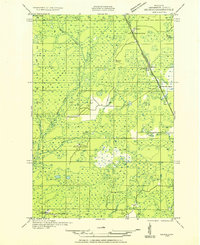 1951 Helena NE1951 Print · USGSMarquette County's interior timberlands and marshes come into focus in the early 1950s, showing a landscape defined by seasonal outposts and rail transit. Genealogists and historians can trace old sites like Rochenon Camp, Helena, and the Parker Spur rail siding.
 - 1951 Map of Helena NW
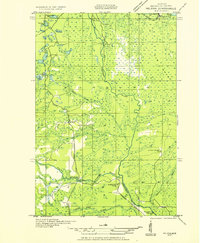 1951 Helena NW1951 Print · USGSMarquette County’s interior during the early 1950s was a landscape of remote camps and heavy industry centered on the Escanaba River. Genealogists and historians can trace old logging outposts like Faucett Camp and the rail operations of the Chicago and North Western.
 - 1952 Map of Ishpeming, 1954 Print
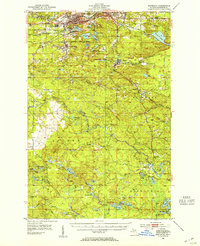 1952 Ishpeming1954 Print · USGSMarquette County’s iron mining heartland is shown in the early fifties, detailing the industrial hubs of Ishpeming and Negaunee. Genealogists and historians can trace rail-side settlements like Frenchtown and Winthrop Junction alongside the Tracy Mine.4 unique versions available
 - 1952 Map of Gwinn, 1954 Print
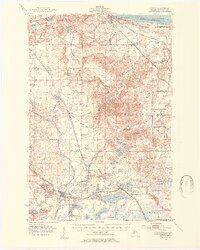 1952 Gwinn1954 Print · USGSMarquette County's iron country and the Lake Superior shoreline are captured here in the early fifties during a period of industrial transition. Genealogists and industrial historians can trace the inactive Stephenson Mine, the Little Lake (Forsyth P O) settlement, and rural schools like June Sch.5 unique versions available
 - 1952 Map of Gwinn, 1954 Print
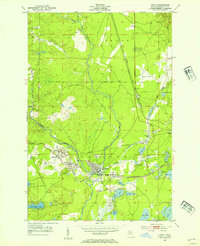 1952 Gwinn1954 Print · USGSMarquette County industrial heritage is on full display in the early fifties as the region transitions from its peak mining era. Genealogists and researchers can locate inactive sites like the Stegmiller Mine and Mackinaw Mine alongside the namesake Gwinn Cem.5 unique versions available
 - 1957 Map of Northland, 1958 Print
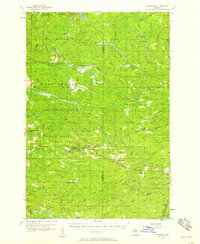 1957 Northland1958 Print · USGSThe Upper Peninsula interior shows its mid-century character during the late 1950s, where rail lines still connected remote forest outposts. Trace the old rail stops at Northland and Alfred or locate the Alfred Lookout Tower and Education Camp near the Ford River.2 unique versions available
 - 1958 Map of Skandia, 1959 Print
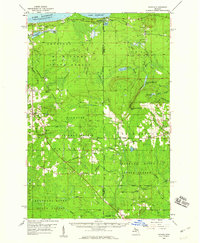 1958 Skandia1959 Print · USGSThe Lake Superior coast and Michigan's Upper Peninsula timberlands are captured here in the late fifties. Genealogists and local historians can trace family roots at Skandia Cem and Deerton Cem or locate the old Yalmer Station along the historic rail lines.2 unique versions available
 - 1958 Map of Rock, 1959 Print
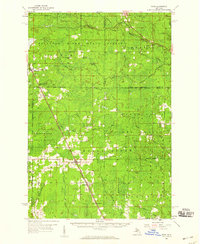 1958 Rock1959 Print · USGSUpper Peninsula timberlands and small rail-side settlements are captured here in the late fifties, just as forest management patterns were maturing. Researchers can trace family roots through locations like Rock, McFarland, and Hillview Cem along the Chicago and Northwestern line.3 unique versions available
 - 1958 Map of Marquette, 1968 Print
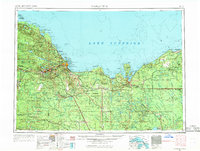 1958 Marquette1968 Print · USGSThe Upper Peninsula’s central corridor is captured here in the mid-twentieth century as mining and timber industries thrived alongside new military installations. Genealogists and historians can trace the rail lines of the Soo Line Railroad through settlements like Gwinn, Turin, and Chatham.2 unique versions available
End of results
Showing maps 1-9 of 9
Top cities near Forsyth Township
- Ishpeming historical maps
- Negaunee historical maps
- Sands historical maps
- Gwinn historical maps
- Skandia historical maps
- Palmer historical maps
Top neighborhoods of Forsyth Township
- New Swanzy historical maps
- Princeton historical maps
- Cedar Bank historical maps
- Little Lake historical maps
- Swanzy historical maps
- Austin historical maps
See more
Frequently asked questions
- What are the different types of historical maps available for Forsyth Township?
- What is the oldest map of Forsyth Township?
- Where can I purchase historical maps of Forsyth Township for my home or office?
- Where can I download high-res historical maps of Forsyth Township?
- Are there historical topographic maps available for Forsyth Township?
- Is there historical aerial imagery available for Forsyth Township?
- Where are historical maps of Forsyth Township sourced from?