Old Maps of Montmorency County, Michigan for Academic Research
Study the evolution of Montmorency County with 118 high-resolution historic maps. Whether you're teaching, researching, or modeling changes in land use, these maps provide essential visual documentation of urban, environmental, and geographic change.
- Analyze long-term change: Track patterns in development, transportation, and natural features.
- Ideal for environmental or urban studies: Support academic projects with primary historical map data.
- Use in the classroom or lab: Educators and researchers rely on these maps to bring historical context to life.
These maps are a powerful tool for teaching, research, and visualizing how Montmorency County has changed over the decades.
Montmorency County, MI maps
(118)- 1949 Map of Lewiston, 1954 Print
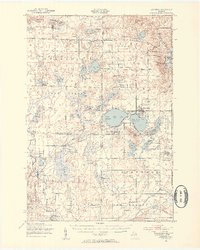 1949 Lewiston1954 Print · USGSNorthern Michigan’s timber and sporting heritage is on full display here during the late nineteen-forties. Researchers can trace the Michigan Meridian, locate family sites at the Lovells Cemetery, or find old camps like the Au Sable Trout & Gun Club.2 unique versions available
 - 1950 Map of Lewiston, 1973 Print
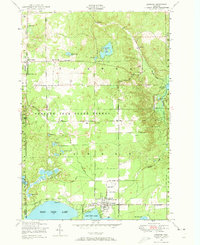 1950 Lewiston1973 Print · USGSIn the early 1950s, this area of northern Michigan transitioned from a timber-driven landscape into a growing lakefront community. Researchers can locate family landmarks like the Charlton Cemetery, Doubles School, and the Vienna Township Hall.3 unique versions available
 - 1950 Map of Comstock Hills, 1973 Print
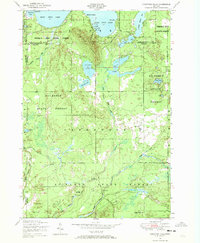 1950 Comstock Hills1973 Print · USGSThe northern lower peninsula comes alive in the fifties as a premier outdoor destination. Trace the development of lakeside retreats like Birchwood Beach or locate the Comstock Fire Tower and the Indian Village Boys Camp deep in the woods.3 unique versions available
 - 1951 Map of Comstock Hills
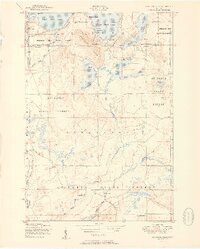 1951 Comstock Hills1951 Print · USGSOscoda County was a prime destination for postwar tourism in the early fifties, characterized by a dense network of lakeside retreats and hunting camps. You can trace the development of Garland Village or locate secluded spots like Birdhaven Resort and Werners Hotel.2 unique versions available
 - 1951 Map of Lewiston
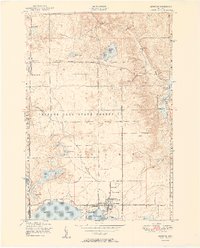 1951 Lewiston1951 Print · USGSLewiston and the surrounding lakes of Montmorency County are captured here in the early fifties, before decades of modernization altered the landscape. Genealogists and local historians can trace the foundations of Lewiston, identifying the Albert Township School, Vienna Corners, and the Charlton Cemetery.2 unique versions available
 - 1954 Map of Hetherton, 1956 Print
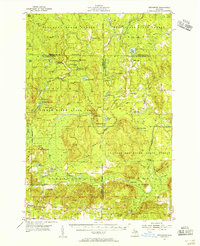 1954 Hetherton1956 Print · USGSNorthern Michigan’s sprawling timberlands are captured here in the mid-fifties, showing a landscape of state forests and quiet lakes. Researchers can trace the rural infrastructure of Hetherton, the Metzger Sch, and remote landmarks like the Pigeon River Lookout Tower.4 unique versions available
 - 1954 Map of Traverse City, 1965 Print
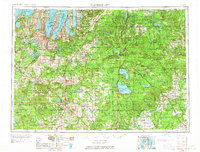 1954 Traverse City1965 Print · USGSNorthern Michigan’s vast lakeshores and timberlands are captured here in the mid-fifties, showing the region before the modern interstate era. Genealogists and researchers can trace rail connections like the Detroit and Mackinac RR or find old communities such as Suttons Bay, Elk Rapids, and Prudenville.4 unique versions available
 - 1954 Map of Tawas City, 1968 Print
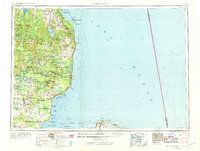 1954 Tawas City1968 Print · USGSCoastal life along Lake Huron was defined by a mix of military aviation and hydroelectric power in the mid-fifties. Researchers can trace the river dams like Cooke Dam, the layout of Wurtsmith AFB, and the coastal mining operations at Alabaster.4 unique versions available
 - 1954 Map of Alpena, 1978 Print
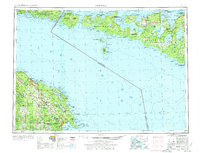 1954 Alpena1978 Print · USGSThe northern waters of Lake Huron meet the Ontario islands during the mid-1950s, a time of active coastal shipping and timber management. Genealogists and historians can trace the Detroit and Mackinac rail line through Alpena or locate rural landmarks like St. Catharine Ch and Forty Mile Point.2 unique versions available
 - 1955 Map of Atlanta, 1956 Print
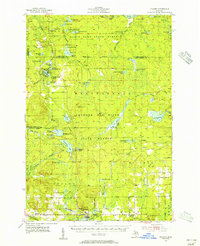 1955 Atlanta1956 Print · USGSMontmorency County is mapped here in the mid-fifties, showing a landscape of state forests and quiet settlements before modern development. Genealogists and researchers can trace local landmarks like Pleasant Valley Ch, Avery Cem, and the Edwards Sch (Abandoned).3 unique versions available
 - 1955 Map of Comins, 1956 Print
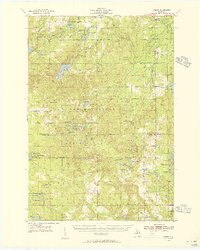 1955 Comins1956 Print · USGSMontmorency and Oscoda counties are captured in the mid-fifties, showing a landscape defined by state forests and emerging post-war recreation. Genealogists and local historians can locate the Loud Sch, the Finnish Cem, and the Sheridan Valley Ski Area during its early years.2 unique versions available
 - 1955 Map of Hillman, 1956 Print
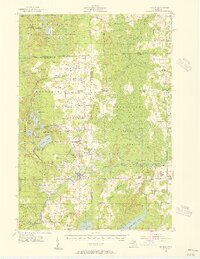 1955 Hillman1956 Print · USGSThe village of Hillman and its surrounding forest lands are documented here during the mid-1950s. Local researchers can trace family roots through numerous rural sites like St Johns Ch, Babcock Sch, and the Hillman Cemetery.3 unique versions available
 - 1955 Map of Cheboygan, 1964 Print
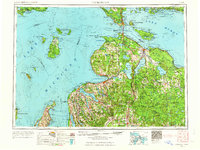 1955 Cheboygan1964 Print · USGSNorthern Michigan in the mid-fifties is a landscape of dense timber and deep water, showing the region just as the road network began to modernize. Trace family roots in lakeside towns like St Ignace and Petoskey, or follow the historic tracks of the Pennsylvania RR and New York Central RR.5 unique versions available
 - 1957 Map of Alpena
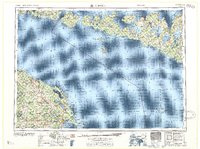 1957 Alpena1957 Print · USGSNortheast Michigan and the islands of the North Channel are captured in the mid-1950s, showing the vital maritime and rail connections of the region. Researchers can trace the path of the Detroit and Mackinac RR or locate small settlements like Meldrum Bay and Lachine.
 - 1958 Map of Cheboygan
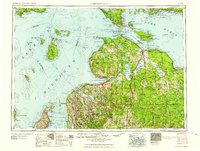 1958 Cheboygan1958 Print · USGSThe tip of Michigan's Lower Peninsula and the surrounding Great Lakes islands are shown here in the late fifties, during the peak of the rail-and-ferry era. Trace the paths of the Pennsylvania RR and explore lakeside settlements like St James, Petoskey, and Indian River.2 unique versions available
 - 1958 Map of Traverse City
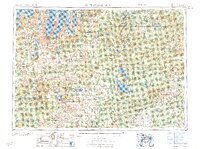 1958 Traverse City1958 Print · USGSNorthern Lower Michigan was a landscape of vast state forests and burgeoning lakeside retreats in the late fifties. Genealogists and historians can trace the rail corridors of the Ann Arbor RR and find established settlements from Elk Rapids to Houghton Lake.2 unique versions available
 - 1958 Map of Alpena
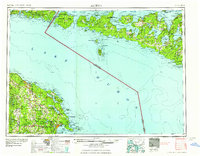 1958 Alpena1958 Print · USGSThe northern reaches of Lake Huron and the Ontario islands are mapped here in the late fifties. You can trace the Detroit and Mackinac RR through Rogers City or locate remote outposts like Meldrum Bay and St. Vital church.
 - 1958 Map of Tawas City
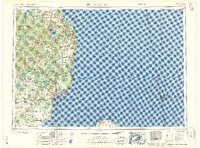 1958 Tawas City1958 Print · USGSThe Lake Huron shoreline and northern Michigan timberlands come into focus in the late fifties, during the expansion of the Cold War. Genealogists and historians can trace rail lines like the Detroit and Mackinac, find regional landmarks like the Lumbermans Memorial Monument, and locate coastal facilities including Wurtsmith AFB.2 unique versions available
 - 1969 Map of Alpena
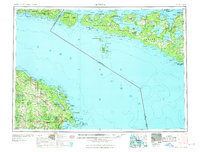 1969 Alpena1969 Print · USGSThe Lake Huron coastline and the Manitoulin islands come alive in this mid-century survey of the Michigan-Ontario border. Genealogists and historians can trace the Detroit and Mackinac rail line through settlements like Lachine and Cathro, or locate the numerous island reservations including Obigewong Indian Reservation No 21.
 - 1972 Map of McCollum Lake, 1975 Print
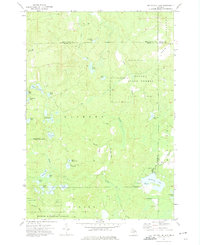 1972 McCollum Lake1975 Print · USGSNorthern Michigan forest lands are shown in the early seventies at the junction of four counties. Researchers can trace old logging routes along the Old Railroad Grade and locate features like McCollum Lake and the Fonro Lodge Landing Strip.
 - 1972 Map of Rust, 1975 Print
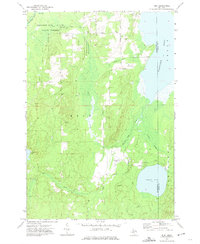 1972 Rust1975 Print · USGSMontmorency County in the early seventies is shown here as a dense network of state forests and winding waterways. Local historians can trace the Old Railroad Grade near Rust or locate family landmarks like the Rust Sch and the Turtle Lake Club Airport.
 - 1982 Map of Petoskey
 1982 Petoskey1982 Print · USGSNorthern Michigan in the early eighties shows a landscape of deep timber and vast inland lakes. Genealogists and historians can trace the rail corridors of the Michigan Central and Detroit and Mackinac between Petoskey, Gaylord, and Wolverine.
 - 1983 Map of Hubbard Lake, 1984 Print
 1983 Hubbard Lake1984 Print · USGSThe shorelines of Alcona and Alpena Counties come to life in this early 1980s overview of the Lake Huron coast and its deep timberlands. Researchers can trace historic rail routes like the Detroit and Mackinac or locate quiet inland hubs such as Barton City and Killmaster.
 - 1983 Map of Grayling, 1984 Print
 1983 Grayling1984 Print · USGSIn the early eighties, this Northern Michigan interior was a hub for forestry, military training, and river recreation. Researchers can trace the sprawling boundaries of Camp Grayling and locate historic markers like Hartwick Pines and Otsego Lake.2 unique versions available
 - 1984 Map of Alpena
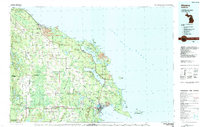 1984 Alpena1984 Print · USGSThe Lake Huron shoreline in the 1980s reveals a region defined by maritime industry, timberlands, and vast inland waters. Genealogists and historians can trace the Detroit and Mackinac Railroad past old settlements like Posen, Hagensville, and the harbor at Rockport.
Showing maps 1-25 of 118
Frequently asked questions
- What are the different types of historical maps available for Montmorency County?
- What is the oldest map of Montmorency County?
- Where can I purchase historical maps of Montmorency County for my home or office?
- Where can I download high-res historical maps of Montmorency County?
- Are there historical topographic maps available for Montmorency County?
- Is there historical aerial imagery available for Montmorency County?
- Where are historical maps of Montmorency County sourced from?