1900s (20th Century) Maps of Rochester Hills, Michigan
Explore 23 historic maps of Rochester Hills from the 1900s (20th Century). These maps offer a rare glimpse into what life looked like during the 1900s — showing old roads, neighborhoods, homes, and landmarks that have changed or disappeared over time.
Whether you're researching your family's past, planning a metal detecting trip, or studying how Rochester Hills's landscape evolved across the 1900s, these high-resolution maps are a powerful tool for exploring the history of this region.
- Focus on a specific era: All maps on this page are from the 1900s, giving you a focused view of this time period.
- See what’s changed: Compare century-old streets, trails, and buildings to today's modern landscape using overlays and satellite layers.
- Research with precision: Use these maps for genealogy, historical research, land use analysis, or educational projects.
- View, download, or print: Maps are fully viewable online in high resolution, and can be downloaded or printed for your own records.
Start exploring Rochester Hills's history through authentic maps from the 1900s. This is your window into the past.
Rochester Hills, MI maps
(23)- 1908 Map of Rochester
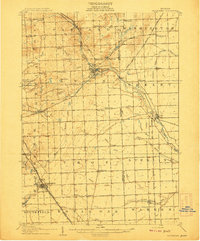 1908 Rochester1908 Print · USGSSoutheast Michigan at the turn of the century shows a bustling landscape of early electric railways and rural township life. Genealogists and local historians can trace the foundations of Rochester, Birmingham, and Utica, alongside vanished landmarks like Snell School and the Stone Shop.3 unique versions available
 - 1936 Map of Warren
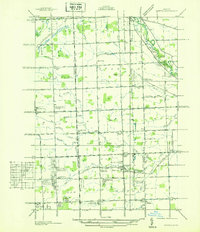 1936 Warren1936 Print · USGSThe Macomb and Oakland county line in the mid-1930s shows a landscape of small townships and early subdivisions. Genealogists can trace family roots through numerous local schools like Berz Sch or find historic burials at Warren Cem and Memorial Park Cem.
 - 1936 Map of Birmingham
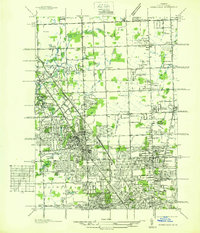 1936 Birmingham1936 Print · USGSOakland County was undergoing a massive suburban transformation in the mid-thirties as the Detroit metropolitan area expanded northward. Trace the early development of Birmingham and Royal Oak, and find vanished landmarks like Charing Cross Sta or the Log Cabin High Sch.
 - 1936 Map of Rochester
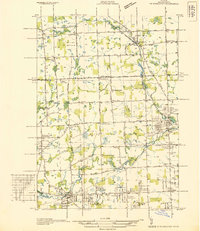 1936 Rochester1936 Print · USGSOakland County was witnessing a surge in residential planning during the mid-1930s as new subdivisions began to fill the space between established towns. Genealogists and historians can trace numerous rural schoolhouses like Ross Sch and Hamlin Sch, or explore the early footprints of the Dodge Subdivision and Rochester.
 - 1936 Map of Washington
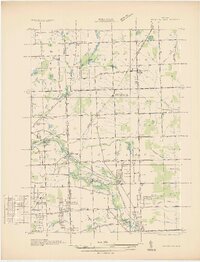 1936 Washington1936 Print · USGSMacomb County townships were transitioning from rural agriculture to automotive industry in the mid-1930s. Genealogists and historians can trace the Packard Proving Grounds, Ferry Morse Seed Co Farms, and old burial sites like Washington Cem.
 - 1945 Map of Birmingham
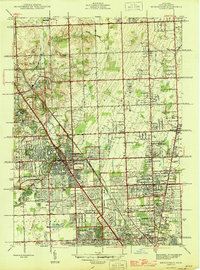 1945 Birmingham1945 Print · USGSOakland County was undergoing a massive suburban transformation in the years following the war. Researchers can trace the early residential grids of Birmingham and Berkley or locate local landmarks like the Log Cabin Sch and St Hugo Ch.
 - 1945 Map of Rochester
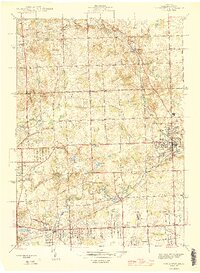 1945 Rochester1945 Print · USGSOakland County was shifting from a quiet rural landscape to a suburban corridor in the mid-1940s. Genealogists can locate family landmarks like Snell Sch, the Oakland Cem, and old settlements like Goodison and Auburn Heights.2 unique versions available
 - 1946 Map of Utica
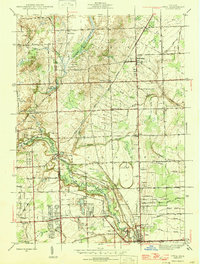 1946 Utica1946 Print · USGSMacomb and Oakland counties are captured here just after the war as the township of Shelby begins its post-war transition. Genealogists and local historians can trace family roots through numerous country schools like Plain Sch and cemeteries such as Prestonville Cem or Stony Creek Cem.2 unique versions available
 - 1946 Map of Warren
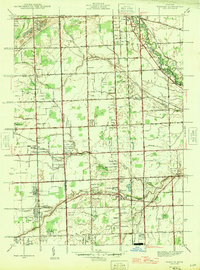 1946 Warren1946 Print · USGSThe Macomb and Oakland county borderlands are shown here in the mid-1940s, capturing a world of rural schools and early suburban aviation. Genealogists can trace family footprints near the Warren Cem, Big Beaver, and rural schoolhouses like Burr Sch.
 - 1952 Map of Warren, 1953 Print
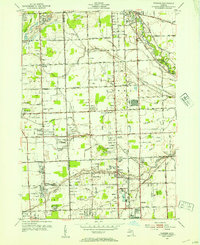 1952 Warren1953 Print · USGSSoutheastern Michigan at the dawn of the 1950s reveals a patchwork of established farms and emerging suburbs along the county line. Genealogists can trace family footprints at Warren Cem and find early schoolhouses like Colerain Sch or Burr Sch.2 unique versions available
 - 1952 Map of Utica, 1954 Print
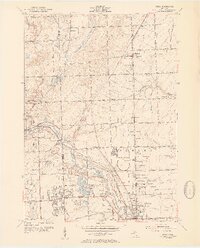 1952 Utica1954 Print · USGSSoutheast Michigan was entering a period of rapid post-war growth when this survey recorded the rural townships and growing centers of Macomb and Oakland Counties. Researchers can trace family history at sites like Disco Sch and Utica Cem, or locate landmarks such as the large Proving Grounds.2 unique versions available
 - 1952 Map of Rochester, 1954 Print
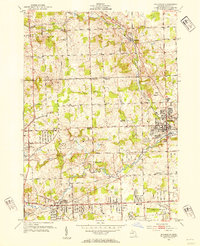 1952 Rochester1954 Print · USGSOakland County was undergoing a period of rapid suburbanization in the early fifties as the rural townships of Avon and Oakland began to fill in. Local historians can trace family roots through numerous country schools and churches, including Five Points Ch, Howarth Sch, and The Haven Sanitarium.3 unique versions available
 - 1952 Map of Birmingham, 1954 Print
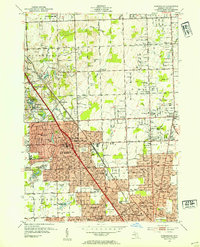 1952 Birmingham1954 Print · USGSThe northern Detroit suburbs are shown here during their early 1950s growth, centering on the rail and road corridors of Oakland County. Genealogists can trace family landmarks like the Leonard Sch, Log Cabin Sch, and the Shrine of the Little Flower.
 - 1954 Map of Detroit
 1954 Detroit1954 Print · USGSThe Detroit metro and its Ontario neighbors are shown at the height of the mid-century industrial era, just as the suburbs were rapidly expanding. Researchers can trace the massive rail networks of the Wabash Railroad or locate landmarks like Grosse Ile and Selfridge Air Force Base.
 - 1961 Map of Detroit, 1973 Print
 1961 Detroit1973 Print · USGSThe international border between Michigan and Ontario was a bustling industrial corridor in the early sixties. Researchers can trace the transit networks and riverfront infrastructure connecting Detroit to Windsor via the Detroit-Windsor Tunnel and major air hubs like Willow Run Airport.2 unique versions available
 - 1965 Map of Detroit
 1965 Detroit1965 Print · USGSThe industrial corridor between Michigan and Ontario is captured here at mid-century, showing the dense rail and river networks of the Great Lakes. Local historians can trace the paths of the Grand Trunk Western RR and locate key landmarks like Selfridge Air Force Base and Grosse Ile.
 - 1968 Map of Utica, 1970 Print
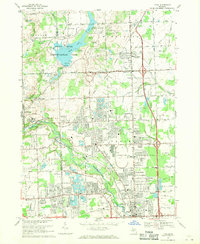 1968 Utica1970 Print · USGSThe Macomb and Oakland county line comes alive in the late sixties, showing the suburban growth surrounding Rochester and Utica. Genealogists can trace family roots through numerous sites like Stony Creek Cem, Disco, and Washington.4 unique versions available
 - 1968 Map of Rochester, 1971 Print
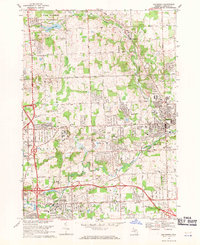 1968 Rochester1971 Print · USGSRochester and its surroundings were transforming during the late sixties as suburban campuses and modern infrastructure met established rail lines. Genealogists and local historians can trace family roots at Mt Avon Cemetery or study the early campuses of Oakland University and Michigan Christian College.5 unique versions available
 - 1968 Map of Birmingham, 1971 Print
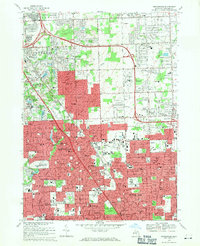 1968 Birmingham1971 Print · USGSOakland County's suburban expansion is in full view during the late sixties as residential neighborhoods fill the gaps between historic village centers. Genealogists and local historians can trace the footprint of Birmingham and Royal Oak, locating old landmarks like Berz Airport and White Chapel Cemetery.4 unique versions available
 - 1968 Map of Warren, 1971 Print
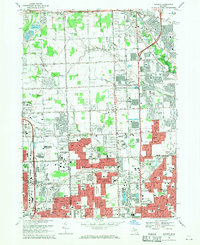 1968 Warren1971 Print · USGSThe Detroit suburbs were in the midst of a massive postwar boom when this survey was conducted. Genealogists and local historians can trace dozens of neighborhood schools and churches, from Holy Trinity Cem to the early days of the Oakland Mall Shopping Center.5 unique versions available
 - 1981 Map of Birmingham, 1989 Print
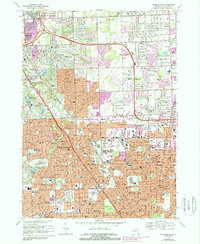 1981 Birmingham1989 Print · USGSOakland County's suburban growth is in full swing in the early eighties as residential expansion reaches into the Rouge River valley. Genealogists and local historians can locate legacy landmarks like White Chapel Cemetery, Greenwood Cem, and the iconic Shrine of the Little Flower.
 - 1985 Map of Pontiac
 1985 Pontiac1985 Print · USGSSoutheast Michigan in the mid-1980s shows a landscape of growing suburban corridors and expansive public parklands. Genealogists and local historians can trace the footprint of rail lines like the Grand Trunk Western or locate family sites near Oakwood Cem and White Chapel Cem.2 unique versions available
 - 1997 Map of Rochester, 2000 Print
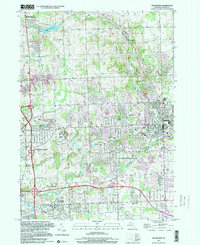 1997 Rochester2000 Print · USGSOakland County at the turn of the millennium shows the dense suburban growth around Rochester and Rochester Hills. Researchers can trace local lineage through Mt Avon Cemetery or explore the institutional footprint of Michigan Christian College and Oakland Community College.
End of results
Showing maps 1-23 of 23
Top cities near Rochester Hills
- Detroit historical maps
- Sterling Heights historical maps
- Warren historical maps
- Clinton Township historical maps
- Livonia historical maps
- Macomb Township historical maps
See more
Top neighborhoods of Rochester Hills
- Yates historical maps
- Flowing Spring Acres historical maps
- Messmore Farms historical maps
- Pon-Avon Farms historical maps
- Avon Lakes Village historical maps
- Avon Manor Estates historical maps
See more
Frequently asked questions
- What are the different types of historical maps available for Rochester Hills?
- What is the oldest map of Rochester Hills?
- Where can I purchase historical maps of Rochester Hills for my home or office?
- Where can I download high-res historical maps of Rochester Hills?
- Are there historical topographic maps available for Rochester Hills?
- Is there historical aerial imagery available for Rochester Hills?
- Where are historical maps of Rochester Hills sourced from?