1900s (20th Century) Maps of Aitkin, Minnesota
Explore 6 historic maps of Aitkin from the 1900s (20th Century). These maps offer a rare glimpse into what life looked like during the 1900s — showing old roads, neighborhoods, homes, and landmarks that have changed or disappeared over time.
Whether you're researching your family's past, planning a metal detecting trip, or studying how Aitkin's landscape evolved across the 1900s, these high-resolution maps are a powerful tool for exploring the history of this region.
- Focus on a specific era: All maps on this page are from the 1900s, giving you a focused view of this time period.
- See what’s changed: Compare century-old streets, trails, and buildings to today's modern landscape using overlays and satellite layers.
- Research with precision: Use these maps for genealogy, historical research, land use analysis, or educational projects.
- View, download, or print: Maps are fully viewable online in high resolution, and can be downloaded or printed for your own records.
Start exploring Aitkin's history through authentic maps from the 1900s. This is your window into the past.
Aitkin, MN maps
(6)- 1914 Map of Aitkin, 1966 Print
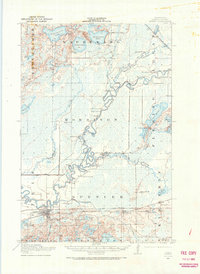 1914 Aitkin1966 Print · USGSAitkin and the surrounding wetlands are shown here just before the First World War, as the river-and-rail economy shaped the landscape. Genealogists can locate numerous rural schoolhouses and early settlements like Rossburg, Hassman, and the Lone Pine School.
 - 1915 Map of Aitkin
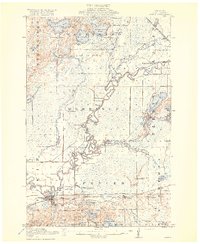 1915 Aitkin1915 Print · USGSAitkin County in the mid-1910s was a hub of river transport and rail expansion, centered on the growing village of Aitkin. You can trace the path of the Northern Pacific railroad through Rossburg and find rural landmarks like Lone Pine School and Waukenabo Lake.4 unique versions available
 - 1953 Map of Duluth, 1964 Print
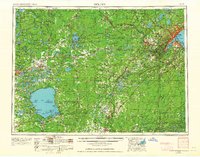 1953 Duluth1964 Print · USGSNortheastern Minnesota and northwestern Wisconsin are shown here during a period of industrial maturity and expanding conservation. Genealogists and historians can trace rail-connected towns like McGrath and Wahkon, or locate heritage sites within the Fond du Lac Indian Reservation.2 unique versions available
 - 1958 Map of Duluth
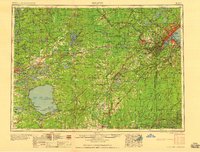 1958 Duluth1958 Print · USGSNortheastern Minnesota and the Wisconsin borderlands are shown in detail during the late 1950s, centered on the bustling rail yards and ports of Duluth. You can trace the historic routes of the Soo Line and Duluth Missabe & Iron Range through small towns like McGrath, Bruno, and Wrenshall.
 - 1973 Map of Aitkin, 1975 Print
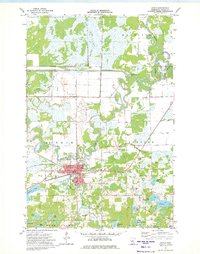 1973 Aitkin1975 Print · USGSAitkin and its surrounding riverbanks are captured here in the early 1970s, showing a landscape defined by the winding Mississippi River. Researchers can trace local history through sites like the Burlington Soo Northern Line, Evergreen Cem, and the Aitkin Municipal Airport.
 - 1994 Map of Aitkin
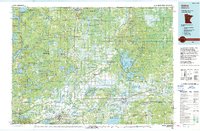 1994 Aitkin1994 Print · USGSIn the mid-1990s, the lake country of central Minnesota remained a patchwork of state forests and rail-linked settlements. Researchers can trace the legacy of the Soo Line through towns like McGregor and Aitkin, or explore the vast reaches of the Savanna State Forest and Rice Lake.
End of results
Showing maps 1-6 of 6
Top cities near Aitkin
- Emily historical maps
- Bay Lake historical maps
- Deerwood historical maps
- Glen historical maps
- Waukenabo historical maps
- Malmo historical maps
See more
Frequently asked questions
- What are the different types of historical maps available for Aitkin?
- What is the oldest map of Aitkin?
- Where can I purchase historical maps of Aitkin for my home or office?
- Where can I download high-res historical maps of Aitkin?
- Are there historical topographic maps available for Aitkin?
- Is there historical aerial imagery available for Aitkin?
- Where are historical maps of Aitkin sourced from?