Old Maps of Otter Tail County, Minnesota
Explore 388 old maps of Otter Tail County, spanning from 1910 to today. These high-resolution historic maps reveal how streets, neighborhoods, landmarks, and natural features evolved over time — perfect for genealogy, metal detecting, research, and local history exploration.
What you can do with these maps:
- See how Otter Tail County changed over time: Compare historical maps to modern-day views to trace roads, homesites, rail lines & more.
- View detailed metadata: Each map includes creators, publishers, year, scale, and archive source.
- Overlay maps with satellite & LiDAR: Visualize the past alongside modern tools to explore terrain & human change.
- Trusted historical sources: Maps sourced from the USGS, Library of Congress, and other archives.
- Access maps your way: View online, download high-res files, or order prints for personal or research use.
Start exploring old maps of Otter Tail County to uncover forgotten places, hidden landmarks, and the deep history beneath your feet.
Otter Tail County, MN maps
(388)- 1910 Map of Wendell, 1965 Print
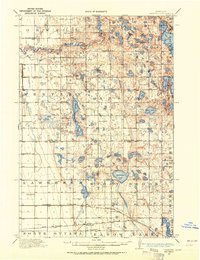 1910 Wendell1965 Print · USGSGrant and Otter Tail counties are shown here in the early twentieth century as a burgeoning network of rail lines and lakeside settlements. Genealogists can locate over twenty numbered schoolhouses and early stations along the Minneapolis St Paul and Sault Ste Marie line near Wendell and Hereford.
 - 1912 Map of Vergas, 1969 Print
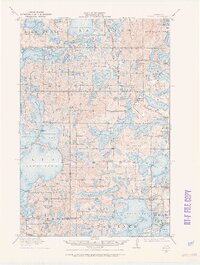 1912 Vergas1969 Print · USGSOtter Tail County was a patchwork of glaciated lakes and early rail lines in the years preceding the Great War. You can trace the path of the Winnipeg Line through Vergas and locate over twenty rural school sites including Jacobs School and School No 116.
 - 1912 Map of Battle Lake, 1975 Print
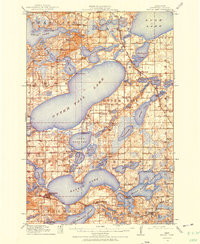 1912 Battle Lake1975 Print · USGSOtter Tail County is captured here in the early twentieth century, showing a lake-rich landscape being shaped by new railroads and summer tourism. Genealogists can locate nearly twenty numbered schoolhouses and early communities like Battle Lake, Vining, and Ottertail.
 - 1913 Map of Ashby
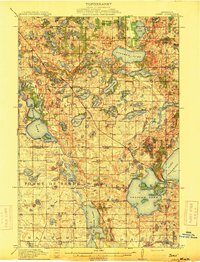 1913 Ashby1913 Print · USGSBefore the modernization of the Midwest, this part of Minnesota was a patchwork of numbered school districts and vital rail lines. Genealogists can trace family footprints near Dalton or search for local landmarks like School No 81, Tenmile Lake, and the Northern Pacific RR.4 unique versions available
 - 1913 Map of Fergus Falls
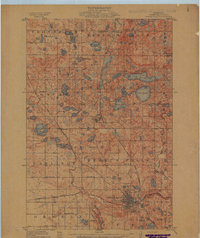 1913 Fergus Falls1913 Print · USGSOtter Tail County is shown here in the early twentieth century, as rural townships were densely populated with family farms and dozens of small schoolhouses. Researchers can trace the Northern Pacific RR route through Carlisle and Elizabeth or locate the sprawling State Insane Asylum near Fergus Falls.3 unique versions available
 - 1913 Map of Wendell
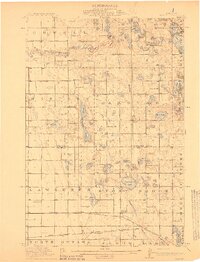 1913 Wendell1913 Print · USGSGrant and Otter Tail counties appear here just before the Great War, showing a landscape defined by prairie rail expansion and rural school districts. Genealogists can locate specific farmstead locations near School No 119, Dayton Dam, or the village of Wendell.
 - 1914 Map of Battle Lake
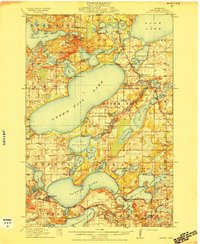 1914 Battle Lake1914 Print · USGSOtter Tail County’s lake country is captured here just before the Great War, showing a landscape defined by water and rail. Researchers can trace numerous rural schoolhouses and early lakeside retreats like Island Lodge, Camp Nidaros, and the village of Battle Lake.3 unique versions available
 - 1914 Map of Pelican Rapids, 1949 Print
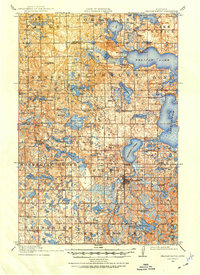 1914 Pelican Rapids1949 Print · USGSThe glacier-carved landscape of Otter Tail County is shown here just before the First World War, when rural schools and lakefront resorts defined the local character. Genealogists can trace family roots through sites like South Emmanuel Church and Bangor Cemetery or locate the many schoolhouses including Rollag School.
 - 1915 Map of Underwood
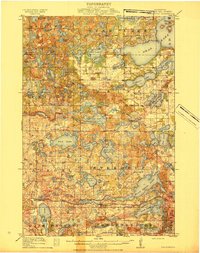 1915 Underwood1915 Print · USGSOtter Tail County is shown here in the early twentieth century as a thriving network of small school districts and lakeside townships. You can trace the Northern Pacific rail line through Underwood or locate local landmarks like School No 207 Weggeland and Maine.3 unique versions available
 - 1915 Map of Perham
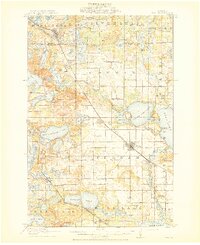 1915 Perham1915 Print · USGSOtter Tail County was a landscape of steam and water in the early twentieth century. Genealogists can trace family footprints through numerous rural school sites like School No 132 and settlements along the Northern Pacific including Perham and Frazee.3 unique versions available
 - 1915 Map of Vergas
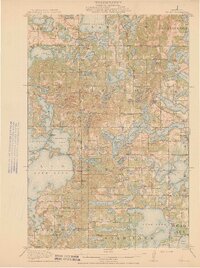 1915 Vergas1915 Print · USGSThe lake country of Otter Tail and Becker counties is captured here in the early twentieth century as recreation began to meet rural industry. Researchers can find numerous country schoolhouses, early lodges like Pelican Inn, and the Fricke Mill site near Lake Melissa.6 unique versions available
 - 1917 Map of Pelican Rapids
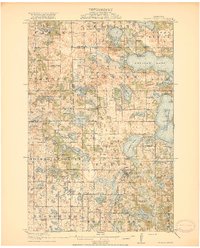 1917 Pelican Rapids1917 Print · USGSOtter Tail County was a landscape of dense rural school districts and lakeside retreats just before the First World War. Genealogists can trace family footprints through dozens of landmarks like Swede Grove Church, Dunn's Resort, and Bangor Cemetery.3 unique versions available
 - 1919 Map of Rothsay
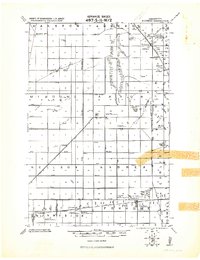 1919 Rothsay1919 Print · USGSRailroad-driven growth on the Wilkin and Otter Tail border is captured here at the end of the Great War. Genealogists can locate family-run grain operations like the Everdell elevator-slender or local landmarks such as the Foxhome Sch. Ho. Cupola and Manston School.
 - 1919 Map of Barnesville, 1943 Print
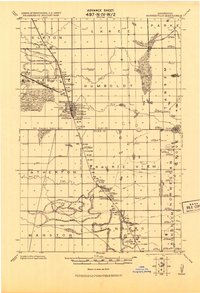 1919 Barnesville1943 Print · USGSThe Red River Valley's agricultural and rail infrastructure is meticulously detailed in this early twentieth-century military survey. Genealogists and historians can locate numerous rural schoolhouses and industrial landmarks like the Barnesville tall Elevator and the Lawndale Elevator.
 - 1951 Map of Rothsay, 1953 Print
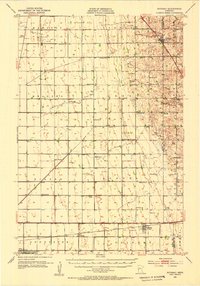 1951 Rothsay1953 Print · USGSWilkin and Otter Tail Counties appear here in the early fifties, showing a landscape of productive prairie townships and busy rail corridors. Researchers can locate numerous country schools and cemeteries like German Cem or the settlement at Everdell.3 unique versions available
 - 1951 Map of Campbell, 1953 Print
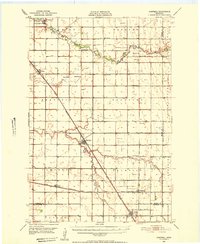 1951 Campbell1953 Print · USGSWilkin County's prairie townships are captured here in the early fifties as the rail-driven economy shaped the Red River Valley borderlands. Genealogists and researchers can trace local landmarks like Sticklestad Ch, Vukku Ch Cem, and the community of Campbell.
 - 1952 Map of Barnesville, 1954 Print
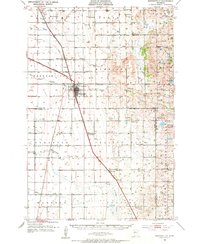 1952 Barnesville1954 Print · USGSThe Barnesville area in the early fifties shows a thriving rail-and-farm landscape at the Clay and Wilkin county border. Genealogists and historians can trace numerous rural schoolhouses, the Little Bethany Ch, and the site of the Braton Sch (Abandoned).
 - 1953 Map of Fargo, 1965 Print
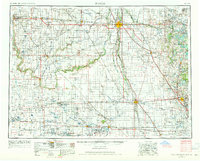 1953 Fargo1965 Print · USGSThe Red River Valley in the mid-fifties was a bustling rail and agricultural corridor during a period of steady prairie growth. Genealogists and historians can trace the intricate rail networks of the Great Northern and Soo Line connecting local hubs like Casselton and Wahpeton.2 unique versions available
 - 1953 Map of Brainerd, 1966 Print
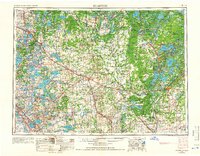 1953 Brainerd1966 Print · USGSCentral Minnesota's lake country and iron ranges are detailed in the mid-fifties, showing the intersection of industry and wilderness. Researchers can locate specific local landmarks like the Crow Wing County Courthouse or trace the early paths of the Soo Line Railroad and the Cuyuna Range Iron Mines.3 unique versions available
 - 1956 Map of Fargo
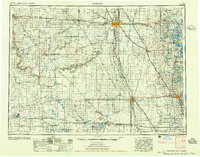 1956 Fargo1956 Print · USGSThe Red River Valley's agricultural heartland is documented here in the mid-fifties as the rail-and-road network expanded across the plains. Genealogists can trace family roots through numerous small railroad towns and local landmarks like Casselton, Sheyenne Valley Church, and Sisseton Indian Res.
 - 1957 Map of Brainerd
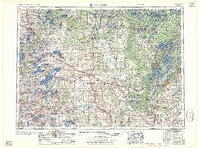 1957 Brainerd1957 Print · USGSNorth-central Minnesota's lake-rich landscape is captured in the mid-1950s as a crossroads of rail, river, and forest. Genealogists and historians can trace the paths of the Great Northern and Soo Line railroads through hubs like Brainerd, Wadena, and Detroit Lakes.
 - 1958 Map of Brainerd
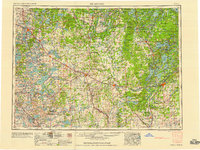 1958 Brainerd1958 Print · USGSCentral Minnesota in the late fifties is a landscape of dense lake chains, rail hubs, and sprawling state forests. Genealogists and local historians can trace old property alignments near the Mississippi River or locate family sites in Brainerd, Little Falls, and Detroit Lakes.
 - 1965 Map of Brainerd
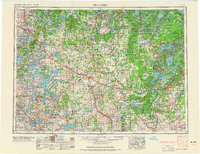 1965 Brainerd1965 Print · USGSNorth-central Minnesota in the mid-fifties presents a complex landscape of sprawling lake systems and established rail corridors. Genealogists and historians can trace the growth of timber towns along the Northern Pacific RR and explore early borders of the White Earth Indian Reservation or Tamarac National Wildlife Refuge.
 - 1966 Map of Carlisle, 1975 Print
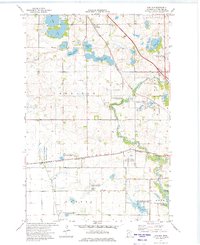 1966 Carlisle1975 Print · USGSOtter Tail County in the early 1970s shows a landscape where prairie agriculture and waterfowl conservation meet. Researchers can trace local landmarks like the Carlisle settlement, the Burlington Northern line, and the Otter Tail River.
 - 1969 Map of Lake Miltona West, 1971 Print
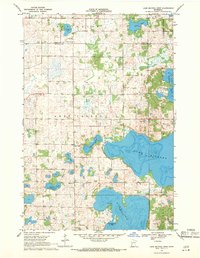 1969 Lake Miltona West1971 Print · USGSDouglas County’s sprawling lake country comes into focus in the late sixties, highlighting the intricate shorelines and early communities of the region. Genealogists and local researchers can trace family landmarks like Leaf Valley, St James Ch, and the many docks along Lake Miltona.
Showing maps 1-25 of 388
Top cities of Otter Tail County
- Fergus Falls historical maps
- Perham historical maps
- Pelican Rapids historical maps
- New York Mills historical maps
- Parkers Prairie historical maps
- Battle Lake historical maps
See more
Frequently asked questions
- What are the different types of historical maps available for Otter Tail County?
- What is the oldest map of Otter Tail County?
- Where can I purchase historical maps of Otter Tail County for my home or office?
- Where can I download high-res historical maps of Otter Tail County?
- Are there historical topographic maps available for Otter Tail County?
- Is there historical aerial imagery available for Otter Tail County?
- Where are historical maps of Otter Tail County sourced from?