1960s Maps of Watonwan County, Minnesota
Explore 10 historic maps of Watonwan County from the 1960s. These maps offer a rare glimpse into what life looked like during the 1960s — showing old roads, neighborhoods, homes, and landmarks that have changed or disappeared over time.
Whether you're researching your family's past, planning a metal detecting trip, or studying how Watonwan County's landscape evolved across the 1960s, these high-resolution maps are a powerful tool for exploring the history of this region.
- Focus on a specific era: All maps on this page are from the 1960s, giving you a focused view of this time period.
- See what’s changed: Compare century-old streets, trails, and buildings to today's modern landscape using overlays and satellite layers.
- Research with precision: Use these maps for genealogy, historical research, land use analysis, or educational projects.
- View, download, or print: Maps are fully viewable online in high resolution, and can be downloaded or printed for your own records.
Start exploring Watonwan County's history through authentic maps from the 1960s. This is your window into the past.
Watonwan County, MN maps
(10)- 1965 Map of Madelia, 1966 Print
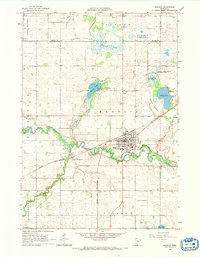 1965 Madelia1966 Print · USGSMadelia and the surrounding prairie were reaching a peak of agricultural development in the mid-sixties. Trace the paths of the Chicago and North Western rail line and discover local landmarks like Linden Church, Fedje Lake, and the Riverside Dam along the Watonwan River.
 - 1965 Map of Perth, 1966 Print
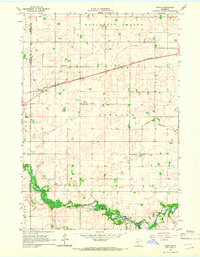 1965 Perth1966 Print · USGSThe Watonwan River valley and surrounding prairie townships are captured here in the mid-1960s. Genealogists and local historians can trace the rural landscape through the North Lincoln Cem, the town of Perth, and the Lincoln Ch along the Chicago and North Western line.
 - 1967 Map of New Ulm
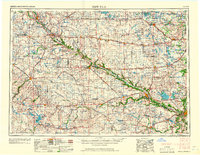 1967 New Ulm1967 Print · USGSSouthern Minnesota in the mid-fifties is captured here as a landscape of river-valley missions and busy prairie rail towns. Researchers can trace the Yellow Medicine Trail and locate historic sites like the Morton Indian Mission and Milford State Monument.
 - 1967 Map of Truman, 1968 Print
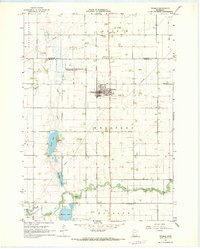 1967 Truman1968 Print · USGSIn the mid-1960s, the agricultural landscape around Truman was a busy corridor for the Chicago and North Western railway. Genealogists can trace family history through several rural cemeteries, including Ridge Lawn and Westford, while others may locate the historic Horicon Church.
 - 1967 Map of Truman SE, 1968 Print
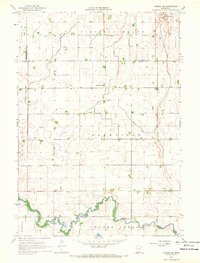 1967 Truman SE1968 Print · USGSMartin County and its neighbors show a highly managed agricultural landscape in the late sixties, shaped by an extensive system of judicial ditches. Genealogists and local historians can locate Nashville Center, trace family roots at Brainard Ch, and find the local Townhall.
 - 1967 Map of Willow Creek, 1968 Print
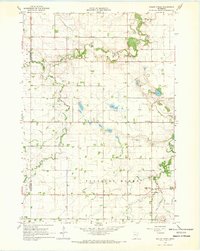 1967 Willow Creek1968 Print · USGSSouthern Minnesota farmland at the edge of Blue Earth County is meticulously mapped here just as the mid-century agricultural landscape reached its peak. Researchers can trace rural life through sites like Willow Creek, the North St Johns Cemetery, and several old schoolhouses including School No 98.
 - 1967 Map of Lewisville, 1968 Print
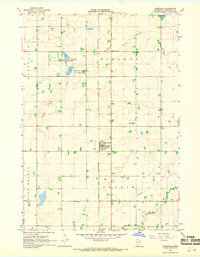 1967 Lewisville1968 Print · USGSThe Watonwan County prairie in the mid-sixties centered on the rail-side community of Lewisville. Genealogists and local researchers can trace the locations of rural schoolhouses like Lone Star Sch and the quiet grounds of Antrim Cem.
 - 1967 Map of Godahl, 1968 Print
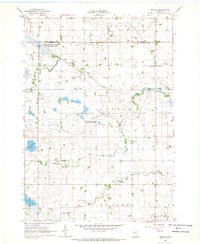 1967 Godahl1968 Print · USGSThe prairie landscape of southern Minnesota is captured here in the late sixties, where the Brown and Watonwan County border meets. Genealogists and local historians can trace the rural communities of Godahl and Sveadahl or locate the Albion Ch and East Sveadahl Ch.
 - 1967 Map of Darfur, 1968 Print
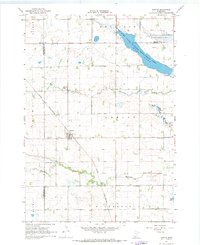 1967 Darfur1968 Print · USGSThe rural landscape around Darfur in the late sixties reveals a community built on the rail and river networks of Southern Minnesota. Genealogists can locate family landmarks such as Bethlehem Cem, St Johns Cem, and School No 2492.
 - 1967 Map of La Salle, 1969 Print
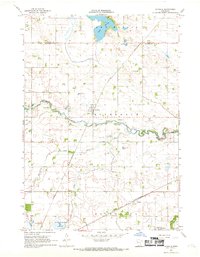 1967 La Salle1969 Print · USGSWatonwan County's agricultural heartland is documented here in the late sixties as the Chicago and North Western railway connected small prairie towns. Genealogists can locate family landmarks like Rosendale Ch and Grogan or trace the winding course of the Watonwan River.2 unique versions available
End of results
Showing maps 1-10 of 10
Top cities of Watonwan County
- Madelia historical maps
- Butterfield historical maps
- South Branch historical maps
- Lewisville historical maps
- Darfur historical maps
- Odin historical maps
See more
Frequently asked questions
- What are the different types of historical maps available for Watonwan County?
- What is the oldest map of Watonwan County?
- Where can I purchase historical maps of Watonwan County for my home or office?
- Where can I download high-res historical maps of Watonwan County?
- Are there historical topographic maps available for Watonwan County?
- Is there historical aerial imagery available for Watonwan County?
- Where are historical maps of Watonwan County sourced from?