Old Maps of Pascagoula, Mississippi for Hiking & Exploration
Hike through history with 22 historic maps of Pascagoula. Explore old trails, ghost towns, and forgotten backroads — perfect for outdoor adventurers and local explorers.
- Rediscover forgotten places: Map out old mining camps, roads, and footpaths that no longer exist on modern maps.
- Layer with modern tools: Combine with LiDAR or satellite views to plan hikes through historical terrain.
- Made for exploration: Popular among hikers, overlanders, and local history lovers.
Use these maps to find adventure and explore the hidden past of Pascagoula.
Pascagoula, MS maps
(22)- 1943 Map of Pascagoula
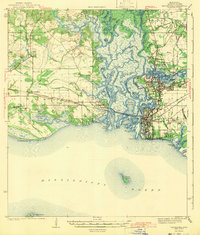 1943 Pascagoula1943 Print · USGSMississippi's Gulf Coast is shown during the early 1940s, highlighting the intricate delta where the Pascagoula River meets the sound. Genealogists and historians can trace the foundations of Moss Point and locate vanished rural landmarks like Zion Ch and Camp Lamotte.2 unique versions available
 - 1953 Map of Mobile, 1968 Print
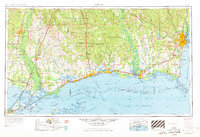 1953 Mobile1968 Print · USGSThe Gulf Coast comes alive in this mid-century survey, from the streets of Mobile to the marshes of New Orleans. Trace family roots in coastal towns like Pass Christian and Bayou La Batre or locate military landmarks including Keesler AFB.3 unique versions available
 - 1955 Map of Pascagoula, 1956 Print
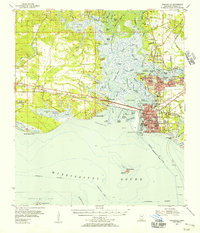 1955 Pascagoula1956 Print · USGSThe Mississippi coast during the mid-fifties reveals a landscape of tidal bayous and growing industrial towns along the Pascagoula River. Genealogists and historians can locate family landmarks like the Mormon Cem, the Old Spanish Fort, and several neighborhood schools including Lincoln Sch.4 unique versions available
 - 1957 Map of Mobile
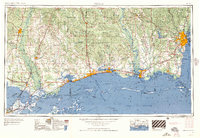 1957 Mobile1957 Print · USGSThe Gulf Coast in the mid-1950s reveals a bustling corridor of rail-and-river commerce connecting Alabama to Louisiana. Genealogists and historians can trace old settlements and military hubs from Keesler Afb to the coastal reaches of Ship Island and Bogalusa.3 unique versions available
 - 1960 Map of Mobile
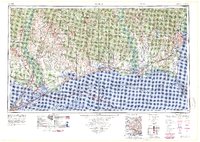 1960 Mobile1960 Print · USGSThe Gulf Coast at the dawn of the sixties shows a landscape of busy ports, military airbases, and barrier islands. Trace the rail lines of the Louisville & Nashville through BILOXI and Pascagoula or find family history in towns like Bayou La Batre and Poplarville.
 - 1963 Map of Mobile
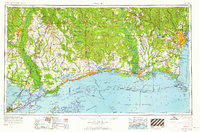 1963 Mobile1963 Print · USGSThe Gulf Coast at the dawn of the sixties shows a thriving maritime and military corridor from Louisiana to Alabama. Genealogists and historians can trace rail lines like the Louisville & Nashville RR and find landmarks from Brookley AFB to Fort Morgan.
 - 1965 Map of Mobile
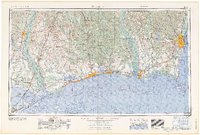 1965 Mobile1965 Print · USGSThe Gulf Coast at mid-century reveals a landscape of expanding ports and vital military installations from Louisiana to Alabama. Genealogists and historians can trace the growth of Biloxi, Pascagoula, and Mobile, alongside the sprawling De Soto National Forest.
 - 1982 Map of Biloxi
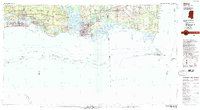 1982 Biloxi1982 Print · USGSThe Mississippi and Alabama coastlines are captured in the early eighties as industrial hubs and wildlife refuges shaped the shoreline. Trace maritime and military history through Fort Morgan, Keesler Air Force Base, and the barrier islands of Gulf Islands National Seashore.2 unique versions available
 - 1982 Map of Pascagoula South
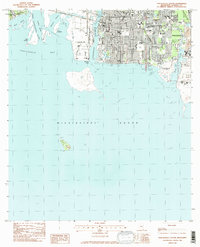 1982 Pascagoula South1982 Print · USGSPascagoula and Gautier sit at the heart of the Mississippi coast's maritime industry in the early eighties. Genealogists and historians can trace neighborhood growth through sites like Memorial Gardens Cem, the large Shipbuilding Plant, and Sacred Heart Sch.2 unique versions available
 - 1982 Map of Pascagoula North, 1983 Print
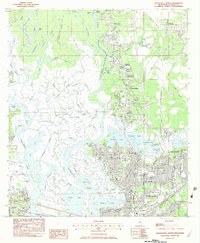 1982 Pascagoula North1983 Print · USGSThe coastal marshlands and river junctions north of the Gulf appear in high detail during the early eighties. Genealogists can trace family names at Mormon Cem and Griffin Cem, while tracing the development of Escatawpa and the Louisville and Nashville rail line.
 - 1984 Map of Mobile
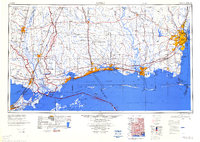 1984 Mobile1984 Print · USGSThe Gulf Coast at the height of the mid-eighties shows a landscape of rapid industrial growth and military significance. Researchers can trace the sprawling rail lines of the Illinois Central Gulf RR, locate the NASA Test Facility, or study the barrier island chain from Cat Island to Petit Bois Island.3 unique versions available
 - 1996 Map of Pascagoula South, 1999 Print
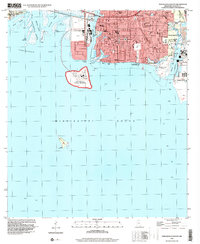 1996 Pascagoula South1999 Print · USGSPascagoula and the surrounding coastal waters are shown here in the late nineties, showcasing a dense network of schools, churches, and maritime facilities. Genealogists and historians can trace local landmarks like Jackson Sch and the Longfellow House National Historical Site.
 - 2012 Map of Pascagoula North, 2012 Print
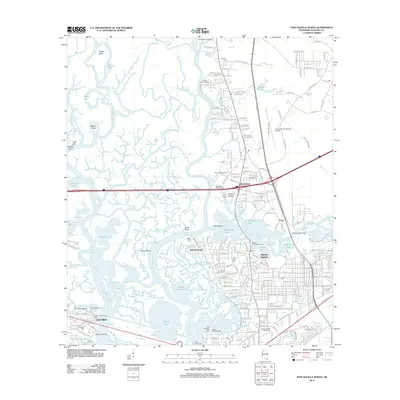 2012 Pascagoula North2012 Print · USGSThe confluence of the Pascagoula and Escatawpa Rivers comes to life in this detailed 2012 portrait of Mississippi’s coastal industrial corridor. Researchers can trace local heritage through the Old Spanish Fort Cem, locate the Jackson County Fairground, and explore the riverfronts near Moss Point and Escatawpa.
 - 2012 Map of Pascagoula South, 2012 Print
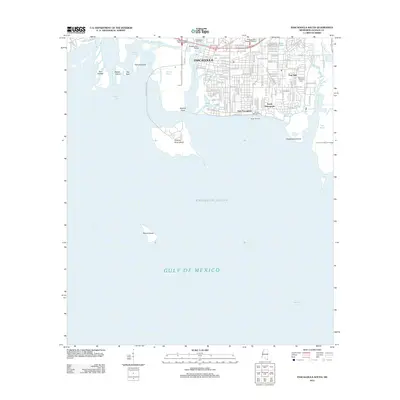 2012 Pascagoula South2012 Print · USGSThe Mississippi coast in the early twenty-first century reveals a dense network of shipyards, residential neighborhoods, and industrial bayous. Genealogists and researchers can trace local landmarks from Memorial Gardens Cem to the waterfronts of East Pascagoula and South Pascagoula.
 - 2015 Map of Pascagoula South, 2015 Print
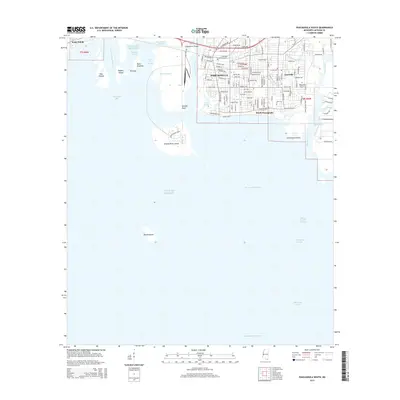 2015 Pascagoula South2015 Print · USGSCoastal Jackson County comes to life in the mid-2010s, showing the complex industrial waterfront and residential neighborhoods of the Mississippi Sound. Genealogists and local historians can trace the streets of Pascagoula, locate Memorial Gardens Cem, and see the development of East Side and South Pascagoula.
 - 2015 Map of Pascagoula North, 2015 Print
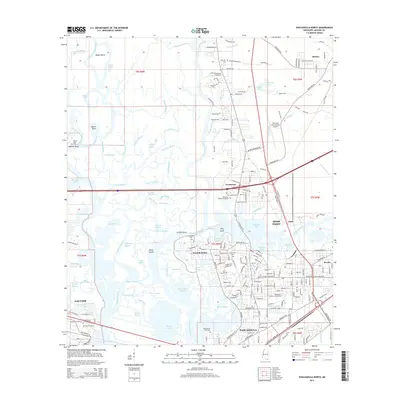 2015 Pascagoula North2015 Print · USGSCoastal Jackson County is captured here in the mid-2010s, showing the intricate wetlands where the Pascagoula River meets the Gulf. Researchers can trace family sites at Evergreen Memorial Gardens or Griffin Cem and explore the industrial corridors of Moss Point.
 - 2018 Map of Pascagoula South, 2018 Print
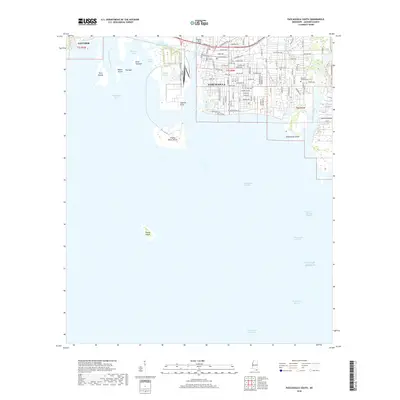 2018 Pascagoula South2018 Print · USGSCoastal Mississippi comes into focus in the late 2010s, showing the intersection of heavy industry and the Gulf of Mexico. Researchers can trace the waterfront development around Pascagoula, from the harbor at Lake Yazoo to the Memorial Gardens Cem.
 - 2018 Map of Pascagoula North, 2018 Print
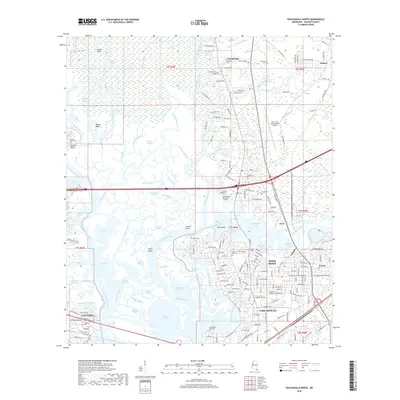 2018 Pascagoula North2018 Print · USGSCoastal Jackson County is captured here in the late 2010s, showing the meeting of the Pascagoula River and Escatawpa River. Genealogists and historians can trace local family roots through several sites like Old Spanish Fort Cem, Saint Paul Cem, and Martin Bluff Cem.
 - 2020 Map of Pascagoula North, 2020 Print
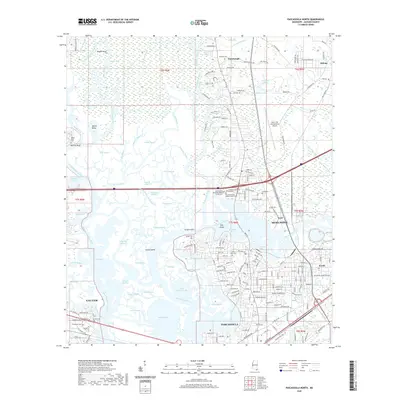 2020 Pascagoula North2020 Print · USGSThe coastal Mississippi delta comes alive in this survey of the river's confluence during the early twenty-first century. Genealogists and historians can trace family locations near Evergreen Memorial Gardens, the historic Escatawpa settlement, and the industrial neighborhoods of Kreole.
 - 2020 Map of Pascagoula South, 2020 Print
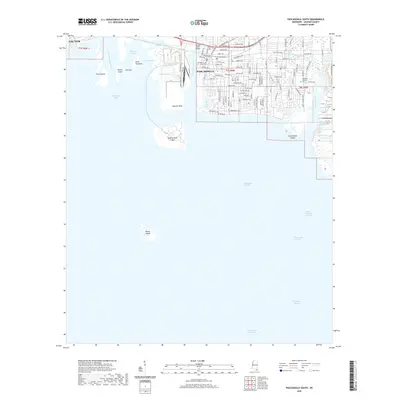 2020 Pascagoula South2020 Print · USGSCoastal Mississippi comes into focus in this recent survey of the bustling river-and-sound landscape. Genealogists and historians can trace the streets of Pascagoula from the Jackson County Courthouse to landmarks like Memorial Gardens Cem and Singing River Island.
 - 2024 Map of Pascagoula North, 2024 Print
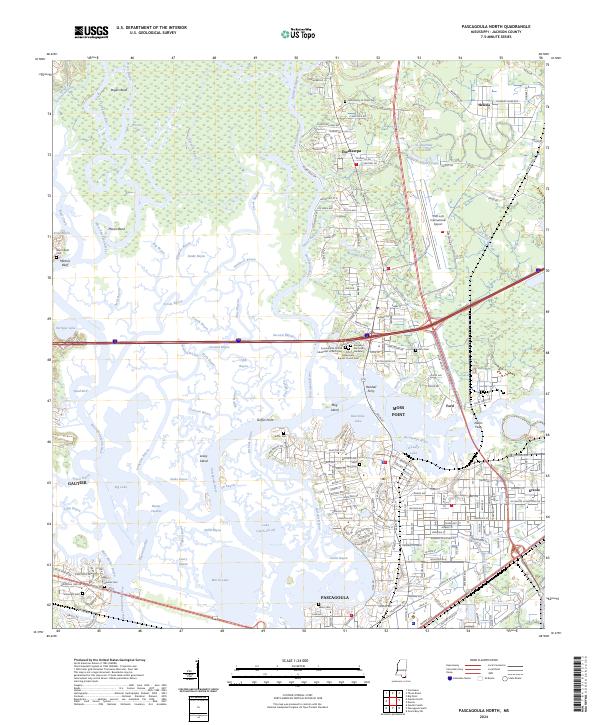 2024 Pascagoula North2024 Print · USGSThe Mississippi Gulf Coast unfolds in the mid-2020s, revealing a landscape defined by the winding Pascagoula River and its surrounding wetlands. Genealogists can trace local roots through Griffin Cem, Zion Cem, and the historic river crossings at Randall Ferry.
 - 2024 Map of Pascagoula South, 2024 Print
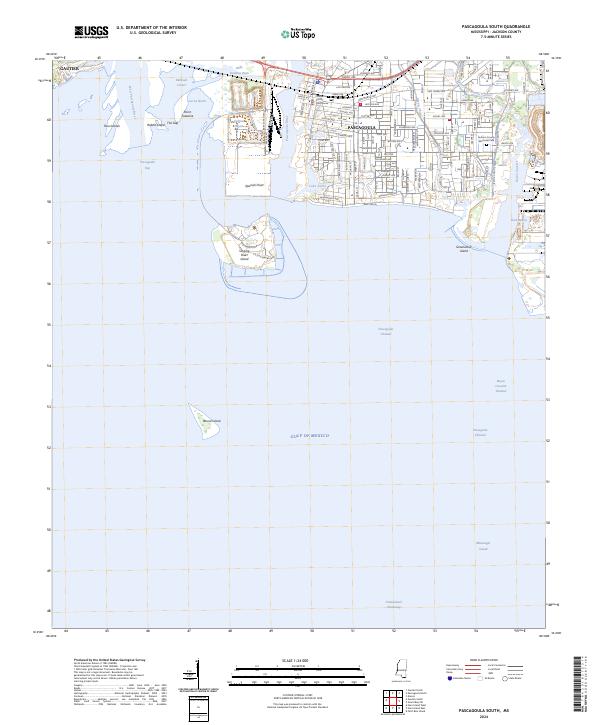 2024 Pascagoula South2024 Print · USGSThe Mississippi Gulf Coast near the shipyards and sound is captured here in the contemporary era. Researchers can trace the civic heart of Pascagoula near the Jackson County Courthouse or locate offshore landmarks like Round Island and Singing River Island.
End of results
Showing maps 1-22 of 22
Top cities near Pascagoula
- Ocean Springs historical maps
- Gautier historical maps
- Moss Point historical maps
- Grand Bay historical maps
- Dauphin Island historical maps
Top neighborhoods of Pascagoula
Frequently asked questions
- What are the different types of historical maps available for Pascagoula?
- What is the oldest map of Pascagoula?
- Where can I purchase historical maps of Pascagoula for my home or office?
- Where can I download high-res historical maps of Pascagoula?
- Are there historical topographic maps available for Pascagoula?
- Is there historical aerial imagery available for Pascagoula?
- Where are historical maps of Pascagoula sourced from?