Old Maps of Wakenda, Missouri
Explore 13 old maps of Wakenda, spanning from 1890 to today. These high-resolution historic maps reveal how streets, neighborhoods, landmarks, and natural features evolved over time — perfect for genealogy, metal detecting, research, and local history exploration.
What you can do with these maps:
- See how Wakenda changed over time: Compare historical maps to modern-day views to trace roads, homesites, rail lines & more.
- View detailed metadata: Each map includes creators, publishers, year, scale, and archive source.
- Overlay maps with satellite & LiDAR: Visualize the past alongside modern tools to explore terrain & human change.
- Trusted historical sources: Maps sourced from the USGS, Library of Congress, and other archives.
- Access maps your way: View online, download high-res files, or order prints for personal or research use.
Start exploring old maps of Wakenda to uncover forgotten places, hidden landmarks, and the deep history beneath your feet.
Wakenda, MO maps
(13)- 1890 Map of Marshall
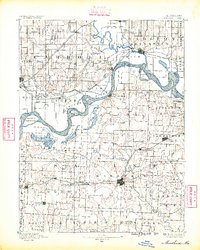 1890 Marshall1890 Print · USGSSaline and Carroll counties come alive in this late nineteenth-century survey, showing the Missouri River bottomlands before modern channelization. Genealogists and historians can trace defunct river landings and rail stops like Eugene City, Laynesville, and Miami Station.
 - 1892 Map of Marshall, 1896 Print
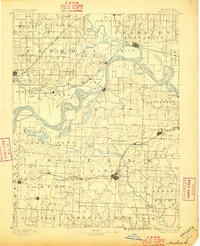 1892 Marshall1896 Print · USGSNorth-central Missouri in the 1890s is defined by its vibrant river commerce and expanding rail networks. Genealogists and historians can trace family roots through old settlements like Malta Bend, Laynesville, and Salt Springs along the Missouri River.
 - 1901 Map of Marshall
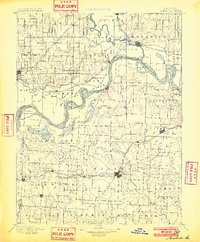 1901 Marshall1901 Print · USGSCentral Missouri thrives along the river and rail lines at the turn of the century. Trace the early footprints of Marshall and Slater, or locate long-standing river landings and rural stations like Miami Station, Malta Bend, and Laynesville.5 unique versions available
 - 1951 Map of Carrollton East, 1952 Print
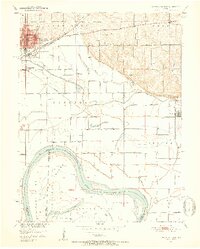 1951 Carrollton East1952 Print · USGSCarroll County at mid-century reveals a landscape defined by the winding Missouri River and a dense network of country schools. Researchers can trace the dual rail lines of the Wabash and Atchison Topeka and Santa Fe near Wakenda and Dietrich Sch.4 unique versions available
 - 1953 Map of Moberly
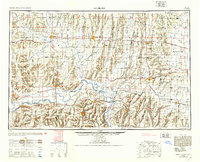 1953 Moberly1953 Print · USGSMid-century north-central Missouri is documented here as a bustling intersection of river commerce and heavy rail. Researchers can trace historic family-named landmarks and transport hubs from the Missouri River corridor to the rail yards of Moberly, Chillicothe, and Macon.
 - 1954 Map of Moberly, 1969 Print
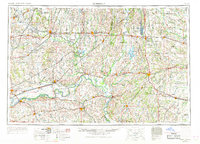 1954 Moberly1969 Print · USGSMid-century Missouri is captured here during a period of transition for its river towns and rail hubs. Genealogists and historians can trace the paths of the Wabash railroad through Moberly or explore the riverside layout of Lexington and Brunswick.3 unique versions available
 - 1957 Map of Moberly
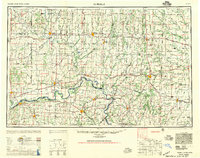 1957 Moberly1957 Print · USGSNorth-central Missouri in the late nineteen-forties and fifties remains a landscape defined by its great rivers and a dense network of steam and diesel rail lines. Genealogists and historians can trace the paths of the Wabash RR and Santa Fe RR through historic junctions like Moberly, Brookfield, and Macon.
 - 1960 Map of Moberly
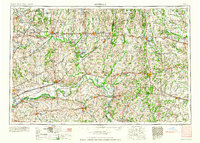 1960 Moberly1960 Print · USGSCentral Missouri comes alive in the mid-twentieth century as a bustling network of river towns and significant rail corridors. Genealogists and historians can trace the paths of the Wabash RR through Moberly or explore the riverfronts of Lexington and Brunswick.
 - 1982 Map of Marshall
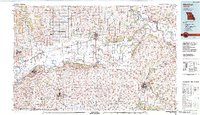 1982 Marshall1982 Print · USGSMid-Missouri river life and rail history meet in this early 1980s landscape, centered on the Missouri's winding course. Researchers can trace the historic Santa Fe Trail and explore sites like the Confederate Memorial State Park and Carrollton Mem Cemetery.
 - 2012 Map of Carrollton East, 2012 Print
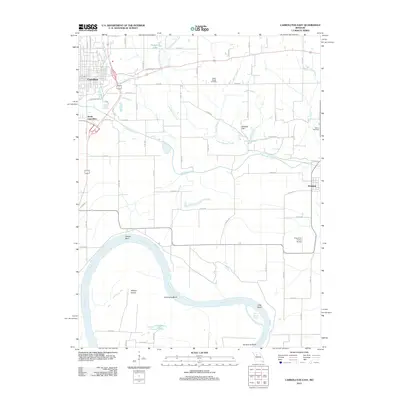 2012 Carrollton East2012 Print · USGSThe Missouri River bottomlands south of Carrollton were an established agricultural landscape by the early twenty-first century. Researchers can trace land use patterns and family history at Willis Chapel Cemetery or the rural airstrip at Famuliner Farms Airport.
 - 2015 Map of Carrollton East, 2015 Print
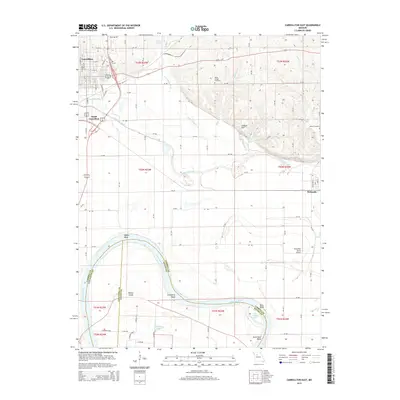 2015 Carrollton East2015 Print · USGSCarroll County and the Missouri River bottomlands are captured here in the mid-2010s, showcasing the agricultural landscape east of Carrollton. Local historians can trace family ties at Willis Chapel Cemetery and Adkins Cemetery or locate the Famuliner Farms Airport.
 - 2017 Map of Carrollton East, 2017 Print
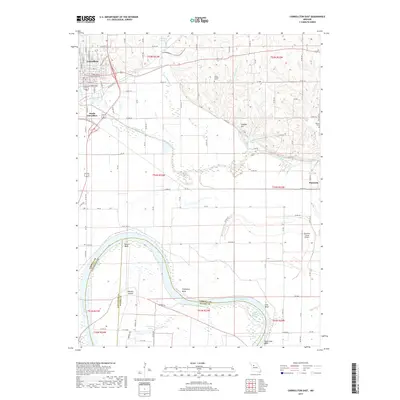 2017 Carrollton East2017 Print · USGSThe Missouri River bottoms south of Carrollton come into focus in the mid-2010s, showcasing a landscape shaped by water and agriculture. Researchers can trace family history at Willis Chapel Cem or locate old community hubs like South Carrollton and Wakenda.
 - 2021 Map of Carrollton East, 2021 Print
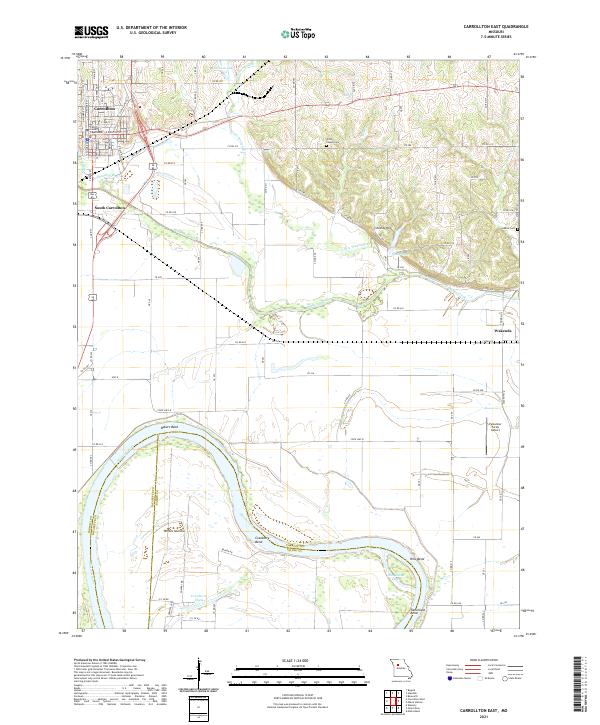 2021 Carrollton East2021 Print · USGSCarrollton and the surrounding Missouri River bottomlands are captured in detail during the early 2020s. Researchers can trace family roots at Willis Chapel Cem or locate specific town lots near the Carroll County Courthouse and South Carrollton.
End of results
Showing maps 1-13 of 13
Top cities near Wakenda
- Marshall historical maps
- Carrollton historical maps
- Waverly historical maps
- Bosworth historical maps
- Alma historical maps
- Malta Bend historical maps
See more
Frequently asked questions
- What are the different types of historical maps available for Wakenda?
- What is the oldest map of Wakenda?
- Where can I purchase historical maps of Wakenda for my home or office?
- Where can I download high-res historical maps of Wakenda?
- Are there historical topographic maps available for Wakenda?
- Is there historical aerial imagery available for Wakenda?
- Where are historical maps of Wakenda sourced from?