Old Maps of Winner, Missouri
Explore 15 old maps of Winner, spanning from 1894 to today. These high-resolution historic maps reveal how streets, neighborhoods, landmarks, and natural features evolved over time — perfect for genealogy, metal detecting, research, and local history exploration.
What you can do with these maps:
- See how Winner changed over time: Compare historical maps to modern-day views to trace roads, homesites, rail lines & more.
- View detailed metadata: Each map includes creators, publishers, year, scale, and archive source.
- Overlay maps with satellite & LiDAR: Visualize the past alongside modern tools to explore terrain & human change.
- Trusted historical sources: Maps sourced from the USGS, Library of Congress, and other archives.
- Access maps your way: View online, download high-res files, or order prints for personal or research use.
Start exploring old maps of Winner to uncover forgotten places, hidden landmarks, and the deep history beneath your feet.
Winner, MO maps
(15)- 1894 Map of Independence
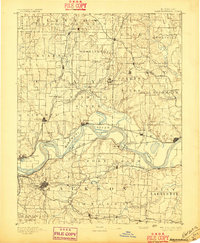 1894 Independence1894 Print · USGSThe river valley and rail corridors of western Missouri are captured in detail during the late nineteenth century. Researchers can trace the early layouts of Liberty and Independence alongside lost river features like Liberty Landing and Cooley Lake.5 unique versions available
 - 1936 Map of Kearney
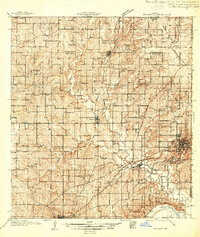 1936 Kearney1936 Print · USGSClay County at the height of the mid-thirties rural school era reveals a landscape of interconnected family farms and rail-stop towns. Researchers can trace ancestral locations through dozens of named landmarks like Mt Gilead Sch, Watkins Ch, and the original street grid of Kearney.
 - 1942 Map of Kearney, 1965 Print
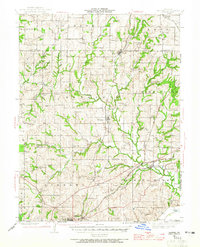 1942 Kearney1965 Print · USGSClay County at the onset of the 1940s is a landscape of established rail hubs and rural schoolhouses. Genealogists can trace family roots through dozens of local landmarks like Antioch Cem, Mt Gilead Sch, and the County Home.2 unique versions available
 - 1945 Map of Kearney
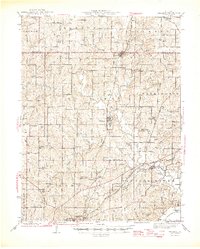 1945 Kearney1945 Print · USGSClay County farming communities thrive in the mid-1940s as rail lines connect rural outposts to the wider region. Genealogists can trace family footprints through dozens of local schools like Bodoc Sch and country churches such as Antioch Ch.2 unique versions available
 - 1950 Map of Kansas City
 1950 Kansas City1950 Print · USGSMid-century Kansas and Missouri are captured here during a period of industrial growth and shifting transportation. Genealogists and historians can trace rail lines like the Wabash RR or locate ancestral homes near the Potawatomi Indian Reservation and Horton.
 - 1954 Map of Kansas City
 1954 Kansas City1954 Print · USGSThe Missouri-Kansas borderlands flourished in the post-war era as river commerce and rail networks converged at the Missouri River. Genealogists and historians can trace the foundations of Kansas City and smaller rural hubs like Hiawatha or Sabetha.
 - 1956 Map of Kansas City, 1967 Print
 1956 Kansas City1967 Print · USGSThe Kansas-Missouri border region thrived during the mid-fifties, centered on the growing metropolitan cores and the busy river valleys. Researchers can trace the layout of significant government sites like Fort Leavenworth and the Lake City Army Ammunition Plant.4 unique versions available
 - 1960 Map of Kansas City
 1960 Kansas City1960 Print · USGSMid-century Kansas and Missouri meet at the river forks, showing a sprawling rail-and-river economy during the 1950s growth era. Genealogists and researchers can trace tribal lands like the Kickapoo Indian Reservation or follow the early interstate corridors through Saint Joseph and Independence.3 unique versions available
 - 1971 Map of Kearney SW, 1973 Print
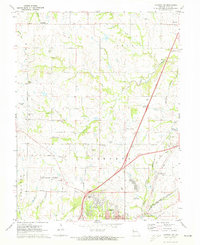 1971 Kearney SW1973 Print · USGSClay County at the dawn of the 1970s reveals a landscape where the growing edges of Kansas City reach toward quiet rural communities. Researchers can trace early rural life through numerous landmarks like Old Providence Cem, Roosterville, and the historic Burlington Northern rail line.2 unique versions available
 - 1983 Map of Kansas City
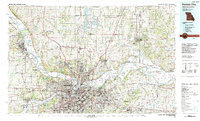 1983 Kansas City1983 Print · USGSThe Missouri-Kansas borderlands reached a peak of suburban and industrial connectivity by the early eighties. Researchers can trace established neighborhoods and major landmarks like the Fort Leavenworth Military Reservation, Swope Park, and the U.S. Army Ammunition Plant.
 - 1990 Map of Kearney SW, 1997 Print
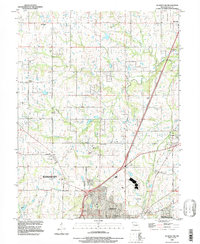 1990 Kearney SW1997 Print · USGSNorth of Kansas City in the 1990s, this area of Clay County reflects the meeting of suburban growth and traditional Missouri farm country. Genealogists and historians can trace family locations through numerous rural burial grounds like Watkins Cem, Pickett Cem, and the old settlement at Roosterville.
 - 2012 Map of Kearney SW, 2012 Print
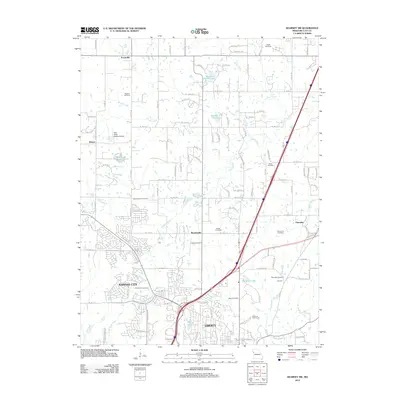 2012 Kearney SW2012 Print · USGSThe outskirts of Liberty and Kansas City come alive in this map of modern-day Clay County. Genealogists and historians can trace numerous family burial sites such as Old Providence Cemetery and Pickett Cemetery, or locate the site of Pioneer Village.
 - 2014 Map of Kearney SW, 2014 Print
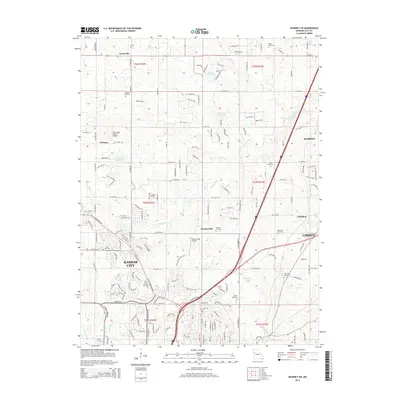 2014 Kearney SW2014 Print · USGSThe northern reaches of the Kansas City metro are shown here during a period of rapid suburban integration within Clay County. Genealogists can trace family heritage through numerous burial sites like Old Providence and Watkins Cemetery, while aviators may note Kitty Hawk Estates Airport.
 - 2017 Map of Kearney SW, 2017 Print
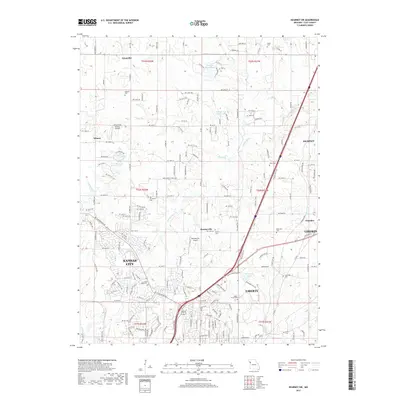 2017 Kearney SW2017 Print · USGSClay County at the edge of the Kansas City metro area reveals a mix of rural crossroads and suburban growth in the late twenty-teens. Researchers can trace family history through numerous burial sites like Old Providence Cem and Watkins Cem or locate small settlements such as Ectonville and Roosterville.
 - 2021 Map of Kearney SW, 2021 Print
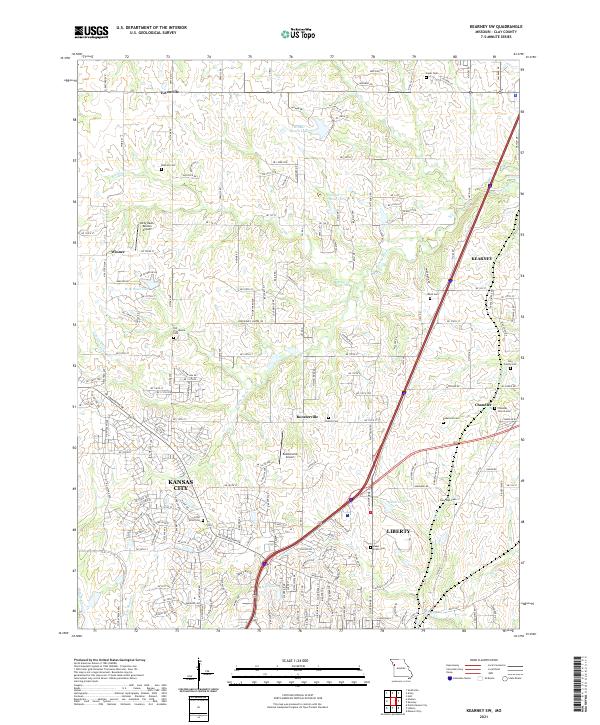 2021 Kearney SW2021 Print · USGSClay County's rural transitions and suburban expansion are evident in this 2021 study of the northern Kansas City corridor. Genealogists can locate several historic burial grounds including Old Providence Cem, Clay County Cem, and Pickett Cem.
End of results
Showing maps 1-15 of 15
Top cities near Winner
- Kansas City historical maps
- Kansas City historical maps
- Independence historical maps
- Liberty historical maps
- Gladstone historical maps
- Excelsior Springs historical maps
See more
Frequently asked questions
- What are the different types of historical maps available for Winner?
- What is the oldest map of Winner?
- Where can I purchase historical maps of Winner for my home or office?
- Where can I download high-res historical maps of Winner?
- Are there historical topographic maps available for Winner?
- Is there historical aerial imagery available for Winner?
- Where are historical maps of Winner sourced from?