1900s (20th Century) Maps of Dallas County, Missouri
Explore 37 historic maps of Dallas County from the 1900s (20th Century). These maps offer a rare glimpse into what life looked like during the 1900s — showing old roads, neighborhoods, homes, and landmarks that have changed or disappeared over time.
Whether you're researching your family's past, planning a metal detecting trip, or studying how Dallas County's landscape evolved across the 1900s, these high-resolution maps are a powerful tool for exploring the history of this region.
- Focus on a specific era: All maps on this page are from the 1900s, giving you a focused view of this time period.
- See what’s changed: Compare century-old streets, trails, and buildings to today's modern landscape using overlays and satellite layers.
- Research with precision: Use these maps for genealogy, historical research, land use analysis, or educational projects.
- View, download, or print: Maps are fully viewable online in high resolution, and can be downloaded or printed for your own records.
Start exploring Dallas County's history through authentic maps from the 1900s. This is your window into the past.
Dallas County, MO maps
(37)- 1934 Map of Macks Creek
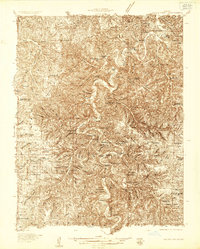 1934 Macks Creek1934 Print · USGSIn the central Ozarks during the 1930s, the rugged river valleys supported a landscape of isolated homesteads and country schoolhouses. Genealogists can locate family landmarks like Laughlin Cem, Johnston Castle, and the Tunnel Dam along the Niangua River.4 unique versions available
 - 1939 Map of Macks Creek
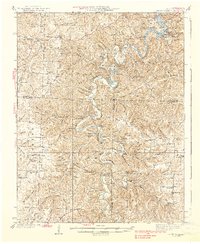 1939 Macks Creek1939 Print · USGSThe Niangua River valley in the late 1930s reveals a landscape of river crossings and early Ozark tourism. Researchers can trace ancestral locations through numerous rural school sites like Barkley Sch or find landmarks like Hahatonka Castle and Tunnel Dam.2 unique versions available
 - 1939 Map of Long Lane, 1966 Print
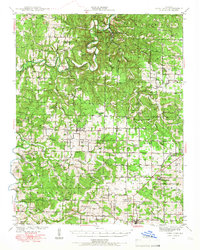 1939 Long Lane1966 Print · USGSDallas and Laclede Counties were defined by the winding Niangua River and the rural rail economy in the late 1930s. Genealogists can find numerous family-named landmarks like Williams Cem and isolated schools such as Blackfoot Sch.
 - 1942 Map of Long Lane
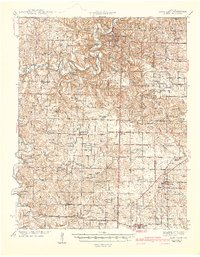 1942 Long Lane1942 Print · USGSThe Ozark plateau comes alive in the early 1940s, showing a land defined by the winding Niangua River and the rural townships of Wilson and Union. Researchers can trace dozens of country schoolhouses like Lonesome Hill Sch and Loudon Smoke Sch or locate ancestors near Shanks Cem.3 unique versions available
 - 1946 Map of Niangua, 1966 Print
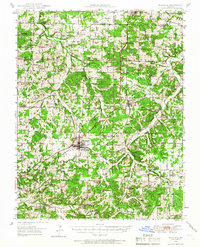 1946 Niangua1966 Print · USGSMid-century Webster County is shown here during a time when rural life centered on the St Louis-San Francisco rail line and local country schools. Genealogists can locate family landmarks such as Bumgardner Ford, Eighty Eight Sch, and Sparkle Brook Cem.
 - 1947 Map of Strafford, 1967 Print
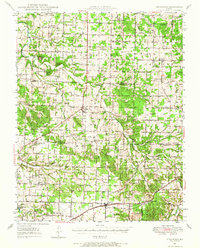 1947 Strafford1967 Print · USGSMissouri's Ozark plateau comes alive in the mid-forties, showing the rural school districts and crossroads towns of Greene and Dallas counties. Trace family roots at Mission Chapel, find the old roadbed of U. S. 66, or locate Tin Town.
 - 1948 Map of Niangua
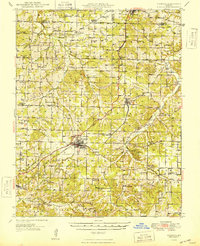 1948 Niangua1948 Print · USGSIn the late 1940s, Webster County was a landscape of small farming communities and river crossings. Trace the old rail line to Marshfield or find rural landmarks like Eighty Eight Sch, Mission Home Ch, and the crossings at Johnston Ford.2 unique versions available
 - 1948 Map of Strafford
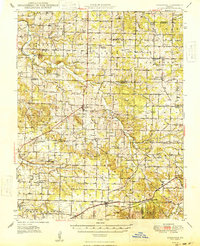 1948 Strafford1948 Print · USGSMid-century Greene and Webster Counties center on the rail-aligned town of Strafford and the rural crossroads of Fair Grove. Genealogists can locate family landmarks including Mullinx Cem, Hickory Barren Sch, and the old Whitlock Ch.2 unique versions available
 - 1950 Map of Buffalo NW, 1963 Print
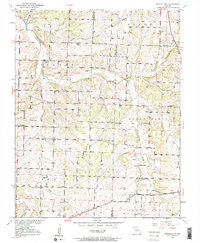 1950 Buffalo NW1963 Print · USGSNorthwestern Polk County at mid-century remained a landscape of dispersed family farms and small rural community centers. Genealogists and local historians can trace the foundations of this area through named schools like Concord Sch and churches such as Reynolds Chapel.2 unique versions available
 - 1950 Map of Urbana, 1967 Print
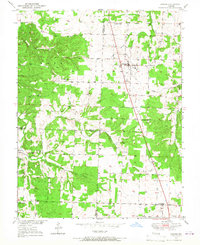 1950 Urbana1967 Print · USGSThe crossroads of Hickory, Dallas, and Polk counties come alive in the mid-1950s around the settlements of Urbana and Louisburg. Genealogists and historians can trace the foundations of this rural community through Star Ridge Sch, Bower Chapel, and Rimby.2 unique versions available
 - 1951 Map of Buffalo NW
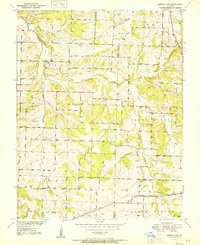 1951 Buffalo NW1951 Print · USGSThe Polk and Dallas county border comes alive in the early fifties, showing a rural landscape organized around namesake schools and small country chapels. Genealogists can locate family landmarks such as Reynolds Chapel, Lindley Ch, and the Breshears Cem.2 unique versions available
 - 1951 Map of Urbana
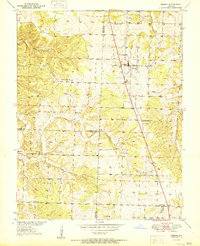 1951 Urbana1951 Print · USGSMid-century Dallas and Hickory Counties are captured here as a network of small farm towns and country parishes. Genealogists can trace family footprints near Urbana, Rimby, and the Star Ridge Sch, or locate the Cussington Cem near Louisburg.2 unique versions available
 - 1954 Map of Springfield
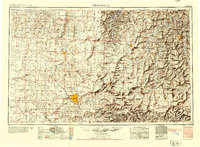 1954 Springfield1954 Print · USGSThe Missouri Ozarks are captured here during the post-war era, showing the expansion of Springfield and the surrounding river valleys. Genealogists and historians can trace local landmarks like Mount Comfort Cemetery and the Fort Leonard Wood military grounds.6 unique versions available
 - 1958 Map of Springfield
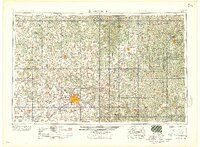 1958 Springfield1958 Print · USGSThe Missouri Ozarks are captured during the mid-century era of growth, centered on the bustling hub of Springfield. Genealogists and historians can trace family roots through numerous landmarks like Ebenezer Church, Stockton Cem, and the various county courthouses.
 - 1959 Map of Springfield
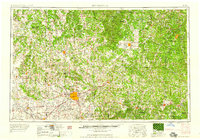 1959 Springfield1959 Print · USGSThe Missouri Ozarks are captured here during a decade of postwar growth and increasing highway connectivity. Researchers can trace the legacy of the St Louis-San Francisco RR and locate early sites in Springfield, Lebanon, and Mountain Grove.
 - 1960 Map of Branch, 1961 Print
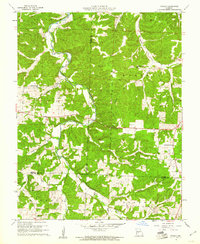 1960 Branch1961 Print · USGSCamden County was a land of quiet creek valleys and scattered hilltop churches at the dawn of the 1960s. Family historians can trace ancestral sites along the Little Niangua River, from the Stanton Cem to the Branch Lookout Tower.2 unique versions available
 - 1960 Map of Tunas, 1961 Print
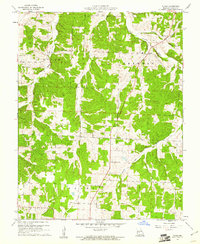 1960 Tunas1961 Print · USGSThe community of Tunas and the Little Niangua River valley are shown here in the early sixties. Genealogists and local historians can locate rural landmarks such as Howard Chapel, Cherry Grove Ch, and the winding Coatney Branch.2 unique versions available
 - 1960 Map of Preston, 1961 Print
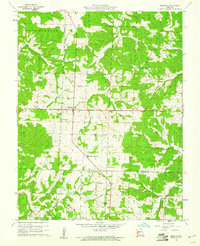 1960 Preston1961 Print · USGSPreston and the Missouri Ozark borderlands are documented here at the start of the 1960s, showing a landscape of small family farms and timber. Genealogists can trace rural roots through the locations of Fisher Cem, Olive Point Ch, and the Morgan Sch.2 unique versions available
 - 1961 Map of Buffalo, 1962 Print
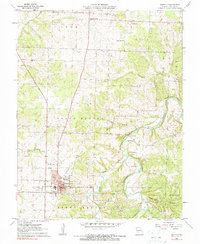 1961 Buffalo1962 Print · USGSBuffalo and the surrounding Missouri countryside are captured here in the early sixties, showing the town's expansion and rural foundations. Genealogists and local historians can trace old community hubs like Pumpkin Center, the Union Home Cem, and Engle Sch.2 unique versions available
 - 1961 Map of Half Way, 1962 Print
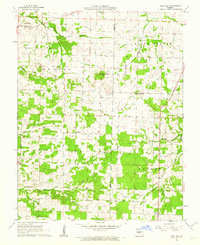 1961 Half Way1962 Print · USGSThe borderlands of Polk and Dallas counties are captured here in the early sixties, showing a landscape of small Missouri farmsteads and creek-side settlements. Genealogists can locate several rural burial grounds and community centers, including Ankrom Cemetery, Garden Cemetery, and Redtop Church.2 unique versions available
 - 1961 Map of Charity, 1962 Print
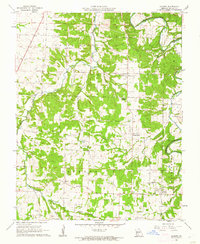 1961 Charity1962 Print · USGSDallas County in the early sixties reveals a network of tight-knit farming communities and family landmarks along the Niangua River. You can trace family roots at Davidson Cem or locate old schoolhouses like Charity Sch and Mt Harmon Sch.2 unique versions available
 - 1970 Map of Fair Grove, 1971 Print
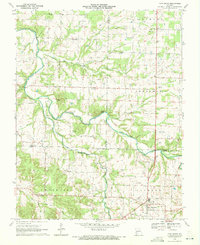 1970 Fair Grove1971 Print · USGSThe northern reaches of Greene County are captured here at the start of the 1970s, where the winding Pomme De Terre River meets the rural crossroads of Fair Grove. Researchers can trace the family names of the Ozarks through landmarks like Goodnight Knob and the Mallard Cemetery.2 unique versions available
 - 1970 Map of Elkland, 1971 Print
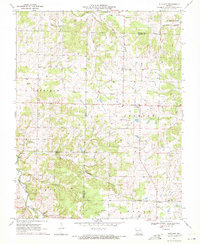 1970 Elkland1971 Print · USGSElkland and the surrounding Missouri countryside appear here in the early 1970s, at the intersection of Webster, Dallas, and Greene counties. Researchers can trace rural lineages through sites like the Elkland Sch, Union Mound Ch, and Stever Cem.
 - 1982 Map of Niangua, 1983 Print
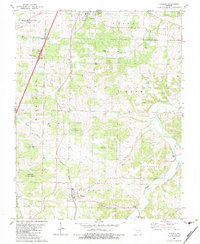 1982 Niangua1983 Print · USGSThis part of Webster and Laclede counties in the early eighties shows a landscape of small Ozark settlements and timbered state lands. Researchers can locate family landmarks like Letterman Cem, the village of Niangua, and rural churches such as Mathis Ch.
 - 1982 Map of Windyville, 1983 Print
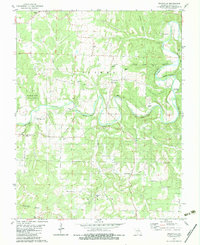 1982 Windyville1983 Print · USGSIn the early 1980s, the Niangua River valley in Dallas County maintained a quiet rural character centered on the settlement of Windyville. Researchers can trace deep family roots through numerous local burial grounds like Scrivner and Fourmile cemeteries or explore the river terrain near Kehler Bluff.
Showing maps 1-25 of 37
Top cities of Dallas County
Frequently asked questions
- What are the different types of historical maps available for Dallas County?
- What is the oldest map of Dallas County?
- Where can I purchase historical maps of Dallas County for my home or office?
- Where can I download high-res historical maps of Dallas County?
- Are there historical topographic maps available for Dallas County?
- Is there historical aerial imagery available for Dallas County?
- Where are historical maps of Dallas County sourced from?