Old Maps of Blue Ridge, Missouri
Explore 12 old maps of Blue Ridge, spanning from 1925 to today. These high-resolution historic maps reveal how streets, neighborhoods, landmarks, and natural features evolved over time — perfect for genealogy, metal detecting, research, and local history exploration.
What you can do with these maps:
- See how Blue Ridge changed over time: Compare historical maps to modern-day views to trace roads, homesites, rail lines & more.
- View detailed metadata: Each map includes creators, publishers, year, scale, and archive source.
- Overlay maps with satellite & LiDAR: Visualize the past alongside modern tools to explore terrain & human change.
- Trusted historical sources: Maps sourced from the USGS, Library of Congress, and other archives.
- Access maps your way: View online, download high-res files, or order prints for personal or research use.
Start exploring old maps of Blue Ridge to uncover forgotten places, hidden landmarks, and the deep history beneath your feet.
Blue Ridge, MO maps
(12)- 1925 Map of Gilman
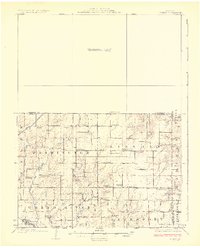 1925 Gilman1925 Print · USGSDaviess County was a landscape of tightly-knit rural school districts and parish churches in the mid-1920s. Genealogists can trace family footprints at Bancroft, the Quincy Omaha and Kansas City rail line, and numerous sites like Prairie City Church.3 unique versions available
 - 1946 Map of Gilman
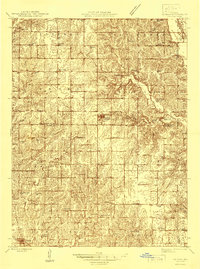 1946 Gilman1946 Print · USGSMid-century Daviess and Harrison Counties are captured here during a period of transition for rural Missouri's rail and school networks. Researchers can trace the legacy of local education through nearly twenty named school sites like Liberty Sch and Red Sch, or locate family sites near Bancroft and the Wabash line.
 - 1948 Map of Gilman
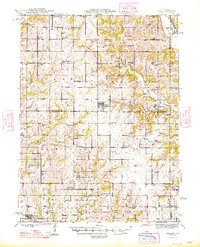 1948 Gilman1948 Print · USGSDaviess and Harrison counties are shown in the late 1940s, capturing a detailed landscape of rural Missouri crossroads and small-town commerce. Genealogists can trace family roots through the numerous named landmarks like Gilman City P O, Bancroft, and the Wabash railroad line.2 unique versions available
 - 1954 Map of Centerville, 1967 Print
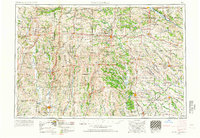 1954 Centerville1967 Print · USGSThe Iowa-Missouri borderlands at mid-century reveal a landscape shaped by river valleys and the height of the regional rail network. Genealogists and historians can trace the paths of the Wabash railroad and locate old townsites like Mystic, Moulton, and Greentop.3 unique versions available
 - 1957 Map of Centerville
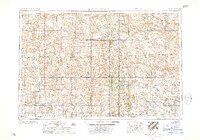 1957 Centerville1957 Print · USGSThe Iowa-Missouri borderlands in the mid-fifties reveal a landscape of river-valley agriculture and vital rail corridors. Genealogists and historians can trace family-named landmarks and small-town growth in Centerville, Kirksville, and along the Wabash railroad line.
 - 1958 Map of Centerville
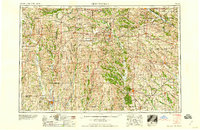 1958 Centerville1958 Print · USGSThe Iowa-Missouri borderlands come into focus during the mid-fifties, showing a landscape defined by river valleys and intersecting rail lines. Genealogists and local historians can trace family roots through dozens of rural hubs like Bloomfield, Unionville, and Corydon.
 - 1981 Map of Trenton
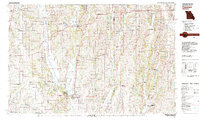 1981 Trenton1981 Print · USGSNorthern Missouri in the early eighties remains a landscape defined by its river valleys and intersecting rail lines. Genealogists and local historians can trace the development of riverside towns like Trenton and Princeton or locate smaller rural junctions such as Humphreys and Brimson.
 - 1984 Map of Gilman City West, 1985 Print
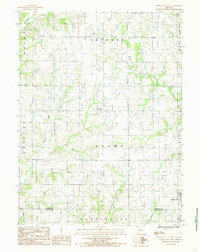 1984 Gilman City West1985 Print · USGSHarrison County farmland in the early 1980s is defined by its winding creek valleys and quiet rural crossroads. Genealogists and researchers can trace the landscape between Blue Ridge and Gilman City, crossing through Sherman and Adams townships.
 - 2012 Map of Gilman City West, 2012 Print
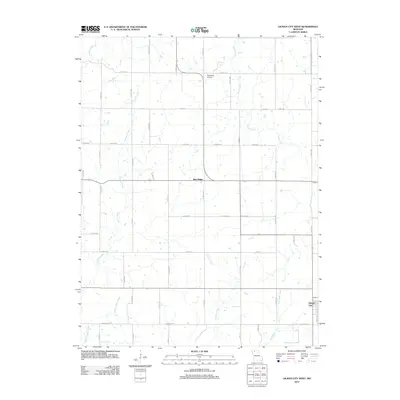 2012 Gilman City West2012 Print · USGSThe rural landscape west of Gilman City is revealed in this early twenty-first-century survey of North Missouri’s farm country. Researchers can trace the drainage of Big Muddy Creek and Hickory Creek near local settlements like Blue Ridge.
 - 2014 Map of Gilman City West, 2014 Print
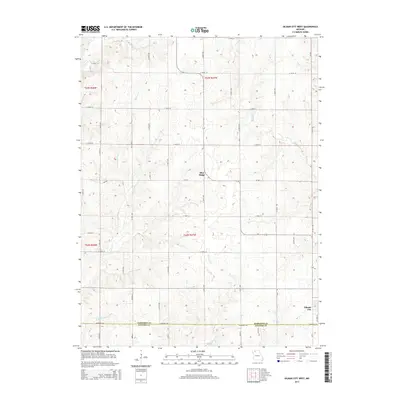 2014 Gilman City West2014 Print · USGSThe rural border of Harrison and Daviess Counties comes into focus during this modern survey of the Missouri prairie. Researchers can trace land tracts between Blue Ridge and Gilman City while following the courses of Big Muddy Creek and Sugar Creek.
 - 2017 Map of Gilman City West, 2017 Print
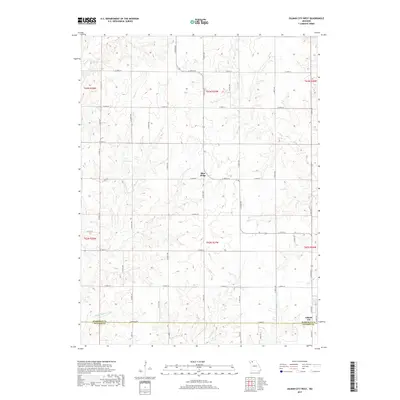 2017 Gilman City West2017 Print · USGSThe northern Missouri landscape at the border of Harrison and Daviess counties is captured here in late-era detail. Genealogists and local historians can trace the rural reaches of Gilman City and the settlement of Blue Ridge alongside Big Muddy Creek.
 - 2021 Map of Gilman City West, 2021 Print
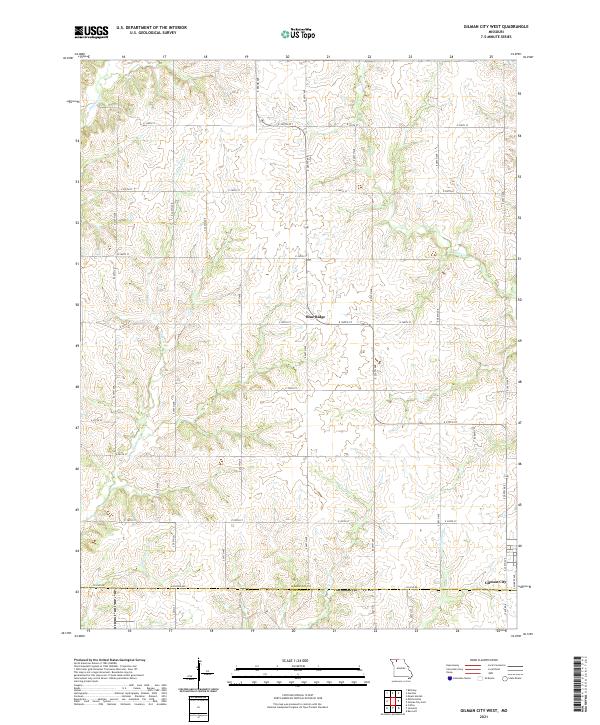 2021 Gilman City West2021 Print · USGSNorthwest Missouri farmland on the Harrison and Daviess County line remains defined by its namesake creeks and rural crossroads. Genealogists and local researchers can trace the landscape around Gilman City and Blue Ridge or follow the paths of Cypress Cr and Sugar Cr.
End of results
Showing maps 1-12 of 12
Top cities near Blue Ridge
- Bethany historical maps
- Ridgeway historical maps
- Jamesport historical maps
- Pattonsburg historical maps
- Mount Moriah historical maps
- Coffey historical maps
See more
Frequently asked questions
- What are the different types of historical maps available for Blue Ridge?
- What is the oldest map of Blue Ridge?
- Where can I purchase historical maps of Blue Ridge for my home or office?
- Where can I download high-res historical maps of Blue Ridge?
- Are there historical topographic maps available for Blue Ridge?
- Is there historical aerial imagery available for Blue Ridge?
- Where are historical maps of Blue Ridge sourced from?