1900s (20th Century) Maps of Stepanek Crossing, Missouri
Explore 6 historic maps of Stepanek Crossing from the 1900s (20th Century). These maps offer a rare glimpse into what life looked like during the 1900s — showing old roads, neighborhoods, homes, and landmarks that have changed or disappeared over time.
Whether you're researching your family's past, planning a metal detecting trip, or studying how Stepanek Crossing's landscape evolved across the 1900s, these high-resolution maps are a powerful tool for exploring the history of this region.
- Focus on a specific era: All maps on this page are from the 1900s, giving you a focused view of this time period.
- See what’s changed: Compare century-old streets, trails, and buildings to today's modern landscape using overlays and satellite layers.
- Research with precision: Use these maps for genealogy, historical research, land use analysis, or educational projects.
- View, download, or print: Maps are fully viewable online in high resolution, and can be downloaded or printed for your own records.
Start exploring Stepanek Crossing's history through authentic maps from the 1900s. This is your window into the past.
Stepanek Crossing, MO maps
(6)- 1937 Map of Silex, 1955 Print
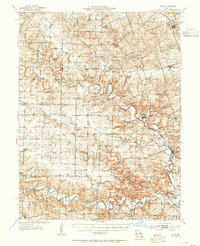 1937 Silex1955 Print · USGSLincoln and Pike counties are shown here in the mid-1930s, when the agricultural economy was centered on the banks of the Cuivre River. Genealogists and local historians can trace rural school districts and old fords, such as Abe Duff Sch, Silex, and Richardson Mill Ford.
 - 1939 Map of Silex
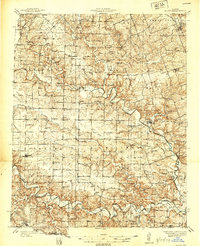 1939 Silex1939 Print · USGSLincoln and Pike Counties are shown in the late 1930s, featuring a landscape defined by the winding Cuivre River and its many forks. Researchers can trace rural life through dozens of local landmarks like Forest Cem Sch, Fairview Ch, and the St Louis and Hannibal RR.
 - 1948 Map of Quincy
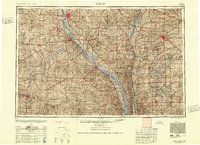 1948 Quincy1948 Print · USGSThe Mississippi and Illinois River valleys are captured at a post-war crossroads as rail and river travel met the expanding highway system. Genealogists can trace family settlements from Quincy to Hannibal and smaller towns like Vandalia and Jerseyville.2 unique versions available
 - 1956 Map of Quincy, 1967 Print
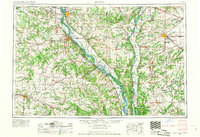 1956 Quincy1967 Print · USGSThe river and rail corridors of the Illinois-Missouri border are documented here during the mid-1950s. Researchers can trace historic river landings and regional transit hubs from Quincy and Hannibal to smaller settlements like Meredosia and Roodhouse.3 unique versions available
 - 1975 Map of Silex, 1977 Print
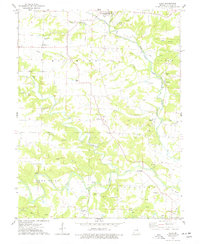 1975 Silex1977 Print · USGSLincoln County farmland and river bottoms are captured here in the mid-seventies, showing the intersection of several rural townships. Genealogists can trace numerous burial sites like Sitton Cem and St Marys Cem or locate the Old Railroad Grade and Stepanek Crossing.2 unique versions available
 - 1986 Map of Mexico
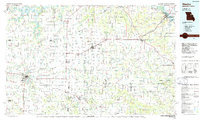 1986 Mexico1986 Print · USGSEast Central Missouri in the mid-eighties shows a landscape of steady agricultural towns and the expansive waters of Mark Twain Lake. Genealogists and historians can trace rail-side communities like Laddonia and Wellsville or locate family markers at Elwood Cem.2 unique versions available
End of results
Showing maps 1-6 of 6
Top cities near Stepanek Crossing
- Wentzville historical maps
- Troy historical maps
- Warrenton historical maps
- Wright City historical maps
- Moscow Mills historical maps
- Jonesburg historical maps
See more
Frequently asked questions
- What are the different types of historical maps available for Stepanek Crossing?
- What is the oldest map of Stepanek Crossing?
- Where can I purchase historical maps of Stepanek Crossing for my home or office?
- Where can I download high-res historical maps of Stepanek Crossing?
- Are there historical topographic maps available for Stepanek Crossing?
- Is there historical aerial imagery available for Stepanek Crossing?
- Where are historical maps of Stepanek Crossing sourced from?