1900s (20th Century) Maps of Westphalia, Missouri
Explore 18 historic maps of Westphalia from the 1900s (20th Century). These maps offer a rare glimpse into what life looked like during the 1900s — showing old roads, neighborhoods, homes, and landmarks that have changed or disappeared over time.
Whether you're researching your family's past, planning a metal detecting trip, or studying how Westphalia's landscape evolved across the 1900s, these high-resolution maps are a powerful tool for exploring the history of this region.
- Focus on a specific era: All maps on this page are from the 1900s, giving you a focused view of this time period.
- See what’s changed: Compare century-old streets, trails, and buildings to today's modern landscape using overlays and satellite layers.
- Research with precision: Use these maps for genealogy, historical research, land use analysis, or educational projects.
- View, download, or print: Maps are fully viewable online in high resolution, and can be downloaded or printed for your own records.
Start exploring Westphalia's history through authentic maps from the 1900s. This is your window into the past.
Westphalia, MO maps
(18)- 1934 Map of Linn
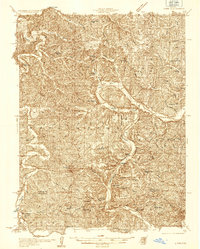 1934 Linn1934 Print · USGSThe Osage County hills and river valleys are shown in detail during the 1930s, featuring the early networks of rural schools and family cemeteries. Genealogists can trace family names and locations at Van Buren Cem, Mt Calvary Ch, and Rich Fountain.
 - 1942 Map of Linn, 1959 Print
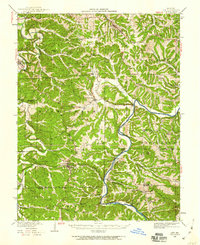 1942 Linn1959 Print · USGSOsage County in the 1940s is defined by its rugged river valleys and the steady pulse of the Rock Island line. Genealogists can trace family footprints at Van Buren Cem or identify old rural school sites like Winkelman Sch and Indian Creek Sch.2 unique versions available
 - 1945 Map of Linn
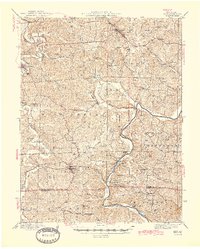 1945 Linn1945 Print · USGSOsage County in the mid-1940s was a landscape of river-valley settlements and rural schools connected by the Rock Island line. Researchers can trace ancestral locations near Westphalia and Freeburg, or locate historical river crossings like Daggetts Ford and Hoops Ford.2 unique versions available
 - 1947 Map of Jefferson City, 1949 Print
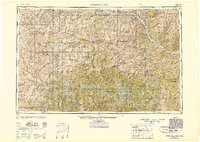 1947 Jefferson City1949 Print · USGSCentral Missouri and the northern Ozarks come into focus in this late 1940s survey of the river-and-rail landscape. Genealogists and historians can trace the growth of Jefferson City and Sedalia or locate family roots near Bagnell Dam and the Lake of the Ozarks.
 - 1948 Map of Meta, 1963 Print
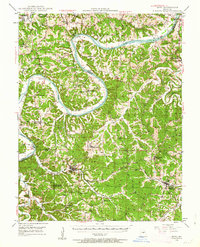 1948 Meta1963 Print · USGSThe Osage River valley in the late 1940s shows a landscape of river ferries and emerging rail hubs. Researchers can trace family sites like St Cecilia Cem & Ch, early river infrastructure at the US Lock & Dam, and rural centers such as Koeltztown.
 - 1949 Map of Saint Louis
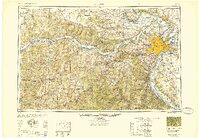 1949 Saint Louis1949 Print · USGSGreater St. Louis and its surrounding river valleys are captured here just after the war, showing the metropolitan core and the rural Ozark fringe. Researchers can trace the sprawling rail network of the Wabash RR or locate landmarks like Meramec Caverns Airport and Scott Air Force Base.2 unique versions available
 - 1950 Map of Meta
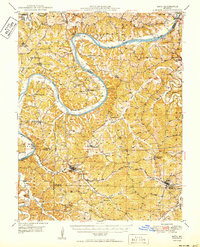 1950 Meta1950 Print · USGSMid-century life in the Missouri river hills centers on the winding Osage River and the small parish towns of the interior. Genealogists can trace family roots through several rural schools and burial grounds, including St Cecelia Cem and the Bodie Ferry (Aban'd).
 - 1954 Map of Jefferson City
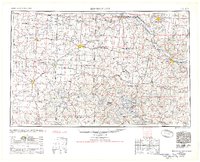 1954 Jefferson City1954 Print · USGSCentral Missouri in the early postwar years showcases a landscape defined by the winding Lake of the Ozarks and the state capital at Jefferson City. Researchers can trace the mid-century rail networks of the Missouri Pacific RR and locate rural communities like Tuscumbia, St Elizabeth, and St Anthony.2 unique versions available
 - 1955 Map of Jefferson City, 1967 Print
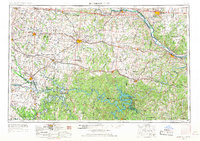 1955 Jefferson City1967 Print · USGSCentral Missouri in the mid-fifties is defined by the winding Missouri River and the expanding reach of Lake of the Ozarks. Researchers can trace the rail corridors of the Missouri Pacific or locate the early footprint of Whiteman AFB and Jefferson City.4 unique versions available
 - 1958 Map of Jefferson City
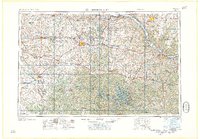 1958 Jefferson City1958 Print · USGSCentral Missouri in the late fifties shows a region transforming through the growth of Whiteman Air Force Base and the Lake of the Ozarks. Researchers can trace rail lines like the Missouri Pacific or find family roots at Enloe Cemetery and Mount Pleasant Cem.
 - 1959 Map of Jefferson City
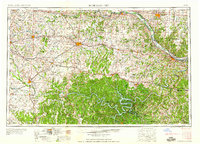 1959 Jefferson City1959 Print · USGSCentral Missouri is captured during the mid-fifties as the river economy and rail networks like the Missouri Pacific met the rise of the automobile. Local researchers can trace family landmarks and rural infrastructure from the Lake of the Ozarks up to Providence Cemetery and Knob Noster State Park.
 - 1962 Map of St. Louis
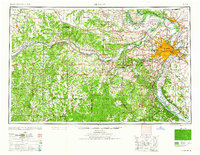 1962 St. Louis1962 Print · USGSThe mid-century gateway to the west shows the metropolitan expansion of St Louis alongside its critical river confluences. Genealogists and historians can trace the rail corridors of the Missouri Pacific RR and settlements from Fulton to De Soto.
 - 1963 Map of St. Louis, 1970 Print
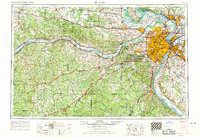 1963 St. Louis1970 Print · USGSSt. Louis and its surrounding river valleys are captured here during the peak of mid-century suburban expansion and industrial activity. Trace the historic rail routes of the Norfolk and Western Ry or locate the St Louis Ordnance Plant and early stretches of US Highway 66.4 unique versions available
 - 1966 Map of St. Louis
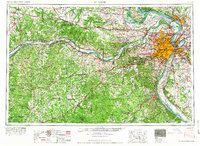 1966 St. Louis1966 Print · USGSThe St. Louis metropolitan area and its surrounding river valleys are captured here during the mid-sixties era of suburban growth and industrial strength. Genealogists and historians can trace the foundations of local communities through sites like Old Pioneer Cem, Parks College, and the Jefferson Barracks Military Reservation.
 - 1981 Map of Westphalia East
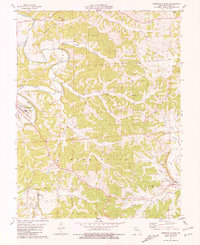 1981 Westphalia East1981 Print · USGSOsage County's river-carved valleys and upland ridges are captured in the early 1980s as rural life centered on the Maries River. Genealogists and historians can trace family sites at Sacred Heart Cem or locate industrial markers like the Shale Pit and Kilns.
 - 1983 Map of Lake Of The Ozarks, 1984 Print
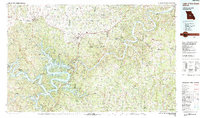 1983 Lake Of The Ozarks1984 Print · USGSThe Lake of the Ozarks region in the early eighties shows a landscape of deep river bends and growing recreation. Genealogists can trace family names and small settlements from Versailles to Meta and locate old mining sites like Tiff Mine.
 - 1985 Map of Sullivan
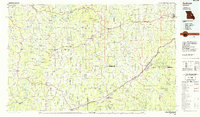 1985 Sullivan1985 Print · USGSMid-1980s Missouri comes into focus here as the Ozark landscape balances industrial mining with river recreation. Genealogists and historians can trace the St Louis-San Francisco RR through Sullivan and locate landmarks like Pea Ridge Mine or St Cloud Church.3 unique versions available
 - 1987 Map of Westphalia West, 1988 Print
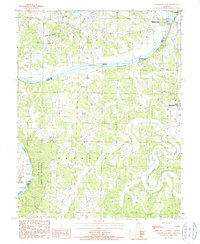 1987 Westphalia West1988 Print · USGSOsage and Cole Counties are shown in the late eighties as the winding Osage River dominates the local geography. Researchers can trace historic industrial sites like the Coke Ovens or locate family roots near Folk Cem and Westphalia.
End of results
Showing maps 1-18 of 18
Top cities near Westphalia
- Jefferson City historical maps
- Holts Summit historical maps
- Linn historical maps
- Wardsville historical maps
- Taos historical maps
- Freeburg historical maps
See more
Frequently asked questions
- What are the different types of historical maps available for Westphalia?
- What is the oldest map of Westphalia?
- Where can I purchase historical maps of Westphalia for my home or office?
- Where can I download high-res historical maps of Westphalia?
- Are there historical topographic maps available for Westphalia?
- Is there historical aerial imagery available for Westphalia?
- Where are historical maps of Westphalia sourced from?