Old Maps of Kelso, Missouri for Genealogy
Trace your family roots with 17 historic maps of Kelso. These high-res maps reveal old neighborhoods, homesites, landmarks, and streets — helping you uncover where your ancestors lived and how the area evolved over time.
- Explore historic neighborhoods: Identify where your relatives may have lived in the 1800s or 1900s.
- Compare maps over time: Trace the changes in streets, buildings, and landmarks for multi-generational research.
- Perfect for genealogy & ancestry research: Used by family historians and researchers to map out lineage and migration.
These maps are an incredible resource for exploring your personal connection to Kelso's past.
Kelso, MO maps
(17)- 1934 Map of Morley
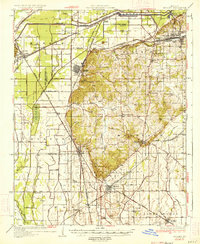 1934 Morley1934 Print · USGSSoutheastern Missouri during the 1930s reveals a landscape being reshaped by massive drainage projects. Genealogists can trace family roots at Hunter Sch or locate ancestors in settlements like Morley, Benton, and the rail junction at Brooks Junction.3 unique versions available
 - 1939 Map of Morley, 1942 Print
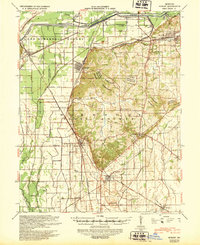 1939 Morley1942 Print · USGSSoutheast Missouri was undergoing a massive hydrological transformation in the late 1930s as engineers redirected the Whitewater River. Genealogists and historians can trace rail-depot towns like Chaffee and Morley alongside vanished rural landmarks like Bryan Sch and Brooks Junction.2 unique versions available
 - 1949 Map of Paducah
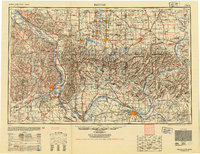 1949 Paducah1949 Print · USGSThe confluence of the Ohio, Mississippi, Tennessee, and Cumberland rivers at the close of the 1940s reveals a region bound by water and rail. Researchers can trace historic river landings, timberlands in the Shawnee National Forest, and the coal-mining infrastructure around West Frankfort and Herrin.2 unique versions available
 - 1950 Map of Paducah
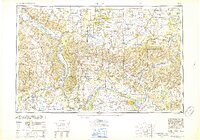 1950 Paducah1950 Print · USGSThe confluence of the great midwestern rivers defines this mid-century landscape at the intersection of Illinois, Kentucky, and Missouri. Genealogists and historians can trace the rail-and-river economy through the hubs of Paducah, Cairo, and Metropolis or locate family roots near the Wildcat Hills.
 - 1954 Map of Paducah
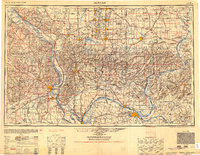 1954 Paducah1954 Print · USGSSouthern Illinois and Western Kentucky intersect at the great river confluences during this mid-century era of rail and river industry. Genealogists and historians can trace family roots and commerce through river towns like Cairo, Metropolis, and Golconda, or along the tracks of the Illinois Central Railroad.2 unique versions available
 - 1961 Map of Paducah
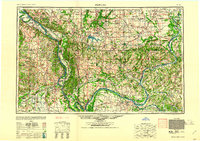 1961 Paducah1961 Print · USGSThe Lower Ohio Valley at mid-century is a landscape defined by its great rivers and newly formed reservoirs. Researchers can trace the riverfronts of Paducah and Metropolis, or locate smaller settlements like Old Shawneetown and Cave in Rock along the banks.2 unique versions available
 - 1963 Map of Scott City, 1964 Print
 1963 Scott City1964 Print · USGSSoutheastern Missouri at the start of the 1960s shows a landscape of engineered drainage and rail-side growth. Trace local history through the streets of Scott City and Ilmo, or find family roots at Ancell Cem and Spradlin Cem.2 unique versions available
 - 1963 Map of Morley, 1968 Print
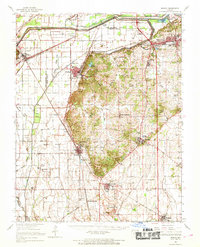 1963 Morley1968 Print · USGSScott County in the early 1960s was a landscape defined by industrial rail lines and significant drainage works like the Headwater Diversion Channel. Researchers can trace rural family roots at Guardian Angel Ch or locate mid-century landmarks like the Cape Girardeau Municipal Airport and Marquette Lakes.
 - 1964 Map of Paducah
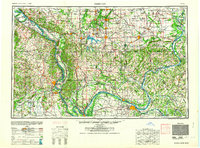 1964 Paducah1964 Print · USGSThe river-and-rail corridor of Southern Illinois and Western Kentucky is captured here during the height of the mid-century industrial era. Genealogists and researchers can trace local landmarks across several counties, from the rail yards of Paducah to the waters of Crab Orchard Lake and Kentucky Reservoir.2 unique versions available
 - 1984 Map of Cape Girardeau, 1985 Print
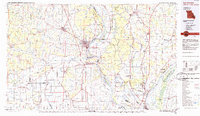 1984 Cape Girardeau1985 Print · USGSThe tri-state junction of Missouri, Illinois, and Kentucky in the mid-1980s was a bustling corridor defined by its massive river systems and complex rail lines. Researchers can trace the paths of the Missouri Pacific RR, explore the Shawnee National Forest, or locate small settlements like Marble Hill and Advance.
 - 1986 Map of Cape Girardeau
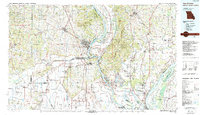 1986 Cape Girardeau1986 Print · USGSThe Missouri-Illinois-Kentucky borderlands come into focus in the mid-1980s as the river-and-rail economy shapes the landscape near the Great Rivers confluence. Researchers can trace historic rail lines and old settlements like Gordonville, New Hamburg, and the Trail of Tears State Park.
 - 1987 Map of Paducah, 1988 Print
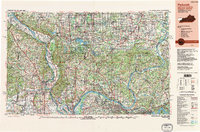 1987 Paducah1988 Print · USGSThe Lower Ohio Valley and the Illinois Ozarks come alive in this late twentieth-century regional survey. Genealogists and local historians can trace river-town roots and state park landmarks from Metropolis to Cape Girardeau and Trail of Tears State Park.
 - 1993 Map of Scott City, 1996 Print
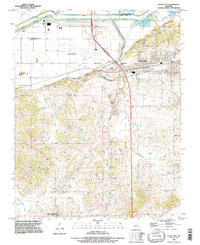 1993 Scott City1996 Print · USGSThe Missouri riverfront near Scott City and Illmo is shown in the early nineties, revealing a landscape defined by massive flood control projects. Genealogists can locate family landmarks like Ancell Cem, Clymer Cem, and the old settlement of New Hamburg.
 - 2012 Map of Scott City, 2012 Print
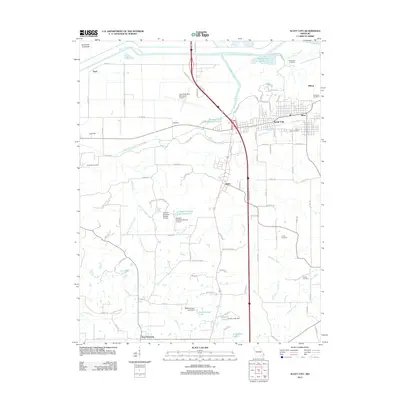 2012 Scott City2012 Print · USGSThe Missouri riverlands near the Mississippi come into focus during the early twenty-first century, showcasing a landscape of complex drainage channels and small towns. Genealogists and historians can locate legacy sites like Mount Zion Cemetery, the community of New Hamburg, and the Castor River Diversion Channel.
 - 2015 Map of Scott City, 2015 Print
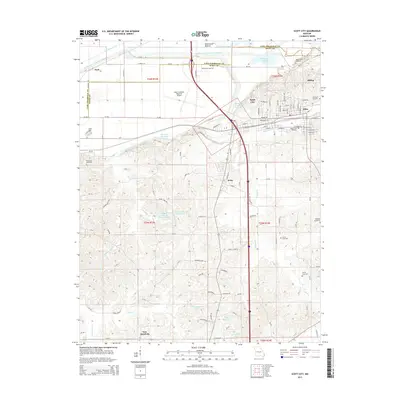 2015 Scott City2015 Print · USGSIn the early twenty-first century, the river valley south of Cape Girardeau reveals a landscape of massive water diversions and historic rail corridors. Trace family roots at Ancell Cemetery or Rockview Cemetery, and explore the growth of Scott City, Illmo, and Kelso.
 - 2017 Map of Scott City, 2017 Print
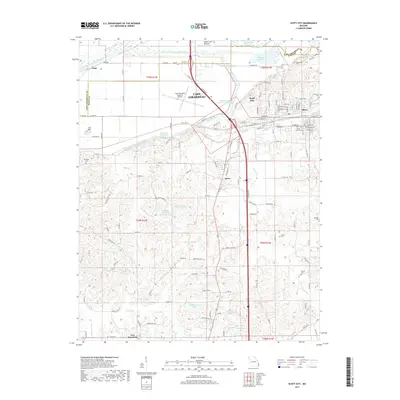 2017 Scott City2017 Print · USGSThe interconnected communities of Scott City, Illmo, and Kelso are shown in the 2010s amidst a landscape of sophisticated river diversions and low-lying bottoms. Genealogists and local historians can trace family roots through numerous sites including Mount Zion Cem, Ancell Cem, and New Hamburg.
 - 2021 Map of Scott City, 2021 Print
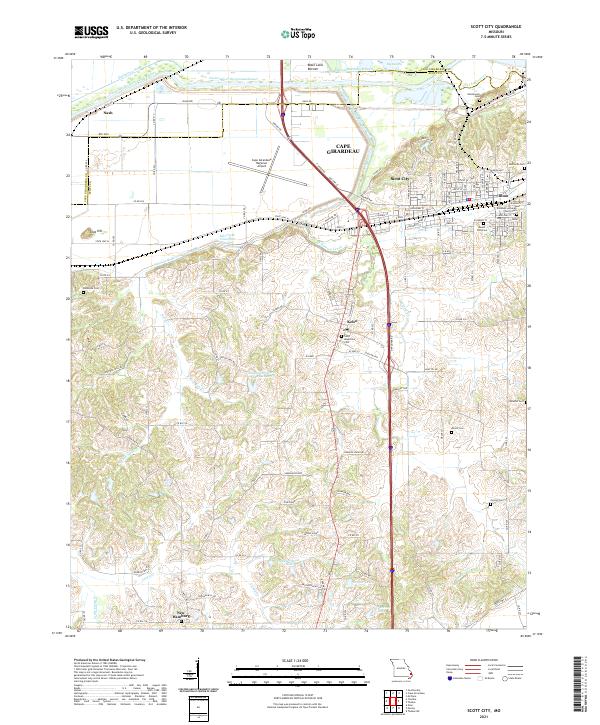 2021 Scott City2021 Print · USGSScott City and Illmo sit at the junction of the Missouri river bottoms and interior hills in the early twenty-first century. Researchers can locate family heritage sites like Saint Augustine Cem, the settlement of New Hamburg, and the Eisleben Lutheran Church Cem.
End of results
Showing maps 1-17 of 17
Top cities near Kelso
- Cape Girardeau historical maps
- Jackson historical maps
- Scott City historical maps
- Chaffee historical maps
- Oran historical maps
- Morley historical maps
See more
Frequently asked questions
- What are the different types of historical maps available for Kelso?
- What is the oldest map of Kelso?
- Where can I purchase historical maps of Kelso for my home or office?
- Where can I download high-res historical maps of Kelso?
- Are there historical topographic maps available for Kelso?
- Is there historical aerial imagery available for Kelso?
- Where are historical maps of Kelso sourced from?