Old Maps of Birch Tree, Missouri for Metal Detecting
Plan your next treasure hunt with 45 historic maps of Birch Tree. Find old homesites, ghost towns, trails, and gathering spots that may be lost to time — perfect for identifying promising metal detecting locations.
- Locate forgotten sites: Uncover places like long-lost settlements, abandoned rail lines, or gathering spots.
- Plan better hunts: Use map overlays combined with LiDAR or satellite views to narrow in on historically rich areas.
- Made for detectorists: Thousands of hobbyists use these maps to discover relics, coins, and hidden history.
Use these historic maps to boost your research and find new opportunities beneath the surface of Birch Tree.
Birch Tree, MO maps
(45)- 1915 Map of Eminence, 1956 Print
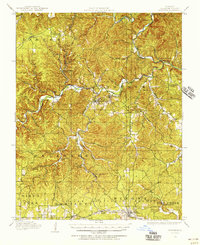 1915 Eminence1956 Print · USGSShannon County at the height of the early twentieth-century timber era shows a landscape defined by deep hollows and the winding Current River. Genealogists can trace family roots through numerous rural landmarks like Angeline P.O., West Eminence, and over a dozen country schools including Shawnee School.2 unique versions available
 - 1917 Map of Eminence
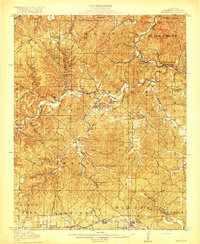 1917 Eminence1917 Print · USGSThe Ozark highlands of Shannon County are captured here just as the timber industry and river-based commerce shaped local life. Researchers can trace the footprints of lost rural communities at Horse Hollow Angeline P.O., Delaware, and West Eminence.4 unique versions available
 - 1931 Map of Bandyville
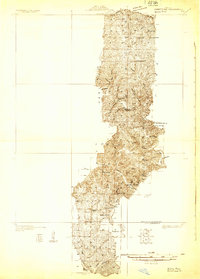 1931 Bandyville1931 Print · USGSThe Eleven Point River valley in the early 1930s remains a landscape of isolated rural townships and crossroads schools. Genealogists can trace family roots through sites like Falling Springs Cemetery, Hickory Grove Ch, and Bildad Sch.
 - 1944 Map of Birch Tree, 1962 Print
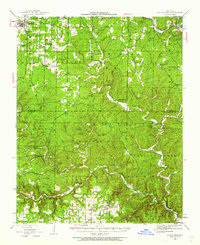 1944 Birch Tree1962 Print · USGSShannon and Oregon Counties are shown in the mid-1940s, a landscape defined by the winding Eleven Point River and isolated Ozark settlements. Genealogists and historians can trace family roots through sites like Oak Forest Cem, Fair Grove Sch, and New Liberty.2 unique versions available
 - 1945 Map of Montier, 1960 Print
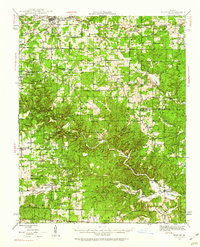 1945 Montier1960 Print · USGSThe Missouri Ozarks during the mid-1940s are documented here, showing a landscape of small settlements and river valleys just as the post-war era began. Local historians can trace dozens of country schools and churches, from Gravel Ridge Sch to the Hilltop Mission and the remote Sherwood Reese Ranch.2 unique versions available
 - 1946 Map of Summersville
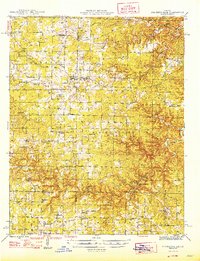 1946 Summersville1946 Print · USGSThe Ozark plateau near the Texas and Shannon county lines appears in the late 1940s as a landscape of remote hollows and high ridges. Local historians can trace old community centers like Arroll or locate the numerous rural schoolhouses including Oak Ridge Sch and Welch Sch.2 unique versions available
 - 1948 Map of Montier
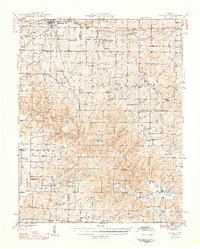 1948 Montier1948 Print · USGSPost-war Howell, Shannon, and Oregon Counties come to life here, showing the ridge-and-hollow social network of the Missouri Ozarks. Genealogists can trace family names through dozens of rural landmarks like Marble Hill Sch, Bennett Chapel, and the Brown Cem.2 unique versions available
 - 1948 Map of Birch Tree
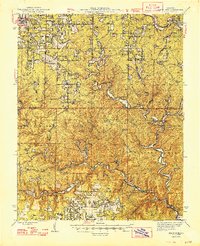 1948 Birch Tree1948 Print · USGSThe Missouri Ozarks are documented here in the late 1940s, showing a landscape of state forests and spring-fed rivers. Local historians can trace family locations near New Liberty, Oak Forest Cem, and numerous rural schoolhouses like Spring Creek Sch.2 unique versions available
 - 1948 Map of Summersville
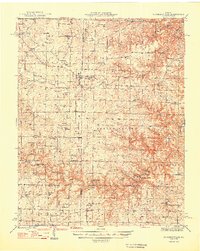 1948 Summersville1948 Print · USGSSummersville and the surrounding Ozark plateau are captured here in the late 1940s, showing a landscape defined by small farms and karst geology. Genealogists can locate numerous rural landmarks like Heelstring Sch, Riley Cem, and the river-side Rymer Ranch.
 - 1949 Map of Rolla, 1950 Print
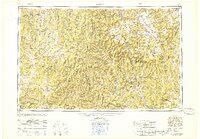 1949 Rolla1950 Print · USGSThe Missouri Ozarks are captured here just after the war, showing a landscape of deep river valleys and emerging reservoir projects. Genealogists and historians can trace the mining towns of Bonne Terre and Potosi or follow the early route of U.S. Highway 66.
 - 1953 Map of Rolla
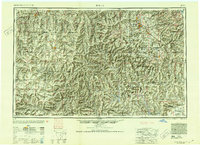 1953 Rolla1953 Print · USGSSoutheast Missouri’s mining towns and timberlands are seen here at the start of the 1950s. Genealogists and historians can trace the rail-and-river economy through local hubs like Fredericktown and the lead-mining heritage of Potosi and Desloge.
 - 1954 Map of Rolla, 1970 Print
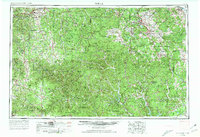 1954 Rolla1970 Print · USGSThe Missouri Ozarks and the historic Lead Belt are captured in the late sixties, showing a landscape of deep river hollows and industrial mines. Researchers can trace the routes of the Missouri Pacific RR to extraction sites like the Iron Mountain Mine or Pea Ridge Mine.2 unique versions available
 - 1957 Map of Poplar Bluff, 1968 Print
 1957 Poplar Bluff1968 Print · USGSThe Missouri-Arkansas border region is captured here as the timber and rail industries shaped the Ozark foothills. Genealogists and historians can trace the Missouri Pacific Railroad through river towns like Pocahontas, Greenville, and Van Buren.3 unique versions available
 - 1958 Map of Rolla
 1958 Rolla1958 Print · USGSThe Missouri Ozarks and the lead-rich hills of the southeast are captured here in the late fifties as timber and mining shaped the local economy. Researchers can locate family landmarks like the Rolla Cemetery or trace old rail lines including the Missouri-Illinois RR and St Louis-San Francisco RR.
 - 1959 Map of Poplar Bluff
 1959 Poplar Bluff1959 Print · USGSThe Missouri Ozarks and Arkansas borderlands meet in this late 1950s study of the region's diverse terrain and rail-fed towns. Researchers can trace the path of the Missouri Pacific Railroad through Poplar Bluff or locate smaller settlements like Birch Tree and Myrtle.
 - 1959 Map of Rolla
 1959 Rolla1959 Print · USGSMid-century Missouri is defined here by the deep forests of the Ozarks and the industrial peaks of the St Francois Mountains. Genealogists and historians can trace the development of towns like Potosi and Fredericktown or locate rural landmarks like Dry Fork Church and the Phelps County Courthouse.
 - 1960 Map of Poplar Bluff
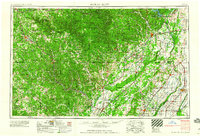 1960 Poplar Bluff1960 Print · USGSSoutheast Missouri and Northeast Arkansas are captured here during the post-war era, showing the transition from the Ozark highlands to the Delta. Genealogists and historians can trace rail corridors like the St. Louis Southwestern RR and remote settlements such as Birch Tree and Warm Springs.
 - 1960 Map of Rolla
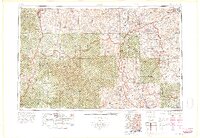 1960 Rolla1960 Print · USGSThe Ozark Highlands in the mid-twentieth century reveal a landscape of deep timber and heavy industry. Researchers can trace the rail-and-mine economy through the St Louis-San Francisco RR and the Iron Mountain Mine, alongside the growth of Fort Leonard Wood.
 - 1964 Map of Bartlett, 1966 Print
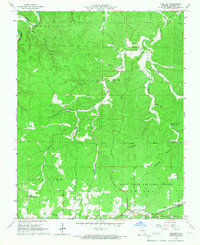 1964 Bartlett1966 Print · USGSShannon County in the mid-1960s shows a landscape of deep Ozark hollows and quiet railway stops along the St Louis San Francisco line. Researchers can locate the Manger of Bethlehem Ch, the Delaware Cem, and the community of Bartlett.3 unique versions available
 - 1966 Map of Rolla
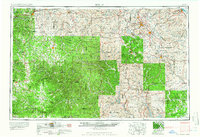 1966 Rolla1966 Print · USGSThe Missouri Ozarks are revealed here in the mid-1960s, showing the intersection of heavy industry and sprawling national forests. Trace the development of the Lead Belt near Flat River or locate family roots in vanished hamlets like Enough and Howes Mill.
 - 1968 Map of Jam Up Cave, 1970 Print
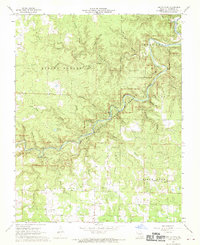 1968 Jam Up Cave1970 Print · USGSShannon County's river-cut uplands are shown in the late sixties just as the riverways were being protected. Researchers can locate family landmarks like Turkey Oak Cem, Bures Ch, and the massive entrance of Jam Up Cave along the Jacks Fork.4 unique versions available
 - 1971 Map of Rolla
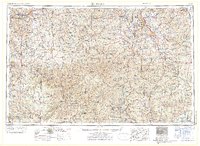 1971 Rolla1971 Print · USGSThe Missouri Ozarks are captured here during the early seventies, showing a landscape of deep river valleys and industrial mining towns. Researchers can trace historic lead mining operations at St Joseph Mines and locate rural landmarks like Viburnum and the Galveston Trail.
 - 1982 Map of Birch Tree
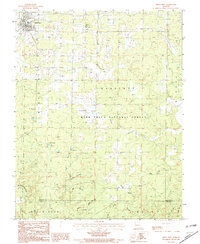 1982 Birch Tree1982 Print · USGSBirch Tree and the surrounding Ozark woodlands are captured here in the early 1980s, straddling the Shannon and Oregon County border. Genealogists and local historians can trace rural landmarks like Cave Spring, the Mine near Fisher Pond, and several local cemeteries.
 - 1984 Map of West Plains
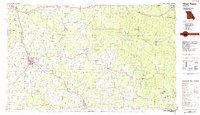 1984 West Plains1984 Print · USGSThe Missouri Ozarks are mapped here in the mid-1980s, centered on the regional hub of West Plains and the river corridors of the Eleven Point River. Trace the old rail lines and timber towns of Willow Springs, Mountain View, and Birch Tree through the Mark Twain National Forest.2 unique versions available
 - 1986 Map of Spring Valley
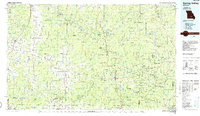 1986 Spring Valley1986 Print · USGSThe Missouri Ozarks are showcased in the mid-1980s, revealing a landscape defined by state forests and the protected waters of the Current River. Researchers can trace local heritage through landmarks like Oakside Ch, Fletcher Mine, and Summersville Cem.2 unique versions available
Showing maps 1-25 of 45
Top cities near Birch Tree
- Mountain View historical maps
- Winona historical maps
- Eminence historical maps
- Summersville historical maps
Frequently asked questions
- What are the different types of historical maps available for Birch Tree?
- What is the oldest map of Birch Tree?
- Where can I purchase historical maps of Birch Tree for my home or office?
- Where can I download high-res historical maps of Birch Tree?
- Are there historical topographic maps available for Birch Tree?
- Is there historical aerial imagery available for Birch Tree?
- Where are historical maps of Birch Tree sourced from?