1900s (20th Century) Maps of Forsyth, Missouri
Explore 12 historic maps of Forsyth from the 1900s (20th Century). These maps offer a rare glimpse into what life looked like during the 1900s — showing old roads, neighborhoods, homes, and landmarks that have changed or disappeared over time.
Whether you're researching your family's past, planning a metal detecting trip, or studying how Forsyth's landscape evolved across the 1900s, these high-resolution maps are a powerful tool for exploring the history of this region.
- Focus on a specific era: All maps on this page are from the 1900s, giving you a focused view of this time period.
- See what’s changed: Compare century-old streets, trails, and buildings to today's modern landscape using overlays and satellite layers.
- Research with precision: Use these maps for genealogy, historical research, land use analysis, or educational projects.
- View, download, or print: Maps are fully viewable online in high resolution, and can be downloaded or printed for your own records.
Start exploring Forsyth's history through authentic maps from the 1900s. This is your window into the past.
Forsyth, MO maps
(12)- 1907 Map of Forsyth
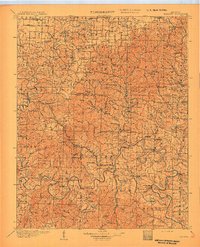 1907 Forsyth1907 Print · USGSThe White River country of southwest Missouri is seen here in the early nineteen-hundreds, prior to the region's major dam projects. Genealogists can trace family homesteads near landmarks like Marble Cave, numerous riverside crossings such as Mabry Ferry, and local landmarks like Loafers Glory School.3 unique versions available
 - 1945 Map of Harrison
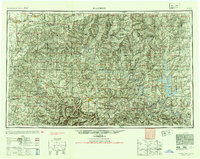 1945 Harrison1945 Print · USGSThe Ozark and Boston Mountains straddle the Missouri-Arkansas border during the mid-forties, showing a landscape of forest ridges and river valleys. Genealogists and historians can trace rail-connected towns like Monett and West Plains or early lake developments at Bull Shoals Res and Norfork Lake.
 - 1949 Map of Harrison
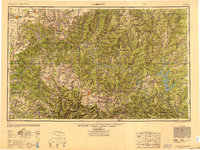 1949 Harrison1949 Print · USGSThe Ozark highlands of northern Arkansas and southern Missouri are shown just after the war, when the White River still followed its original course. Genealogists and historians can trace rail lines like the Missouri & Arkansas RR and locate rural hubs like Harrison, Eureka Springs, and Mountain Home.
 - 1954 Map of Harrison
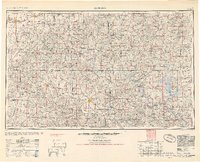 1954 Harrison1954 Print · USGSThe Ozarks and Boston Mountains meet during a period of massive river engineering in the mid-fifties. Researchers can trace the early shorelines of Bull Shoals Lake and Table Rock Reservoir or locate inland towns like Berryville and Harrison.
 - 1956 Map of Forsyth, 1957 Print
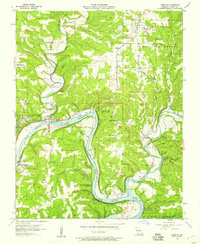 1956 Forsyth1957 Print · USGSTaney County's landscape was being reshaped by new reservoirs in the mid-fifties as the White River valley filled. Researchers can trace family history through local landmarks like Cedar Grove School, Kissee Mills, and the Forsyth Cemetery.3 unique versions available
 - 1956 Map of Branson, 1957 Print
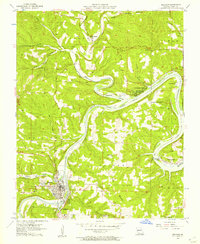 1956 Branson1957 Print · USGSThe White River valley in the mid-fifties shows the established resort culture around Lake Taneycomo just before the regional landscape was further altered by major dams. Researchers can trace the development of Branson, find local landmarks like the Drive-in Theater, or locate the Mountain Grove Sch.3 unique versions available
 - 1958 Map of Harrison, 1973 Print
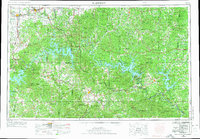 1958 Harrison1973 Print · USGSThe Ozark and Boston Mountains appear in this mid-century survey as the great White River impoundments were reshaping the region. Researchers can trace the rail lines of the St Louis-San Francisco Ry and locate early settlements like Berryville and Gainesville.
 - 1964 Map of Harrison
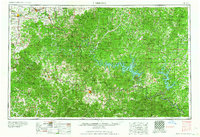 1964 Harrison1964 Print · USGSThe Ozark and Boston Mountains of Arkansas and Missouri are captured here in the mid-sixties, showing the rugged highlands before extensive modern development. Genealogists and historians can trace family-named peaks like Gaither Mountain and follow the St Louis-San Francisco RR through Monett and Purdy.
 - 1985 Map of Table Rock Lake
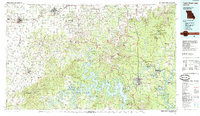 1985 Table Rock Lake1985 Print · USGSSouthwest Missouri in the mid-1980s shows a landscape transformed by the waters of the White River and its reservoirs. Genealogists and local historians can trace the intricate shorelines of Table Rock Lake, locate rural crossroads like Jenkins and Madry, and explore the grounds of Roaring River State Park.
 - 1985 Map of Harrison
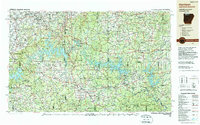 1985 Harrison1985 Print · USGSThe Ozark highlands and the White River valley are seen here in the mid-1980s, showcasing a region defined by its massive reservoirs and protected wilderness. You can trace the rugged corridors of the Missouri & North Arkansas RR or locate historic settlements like Eureka Springs and Jasper.
 - 1989 Map of Branson
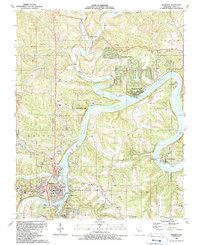 1989 Branson1989 Print · USGSBranson and the winding White River corridor are shown in the late eighties as the region matured into a major destination. Genealogists and local historians can locate several rural landmarks, including Renshaw Cem, Ozark Mountain Ch, and the Boston Ferry State Natural History Area.
 - 1989 Map of Forsyth
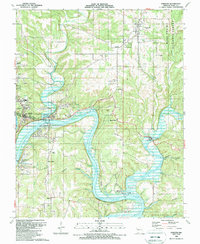 1989 Forsyth1989 Print · USGSIn the Ozarks during the late 1980s, the river valley around Forsyth and Kissee Mills shows a landscape shaped by major hydroelectric and recreational waters. Researchers can trace local heritage through sites like Brittain Cem, the Taneycomo Country Club, and the Ozark Beach Dam.
End of results
Showing maps 1-12 of 12
Top cities near Forsyth
- Branson historical maps
- Hollister historical maps
- Merriam Woods historical maps
- Highlandville historical maps
- Diamond City historical maps
- Rockaway Beach historical maps
See more
Frequently asked questions
- What are the different types of historical maps available for Forsyth?
- What is the oldest map of Forsyth?
- Where can I purchase historical maps of Forsyth for my home or office?
- Where can I download high-res historical maps of Forsyth?
- Are there historical topographic maps available for Forsyth?
- Is there historical aerial imagery available for Forsyth?
- Where are historical maps of Forsyth sourced from?