Old Maps of Truesdale, Missouri for Academic Research
Study the evolution of Truesdale with 19 high-resolution historic maps. Whether you're teaching, researching, or modeling changes in land use, these maps provide essential visual documentation of urban, environmental, and geographic change.
- Analyze long-term change: Track patterns in development, transportation, and natural features.
- Ideal for environmental or urban studies: Support academic projects with primary historical map data.
- Use in the classroom or lab: Educators and researchers rely on these maps to bring historical context to life.
These maps are a powerful tool for teaching, research, and visualizing how Truesdale has changed over the decades.
Truesdale, MO maps
(19)- 1890 Map of Hermann
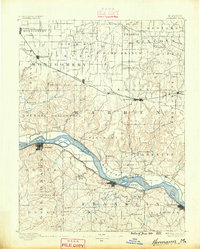 1890 Hermann1890 Print · USGSMid-Missouri river life and rail commerce define this late-century landscape during a period of steady expansion. Genealogists and historians can trace family roots through old post offices like Hopewell Academy P.O. and Swiss P.O. or the early street grids of Hermann and Warrenton.5 unique versions available
 - 1943 Map of Warrenton, 1962 Print
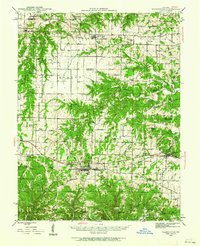 1943 Warrenton1962 Print · USGSMissouri's rural heartland is meticulously detailed in the early 1940s, showing the vital rail corridors and crossroads communities of Warren and Lincoln counties. Genealogists and historians can locate dozens of small schoolhouses like Weeks Sch and Moore Sch alongside the tracks of the Wabash RR.2 unique versions available
 - 1945 Map of Warrenton
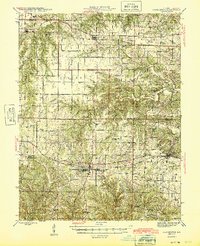 1945 Warrenton1945 Print · USGSWarrenton and Wright City thrive along the Wabash rail line in the mid-1940s, surrounded by a dense network of Missouri country schools and rural churches. Genealogists can trace family landmarks like Camp Branch Cem, Zion Ch, and the Goat Spring Sch.2 unique versions available
 - 1949 Map of Saint Louis
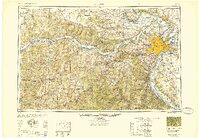 1949 Saint Louis1949 Print · USGSGreater St. Louis and its surrounding river valleys are captured here just after the war, showing the metropolitan core and the rural Ozark fringe. Researchers can trace the sprawling rail network of the Wabash RR or locate landmarks like Meramec Caverns Airport and Scott Air Force Base.2 unique versions available
 - 1962 Map of St. Louis
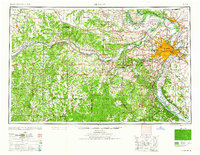 1962 St. Louis1962 Print · USGSThe mid-century gateway to the west shows the metropolitan expansion of St Louis alongside its critical river confluences. Genealogists and historians can trace the rail corridors of the Missouri Pacific RR and settlements from Fulton to De Soto.
 - 1963 Map of St. Louis, 1970 Print
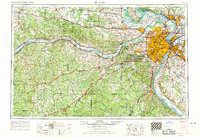 1963 St. Louis1970 Print · USGSSt. Louis and its surrounding river valleys are captured here during the peak of mid-century suburban expansion and industrial activity. Trace the historic rail routes of the Norfolk and Western Ry or locate the St Louis Ordnance Plant and early stretches of US Highway 66.4 unique versions available
 - 1966 Map of St. Louis
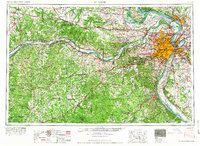 1966 St. Louis1966 Print · USGSThe St. Louis metropolitan area and its surrounding river valleys are captured here during the mid-sixties era of suburban growth and industrial strength. Genealogists and historians can trace the foundations of local communities through sites like Old Pioneer Cem, Parks College, and the Jefferson Barracks Military Reservation.
 - 1972 Map of Wright City, 1974 Print
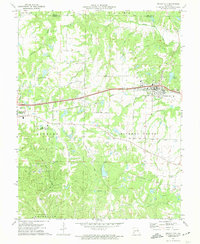 1972 Wright City1974 Print · USGSWright City and Truesdale are shown at a crossroads of rail and regional industry in the early seventies. Trace the Norfolk and Western line or locate local landmarks like Passionist Fathers Seminary and Harmonie Ch.2 unique versions available
 - 1973 Map of Warrenton, 1974 Print
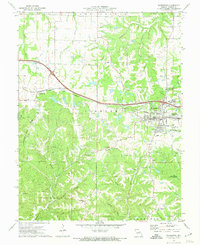 1973 Warrenton1974 Print · USGSWarrenton and Truesdale thrive along the rail corridor in the early seventies, surrounded by a landscape of clay mining and forest. Local historians can locate ancestral sites like Steinhagen Ch Cem, Macedonia Ch, and the clayworks of Elkhorn.2 unique versions available
 - 1985 Map of Fulton
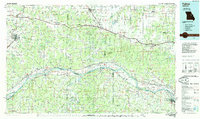 1985 Fulton1985 Print · USGSMid-Missouri was a hub of river commerce and rail travel in the mid-1980s, where towns like Fulton and Hermann anchored the river valley. Researchers can trace historic river islands like Rush Island or follow the path of the Missouri - Kansas - Texas Railroad.2 unique versions available
 - 2012 Map of Wright City, 2012 Print
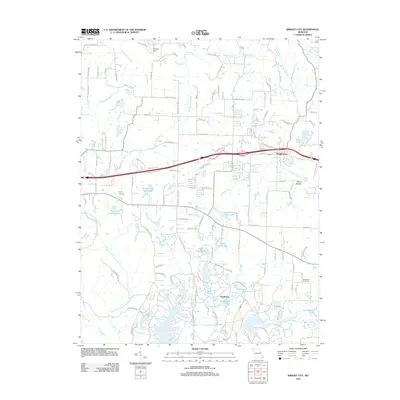 2012 Wright City2012 Print · USGSWright City and the surrounding Warren County countryside are captured here in the early 21st century as suburban development meets rural tradition. Genealogists and local historians can trace the area's growth through landmarks like Mount Airy Cemetery, the private waters of Innsbrook, and Midway Vlg.
 - 2012 Map of Warrenton, 2012 Print
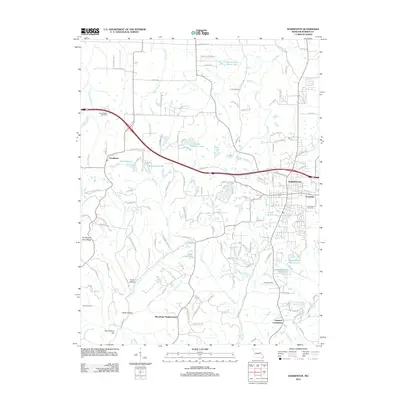 2012 Warrenton2012 Print · USGSWarren County at the start of the 2010s shows a landscape of growing residential communities and traditional rural settlements. Researchers can trace family history at Camp Branch Cemetery or locate landmarks like the Landing Strip and Truesdale.
 - 2015 Map of Warrenton, 2015 Print
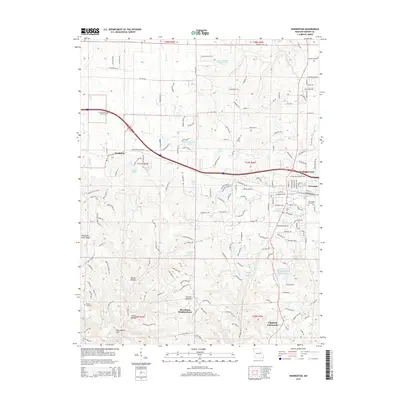 2015 Warrenton2015 Print · USGSWarren County in the mid-2010s shows a landscape defined by the growth of Warrenton and Truesdale against a backdrop of rural heritage. Genealogists and local historians can trace family locations through Macedonia Neighborhood, Rattle Cemetery, and S Rock Church.
 - 2015 Map of Wright City, 2015 Print
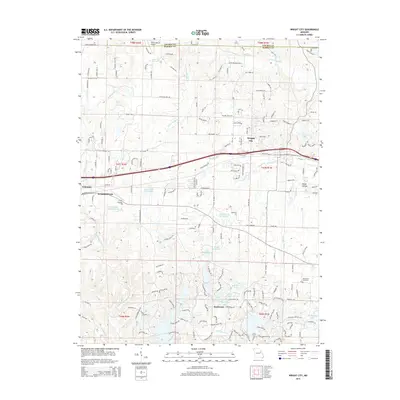 2015 Wright City2015 Print · USGSWright City and the surrounding Warren County countryside are shown here during a period of transition between rural farmland and growing lakeside communities. Genealogists and local historians can trace family locations near Mount Airy Cemetery, Innsbrook, and Passionist Fathers Lake.
 - 2017 Map of Wright City, 2017 Print
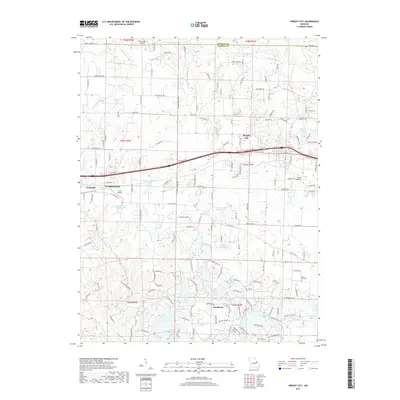 2017 Wright City2017 Print · USGSWright City and Warrenton are captured here in the late 2010s as they expanded along the Interstate 70 corridor. Genealogists and local historians can locate Mount Airy Cemetery, the Boone Trail School, and family-named landmarks like Skunk Hollow.
 - 2017 Map of Warrenton, 2017 Print
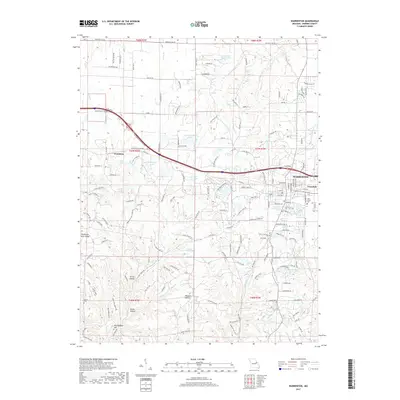 2017 Warrenton2017 Print · USGSWarrenton and Truesdale are shown during a period of growth along the Interstate corridor in the late twenty-tens. Local historians can trace family locations near Camp Branch Cem or explore rural landmarks like Roundabout Hill and Birkemeier Lake.
 - 2021 Map of Wright City, 2021 Print
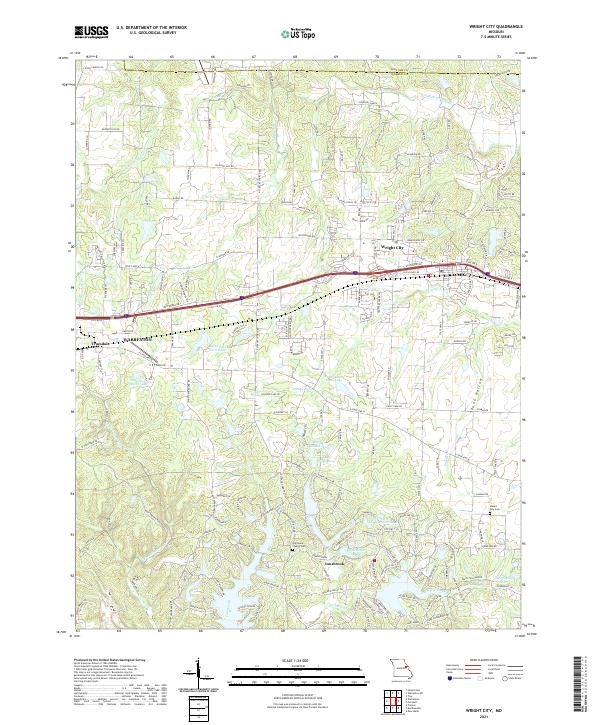 2021 Wright City2021 Print · USGSWright City and the Interstate 70 corridor are shown here in the early 2020s as residential growth expands near the Warren and Lincoln county lines. Genealogists and historians can locate legacy sites like Harmonie Church Cem and Mount Airy Cem among modern developments.
 - 2021 Map of Warrenton, 2021 Print
 2021 Warrenton2021 Print · USGSWarrenton and Truesdale are documented in this recent survey, showing the Warren County seat and its surrounding landscape as it appears today. Researchers can locate civic landmarks like the Warren County Courthouse and burial grounds such as Camp Branch Cem and Rattle Cem.
 - 2023 Map of Warrenton, 2023 Print
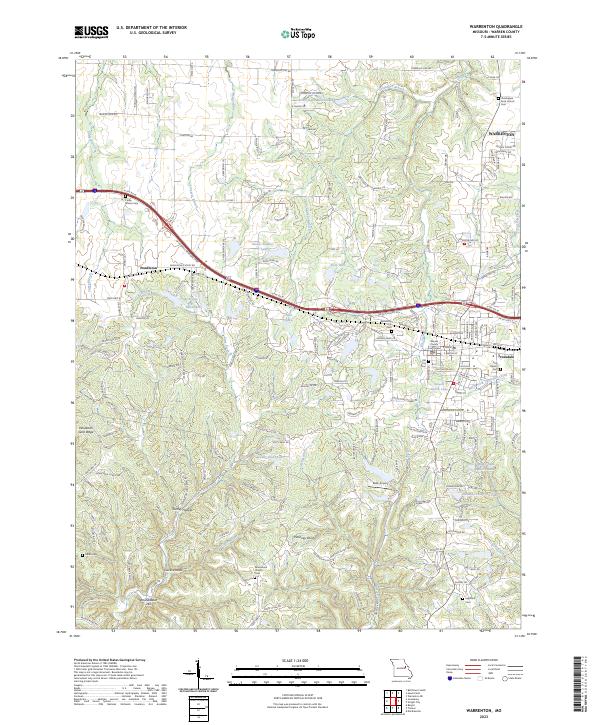 2023 Warrenton2023 Print · USGSWarrenton and the surrounding Missouri countryside are captured here in the early twenty-first century, showing the established communities of the county seat. Researchers can trace local lineage through several landmark burial grounds like Holy Rosary Cemetery and Rock Church Cemetery.
End of results
Showing maps 1-19 of 19
Top cities near Truesdale
- Wentzville historical maps
- Washington historical maps
- Troy historical maps
- Warrenton historical maps
- Wright City historical maps
- Moscow Mills historical maps
See more
Frequently asked questions
- What are the different types of historical maps available for Truesdale?
- What is the oldest map of Truesdale?
- Where can I purchase historical maps of Truesdale for my home or office?
- Where can I download high-res historical maps of Truesdale?
- Are there historical topographic maps available for Truesdale?
- Is there historical aerial imagery available for Truesdale?
- Where are historical maps of Truesdale sourced from?