Old Maps of Rye, New Hampshire for Hiking & Exploration
Hike through history with 63 historic maps of Rye. Explore old trails, ghost towns, and forgotten backroads — perfect for outdoor adventurers and local explorers.
- Rediscover forgotten places: Map out old mining camps, roads, and footpaths that no longer exist on modern maps.
- Layer with modern tools: Combine with LiDAR or satellite views to plan hikes through historical terrain.
- Made for exploration: Popular among hikers, overlanders, and local history lovers.
Use these maps to find adventure and explore the hidden past of Rye.
Rye, NH maps
(63)- 1888 Map of Newburyport
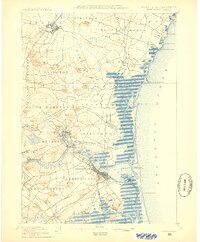 1888 Newburyport1888 Print · USGSThe North Shore and Seacoast regions meet at the turn of the century along the Merrimac River. Trace the early rail lines of the Boston and Maine Railroad or locate coastal landmarks like the U.S. Life Saving Station and Range Light.
 - 1890 Map of Newburyport
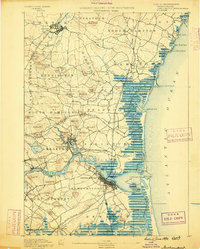 1890 Newburyport1890 Print · USGSThe coastal borderlands of Massachusetts and New Hampshire are shown here during a peak era of maritime and rail activity. Genealogists and local historians can trace family-named sites across Newbury Old Town, Byfield, and the bustling docks at Salisbury Point.
 - 1893 Map of Dover
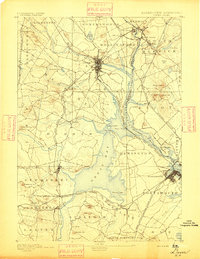 1893 Dover1893 Print · USGSThe Maine and New Hampshire borderlands come alive in this late nineteenth-century survey of the Seacoast and Piscataqua River regions. Genealogists and historians can trace defunct rail stops like Barrington Station and South Newmarket Junction or locate the industrial Great Works mill.5 unique versions available
 - 1893 Map of York
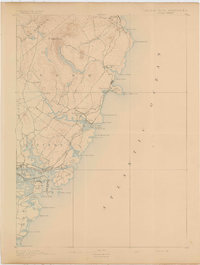 1893 York1893 Print · USGSThe Maine and New Hampshire coastlines meet in the 1890s at a time of maritime industry and emerging seaside travel. Researchers can trace the development of York Village, the operations at the Navy Yard, and the early route of the York Beach and Railroad.5 unique versions available
 - 1894 Map of Newburyport
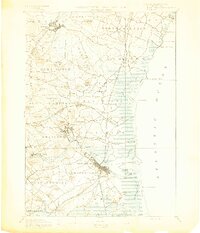 1894 Newburyport1894 Print · USGSCoastal Massachusetts and New Hampshire are captured here in the late nineteenth century, from the bustling riverfront of Newburyport to the marshes of Hampton. Genealogists and historians can trace rail lines, coastal landmarks like the U.S. Life Saving Station, and old neighborhoods in Amesbury or Newbury Old Town.7 unique versions available
 - 1916 Map of Dover
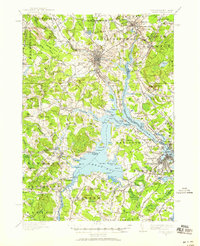 1916 Dover1916 Print · USGSCoastal New Hampshire and the Maine borderlands are captured here during the height of the rail era. Genealogists can locate dozens of district schools like Madbury School and trace the paths of the Boston and Maine Railroad through Portsmouth and Dover.2 unique versions available
 - 1918 Map of Dover
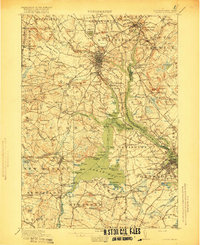 1918 Dover1918 Print · USGSCoastal New Hampshire and the Maine borderlands are captured here during the First World War era, showing a landscape defined by tidal rivers and rail networks. Genealogists can trace family landmarks and early civic life through the State College in Durham, the Kittery Depot, and local schoolhouses like Marshwood.6 unique versions available
 - 1920 Map of York
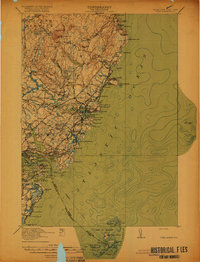 1920 York1920 Print · USGSThe Maine and New Hampshire shoreline comes to life during the late 1910s, showing a region balanced between naval defense and coastal commerce. Genealogists and historians can locate old landmarks like the Lincoln School, the Coast Guard Sta, and the path of the Electric Railway.6 unique versions available
 - 1932 Map of Newburyport
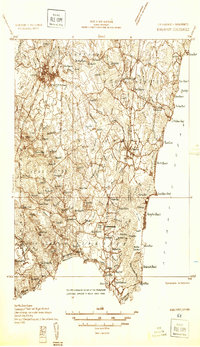 1932 Newburyport1932 Print · USGSThe New Hampshire seacoast and southern Rockingham County are shown here in the early thirties, just as coastal recreation and inland farming reached a mature balance. Genealogists can locate family-named landmarks like Nason Corner, Dearborn Academy, and various district schools.4 unique versions available
 - 1934 Map of Exeter
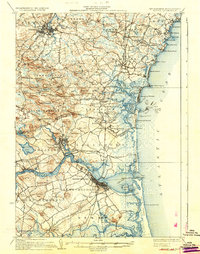 1934 Exeter1934 Print · USGSThe New Hampshire seacoast and Merrimack Valley met the Atlantic in the mid-thirties as a network of rail and river commerce. Genealogists can trace family lines through Newbury Old Town or locate historic institutions like Phillips Exeter Academy and Dearborn Academy.5 unique versions available
 - 1941 Map of Dover
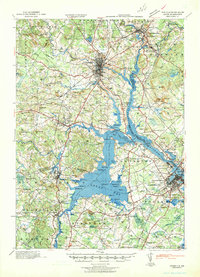 1941 Dover1941 Print · USGSCoastal New Hampshire and the Maine borderlands are captured here just before the mobilization of the early 1940s. Genealogists can trace family lands near Garrison Hill, old district schools like Witchtrot Sch, and the rail depots at Greenland Village Sta.
 - 1943 Map of Cape Ann
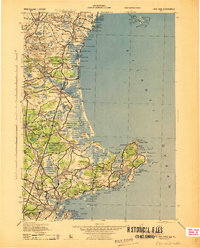 1943 Cape Ann1943 Print · USGSCoastal Massachusetts and New Hampshire appear here during the wartime era, showing the maritime and rail infrastructure that defined the North Shore. Genealogists can trace family names across Asbury Grove, Merrimacport, and the Boston & Maine RR rail corridor.
 - 1944 Map of Kittery
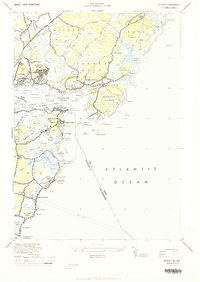 1944 Kittery1944 Print · USGSThe Maine and New Hampshire coastlines are shown here at the height of World War II, revealing a landscape defined by strategic defense. Genealogists and historians can trace family land and military footprints at Fort Dearborn, Admiralty Village, and Kittery Point.2 unique versions available
 - 1944 Map of Hampton
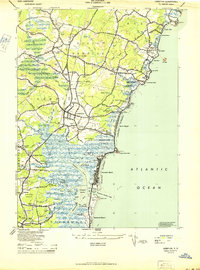 1944 Hampton1944 Print · USGSThe New Hampshire Seacoast during the mid-forties reveals a world of tidal marshes and emerging beach communities. Trace family roots and local history at Old Camp Ground, Dearborn Academy, and the crossroads at The Five Corners.2 unique versions available
 - 1948 Map of Boston
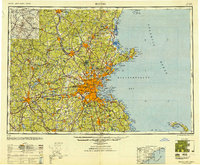 1948 Boston1948 Print · USGSEastern Massachusetts and southern New Hampshire appear at an industrial peak in the late 1940s, just as suburban growth began to accelerate. Genealogists and historians can trace rail lines like the Boston and Albany RR or locate coastal landmarks like Graves Lighthouse and Fort Devens.2 unique versions available
 - 1949 Map of Portland
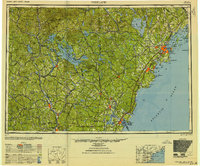 1949 Portland1949 Print · USGSCoastal Maine and the New Hampshire interior are shown in detail during the late forties, from the bustling harbors to the lakeside villages. Researchers can trace historical rail networks like the Boston & Maine RR and locate coastal defenses such as Fort Preble.3 unique versions available
 - 1952 Map of Portsmouth
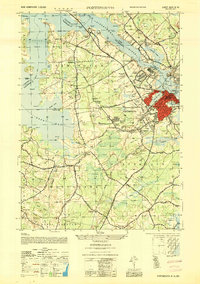 1952 Portsmouth1952 Print · USGSCoastal New Hampshire and Maine are shown in detail during the early fifties, centering on the harbor and the bustling city of Portsmouth. Trace the development of the Piscataqua River waterfront, find ancestral sites like Winnicut Mills, and locate old rail hubs at Greenland Station or Newington Station.
 - 1956 Map of Kittery, 1957 Print
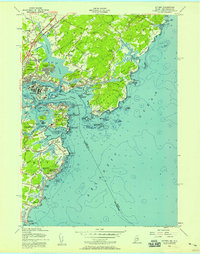 1956 Kittery1957 Print · USGSThe Maine and New Hampshire coastlines meet here in the mid-1950s, a landscape shaped by centuries of maritime defense and growing suburban neighborhoods. Genealogists and historians can trace the foundations of Kittery and New Castle, locating landmarks like Fort McClary State Park and the Whaleback Lighthouse.5 unique versions available
 - 1956 Map of Isles Of Shoals, 1957 Print
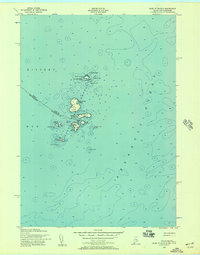 1956 Isles Of Shoals1957 Print · USGSThe offshore islands of York County and Rockingham County are captured in this mid-century maritime survey. Genealogists and historians can trace the settlement of Gosport on Star Island and locate landmarks like the White Island Lighthouse and the ledges of Duck Island.2 unique versions available
 - 1956 Map of Dover, 1960 Print
 1956 Dover1960 Print · USGSCoastal New Hampshire and the Maine borderlands are captured here during a period of massive transition as modern infrastructure meets historic mill towns. Researchers can trace the development of Pease Air Force Base or locate family roots at Winnicut Mills and Packers Falls Cem.4 unique versions available
 - 1956 Map of York, 1960 Print
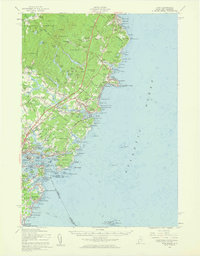 1956 York1960 Print · USGSThe Maine coastline in the mid-fifties shows a world of historic harbor defenses and growing seaside resorts. Genealogists can trace family names at Brixham Upper Corners, locate the First Parish Ch, and explore the shoreline from York Cliffs to Kittery.4 unique versions available
 - 1956 Map of Portland, 1963 Print
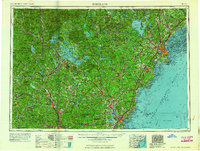 1956 Portland1963 Print · USGSSouthern Maine and eastern New Hampshire are captured here in the mid-fifties, during a time of major highway expansion and military growth. You can trace the path of the Maine Turnpike and locate landmarks like the Portsmouth Naval Shipyard and Sebago Lake.4 unique versions available
 - 1956 Map of Portsmouth, 1963 Print
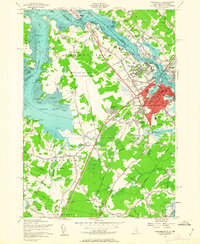 1956 Portsmouth1963 Print · USGSCoastal New Hampshire and Maine are shown here during the mid-fifties, just as the massive Pease Air Force Base was established. Researchers can trace family sites from Winnicut Mills to Atlantic Heights and find local landmarks like Breakfast Hill.4 unique versions available
 - 1956 Map of Isles of Shoals, 1964 Print
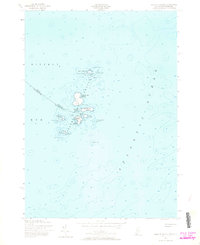 1956 Isles of Shoals1964 Print · USGSThe Isles of Shoals are captured here in the mid-1950s, detailing the maritime boundary between Maine and New Hampshire. Researchers can locate island landmarks such as Tucke Mon, the Lighthouse on White Island, and the settlement at Appledore.
 - 1956 Map of Boston, 1967 Print
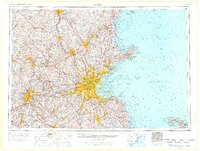 1956 Boston1967 Print · USGSThe Massachusetts coastline and industrial interior are seen here during the mid-century peak of suburban and highway expansion. Researchers can trace historic harbor defenses like Fort Revere, local landmarks such as Faneuil Hall, and the vast Parker River National Wildlife Refuge.6 unique versions available
Showing maps 1-25 of 63
Top cities near Rye
- Dover historical maps
- Portsmouth historical maps
- Newburyport historical maps
- Amesbury historical maps
- Hampton historical maps
- York historical maps
See more
Top neighborhoods of Rye
- Rye Beach Village District historical maps
- Gosport historical maps
- Fairhill Manor historical maps
- Adams Mobile Home Park historical maps
Frequently asked questions
- What are the different types of historical maps available for Rye?
- What is the oldest map of Rye?
- Where can I purchase historical maps of Rye for my home or office?
- Where can I download high-res historical maps of Rye?
- Are there historical topographic maps available for Rye?
- Is there historical aerial imagery available for Rye?
- Where are historical maps of Rye sourced from?